Showing posts with label Steve Phillips. Show all posts

Wednesday, January 24, 2018

Ken Griffey Jr. Once Rejected a Trade to the Mets For a Rejected Met

Imagine if a scene like this had happened at Shea Stadium with Griffey wearing a Mets uniform.  (Elaine Thompson/AP)

With today's news that Seattle legend Edgar Martinez failed to garner the votes necessary for Hall of Fame election, that leaves Ken Griffey Jr. as the only player with a Mariners cap on his plaque in Cooperstown.  But nearly two decades ago, a deal was in place that could have seen Griffey change the "S" on his cap to an interlocking "NY".  That is, if Griffey hadn't rejected the trade.

According to the Seattle Times, Mariners general manager Pat Gillick and his Mets counterpart Steve Phillips had discussed a trade in December 1999 that would have brought Griffey to New York to join fellow 2016 Hall of Fame inductee Mike Piazza in the middle of a formidable Mets lineup that had come within two wins of a National League pennant just two months earlier.  But Griffey was adamant about only playing in Seattle or Cincinnati, where he grew up and went to high school.  As a 10-and-5 player (ten years in the majors, the last five with his current team), it was Griffey's right to reject any trade he didn't approve of, which he did after the Mariners asked for his approval of a potential move to New York.

Who would the Mets have sent to Seattle for the future Hall of Famer?  Well, Roger Cedeño would have taken his .313 batting average and then-club record 66 stolen bases to the Pacific Northwest in the nixed deal.  So would Octavio Dotel, who ended up pitching for a major league record 13 teams in his 15 major league seasons.  A third player would also have been jettisoned to Seattle to go with the speedy Cedeño and the peripatetic Dotel.  That player would have been Armando Benitez.

Yes, that Armando Benitez.

Benitez had become the Mets' closer in 1999 after John Franco was lost for two months with an injury.  Although Benitez had a dominant regular season (22 saves, 1.85 ERA, 128 Ks in 78 IP), he was just ordinary in the postseason, blowing a save in the division series (a game the Mets eventually won in extra innings) and failing to hold a one-run lead in the tenth inning of Game Six of the NLCS (the Mets lost that heartbreaker to the Braves).

Booooo!!!   (Gregory Bull/AP)
Had Griffey just said yes to the Mets, Benitez would have been in Seattle in 2000.  That means he wouldn't have allowed a game-tying three-run homer to the Giants' J.T. Snow in the ninth inning of Game Two of the 2000 NLDS.  And he certainly wouldn't have blown a ninth inning lead to the Yankees in Game One of that year's World Series, which completely changed the course of that Fall Classic.  And let's not forget how Benitez allowed eight runs in two late-season appearances against the Braves in 2001, coughing up a three-run lead and four-run advantage in those ill-fated outings, all but ending the Mets' unlikely post-9/11 push to a potential division title.

Benitez remained a Met until 2003, which was more than enough for him to incur the wrath of long-time Mets fans as well as recent converts.  Dotel and Cedeño, who were two-thirds of the rejected trade for Griffey in 1999, were eventually traded that winter to the Houston Astros for Derek Bell and Mike Hampton, with Hampton eventually being named the Most Valuable Player of the 2000 National League Championship Series.  Fortunately for Hampton, Benitez didn't blow any of his leads in his two NLCS starts, although Benitez did allow two runs in the ninth inning of Hampton's first NLCS start, turning a comfortable 6-0 lead into a 6-2 final.

Could the Mets have won the 2000 World Series if Griffey had okayed the trade?  Would John Franco have gone back to being the Mets' closer and would he have held the leads that Benitez blew in so many crucial situations?  We'll never know.  But the thing we can say with certainty is that every person who booed Benitez would have cheered for Griffey.  And Mets history would have looked a whole lot different.


Monday, March 13, 2017

The Thrill of Victory, The Agony of the Mets: Bobby Valentine

There are moments in history that are so unforgettable, people can always remember where they were at the moment the historic events took place.  Where were you on November 22, 1963?  Probably mourning the death of President John F. Kennedy.  Do you remember what you were doing on July 20, 1969?  Most likely it involved a small step for man and a giant leap for mankind.  (For some of you, it might also have involved the Mets and Expos splitting a Sunday doubleheader at Parc Jarry.)

Mention the date June 15, 1977 to a Mets fan, however, and they'll all respond with the same two words: Midnight Massacre.

The darkest day in Mets history saw the team deal its best player, Tom Seaver, to the Cincinnati Reds at the trade deadline.  In a separate transaction, the Mets rid themselves of their best power hitter, Dave Kingman, sending him to the San Diego Padres for a seldom-used relief pitcher and a light-hitting utility player.  By the end of the 1978 campaign, the reliever (Paul Siebert) had pitched his final game in the majors.  The other player acquired for Kingman wore a Mets uniform far longer than Siebert did.  And when he took his jersey off for the final time, he had managed to make a little history of his own.

The field general responsible for a great run in Mets history.  (Scott Jordan Levy/Getty Images)

Robert John Valentine became a Met because of a Massacre.  He then proceeded to kill what was left of his playing career, producing a .222/.295/.280 slash line for the Mets in 1977 and 1978 before he was released by the team mere days before the start of the 1979 campaign.  Valentine, who was originally selected by the Los Angeles Dodgers with the fifth overall pick in the 1968 June Amateur Draft, played briefly for the Seattle Mariners after he was let go by the Mets before calling it a career at the age of 29.

Despite never quite fulfilling the expectations that come with being a top-five pick in the draft, Valentine spent much of his playing career studying the game.  One of his minor league managers, Tom Lasorda, was influential in Valentine's decision to continue to be a part of the game once his playing career had come to an end.

"Tommy had told me to start thinking about how I could stay in baseball," Valentine said.  "That's what I wanted to do.

Valentine became a coach with the Mets just four years after playing his final game in the majors.  Two years later, he was hired by the Texas Rangers to replace Doug Rader after the Rangers got off to a miserable 9-23 start.  Although Texas finished in last place in the American League West in 1985, Valentine turned things around in his first full season as the team's skipper in 1986, leading the team to a second-place finish and an 87-75 record.  Valentine remained in Texas until 1992, when he was fired by then-managing general partner George W. Bush after getting off to a 45-41 start.

Although Valentine never led Texas to the postseason, he was the Rangers' all-time leader in managerial wins for over two decades.  Valentine was not surpassed in that category until Ron Washington bumped him down to No. 2 in 2014.  But once he was fired, the always opinionated Valentine made sure to remind his former employers who he thought was responsible for the Rangers' turnaround from cellar dwellers to contenders.

"I don't think anybody would've done better than I did while I was here," Valentine said.  "People are going to look back and say in 1985, this is where the Texas Rangers were and in 1992, this is where they were when he left.  I think people are going to say that's one hell of a job."

After working for the Cincinnati Reds in 1993 as a scout and third base coach, Valentine returned to the Mets' organization in 1994 to manage the team's Triple-A affiliate in Norfolk.  With major league players on strike from 1994 to 1995, Valentine took the opportunity to become a manager in Japan in 1995 before he returned to Norfolk to manage the Tides once again in 1996.  Under Valentine, the Tides went 82-59, which was the second-best record in the ten-team International League.

Meanwhile, the Mets, who were on their way to a sixth consecutive losing season, had gotten tired of manager Dallas Green's comments about their young pitchers not belonging in the majors.  With 31 games left in the 1996 season, Green was fired, allowing Valentine to make the jump from Triple-A to the big leagues to manage the Mets.  And just like he did with the Rangers, his leadership was instrumental in the revival of a moribund franchise.

The 1996 Mets finished the year with a 71-91 record, with Valentine going 12-19 after replacing Green at the helm.  Valentine, who had a reputation of getting the most out of otherwise ordinary players, continued to thrive in that respect during his first full season as the Mets' skipper.  Butch Huskey (.287, 24 HR, 81 RBI) had a career year in 1997, while Edgardo Alfonzo batted .315 and reached double digits in home runs and stolen bases for the first time.  On the pitching side, Bobby Jones (15-9, 3.63 ERA) became an All-Star and journeyman Rick Reed (13-9, 2.89 ERA, 1.042 WHIP) finally found a home in New York.  What did all four of those players have in common besides having breakout years for the Mets in 1997?  They all played for Valentine at Norfolk during his two stints as the Tides' manager.

Fonzie was one of many who thrived under Bobby V in both the minors and majors.  (Jonathan Daniel/Getty Images)

New York surprised the league in '97, staying in contention for the National League wild card berth until the final week of the season.  The Valentine-led Mets finished the year with an 88-74 record, which represented a 17-win increase from the previous year.  Only the 1969 and 1984 Mets had shown a greater improvement from one year to the next.

Another reason why the Mets were so successful in 1997 was the acquisition of first baseman John Olerud, who batted .294 with 22 homers in his first season with the Mets.  Olerud led the team in doubles (34), runs scored (90), RBI (102) and on-base percentage (.400), while providing Gold Glove-caliber defense at his position.

The Mets' sudden rise to contention in 1997 caused a flurry of transactions during the off-season.  First, the Mets re-signed Olerud to a two-year deal.  They then traded for veteran left-handed starting pitcher Al Leiter.  But the coup de grâce didn't come until the season had gotten underway, when general manager Steve Phillips acquired All-Star slugger Mike Piazza from the Florida Marlins.

Olerud and Piazza batted .354 and .348, respectively, making Valentine's job of filling out the lineup card that much easier.  But they weren't the only players who helped prove that the previous season's resurgence wasn't a fluke.  Alfonzo continued to blossom under Valentine, improving his power numbers (17 HR, 78 RBI) from the previous year.  In addition, new center fielder Brian McRae's vision of a 20/20 season came to fruition, as he hit 21 homers and stole 20 bases.  But it was Valentine's use of the bullpen that really helped the team succeed.

For the first time in franchise history, five relievers appeared in 50 or more games.  Closer John Franco set a team record with 38 saves, while Dennis Cook and Turk Wendell combined to appear in 139 games, with Cook becoming the first left-handed reliever to pitch in 70 or more games for the Mets in a single season and Wendell appearing in a club-record nine consecutive games during the team's playoff push in September.

Alas, Valentine and the Mets fell short in their quest to end their decade-long postseason drought, as the team lost its final five games of the season to once again finish the year with an 88-74 record.  Valentine had now managed over ten years in the major leagues with nary a playoff berth to show for his efforts.  He was poised to finally crash the postseason party in 1999.  But first, he had to stop everything from crashing down on him.

The Mets played decently, but not spectacularly over the first two months of the season before losing eight straight games from late May to early June.  The eighth defeat in the skein gave the Mets an unsightly 27-28 record, which moved them under the .500 mark for the first time since their Opening Day loss to the Marlins.  The loss also led to the sudden firing of the team's hitting, pitching and bullpen coaches.  Although Valentine's job was spared, he knew that if the team didn't improve quickly after their less than mediocre 55-game start, his days as the team's skipper were numbered.  And so, Valentine decided to share a few numbers of his own.

"In the next 55 games, if we're not better, I shouldn't be the manager," Valentine proclaimed. "I'd rather have a sustained run; something like 40 and 15 would be good."

The team responded to the firings by winning their next three games in lopsided fashion, outscoring the Yankees and Blue Jays by a combined 26-7 score.  The outburst of offense seemed to come to an end in the series finale against Toronto, as the Blue Jays took a 3-0 lead into the bottom of the ninth inning.  But a three-run rally by the Mets, which included a rare stolen base by Piazza, sent the game to extra innings.  In the 12th, a questionable catcher's interference call led to Valentine's ejection.  Valentine left the dugout briefly, only to be replaced a few minutes later by what appeared to be his mustachioed doppelganger.  Except it wasn't his hirsute twin.  It was Valentine himself attempting to go incognito behind Orel Hershiser in the corner of the dugout.  The disguise was discovered by Major League Baseball and Valentine was fined $5,000 and suspended for two games.  One thing that couldn't be disguised, however, was the Mets' newfound streak of success, as two innings after Valentine was ejected, the Mets won in walk-off fashion for their fourth consecutive victory.

The Mets were winning again?  That's incog-NEAT-o!  (Fox Sports Net screen shot)

By early August, the Mets' 27-28 record had turned into a 67-43 mark, as the team did indeed win 40 of their next 55 games as per Valentine's prophetic statement.  New York had five separate winning streaks of four or more games during their torrid two-month stretch, while never losing more than two in a row.  The Mets briefly took over first place in August before the Braves reclaimed their customary spot in the division by the end of the month.  New York then pulled back to within one game of Atlanta as they entered a critical three-game series at Turner Field on September 21.  When the series was over, the focus had shifted from the division race to the wild card chase, as the Chipper Jones One-Man Wrecking Crew had essentially torn down the Mets' N.L. East aspirations.

No matter who Valentine put on the mound, Jones found a way to take that pitcher deep.  Jones homered four times in the series, hitting long balls off southpaws (Al Leiter, Dennis Cook) and right-handed hurlers (Rick Reed, Orel Hershiser).  Jones drove in seven runs in the three games, or one more run than the Mets scored in the series.  After the final game, Jones reflected on what had transpired in the Braves' three-game sweep of the Mets.

"It was one of those dream series," Jones said.  "It's almost like the ball is hitting my bat.  I don't think I'm doing anything different, but it seems like the ball keeps hitting my sweet spot."  

Meanwhile, in the other clubhouse, Valentine had his own feelings on the sweep, one that increased the Braves' lead in the division to four games over the Mets.  He was particularly vocal about what Jones had been able to accomplish.

"They sure did the job they needed to give themselves some room.  At least Chipper did," Valentine said.  "It's uncanny that he's so hot right now."

The use of the word "uncanny" caused the media to suggest that Valentine was accusing Jones of cheating, especially after Jones had hit several well-placed pitches with authority.  Valentine, who was known to occasionally suffer from foot-in-mouth syndrome, had to quickly recant his unfortunate utterance, saying: "Maybe I shouldn't have used that word."

Although the Mets' dreams of winning the division were derailed by the Braves, the wild card was still well within reach, as New York still had a two-game lead over the Cincinnati Reds with nine games to play.  There was only one problem.  The Mets kept losing.  And losing.  And losing some more.

Following the sweep in Atlanta, the Mets traveled to Philadelphia and promptly lost three more games.  This wasn't the perennially contending Braves the Mets got swept by; it was a Phillies team that was 11 games under .500 entering the series.  The loss in the series finale officially gave the Braves the division title.  It also vaulted the Reds over the Mets in the wild card race.

The Mets limped home from Philadelphia to open their final homestand of the season, still having memories of the previous season, when the team lost its final five games to deny them a spot in the playoffs.  Their losing streak extended to seven games in the opener of a three-game set against the Braves.  New York finally won a game when they walloped Greg Maddux in the middle game of the series, thanks mostly to a grand slam by John Olerud, but then dropped an extra-inning heartbreaker in the finale after coming back twice in the late innings to tie the game.  After the game, the uncanny Jones made a very candid statement, one that forever made him Public Enemy No. 1 in Flushing.

"Now all the Mets' fans can go home and put their Yankees stuff on."

If Jones's comments suggested that the fans would be watching playoff baseball from their couches instead of from their seats at Shea Stadium, he was gravely mistaken.  With the Mets two games out of the wild card spot with three games to play, they responded by sweeping the Pittsburgh Pirates.  Starting pitchers Kenny Rogers and Rick Reed struck out 22 batters between them in the first two games, while Orel Hershiser and four relievers combined to pitch a three-hitter against the Pirates in the series finale.  But it was a move by Valentine in Game No. 162 that may have saved the Mets' season.

Melvin Mora had played in 65 games for the Mets coming into the season's final home game.  He had started just three of them, with Valentine using him mostly as a late-inning defensive replacement.  Mora had just 38 plate appearances in those 65 games, which didn't allow him to remain fresh as a hitter and resulted in a .133 batting average entering the finale against the Pirates.  With the game tied, 1-1, in the bottom of the seventh, Mora came into the game as a pinch-runner for Rickey Henderson.  Although it was the tenth time Valentine had used Mora to run for a teammate, it was the first time Mora had run for the game's all-time stolen base leader.  The Mets failed to score in the inning, but Mora stayed in the game as the new left fielder.  More importantly, he took over Henderson's leadoff spot in the batting order.  That came into play two innings later, when the bottom of the ninth rolled around with the game still tied.

Pinch-hitter Bobby Bonilla led off the inning by grounding out.  That brought up Mora, who had just four hits in 30 at-bats.  Rather than replacing the light-hitting Mora, Valentine rolled the dice and allowed him to take his turn at bat.  The gamble paid off, as Mora delivered an opposite-field single.  Two pitches later, Edgardo Alfonzo also went the other way with a hit, pushing Mora over to third base.  An intentional walk to Olerud set up a force play at every base.  But it also brought up Mike Piazza to the plate.  New pitcher Brad Clontz didn't even have time to get nervous about facing the future Hall of Famer, as his first pitch bounced up and over the tall protective screen behind the plate, allowing Mora to scamper home with the winning run.

The mojo was risin' for Melvin Mora when Bobby V allowed him to hit in the '99 finale.  (Ezra Shaw/Getty Images)

The sweep of the Pirates, coupled with the Reds losing two out of three to the Milwaukee Brewers, forced a one-game playoff to determine the wild card winner.  After the tight affair that forced the 163rd game, the Mets had a relatively easy time in Cincinnati against the Reds, scoring early and extending their lead throughout the game before Al Leiter put the icing on the cake with a masterful complete-game, two-hit shutout.

For the first time since 1988, the Mets were going to the postseason.  That drought wasn't nearly as long as Valentine's, as he had endured ten seasons as a player without appearing in the playoffs, followed by a decade as a manager with his season ending after the 162nd game.

Valentine's first postseason series ended on a high note, with backup catcher Todd Pratt hitting a game-winning home run off Arizona closer Matt Mantei in Game Four of the National League Division Series.  The thrilling victory sent the Mets to the NLCS to face Chipper Jones and the Braves.  During the regular season, Atlanta had taken nine out of 12 matchups against New York, outscoring the Mets, 63-40.  But Arizona had been just as dominant against the Mets in the regular season, winning seven of nine games by a combined 63-39 tally before the Mets defeated the Diamondbacks in the NLDS.  That gave the Mets hope against an experiences Braves squad.  By the end of Game Three, however, that hope was nearly gone.

Atlanta took the first three games of the series, defeating Masato Yoshii, 4-2, in Game One, followed by two one-run victories in Games Two and Three.  The Mets recovered to eke out a comeback win against Braves' closer and renowned people watcher on the No. 7 train, John Rocker, forcing a fifth game at Shea Stadium.  The 15-inning, rain-soaked affair featured Valentine at his best.  First, he removed Yoshii after three innings even though he had allowed just two runs.  He then brought in Turk Wendell in the seventh inning to face Chipper Jones.  Wendell's trademark slider proved to be too much for the switch-hitting Jones, who struck out much to the home crowd's delight.  Valentine also ordered five intentional walks during the game.  None of the recipients of the free passes came around to score.

The game remained tied until the 15th inning, when the Braves finally broke through for a run against the Mets' tired bullpen.  New York could have easily conceded the pennant right there, but Valentine and his players would have nothing of it.  Shawon Dunston, who had been put into the game by Valentine five innings earlier, ran the count full before fouling off six consecutive pitches.  On the 12th pitch of the at-bat, the man who wore No. 12 for the Mets hit a sharp ground ball up the middle for a single.  Dunston then stole second.  After reliever Kevin McGlinchy walked pinch-hitter Matt Franco, Alfonzo bunted the runners over to second and third.  An intentional walk to Olerud brought up cleanup hitter Todd Pratt, who came in for Piazza in the 14th inning when Piazza injured his left forearm.  Pratt drew the third walk of the frame, tying the game and bringing Robin Ventura up to the plate, who delivered his famous Grand Slam Single to win the game for the Mets.

After five hours and 46 minutes, the Mets had finally forced their way back to Atlanta for a Game Six showdown.  Tired and bruised, the Mets fell behind by five runs in the first inning before coming back to tie the game in the seventh.  An inning later, they had gone out in front of the Braves.  The Mets failed to hold that precarious lead, then coughed up another one-run lead in the tenth.  Finally, in the 11th inning, after the two teams had played for over ten hours in their last two games, Valentine went to starting pitcher Kenny Rogers in an attempt to extend the game and their season.  It was one of the few decisions that did not go right for Bobby V in his first postseason experience.  A double, a sacrifice bunt, two intentional walks and one unintentional walk later, the Braves had ended the Mets' storybook season, leaving a stunned Valentine to repeatedly say "no, no, no" while pounding his fists on the dugout railing as Gerald Williams crossed the plate with the pennant-winning run.

The look of disappointment on Bobby V's face says it all.  (NBC Sports screen shot)

The most successful year in over a decade had come to a crashing halt for the Mets after their Game Six defeat.  But despite the sudden end to the season, Valentine was proud of his players and praised their ability to fight back when all appeared lost.

''I'm going to take some time in the winter to watch these games, and try to enjoy them,'' Valentine said.  ''I told my guys after the game that it might be a shorter winter or a longer winter for them but I think they played like champions.  They should feel like champions.  It's very difficult to come back from five runs and have a couple of leads.  It's difficult to give it up, but we gave everything we had."

A year after being told by their manager that they played like champions in defeat, the Mets became champions of the National League.  Unlike the 1999 campaign, the Mets did not need to produce a 40-15 record during the middle of the 2000 season, nor did they require a frenetic finish to qualify for the playoffs.  Instead, they clinched the wild card with several games to play and nearly beat out the Braves for the division title.  And once the St. Louis Cardinals knocked off Atlanta in the division series, the Mets were faced with the reality that they would not have to go up against the Hall of Fame triumvirate of Greg Maddux, Tom Glavine and John Smoltz.  Rather, they'd be facing a Cardinals' pitching staff that had produced a 4.38 ERA during the regular season and allowed a then-franchise record 196 home runs.  It was enough to make the Mets' hitters salivate in anticipation of their NLCS feast.

New York defeated St. Louis in five games, scoring six or more runs in each of their four victories.  In addition to going homer happy against the Cards, the Mets produced a deluge of doubles, with four balls leaving the park and a dozen more ending up with the Mets' batter on second base.  The Mets were on their way to the World Series for the first time since 1986, as Valentine joined the pantheon of pennant-winning managers in franchise history.  Their opponent was the crosstown New York Yankees, creating the first Subway World Series since 1956.  But just like they did in 1999, the Mets came up short in a series where every game was decided by one or two runs.

Going into the 2001 season, Valentine was trying to become the first manager in Mets history to lead the team to back-to-back World Series berths.  At the same time, he was trying to keep general manager Steve Phillips off his back.  Just like Davey Johnson and Frank Cashen couldn't see eye-to-eye at the end of their respective tenures with the Mets, Valentine and Phillips were also in a strained professional relationship.  Valentine wasn't a fan of some of the trades Phillips made.  He also didn't like that Phillips wouldn't allow him to talk to other teams about their vacant managerial positions after gaining some leverage with his consecutive postseason appearances.  The feud would continue into the 2001 campaign, and got progressively worse once the Mets got off to an awful start.

By mid-May, New York was ten games under .500 and showing no signs of improvement.  Instead of being buyers at the trade deadline, they started to part ways with several of the key players that helped them rise to the top of the baseball world.  In an eight-day span, the Mets traded backup catcher and 1999 postseason hero Todd Pratt, cut ties with set-up men Turk Wendell and Dennis Cook and dealt starting pitcher Rick Reed, all of whom were favorites of Valentine.  Phillips had raised the white flag on the season.  Valentine, on the other hand, never surrendered his dreams of raising another kind of flag at Shea.

After the Mets reached their nadir in mid-August with a 54-68 record, Valentine led his troops to victory in 17 of the team's next 22 games.  Although the Mets still had a losing record at 71-73, they had climbed to within eight games of the first-place Braves with 18 games to play.  It would still take a monumental effort to cut further into the Braves' lead.  But then September 11 happened.  And Valentine had a new mission to accomplish.

Bobby Valentine was a healer at the helm.  In more ways than one.  (Ezra Shaw/Getty Images)

On the morning of September 11, 2001 the Mets were in Pittsburgh, waiting to open a three-game series against the Pirates that night.  But after the terrorist attack on the United States, the series was postponed and the Mets returned via bus to New York.  Upon arriving in their home city, Valentine immediately went to Ground Zero to offer assistance.  Valentine also worked tirelessly at Shea Stadium, working to distribute relief goods to those in need.  John Franco, himself a native New Yorker, noticed how involved his manager was in the healing process.

"Bobby was a great leader," Franco said.  "He had us out there, and even when we were done, he stood out there by himself helping everybody else, all the volunteers."

When baseball resumed a week later, the Mets returned to Pittsburgh with the entire country supporting them.  Overcoming fatigue and emotional stress, New York emerged victorious in all three games, moving them back over .500 and within five games of first place.  The Mets then returned to Shea Stadium to face the Braves and gave the patriotic crowd a reason to smile again.  Mike Piazza's home run in the series opener turned a loss into a thrilling victory.  The second game also went to New York, as RBIs by Tsuyoshi Shinjo, Rey Ordoñez and Armando Benitez (not a typo) helped turn a one-run lead into a four-run cushion.  It also moved the Mets to within 3½ games of the division lead.

Unfortunately, the Mets dropped the series finale to the Braves, then lost two out of three games in Atlanta the following week.  Although the Mets managed to finish the year with a winning record - Valentine's fifth straight as manager of the team - they failed to catch the Braves and missed the playoffs for the first time since 1998.  A year later, the Mets couldn't repeat their late-season magic and finished below .500 for the first time since Valentine took over for Dallas Green in 1996.  Valentine's first season of failure became his last season at the helm of a rapidly sinking ship, as he was fired by the Mets a few days after the season came to an end.  General manager Phillips got to keep his job, which finally brought out all the animosity Valentine had felt for him over the years.

"What (Phillips) has done isn't proper," Valentine said.  "He's done what he could so I wouldn't be around.  I told Fred (Wilpon) that he had to give the next manager authority in the clubhouse and on the field, that he had to get Steve off the field and out of the clubhouse.  You can't let a GM high-five guys and joke around after a win and then after a loss act like it's the end of the world.  Get him out of there for the sake of the next guy."

The Mets did indeed get Phillips out of there, but waited until the 2003 season was nearly half-over to do so.  By then, the manager with the second-most wins in franchise history was just a distant memory.

When Bobby Valentine became the Mets' manager in 1996, he took over a team that hadn't had a winning season since 1990 and was a combined 91 games under .500 since the start of the 1991 campaign.  He proceeded to lead the team to five consecutive winning seasons, which included two postseason appearances and a National League pennant.  Despite his final season in which he went 75-86, Valentine's .534 winning percentage ranks third in team history behind Davey Johnson (.588) and Willie Randolph (.544).

(Focus On Sport/Getty Images)
As controversial as Valentine was with his outspokenness and relationship with his general manager, his players - especially the ones that played for him in the minor leagues - remained fiercely loyal to him.  Benny Agbayani, who played for Valentine at Norfolk in 1996 and in New York from 1998 to 2001, followed his manager to Japan in 2004, then retired from the game once Valentine was unceremoniously fired in 2010.  Eric Hillman, who pitched for the Mets from 1992 to 1994, blossomed under Valentine in both the United States (Norfolk) and Japan (Chiba Lotte) before injuries ended his career in 1997.  Once he retired, Hillman had a telling statement about what it was like to play for Valentine.

"Either you love Bobby Valentine or you hate him," Hillman said.  "There's no middle ground.  I'll tell you what - I'd take a bullet for that guy.  He did everything for me in my career."

Valentine was both respected and reviled.  He was also cherished and criticized.  But no one can deny that Valentine was part of the Mets' renaissance in the late 1990s.  His relationship with management may have been testy at times, but his relationship with the win column was always strong.

He first came to the Mets in 1977 during one of the darkest periods in franchise history.  By the time Valentine left the team for good a quarter century later, he was responsible for some of the club's brightest moments.

Mets fans with vivid memories of the late '90s and early '00s will always have a place in their hearts for Valentine.


Note: The Thrill of Victory, The Agony of the Mets is a thirteen-part weekly series spotlighting those Mets players and personnel who experienced the best of times and the worst of times with the team.  For previous installments, please click on the names below:

January 2, 2017: Tom Seaver
January 9, 2017: Mike Piazza
January 16, 2017: Wally Backman
January 23, 2017: Daniel Murphy
January 30, 2017: Frank Cashen
February 6, 2017: Ed Kranepool
February 13, 2017: Doug Sisk
February 20, 2017: Joan Whitney Payson 
February 27, 2017: John Franco and Armando Benitez 
March 6, 2017: Dwight Gooden


Monday, February 27, 2017

The Thrill of Victory, The Agony of the Mets: John Franco and Armando Benitez

In New York sports, an athlete has to be great more often than not to be fully loved.  Players like Tom Seaver and Mike Piazza aren't revered just because they have phenomenal statistics; they're beloved because they produced in key spots when the Mets needed them to.

Similarly, a lesser player like Benny Agbayani will always have a special place in the hearts of Mets fans because he was a clutch performer even if his cumulative career numbers don't necessarily say he was one of the top players on the team.

On the other hand, a player who produces in non-pressure situations more often than he does when the stakes are higher will also be remembered by the Flushing faithful, but not in a way he'd like.  And even breaking a franchise record or two can't change the minds of fans with long memories.

The Mets' top two closers, if you go by saves alone.  (Focus on Sport/Getty Images; Corey Sipkin/NY Daily News)

As a child growing up in Brooklyn, John Anthony Franco - the son of a New York City sanitation worker - dreamed of delivering a title to the Mets.  Nearly two thousand miles away, Armando German Benitez was developing his heater in the Dominican town of San Pedro de Macoris, whose primary export was major league shortstops.

Franco attended Lafayette High School, the same school that produced Hall of Fame pitcher Sandy Koufax and Mets owner Fred Wilpon.  He then attended St. John's University and was drafted by the Los Angeles Dodgers after his junior year in 1981.  Two years later, the Dodgers traded Franco to Cincinnati, the team for which he made his major league debut in 1984.  Franco was brilliant as the Reds' closer, posting a 2.49 ERA in six seasons and saving 148 games, including a league-leading 39 saves in 1988.  But after making his third All-Star team in 1989, Franco was awful following the mid-season hiatus, blowing five saves in 15 opportunities and recording a 4.87 ERA.  As a result, the Reds replaced Franco during the off-season, trading him to the Mets for fellow southpaw Randy Myers in a deal that shocked Myers and delighted Franco.

"John had a great first half last season and a not-so-great second half," Mets' vice president Joe McIlvane said.  "We're hoping that a change of scenery will bring him back.  When we called him tonight, he was so happy he was bouncing off the wall."

Franco had a triumphant first season with the Mets, as he led the league in saves with 33 and became an All-Star for the fourth time in his career.  But Myers had greater team success, as he and his fellow Nasty Boys in the Reds' hard-throwing bullpen celebrated a World Series title in 1990.

The 1990 baseball season also saw the professional debut of another flame-throwing reliever, as Armando Benitez was signed as an amateur free agent with the Baltimore Orioles in April.  Four years later, Benitez made his major league debut, allowing one run in ten innings while striking out 14 batters.  While Benitez was blowing hitters away with his fastball, Franco was nibbling his way to success with the Mets.

From 1990 to 1998, Franco posted five years of 30 or more saves, after only one Met (Jesse Orosco) had reached the 30-save plateau in the franchise's first 28 seasons.  Franco's ERA during the nine-year period was a splendid 2.80, but he was constantly pitching in and out of trouble, as evidenced by his 1.346 WHIP and the .255 batting average against him.  Meanwhile, Benitez was practically unhittable as a member of the Orioles through the 1998 season, as he averaged nearly 12 strikeouts per nine innings and held opposing hitters to a .197 average.

The Mets failed to qualify for the postseason in 1998, as they coughed up a slim lead in the wild card race during their season-ending five-game losing streak.  Going into the off-season, general manager Steve Phillips was looking to upgrade the bullpen, especially after reliever Mel Rojas posted a 6.05 ERA in 50 games - the highest single-season ERA in club history for a pitcher who made at least 50 appearances.  Phillips filled that hole by acquiring Benitez in a three-team trade in December.

"We feel we've added in Armando Benitez one of the best power pitchers in the game," Phillips said, "and somebody who will give us a completely different look in the bullpen - somebody who will give us someone who can get a strikeout coming out of the bullpen."

(Eliot J. Schecter/Getty Images)
Indeed, with the addition of Benitez, the Mets now had one of the best relief corps in baseball, as Benitez was now part of a bullpen that included closer Franco, as well as the righty-lefty set-up combo of Turk Wendell and Dennis Cook.

The Mets began the 1999 season using Benitez primarily as an eighth-inning pitcher and he was dominant in the role, posting a 1.34 ERA in his first 40 appearances and holding opposing hitters to a microscopic .119 batting average.  But on June 30, Benitez surrendered a walk-off home run to the Marlins' Mark Kotsay.  It would be a portent of things to come for Benitez, who would have a new job with the team two days later, and it had nothing to do with his poor outing against Florida.

On July 2, the Mets hosted the division rival Atlanta Braves in front of 51,979 fans on Fireworks Night at Shea Stadium.  The outcome of the game was decided early, as the Braves pummeled starter Masato Yoshii for eight runs in three innings.  With the Braves leading 12-0 by the time the ninth inning rolled around, Mets manager Bobby Valentine surprisingly brought in his closer to start the final frame.  Franco allowed a double and two walks before he was taken out of the game with a strained tendon in the middle finger of his pitching hand.  Relieving him was utility man Matt Franco, who promptly allowed a three-run homer to the first batter he faced, causing Valentine to regret his decision immediately.

"I should have had Matty start the ninth, as it turns out," Valentine said.  "I had the wrong Franco start the ninth."

Franco's injury sidelined him for two months, as the lefty didn't pitch again until September 5.  While the former closer was recovering, the new closer was thriving in his new role.  During Franco's absence, Benitez recorded three wins, 13 saves and struck out 38 batters in just 23 innings.  But like Franco before him, Benitez constantly had to pitch his way out of jams he created, as he also walked 16 batters in those 23 frames.

Once Franco returned from the disabled list, Benitez continued to be the Mets' ninth-inning guy while Franco settled into a set-up role.  Both Franco (0.96 ERA in 12 appearances) and Benitez (0.64 ERA in 13 games) had strong Septembers, helping the Mets win the wild card berth to advance to the postseason for the first time since 1988.  It would be the first playoff trip for Franco in his 16-year career, while Benitez was making his third journey to the postseason.  (He was a member of the Orioles' bullpen when they qualified for the playoffs in 1996 and 1997.)

In the Division Series against Arizona, both Franco and Benitez were unscored upon, although Benitez couldn't hold a one-run lead in Game Four, allowing two inherited runners to cross the plate in the eighth inning.  With the Mets needing one win to advance to the National League Championship Series and avoid facing Randy Johnson in a potential fifth and deciding game, Valentine gave the ball to Franco as the game moved into extra innings.  Franco pitched a perfect frame and earned the win when Todd Pratt hit a series-ending home run off Diamondbacks' closer Matt Mantei in the bottom of the tenth.

Ten days after Franco bailed out Benitez, neither pitcher could bail out the Mets.  With the Mets desperately trying to force a seventh game against the Braves in the National League Championship Series, Franco couldn't hold a one-run lead in the eighth inning.  Two innings later, Benitez blew a one-run lead as well, as he allowed light-hitting Ozzie Guillen to drive in the tying run in the bottom of the tenth.  The Braves won the pennant an inning later when Kenny Rogers walked in the winning run.  Franco was one of many Mets who were disappointed by the way the team's storybook season came to a close.

"We had a good feeling about everything," Franco said.  "We just didn't get it done.  It took me 16 years to get here and to come so close, it's hard."

The Mets entered the 2000 season on a mission to play in the World Series, but by mid-May, their mission was just to stay above .500.  After 40 games, the Mets' record stood at 20-20.  The strong bullpen general manager Steve Phillips had constructed was falling apart, as Turk Wendell's slider was sliding off the plate (19 walks in 25⅓ innings) and Dennis Cook's ERA was approaching the Rojasphere.  Franco and Benitez were also not immune to the bullpen blues, as Franco struggled to keep his ERA under 4.00 and Benitez couldn't keep the ball in the park.  In fact, Benitez finished the year allowing ten homers, three of which were grand slams.  And out of the 24 runs he allowed on the season, 17 of them scored on home runs.  Fortunately for the Mets, their explosive offense was able to overcome the underachieving bullpen, as the team recovered from its slow start to win the wild card for a second consecutive season.

Once the 2000 postseason began, Franco was able to put his subpar season behind him.  Benitez, on the other hand, continued to struggle under the spotlight.  After losing Game One of the NLDS to the San Francisco Giants, the Mets were two outs away from knotting the series when Benitez surrendered a game-tying three-run homer to pinch-hitter J.T. Snow.  The Mets then retook the lead in the top of the tenth on a two-out double by Darryl Hamilton and an RBI single by Jay Payton.  Benitez started the bottom of the tenth, but was quickly removed after allowing a leadoff single to pinch-hitter Armando Rios.  Once again, Franco was called upon to bail out the man who took his job the year before.  In a pressure-packed situation, the veteran left-hander retired the first two batters he faced, then froze Barry Bonds on a 3-2 pitch to send the Mets back to Shea Stadium with a series-tying victory.  The Giants wouldn't win another game, as the Mets took Games Three and Four at home to advance to the next round.

Benitez fails, Franco prevails.  (NY Daily News Archives)

The Mets' opponent in the NLCS was the St. Louis Cardinals.  New York won the first game of the series at Busch Stadium, then took a 5-3 lead into the eighth inning of Game Two.  But this time it was Franco who coughed up the lead with a walk, a single and a wild pitch.  The Mets charged back in front an inning later, with Payton once again delivering the go-ahead RBI single.  And this time, Benitez came through, keeping the Cardinals off the scoreboard in the bottom of the ninth to save the game.  The series then shifted back to Shea Stadium, where the Mets would take two out of three to win their first pennant in 14 years and set up New York's first Subway World Series since 1956.

It took Franco seventeen long and sometimes tumultuous seasons in the big leagues, but he was finally going to the World Series.  Benitez was also playing in his first Fall Classic, but by the time Game One was over, Benitez had once again experienced a classic fall.

After seven strong innings by starting pitcher Al Leiter and a scoreless eighth by Franco, Benitez was called upon to shut down the Yankees in the ninth inning.  But the two-time defending world champions would not go down without a fight, as they scratched out a walk, two singles and sacrifice fly to send the game to extra innings, where they won it in the 12th on a bases-loaded single by former Met Jose Vizcaino.  The blown save was the third time in two postseasons that Benitez had coughed up a lead that would have given Leiter a victory.  Leiter never did win a playoff game for the Mets.  Two games later, Franco did what his fellow southpaw couldn't do.

The Mets returned to Shea Stadium for Game Three after dropping the first two games of the series at Yankee Stadium.  With the score tied in the eighth inning, Franco entered the game with no outs and the go-ahead run on first base.  Three pitches later, he coaxed Jorge Posada to ground into a 5-4-3 double play.  Six pitches after that, he got out of the inning.  The Mets then scored twice in the bottom of the eighth and Benitez held down the fort in the ninth inning to give Franco and the Mets a much-needed win.

Unfortunately, that would be the only victory for the Mets in the 2000 World Series, as the Yankees took Games Four and Five to win their third consecutive championship.  Just as the Brooklyn Dodgers would say after each defeat to the Bronx Bombers in the Fall Classic, it was "wait 'till next year" for the Mets.  Unfortunately, next year - and the promises of another postseason run - never came.

After two seasons of ups and downs, featuring both shaky and thrilling performances by Franco and Benitez, the Mets struggled for most of the 2001 campaign.  By mid-August, the Mets appeared to be in need of a defibrillator, as their record stood at 54-68.  Playoffs?  They weren't talking about playoffs, especially when they were 13½ games out of first place and just two games ahead of the cellar-dwelling Montreal Expos in the National League East.  Most teams would have called it a season at that point.  Not the Mets, who remembered how to win when they and the rest of the city needed it the most.

From August 18 to September 9, the Mets won 17 of 22 contests, which allowed them to pull to within two games of .500.  But baseball was forced to put its pennant races on hold after the tragic events of September 11, as the terrorist attacks in New York and Washington postponed all games for a week.  When the Mets returned to action in Pittsburgh on September 17, the country's eyes were focused on New York's National League team.  The Mets did not disappoint.

The week away from the game did nothing to quash the Mets' momentum, as New York defeated Pittsburgh on the strength of a three-run ninth inning.  As important as the victory was for the Mets, Franco knew that the game meant so much more to the people watching back in his home city.

"For three hours, I hope we gave some pleasure to the guys who have been working," Franco said.  "We're not just playing for ourselves, we're playing for the whole city of New York."

(Keith Srakocic/AP)
With the Big Apple clearly on their minds, the Mets brought out the big brooms in Pittsburgh, sweeping the three-game set to move above .500 for the first time since they were 2-1.  Up next was a huge series against Atlanta at Shea Stadium, where another clean sweep would cut the Braves' lead to a mere 2½ games.  The opener would also be the first sporting event held in New York since 9/11.  For seven innings, there was a solemn atmosphere at the ballpark.  But in the bottom of the eighth, Mike Piazza's two-run lead-changing homer off Steve Karsay brought the crowd to its feet in celebration.  Benitez, who had allowed the Braves to take the lead in the top of the eighth on a Brian Jordan double, was taken off the hook by Piazza's long ball.  Two days later, there would be no one to save the Mets' closer.

After taking the first two games of the crucial series to cut the Braves' once insurmountable lead from 13½ games lead to just 3½, the Mets were poised for another sweep, especially after taking a three-run lead into the top of the ninth inning in the series finale.  But once again, Jordan produced another long hit against Benitez, taking him out of the park for a two-run homer - the 12th home run allowed by Benitez in 2001.  With the lead down to a single tally, Valentine left Benitez in, only to watch him surrender a two-out walk and back-to-back singles, the latter of which tied the game.  Two innings later, Jordan hit another home run, this time off reliever Jerrod Riggan, to stun the Mets and push the lead in the division back up to 4½ games.  The loss was just the sixth for the Mets in their last 28 games.

The following weekend, the Mets took on the Braves again, although this time the venue for the showdown was Turner Field.  Incredibly, the Mets had pulled back to within three games of the Braves and were just a sweep away from completing an inspired comeback and moving into a tie for first place.  It took a month for the team to move back into contention.  It only took a one-inning meltdown by Benitez and Franco to fall out of it.

Since becoming teammates in 1999, Benitez and Franco had combined for 130 saves.  There was no save situation for either pitcher in the first game against Atlanta, as Tom Glavine defeated the Mets in the series opener, 5-3.  The second game also went into the ninth inning without a save being at stake, but this time it was because the Mets had a four-run lead entering the final frame.  Starting pitcher Al Leiter had dominated the Braves for eight innings, holding Atlanta to one run on four hits.  That was enough for the manager, as Valentine went with Benitez to start the ninth.

Benitez got two outs, but not before he allowed a run to cut the Mets' lead to 5-2.  He then walked pinch-hitter Keith Lockhart, who was hitting just .228 at the time, and followed that up by surrendering a two-run double to Marcus Giles.  After Benitez issued an intentional walk to Julio Franco - a questionable call since Franco represented the go-ahead run - Valentine brought in John Franco to stop the bleeding.  Instead, he just poured salt into the open wound.

With two men on base, Franco walked pinch-hitter Wes Helms, whose .214 average made Lockhart look like a batting champion.  That loaded the bases for Met killer du jour, Brian Jordan.

A week earlier, Jordan had taken Benitez deep in the ninth inning.  This time, Jordan swung and missed at Franco's first pitch.

Two innings after Jordan tagged Benitez, he blasted an extra-inning long ball against Jerrod Riggan.  This time, Jordan hit nothing but air as he missed Franco's second offering.

John Franco had saved 422 games in his career - the most by a left-handed pitcher in history - and was one strike away from recording No. 423.  More importantly, he was a strike away from pulling the Mets back to within three games of the Braves.  Franco peered in at catcher Mike Piazza's low target and then fired a pitch that was belt-high and on the outside part of the plate.  In other words, it was right in Jordan's wheelhouse.

Just a bit outside.  Just a bit out of the ballpark.  And just a bit out of the playoff race.  (MLB.com screen shot)

Jordan's walk-off grand slam capped a seven-run ninth inning and gave the Braves an 8-5 win over the Mets.  For all intents and purposes, it was the night the lights went out in Georgia for the Mets' postseason aspirations.

"We've come back from a lot," a dejected Franco said after the game.  "But I don't know how you get over this."

The Mets never did get over their bullpen's meltdowns against the Braves.  In the two games, Benitez and Franco combined to face 17 batters.  They retired just five of them and allowed ten runs to score.  The second ninth-inning collapse in as many weeks dropped the Mets five games behind the Braves with seven games to play.  Four days later, New York was officially eliminated from the playoff race.

The 2001 campaign was just the second time in Franco's dozen seasons with the Mets that he ended the year with an ERA north of 4.00.  Benitez finished the year with a 3.77 ERA, which was more than a run and a half higher than the 2.22 ERA he posted in his first two years with the team.  Although the Mets posted their fifth consecutive winning season - barely, at 82-80 - the club was clearly in decline.  And they had to play the following year without their longest tenured player.

Franco, who had been named the team's captain in 2001, was forced to drop the anchor on his 2002 season, as an injury to his left elbow required Tommy John surgery.  That left Benitez as the only experienced closer on the team.  It also left him alone as the recipient of the fans' wrath when he once again couldn't keep the ball in the park.

As July turned to August, the Mets were four games over .500 and were within striking distance of the wild card-leading Dodgers.  But in the first game of a doubleheader at Shea Stadium on August 3, Benitez was called upon to protect a one-run lead against the Arizona Diamondbacks and promptly allowed a home run to Craig Counsell, a hitter who had produced just 12 homers in nearly 2,000 career plate appearances before he took Benitez deep.  Counsell's blast was also the fourth home run Benitez had allowed in his last six outings.  The Mets would go on to lose the game to the D-Backs in extra innings.  They then went on to lose every game they played at home in the month of August.

With Franco on the sidelines, the Mets would finish the 2002 campaign in last place with a 75-86 record - their first losing season since 1996.  By the time Franco returned to the mound in late May 2003, the Mets were already buried in the division standings.  The team ended the year in the N.L. East cellar once again, marking the first time in 20 years that the Mets finished in last place in back-to-back seasons.  Franco played one more year in New York, posting a horrid 5.28 ERA in 52 appearances, before signing a free agent contract to pitch for the Houston Astros in 2005.  His 21-year career ended when he was released by the Astros in July, just three months before Houston won its first pennant.

While Franco was closing out his Mets career in 2004, Benitez was closing out the Mets as a member of the division rival Florida Marlins.  Just one year after he played his final game for the Mets, Benitez dominated his former team to the tune of a 0.68 ERA and 0.30 WHIP in 12 appearances, notching an incredible 11 saves against the Mets in 2004 alone.  It took him six years and a change of teams, but Benitez had finally learned how to block out the boos in order to perform well in New York, much to the chagrin of long-suffering Mets fans.

Franco and Benitez saved 436 Mets wins, but couldn't save themselves from hearing boos.  (Keith Torrie/NY Daily News)

John Franco and Armando Benitez rank No. 1 and No. 2 in saves in Mets history.  Ordinarily, that would make them beloved former members of the team.  But both pitchers, especially Benitez, have had their share of unflinching detractors.

Throughout his career, Franco was respected by Mets fans.  A member of the Mets Hall of Fame, Franco was a New Yorker through and through and always took pride in representing the team and the city.  But Franco was never a "lights out" pitcher, and quite often had to escape a jam of his own creation when he was on the mound, as evidenced by his commendable 3.10 ERA as a Met but less-than-stellar 1.365 WHIP.  Benitez, on the other hand, was supposed to be a "game over" type of pitcher when he replaced Franco as the team's closer, and for the most part he was, as long as those games weren't of great import to the Mets.  Sure, he had a 2.70 ERA and averaged nearly a dozen strikeouts per nine innings while he was with the team.  In fact, no pitcher who threw at least 300 innings in club history averaged more strikeouts per nine innings than Benitez and only Tom Seaver had a lower ERA (2.57) as a Met than the team's beleaguered former closer.  But he also had a penchant for allowing the biggest hits at the worst possible moments, which fans tend to remember more than the times he struck out the side in the month of May.

Mets fans love to cheer for a winner, and Franco and Benitez were certainly part of one of the more successful eras in team history.  But those same fans also have certain expectations for their star players, and if those stars fail to shine at the most crucial moments, their legacies in New York are forever dimmed.  Franco and Benitez have the numbers to be considered among the best at their position.  But unfortunately, too many opposing players had their numbers when they were on the mound.  And for many of the die-hards who watched them pitch, that's enough to take some of the shimmer off their otherwise respectable careers.


Note: The Thrill of Victory, The Agony of the Mets is a thirteen-part weekly series spotlighting those Mets players and personnel who experienced the best of times and the worst of times with the team.  For previous installments, please click on the names below:

January 2, 2017: Tom Seaver
January 9, 2017: Mike Piazza
January 16, 2017: Wally Backman
January 23, 2017: Daniel Murphy
January 30, 2017: Frank Cashen
February 6, 2017: Ed Kranepool
February 13, 2017: Doug Sisk
February 20, 2017: Joan Whitney Payson


Saturday, August 13, 2016

The Dog Days of Summer Seem to Only Affect the Mets


If you've been living in the New York metropolitan area the last few weeks, you know it's been a hot summer, especially recently when temperatures have been in the 90s with heat indices soaring into triple digits.  In between breaths of hot and sticky air, you've probably heard someone mention that we're in the dog days of summer.  But what exactly are those canine 24-hour periods?

The dictionary definition of dog days is as follows:

  • The sultry part of the summer, supposed to occur during the period that Sirius, the Dog Star, rises at the same time as the sun: now often reckoned from July 3 to August 11.
  • A period marked by lethargy, inactivity or indolence.

Clearly, the second definition was created with the 2016 New York Mets in mind.

Just a few days after the astrological beginning of the dog days of summer, the Mets' record stood at 47-38 and they held a firm grip on the National League's top wild card spot.  Since then, the Mets have gone 10-20 and their players have developed those dreaded summer allergies - the ones that make them allergic to winning streaks longer than one game.

Since July 7, when the Mets were three games ahead of the Cardinals and Marlins, New York has the worst record in baseball.  Don't believe me?  Here, see for yourself.  Can't find the Mets?  Just look all the way down in the lower right hand corner - the spot usually reserved for last place teams.


The dog days have affected other competitive teams as well, as the Marlins and Cardinals have only been one game above .500 since July 7.  The Pittsburgh Pirates, who had the eighth-best record in the National League on July 7, are also just one game over the break-even point since that date.  But even that's been good enough to put them ahead of the Mets on the morning of August 13.  It should be noted that the Mets had the fourth-best record in the Senior Circuit five weeks ago, which means the Pirates only needed to be barely better than mediocre to leapfrog over four teams on their way to passing the defending National League champions in the wild card race.

The Mets have done nothing but fall apart since Sirius started to rise at the same time as the sun.  I mean that figuratively and literally, as Matt Harvey, Yoenis Cespedes, Jose Reyes, Asdrubal Cabrera and probably some other players you never realized were on the team (Justin Ruggiano, anyone?) have all been felled by the injury bug.  Still, even with the plethora of boo-boos, no one could have expected that this team would ever be the worst out of 30 teams for a period of just over a month.

Summer doldrums have affected the Mets in the past as well.  Just six years ago, the Mets' record stood at 45-35 on the morning of July 3, the date in which the dog days of summer begin in the astrological sense.  The team had the wild card lead and was only two games behind the first-place Braves in the N.L. East and three games ahead of the eventual division champion Phillies.  Five weeks later, they were below .500, behind the Phillies, and on the outside of the playoff race looking in.

Do you remember the 2002 season, when general manager Steve Phillips brought in a bunch of former All-Stars in Mo Vaughn, Jeromy Burnitz and Roberto Alomar to help the team go for its sixth straight winning season and third playoff trip in four years?  That team was 53-49 in late July and within striking distance of the wild card-leading Dodgers.  Then ... KABOOM!  That's the sound a Flushing Free Fall makes when the team proceeds to go 8-25 in its next 33 games, which included a 12-game losing streak in mid-August and the loss of every home game in the entire month.  For all you kids out there, that's an 0-13 record in August.

And what about the 1992 Mets, also known as "The Worst Team Money Could Buy"?  That team was actually just four games out of first place on July 24 and appearing to be worth every penny invested in it.  But less than a month later, the team was 15 games off the pace in the division after losing 19 of 24 games.

The dog days of summer affect every major league team.  Players get tired over a long season and especially when the weather is hot and humid.  But over the years, those days have been particularly rough on the Mets.  This season has been no exception.

Last night's loss to the Padres was the Mets' 20th defeat in their last 30 games.  If you believe in astrological definitions, the dog days of summer ended two days ago.  Perhaps someone should tell the Mets that the Dog Star is no longer rising with the sun and hope that this information can help the team rise in the wild card standings.  The Mets could certainly use all the help they can get.


Friday, March 20, 2015

Joey's Soapbox: The Mora Things Change, The Flores Stays The Same

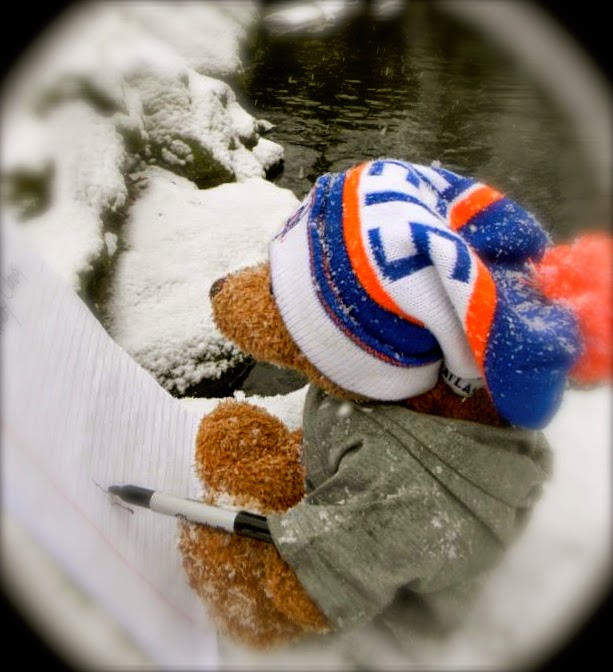
I feel like I'm stuck in a snow globe writing about our Mets this off-season.

Greetings, everyone!  This is Joey Beartran, taking over the Studious Metsimus blogging duties on this snowy first day of spring.  My colleague, Ed Leyro, has finally allowed me to write something on the current Mets since he seems to have forgotten they still exist, what with all the ten-million word "One Mo-MET In Time" posts he's been writing this off-season.  Maybe you have the patience to read them, but I'm a fast-talking bear in a fast-moving world.  I don't have time for that.  What I do have time for is telling you about a mistake I hope the Mets don't make regarding the current shortstop situation - a situation that goes by the name of Wilmer Flores.

But before I get to Flores, I have a question to ask you.  Do you remember the 2000 season?  That was the year Mets were coming off a memorable 1999 campaign in which they made the playoffs for the first time since the Reagan administration.  That was also the year Rey Ordoñez got hurt, fracturing his left forearm on a tag play at second base in late May.

Ordoñez was a three-time Gold Glove winner at shortstop, swallowing up ground ball after ground ball, sometimes in spectacular fashion.  But once he got hurt at Dodger Stadium, the Mets were left with a defensive hole at the shortstop position.  They tried to fill it with Melvin Mora, who was in his first full season with the Mets, but he was much more comfortable with a bat in his hands than a glove.

Mora started 37 games at the shortstop position, batting .265 with four homers, 18 RBI and 27 runs scored in just 147 at-bats.  Compare that to Rey Ordoñez, who had a total of four homers in his five-year career up to that point.  Mora also boasted a .442 slugging percentage and .750 OPS in his seven-week trial at short while Ordoñez had a lifetime .292 slugging percentage and .580 OPS prior to his season-ending injury.

The Mets scored 216 runs in Mora's 37 starts, averaging nearly six runs per game.  They scored 212 runs in the 44 games started by Ordoñez prior to his injury, an average of 4.8 runs per game.  Now let's compare the offensive numbers put up by the two players while playing shortstop during the 2000 campaign, especially since they both had almost the same number of plate appearances in their abbreviated seasons.

  • M. Mora (164 PA): .265/.308/.442, 12 doubles, 1 triple, 4 HR, 18 RBI, 27 runs, 5 SB.
  • R. Ordoñez (155 PA): .188/.278/.226, 5 doubles, 0 triples, 0 HR, 9 RBI, 10 runs, 0 SB.

There's no question that Mora was clearly the better offensive contributor of the two in a similar sample size.  But from a defensive standpoint, Mora was no Ordoñez.  In fact, he wasn't even average.  In the 37 games he started at short as Ordoñez's replacement, Mora committed seven errors in 144 chances for a .951 fielding percentage.  He also participated in just 14 double plays and had 93 assists.  According to baseball-reference.com, Mora's defensive WAR was -0.1 in 2000.  For all you kids out there, that means from a defensive standpoint, he wasn't better than nothing.  Nothing was better than him.

Meanwhile, Ordoñez had a lifetime 8.8 dWAR leading up to his injury.  That's the highest dWAR through five seasons of any Met in the history of the club.  To this day, only Bud Harrelson (13.6 dWAR in 13 seasons) and Jerry Grote (11.2 dWAR in 12 seasons) have posted a higher lifetime dWAR than Ordoñez.

With Mora, the Mets sacrificed defense for offense.  They did the opposite when Ordoñez was in the starting lineup.  But back in 2000, general manager Steve Phillips panicked when Mora couldn't cut it defensively, even with the team scoring a run per game more than they did when Ordoñez was in the lineup.  So just days before the trade deadline, Phillips, in his infinite wisdom, dealt Mora to the Baltimore Orioles for shortstop Mike Bordick.

O, Melvin Mora.  If only you could have fielded like Rey O.  (James Lang/US Presswire)

Bordick basically did what Mora did as a Met, both offensively and defensively, although Bordick played more games at the position for the Mets than Mora.  In 56 games with the Mets, Bordick batted .260 with eight doubles, four homers, 21 RBI and a not-so-impressive 0.1 dWAR.

So what happened in the years after the Bordick-for-Mora trade?  Well, Bordick went back to Baltimore as a free agent at the conclusion of the 2000 campaign, where he became Mora's teammate.  In nine full seasons with the Orioles, Mora reached 20 doubles eight times, 20 homers three times, double digits in stolen bases four times, batted over .300 twice, led the league in on-base percentage once (.419 in 2004), made the All-Star team twice (2003, 2005) and won a Silver Slugger award (2004).  Meanwhile, Ordoñez played two more seasons with the Mets and played his final game in the big leagues as a member of the Chicago Cubs in 2004 - right around the same time Mora was becoming a legitimate star.

That brings us back to the current day shortstop situation with our good pal, Wilmer Flores.  (You thought I had forgotten about him, didn't you?)  In case you've been hibernating in a cave somewhere, let me remind you that Flores is generally not considered a good fielder.  But no one is complaining about how much better he is at the plate than Ruben Tejada.  In 2014, Flores split his season between AAA-Las Vegas and the Mets, spending approximately half of his time at the big league level.  Flores's numbers were strikingly similar to the overall numbers put up by Melvin Mora in 2000 prior to his trade to Baltimore.

  • W. Flores (2014): 78 games, .251 average, 13 doubles, 1 triple, 6 HR, 29 RBI, 28 runs.
  • M. Mora (2000): 79 games, .260 average, 13 doubles, 2 triples, 6 HR, 30 RBI, 35 runs.

Taking it a step further, Flores's offensive and defensive WAR in 2014 were also right on par with what Mora produced 14 seasons before him, as Flores had a 0.7 oWAR and -0.2 dWAR, while Mora put up a 0.6 oWAR and -0.1 dWAR with the Mets in 2000.

Let me give it to you straight.  Tejada is a good fielder, one who's clearly better with the leather than Flores.  But the difference between Tejada and Flores defensively doesn't even compare to the difference between Ordoñez and Mora.  Ordoñez was one of the best defensive shortstops of his era.  The nicest things we can say about Tejada is that he has nice eyebrows and he won't hurt the Mets in the field.

We've already seen how big of a mistake it was to let Melvin Mora go without giving him a chance to prove himself for more than 37 games.  We can't make the same mistake with Wilmer Flores, especially since Flores is also five years younger now than Mora was in 2000 and can still mature in every facet of the game.

Wilmer Flores may never become a Silver Slugger-winning All-Star like Melvin Mora was, but he certainly has the potential to establish himself as a very good baseball player.  We already know he can hit.  Let him prove to us that he can learn from his mistakes on the field.

At the very least, it would prove that the Mets are trying to learn from their mistakes off the field.  The team certainly doesn't need another Mike Bordick situation in Flushing.

Let him play!  Let him play!  (Brad Barr/USA TODAY Sports)