Showing posts with label Mike Scott. Show all posts

Monday, January 16, 2017

The Thrill of Victory, The Agony of the Mets: Wally Backman

To succeed in baseball, sometimes all you need is someone who believes in your ability to do the job you're hired to do.  At times, that belief can get a player who doesn't light up the boxscore with eye-popping stats an everyday job.  The same holds true for a manager, who requires his front office to have faith in his ability to guide the team toward its goals.

For one former Met who was losing hope that he would be able to spend a full season in the big leagues, all it took was a manager's promise; one that gave him the confidence to improve his game to a level that would keep him in the majors for over a decade.  But that faith was not reciprocated when it was his turn to be the manager, ending a nearly four-decade relationship with the franchise that first believed in him as a player.

A rare photo of Wally Backman with a clean uniform.  (Rick Stewart/Getty Images)

Walter Wayne Backman was a scrappy middle infielder from Oregon who impressed the Mets so much while he was in high school that they drafted him in the first round of the 1977 June amateur draft.  Although Backman was purely a singles hitter (he had just 88 extra-base hits in his first four seasons in the minors), his ability to draw walks and steal bases made him a valuable commodity in the speed-driven game of the late '70s and early '80s.

Backman made his major league debut on September 2, 1980, as did fellow speedster Mookie Wilson.  Backman's performance after his September call-up was far more impressive than Wilson's, as the second baseman batted .323 with a .396 on-base percentage in 110 plate appearances, while Wilson batted just .248 with a .325 OBP in nine extra opportunities at the plate.  Backman split time between second base and shortstop during his month-long debut and produced nine multi-hit games, making a case for his inclusion on the Mets' 1981 Opening Day roster.

Although Backman did make the team out of the spring training in 1981, he was relegated to mostly pinch-hitting duties, as he was hard-pressed to find a defensive position on the field.  Incumbent second baseman Doug Flynn had just won his first Gold Glove award for defensive excellence in 1980, while shortstop Frank Taveras was coming off a two-year stretch in which he stole 74 bases.  To make matters worse, rookie third baseman Hubie Brooks, who also excelled during a late-season call-up in 1980 (.309 batting average, 10 RBI in 89 plate appearances), blossomed into the team's best player during the strike-shortened 1981 campaign, batting .307 with 27 extra-base hits in 98 games.  The glut of talented infielders on the Mets' roster limited Backman to just five starts and 42 plate appearances in what should have been his first full season in the majors.

The 1982 campaign brought a new manager to the Mets in George Bamberger, and with the new skipper came Backman's first extended stint at the major league level.  With Flynn having been traded to the Texas Rangers during the off-season, the second base job was Backman's to lose.  Backman handled the offensive side of the game quite well, batting .272 and reaching base at an impressive .387 clip.  In addition, Backman's 115 OPS+ tied All-Star catcher John Stearns for the team lead among regular players.  But after five years of Flynn's Gold Glove caliber defense at second base, Backman was an underwhelming replacement in the field, committing 14 errors in 88 games at the position.  When a broken collarbone ended Backman's season in mid-August, his short tenure as the Mets' starting second baseman also appeared to be over.  It would have been were it not for a manager who had a feeling about his switch-hitting second sacker.

When Backman got injured in 1982, the Mets turned to 22-year-old Brian Giles to replace him.  Giles was much more reliable defensively and became the team's new starter at second base in 1983, leaving Backman without a position.  As a result, Backman spent most of the '83 campaign at Triple-A Tidewater under manager Davey Johnson.  The rest, as they say, is history.

A not-so-rare photo of Wally Backman with a dirty uniform.  (Tony Triolo/Sports Illustrated)

With a mathematics degree in his back pocket and a willingness to use computers to help him manage, Johnson saw in Backman a player whose value couldn't be measured with traditional baseball statistics.  Backman had an impressive .316 batting average for Tidewater in 1983, but his keen ability to draw walks produced a .422 on-base percentage.  At a time when OBP was not considered one of the major determinants of a player's value, Johnson saw its worth and knew that Backman would be key to his team's success.  So when Johnson was promoted to be the Mets' manager in 1984, he kept a promise to take his spark plug with him.

"I need a leadoff hitter, and Backman fit the bill," Johnson said.

Prior to 1984, the Mets had been using Mookie Wilson as their leadoff hitter.  But Wilson's .310 lifetime OBP, combined with his league-leading at-bat total in 1983 meant that he was also among the leaders in outs made.  With Backman batting first and Wilson dropping to No. 2 in the batting order, the Mets had a true leadoff hitter.  Backman's .360 OBP and 32 stolen bases were both second on the team in 1984, trailing only Keith Hernandez's .411 OBP and Wilson's 46 steals.

In addition to Backman's successful season at the plate, he also saw a significant improvement in his defense, making four fewer errors in 1984 than he did in his previous full season with the Mets in 1982, despite starting 39 more games in '84 than he did in '82.  Backman's offense and defense was instrumental in the Mets' improvement from a perennial second-division team to a 90-win contender in 1984.  And he had his manager to thank for the opportunity.

"The best thing that happened to me was having Dave Johnson as a manager last year," Backman said.  "In the past, I was never a leadoff man.  Dave put me leadoff to begin the season.  He saw what I could do and had confidence in me.  That took a lot of pressure off.  I could relax and play my game."

Backman continued to improve in 1985, making just seven errors in 140 games.  However, he wasn't playing entire games, as he would be removed often for a pinch-hitter whenever a left-handed reliever came into the game.  You see, for as many improvements as the switch-hitting Backman made under Davey Johnson, most of his success as a hitter came from the left side of the plate.  In 1984, Backman batted .162 (6-for-37) against left-handed pitchers, albeit with a .340 on-base percentage.  Since that was considered a small sample size for the mathematically inclined Johnson, the skipper gave Backman more opportunities to bat against southpaws in 1985.  And Backman got even worse.

During the 1985 campaign, the second baseman batted a meager .122 (16-for-131) vs. LHP and he was also drawing fewer walks against them, which led to an also cringeworthy .212 OBP.  As a left-handed batter, however, Backman's two-year production was among the best in the league, as batted .307 against right-handed pitching.  Not helping matters was that Backman's replacement at second base whenever a left-handed pitcher was on the mound (Kelvin Chapman) was himself a lousy hitter.  Although Chapman fared well in 1984 against left-pitchers (.296 batting average, 358 OBP in 181 plate appearances), he was downright atrocious replacing Backman in 1985, batting .172 with a .230 OBP in 142 PA.

With more teams using left-handed starters and relievers, Johnson needed a solution to generate more production against them.  He found the answer in a technique employed by former Mets manager Gil Hodges.

(Barry Colla Photography)
In Johnson's first season managing the Mets, five of his starting eight players had at least 595 plate appearances and only seven players on the roster reached 250 plate appearances.  Once he penciled in a player at a certain position in 1984, he was there for the season.  That started to change a little in 1985, as Johnson took a page out of the Book of Hodges and employed a Mookie Wilson/Lenny Dykstra platoon in center field and used both Ray Knight and Howard Johnson at third base to maximize the offensive production.  If a left-handed pitcher started, Wilson and Knight would receive the bulk of the starts.  If it was a right-handed pitcher on the mound, Dykstra and HoJo would play.  As a result, only five players on the 1985 team surpassed 470 plate appearances, but 11 men came to bat at least 200 times.  The platoons helped, as the Mets, who finished in the middle of the pack in most offensive categories in 1984, became one of the National League's strongest hitting squads in 1985, finishing in the league's top five in batting average, OBP, slugging percentage and runs scored.

Second base was the one position that Johnson couldn't find a suitable platoon partner for Backman.  The two-year Kelvin Chapman experiment had failed, and the Mets needed a solution if they wanted to be a complete offensive team in 1986.  Enter Tim Teufel and enter the postseason.

With Teufel aboard in 1986 to spell Backman against southpaws, the Mets flourished at second base, with Teufel providing the pop (25 extra-base hits, 31 RBI in 279 at-bats) and Backman becoming an OBP machine (.320 batting average, .376 OBP).  Only seven batters in the National League who qualified for the batting title managed to hit over .300.  Backman missed qualifying by a mere 62 plate appearances.  However, he did become just the second Met in franchise history to bat at least .320 in a season of 400 or more plate appearances, joining Cleon Jones, who accomplished the feat in 1969.  By the time 1986 was over, Backman would join Jones in accomplishing a team milestone.

The 1986 Mets won 108 games and ran away with the N.L. East title.  In the National League Championship Series against the Houston Astros, the Mets ran into the league's top pitcher in Mike Scott.  Backman's former Mets teammate stymied New York in Games One and Four, meaning the Mets had to beat the other Astros pitchers if they wanted to advance to the World Series.  After being shut out by Scott in the series opener, Backman got things going for the Mets in Game Two, scoring New York's first run of the series after delivering a one-out single off future Hall of Famer Nolan Ryan.  In his next at-bat, Backman produced an RBI single against Ryan and scored on a triple by Keith Hernandez to put the game out of reach.  Backman was also front and center in the Mets' Game Three and Five victories.

With the Mets trailing the Astros by a run in the bottom of the ninth in Game Three, Backman beat out a drag bunt to lead off the inning, then went to second base on a passed ball.  After Danny Heep flied out, Lenny Dykstra hit a long fly ball to right field that barely cleared the wall, giving the Mets and an exuberant Wally Backman a thrilling come-from-behind win.

After Scott's second victory of the series in Game Four, the Mets knew they had win Game Five in order to avoid playing an elimination game at the Astrodome in Game Six.  This time, Nolan Ryan would fare better against Backman, striking out the second baseman three times in his first four at-bats.  Matching Ryan pitch for pitch was Dwight Gooden, who was brilliant in his ten innings of work.  By the 12th inning, the two teams were still deadlocked and Astros pitcher Charlie Kerfeld was in his second inning of relief.  After retiring Dykstra to lead off the inning, Backman delivered a crucial single, lining the ball off the glove of third baseman Denny Walling.  An errant pickoff throw by Kerfeld allowed Backman to scamper to second base, but also meant that the Astros would intentionally walk Hernandez to get to the slumping Gary Carter.  Carter was batting just .048 in the series (1-for-21) as he stepped up to the plate.  By the time his eight-pitch at-bat was over, his average was up to .091, as Carter drove in Backman from second with a hard-hit ground ball up the middle.

Wally Backman celebrates after scoring the winning run in Game Five of the 1986 NLCS.  (ABC TV screen shot)

The Mets were now one win away from advancing to the World Series for the first time in 13 years, but had to fly to Houston to win that pennant.  Left-hander Bob Knepper was tabbed to face the Mets in Game Six, which meant that Backman would start the game on the bench and Tim Teufel would play second base.  By the time the game was over, Backman would play a key role in deciding the outcome of the game.

New York trailed Houston by three runs as the Mets came to bat in the top of the ninth.  Knepper had been brilliant, facing the minimum three batters in seven of his first eight innings.  But the Mets rallied to tie the game against Knepper and reliever Dave Smith.  With the game knotted and two men in scoring position, Backman was called upon to face the right-handed Smith and was intentionally walked to load the bases.  That's where the Mets' rally ended, as pinch-hitter Danny Heep struck out to end the inning.

The two teams continued to put up zeroes until the 14th, when Backman gave the Mets the lead with a one-out RBI single off reliever Aurelio Lopez.  Had Backman just supplied the Mets with a pennant-winning hit?  Would his name become synonymous with those legendary Mets who came through in the club's biggest moments?  Not quite, as Billy Hatcher delayed the Mets' champagne celebration with a home run off the left field foul pole in the bottom of the 14th.

As the game advanced into the 16th frame, both teams were clearly fatigued, especially the pitchers.  With Lopez still in the game for the Astros, Darryl Strawberry led off the inning with a double, which was followed by an RBI single by Ray Knight, who advanced to second on the throw home.  Backman then stepped up to the plate, prompting Houston manager Hal Lanier to summon left-hander Jeff Calhoun from the bullpen.

With Teufel having been replaced by Backman in the ninth inning, Mets manager Davey Johnson was forced to leave Backman in the game to face the lefty.  Calhoun immediately went ahead on the count with two quick strikes.  But a wild pitch allowed Knight to advance to third base, causing Calhoun to be more careful with his pitches.  Using his keen eye at the plate, Backman coaxed a nine-pitch walk out of Calhoun to continue the rally.

As bad as Backman had been at the plate against southpaws, the next batter was even worse against all pitchers, as closer Jesse Orosco was now set to bat.  But the pressure of the situation continued to get to Calhoun, as his first pitch to Orosco got by catcher Alan Ashby, allowing Knight to score from third base and Backman to advance to second.  Orosco then bunted Backman over to third and Backman later scored the third run of the inning on a single by Lenny Dykstra.  Backman's run proved to be the game-winner, as the Astros scored twice against Orosco in the bottom of the 16th before the reliever struck out Kevin Bass with the tying and winning runs on base.

By winning the pennant in Game Six, the Mets avoided a potential do-or-die game against Mike Scott, who had already dominated the Mets twice in the series.  As much as the Mets didn't want to face him, Backman was originally one of the few players who thought a potential third start by Scott would be the charm for the Mets.

"I don't care if he scuffs 400 balls," Backman said, referring to the rumored secret of Scott's success.  "I don't care if they're scuffed before the game.  I don't think any pitcher can beat us three times in a row."

However, once the Mets outlasted the Astros in Game Six, Backman came to the same realization that most of his teammates already had about having to face Scott in a potential seventh game.

"If we had lost and had to face Scott tomorrow," Backman said, "I wouldn't have slept at all."

Mike Scott wonders what might have been had he been able to scuff his balls one last time.  (Scott Halleran/Getty Images)

Although Backman batted just .238 with a .304 OBP in the NLCS, he always seemed to come through for the Mets during all of their memorable rallies, confirming Davey Johnson's belief in Backman's ability to be a key cog for the team.  Backman continued to produce for the Mets in the World Series against the Boston Red Sox, even though he started just four of the seven games due to the presence of left-handed starting pitcher Bruce Hurst, who was essentially Mike Scott without the scuffed balls.

Backman was sensational in his four starts, batting .375 and reaching base at a .444 clip to help the Mets win three of those four games.  But four victories were needed to win the World Series, and the Mets would need to earn that fourth win against Hurst, who had already defeated New York twice in the series.  It had been two weeks since Backman made the proclamation that no pitcher could beat the Mets three times in a row.  And before Game Seven was over, Backman made sure that his prophecy came true.

The Red Sox took an early 3-0 lead against Mets starter Ron Darling, a lead which was still intact going to the bottom of the sixth inning.  But the Mets finally got to Hurst in that sixth frame, collecting two singles and a walk off him.  With the bases loaded, Keith Hernandez delivered a two-run single to get the Mets within a run.  It was then that Davey Johnson inserted Backman into the game as a pinch-runner, which paid off when Backman came in to store the tying run on a bloop by Gary Carter that forced Hernandez out at second base.  When Backman came up to the plate for the first time in the game in the seventh inning, he drew a seven-pitch walk from Boston reliever Joe Sambito that moved Rafael Santana to third base.  The base on balls proved to be huge, as Hernandez drove in the Mets' sixth run of the game with a sacrifice fly.  The Mets went on to win the game and their second World Series title, defeating the Red Sox in the seventh game, 8-5, with Backman scoring the tying run and drawing a key walk that led to the deciding run crossing the plate.

After winning a championship in 1986, the Mets expected to win several more titles during Backman's career.  But alas, that was not to happen, as injuries befell most of the team's starting pitchers in 1987.  The injury bug also got to Backman, as the second baseman missed 18 games in June with a hamstring issue and an additional 18 games at the end of the year with lingering effects of the original injury.  With Backman missing extended time on the field on multiple occasions in 1987, his platoon partner, Tim Teufel, got more playing time and made quite an impression on the team.

Teufel had 351 plate appearances during the 1987 campaign (which was 16 more than Backman) and batted .308 with 29 doubles, 14 homers and 61 RBI.  As a result, Teufel got more playing time in 1988, with Backman starting just 28 games through mid-June.  The lack of consistent playing time hurt Backman, as he batted just .238 through the team's first 60 games.  But Backman got a second chance as a starter when Teufel missed 23 games with an injury and was absolutely spectacular, batting .344 with a .418 on-base percentage from mid-June to late August.  Just when it looked like Backman would help lead the team to another postseason appearance, he was disabled once again, missing 13 games from late August through mid-September.  By the time he got back on the field, he had lost his job once again.

(Andrew D. Bernstein/Getty Images)
Although Backman finished the 1988 campaign with a solid .303 batting average and .388 OBP in 347 plate appearances, it was his injury replacement that captured everyone's attention in September.  Gregg Jefferies was called up from AAA-Tidewater on August 28 to replace Backman on the roster.  After becoming the team's first homegrown hitting prospect since Darryl Strawberry, batting .354 in his first three professional seasons and showing extra-base power with above-average speed, the 21-year-old wunderkind and fellow switch-hitter proceeded to tear the cover off the ball for the Mets, batting .462 with 14 extra-base hits in his first 13 games.  Jefferies ended the year with a .596 slugging percentage and .961 OPS, and his 17 RBI in just 29 games matched the total produced by Backman during the entire season.

Backman did play all seven games against the Los Angeles Dodgers in the National League Championship Series, batting .273 with a .333 OBP, but the writing was on the wall.  Jefferies was going to be the team's starting second baseman in 1989, and Backman was going to need to play elsewhere.  After a dozen seasons in the organization, the Mets granted Backman's request for a trade, sending him to the Minnesota Twins for three minor league pitchers.  Upon finalization of the deal, Backman was clearly disappointed that his tenure with the Mets had to end the way it did.

"It's funny, you're nothing one year, the way I was after 1987, the first bad year I had," Backman said.  "They couldn't have given me away a year ago.  Now, I have a good year and I'm gone."

Backman became a journeyman during the final five seasons of his career, playing for the Twins, Pirates, Phillies and Mariners from 1989 to 1993.  Backman's playing days ended in May 1993, when he was released by Seattle after batting .138 in ten games with the team.  But just because his playing days were over didn't mean Backman was going to hang up his baseball uniform for good.

Less than half a decade after playing in his final game, Backman managed independent baseball teams before coming back to minor league baseball to manage the Chicago White Sox's Carolina League team in Winston-Salem.  He then was promoted to Chicago's Double-A team in Birmingham and won a league title in 2002.  Backman had another first-place finish in 2004 managing for Class-A Lancaster in the Arizona Diamondbacks' organization before getting his first chance to manage in the majors with the parent club.  What should have been a proud moment for Backman ended up being his worst nightmare, as he was fired just four days after he was hired by the D-Backs when it was revealed that he had been arrested for harassment and had been convicted of driving under the influence.  Backman had also filed for bankruptcy and did not report the news in his final interview.

After taking some time away from baseball, Backman returned to managing independent league teams and winning more division titles.  He came back to the Mets organization in 2010 to manage the Brooklyn Cyclones, leading them to a division title.  Backman then moved up the minor league ladder, managing in Double-A in 2011 and Triple-A in 2012.  But although Backman won back-to-back division titles managing Las Vegas in 2013 and 2014, he couldn't get what he really wanted from the Mets - a job managing or coaching at the major league level.

The Mets qualified for the postseason in 2015 and 2016, winning the National League pennant in 2015, but Backman was left in the Pacific Coast League while the team was celebrating its success three time zones away.  And so, with his path to the majors blocked by an organization that he claimed was disrespecting him, Backman resigned as manager of the 51s.

"When you work for an organization, do everything, you want to be respected for what you do,"  Backman said.  "I just felt, for my time being there, that the respect wasn't there."
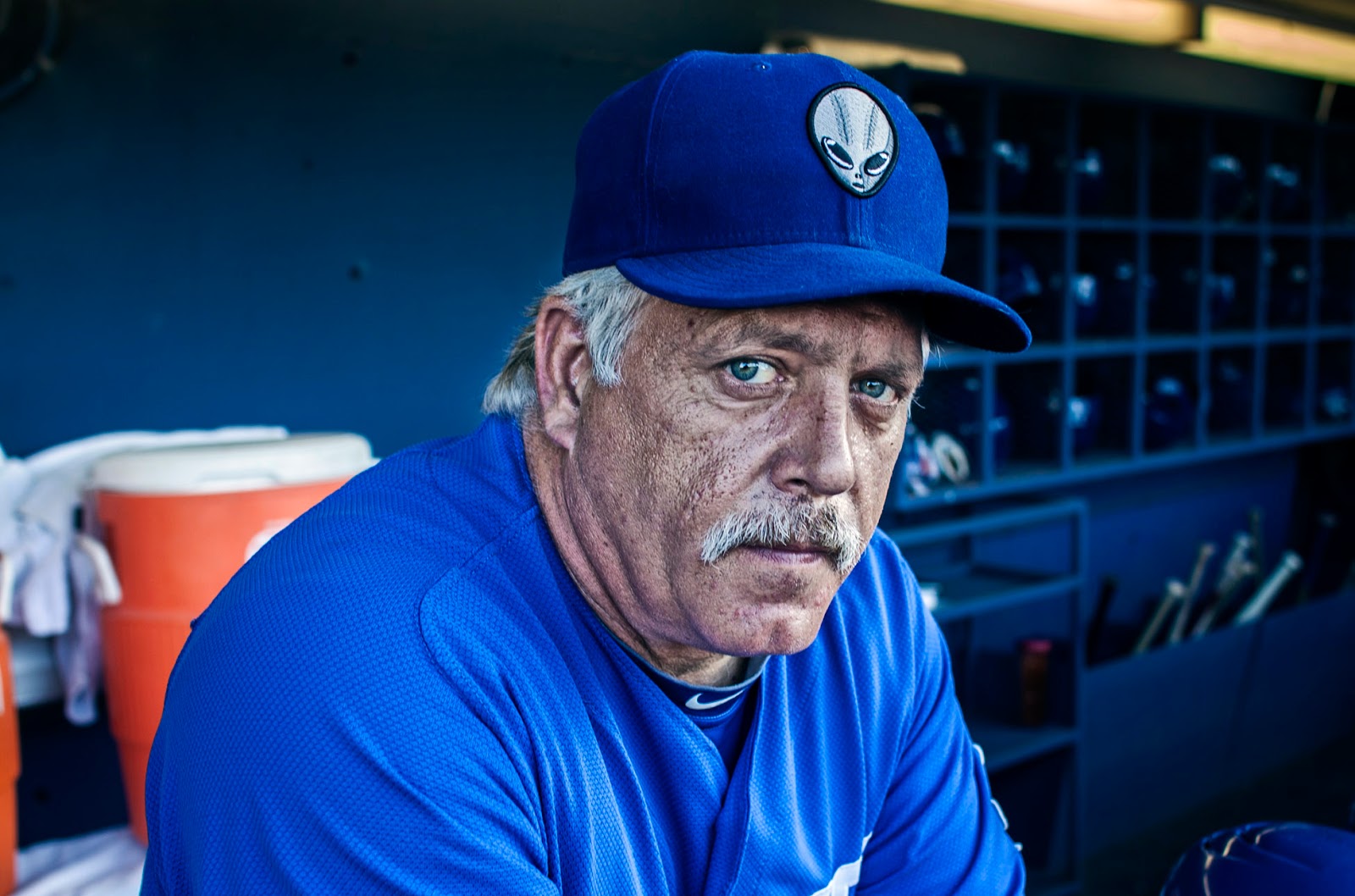
The face of a disrespected man.  (Kin Lui)

Wally Backman was part of the Mets organization for the better part of four decades.  From a scrappy infielder in the 1980s who was one of the spark plugs for a championship team to a fiery manager who led teams to titles wherever he managed, no one could ever say that Backman wasn't a winner.  But for someone whose name was synonymous with winning, why did Backman lose so much?

Before Davey Johnson confided in him, he couldn't get anyone to believe in his ability to play the game.  When the Mets promoted Gregg Jefferies, who was basically a brat with a bat, Backman couldn't stay on the field for the only organization he ever knew.  Because the Arizona Diamondbacks were unaware of how background checks worked, Backman and his family suffered unnecessary embarrassment.  And finally, no amount of division titles was enough to give Backman a job coaching with the Mets on a full-time basis.

For someone who has been a champion many times over, Backman's lifelong career in baseball has been more bitter than sweet.  A player as beloved as he was with the Mets and a person who has given so much of himself to the game deserves better than the hand he has repeatedly been dealt by baseball.


Note: The Thrill of Victory, The Agony of the Mets is a thirteen-part weekly series spotlighting those Mets players and personnel who experienced the best of times and the worst of times with the team.  For previous installments, please click on the names below:

January 2, 2017: Tom Seaver
January 9, 2017: Mike Piazza


Sunday, November 10, 2013

Decisions, Decisions: Mets Starters Didn't Get Them


No-decisions.  Starting pitchers for the Mets got quite used to them in 2013.  Dillon Gee led the team with 23 decisions, followed by Jonathon Niese with only 16.  A dozen pitchers started games for the Mets this past season, combining to record 57 no-decisions.

Excluding the strike seasons of 1981, 1994 and 1995, there has never been a season in franchise history in which no starting pitcher earned 20 decisions.  But two teams came close.  In 1982, Mike Scott led the club in decisions with exactly 20, going 7-13 for the last place Mets.  Of course, that was also the year manager George Bamberger decided to use all of his starters out of the bullpen as well.

No starting pitcher made more than 24 starts for the Mets in 1982, as Charlie Puleo (24 starts, 12 relief appearances), Pete Falcone (23 starts, 17 relief appearances), Mike Scott (22 starts, 15 relief appearances), Craig Swan (21 starts, 16 relief appearances), Randy Jones (20 starts, 8 relief appearances), Pat Zachry (16 starts, 20 relief appearances) and Ed Lynch (12 starts, 31 relief appearances) were all used by Bamberger in every possible way, including save opportunities.  Of the seven pitchers listed above, only Randy Jones failed to earn a save.

The only other team in Mets history to have only one starting pitcher record exactly 20 decisions in a non-strike-shortened season was the 1980 squad.  Like Scott two years later, Ray Burris went 7-13 for the 1980 Mets.  But unlike Scott and his fellow moundsmen, all of Burris' 29 appearances in 1980 came as a starting pitcher.

For the record, Bobby Jones led the 1994 Mets with only 19 decisions, but that season came to an abrupt end in mid-August due to a players' strike.  In each of the other two strike-shortened seasons (1981, 1995), one Met did reach 20 decisions.  Pat Zachry went 7-14 for the 1981 club, while Bobby Jones finished 10-10 for the 1995 squad.

With 57 no-decisions in 2013, the Mets finished way up in the top ten for most no-decisions for a starting staff in team history.  Below is the current top ten.


Year
No-Decisions
Starting Pitchers With The Most Decisions
1980
65
Ray Burris (20), Mark Bomback (18)
1979
57
Craig Swan (27), Pete Falcone (20)
2013
57
Dillon Gee (23), Jonathon Niese (16)
1978
56
Nino Espinosa (26), Jerry Koosman (18)
2008
56
Mike Pelfrey (24), Johan Santana (23)
2004
55
Tom Glavine (25), Steve Trachsel (25)
1992
54
Sid Fernandez (25), Dwight Gooden (23)
2000
54
Mike Hampton (25), Al Leiter (24)
1997
53
Bobby Jones (24), Rick Reed (22)
2010
53
Mike Pelfrey (24), Johan Santana/R.A. Dickey (20)


The 2013 Mets tied the 1979 squad for second-most no-decisions in franchise history, surpassed only by the 1980 team.  Dillon Gee was the only pitcher to earn more than 16 decisions for the Mets in 2013, making this year's club the only one in team history to have just one hurler with at least 17 decisions in a season that wasn't curtailed by a strike.

No-decisions are the result of many things.  Sometimes they occur because starting pitchers don't go as deep into games as they used to, allowing for a reliever to vulture a victory or ten.  Bullpens also aren't as good as they used to be, causing starting pitchers to reach for antacid tablets every time a potential "W" turns into an "ND".  And occasionally a faulty offense doesn't give a starting pitcher much run support, causing him to leave a 2-2 game, 1-1 game, or scoreless pitching duel for a pinch-hitter.

This year's team was a victim of all three.  Matt Harvey pitched well enough to be among the league leaders in wins.  But a dozen no-decisions said otherwise.  Jeremy Hefner has to know how Matt Harvey feels, as he was saddled with 11 no-decisions in 23 starts.  And Dillon Gee was brilliant after his start against the Yankees on May 30.  But even a 2.71 ERA over his last 22 starts wasn't been able to prevent him from earning five losses and seven no-decisions in that time period.

Decisions, decisions.  This year's starting pitchers struggled to earn them.  And their drought was surpassed by just one team in team history.  It's tough to win many games when the starting pitchers aren't getting the Ws for the team.

Sunday, August 25, 2013

Decisions, Decisions: Mets Starting Pitchers Aren't Getting Them


No-decisions.  Starting pitchers for the Mets are getting quite used to them in 2013.  As of this writing, Dillon Gee leads the team with 17 decisions, followed by Matt Harvey with only 14.  A total of 11 pitchers have started games for the Mets this year, combining to record 49 no-decisions.

Assuming he doesn't start racking up no-decisions over the last five weeks of the season, Gee appears to be the only starter with a realistic shot of recording 20 decisions in 2013.  Because of Matt Harvey's innings limit, he will probably not make enough starts to have a chance of making it to 20 decisions (and that's assuming he doesn't continue to pile up the NDs).  Jeremy Hefner, who is third on the team with 12 decisions, is out for the season, thereby freezing his decision total at an even dozen.

Excluding the strike seasons of 1981, 1994 and 1995, there has never been a season in franchise history in which no starting pitcher earned 20 decisions.  But two teams came close.  In 1982, Mike Scott led the club in decisions with exactly 20, going 7-13 for the last place Mets.  Of course, that was also the year manager George Bamberger decided to use all of his starters out of the bullpen as well.

No starting pitcher made more than 24 starts for the Mets in 1982, as Charlie Puleo (24 starts, 12 relief appearances), Pete Falcone (23 starts, 17 relief appearances), Mike Scott (22 starts, 15 relief appearances), Craig Swan (21 starts, 16 relief appearances), Randy Jones (20 starts, 8 relief appearances), Pat Zachry (16 starts, 20 relief appearances) and Ed Lynch (12 starts, 31 relief appearances) were all used by Bamberger in every possible way, including save opportunities.  Of the seven pitchers listed above, only Randy Jones failed to earn a save.

The only other team in Mets history to have only one starting pitcher record 20 decisions in a non-strike-shortened season was the 1980 squad.  Like Scott two years later, Ray Burris went 7-13 for the 1980 Mets.  But unlike Scott and his fellow moundsmen, all of Burris' 29 appearances in 1980 came as a starting pitcher.

For the record, Bobby Jones led the 1994 Mets with only 19 decisions, but that season came to an abrupt end in mid-August due to a players' strike.  In each of the other two strike-shortened seasons (1981, 1995), one Met did reach 20 decisions.  Pat Zachry went 7-14 for the 1981 club, while Bobby Jones finished 10-10 for the 1995 squad.

With 49 no-decisions through games of August 24, the 2013 Mets are poised to crack the top ten for most no-decisions for a starting staff in team history.  Below is the current top ten.


Year
No-Decisions
Starting Pitchers With Most Decisions
1980
65
Ray Burris (20), Mark Bomback (18)
1979
57
Craig Swan (27), Pete Falcone (20)
1978
56
Nino Espinosa (26), Jerry Koosman (18)
2008
56
Mike Pelfrey (24), Johan Santana (23)
2004
55
Tom Glavine (25), Steve Trachsel (25)
1992
54
Sid Fernandez (25), Dwight Gooden (23)
2000
54
Mike Hampton (25), Al Leiter (24)
1997
53
Bobby Jones (24), Rick Reed (22)
2010
53
Mike Pelfrey (24), Johan Santana/R.A. Dickey (20)
1998
52
Rick Reed (27), Al Leiter (23)


The Mets have 35 games left before the curtain falls on the 2013 season.  If the starting pitchers fail to earn decisions in just nine of them, they will have recorded more no-decisions than every team in club annals but the 1980 squad.  And 17 no-decisions (or slightly less than half of the remaining games) will make this year's starting pitchers tops when it comes to not finding Ws or Ls next to their names in the morning paper.  Also, if Dillon Gee earns just two more decisions this year, it will make the 2013 Mets the first team in the 52-year history of the club not to have a starting pitcher with 20 decisions (not including strike-shortened seasons).

No-decisions are a result of many things.  Sometimes they occur because starting pitchers don't go as deep into games as they used to, allowing for a reliever to vulture a victory or ten.  Bullpens also aren't as good as they used to be, causing starting pitchers to reach for antacid tablets every time a potential "W" turns into an "ND".  And occasionally a faulty offense doesn't give a starting pitcher much run support, causing him to leave a 2-2 game, 1-1 game, or scoreless pitching duel for a pinch-hitter.

This year's team is a victim of all three.  Matt Harvey has pitched well enough to be among the league leaders in wins.  But a dozen no-decisions say otherwise.  Dillon Gee has been brilliant since his start against the Yankees on May 30.  But even a 2.27 ERA since that date hasn't been able to prevent Gee from earning six no-decisions in his last 11 starts.

Decisions, decisions.  This year's starting pitchers are struggling to earn them.  And their drought is threatening to shatter team records in that department.  That will most certainly happen if the NDs don't end soon.

Tuesday, March 12, 2013

Whose Retired Number Is It Anyway?

There have been a total of 11 former Mets players who have received the ultimate honor of being inducted into the National Baseball Hall of Fame.  Those players are Yogi Berra, Warren Spahn, Willie Mays, Duke Snider, Tom Seaver, Richie Ashburn, Nolan Ryan, Eddie Murray, Gary Carter, Rickey Henderson and Roberto Alomar.

Of the 11, only Seaver is wearing a Mets cap on his Hall of Fame plaque.  And only Carter (600 games), Seaver (420 games) and Murray (310 games) played in at least 250 games as a Met.

Most of this information you already know, especially if you've read Greg Prince's excellent discussions on the topic in his blog, Faith and Fear In Flushing.  In all likelihood, you also know that Seaver is the only player who has had his number retired by the Mets (Casey Stengel's No. 37 and Gil Hodges' No. 14 were retired because of what they did as managers).  But what about former Mets players who have had their uniform numbers retired by other teams?

The ten Mets Hall of Famers not named Seaver have all had their numbers retired by other teams, with one player (Nolan Ryan) receiving the honor from three teams.  But there are six other former Mets who have not been voted into the Hall of Fame (although one is not yet eligible), yet have had their uniform numbers retired by another team.  Let's take a look at those six players, some of which might cause you to look away once you see their names.


Ken Boyer

One of many former Mets who tried (and failed) to make the third base position his own in the 1960s, Ken Boyer spent the majority of his career as a Gold Glove-winning All-Star in St. Louis.  Defensively, Boyer won five Gold Gloves manning the hot corner in St. Louis.  Offensively, Boyer drove in over 1,000 runs in 11 years as a Cardinal and was named the 1964 National League MVP.  In St. Louis, Boyer enjoyed seven 20-HR seasons and hit over .300 five times.  In 1½ seasons with the Mets (1966-67), Boyer batted .258 and managed 17 homers.  Boyer's No. 14 was retired by the Cardinals in 1984.


Jim Fregosi

Even Mets fans who hadn't been born by December 10, 1971 know why that date is notorious.  On that date, the team made what is still considered to be the worst trade in team history when they sent Nolan Ryan to the California Angels for shortstop Jim Fregosi, who would be asked to play third base for the Mets.  Ryan went on the have his number retired by the other three teams he played for (more on that later), while Mets fans wish Fregosi had retired before the day of the trade.  The Angels retired Fregosi's No. 11 in 1998, just five years after Ryan retired from pitching.


Tom Glavine

Glavine won his 300th game as a Met, but no one really cares.  It's the one game he didn't win (and his post-game reaction to it) that everyone will remember him for.  The southpaw's Met career ended the way it began, with a horrible performance that resulted in him exiting the game to a chorus of boos from the Shea Faithful.  Glavine won 244 games as an Atlanta Brave and had his No. 47 retired by the team in 2010.  I'm sure he wasn't devastated on the day it was retired.


Randy Jones

Although Jones went 92-105 as a San Diego Padre, his No. 35 was retired by the Friars in 1997.  Jones had two 20-win seasons in San Diego, which came immediately after he recorded a 20-loss season in 1974.  Take out Jones' two 20-win campaigns and his best single-season record came in his rookie year (1973) when he finished a mediocre 7-6.  Jones spent his final two seasons in the big leagues as a Met, leaving his afro and ability to pitch on the West Coast.


Mike Scott

In four years as a Met, Mike Scott went 14-27 and never struck out 100 batters in a single season.  Then he became an Astro, had a little chat with original Met Roger Craig, got Santa Claus to bring him a "Scuffing For Dummies" book and became a Cy Young Award winner.  He almost single-handedly eliminated the Mets in the 1986 NLCS.  Six years later, Scott's No. 33 (and nail file) was raised to the Astrodome roof.


Rusty Staub

Staub played for the Mets before and after he played for the team that eventually retired his number.  Le Grand Orange was traded by Montreal to the Mets in 1972 after making the All-Star team in each of his three seasons as an Expo.  In 1979, Staub returned to Montreal, two years before coming back to the Mets.  Staub was no longer in the proper shape to be an everyday player (although his body certainly had a proper shape), but was still able to contribute to the team, becoming one of the most productive pinch-hitters in franchise history.  Staub's No. 10 was retired by the Expos in 1993.  His two numbers with the Mets (No. 4, No. 10) are still in circulation.

Monday, March 11, 2013

The Mets That Got Away: Mike Scott

Over the years, there have been a number of Mets players who were traded before they had a chance to blossom in the major leagues.  Players like Amos Otis, Nolan Ryan and Ken Singleton all come to mind.  But what about those players who were given a chance to become successful at the big league level but failed miserably as members of the Mets?

One of those players was given four years to realize his potential in Flushing.  But after showing some promise in his third year, he completely regressed in year four.  By then, the Mets had completely given up on him and decided to trade him away.  Not only did he become one of the best pitchers in the league after the Mets cut ties with him, but he got there with the timely assistance of an original Met.  And his newfound success almost prevented one of the most memorable moments in team history from ever occurring.

The Mets gave Nolan Ryan's old number to Mike Scott just a few years before making him Ryan's teammate in Houston.

Michael Warren Scott was drafted by the Mets out of Pepperdine University in the second round of the 1976 June amateur draft.  During his first three years in the Mets organization, Scott was a so-so pitcher.  He wasn't overpowering (209 Ks in 425 IP) and didn't make much of an improvement from year to year.  (Scott's ERA rose from 2.86 at AA-Jackson in 1976 to 3.94 at AAA-Tidewater in 1978.)  But that all changed in 1979, when Scott got his first chance to contribute at the big league level.

When the Mets broke camp in 1979, their roster consisted of ten new players on the 25-man roster, including five rookies.  Two of those neophytes (Jesse Orosco, Neil Allen) would go on to become successful relievers for the Mets, while the third (Mike Scott) spent most of the season flip-flopping between starter, reliever, and eventually back to the minors.

Scott made his major league debut on April 18, pitching two innings of relief against the Montreal Expos.  Six days later, Scott made his first start, pitching five solid innings against the San Francisco Giants to earn his first win in the majors.  The win was surrounded by controversy, as both the Mets and Giants played the game under protest after an argument with the replacement umpires caused a 28-minute delay.

By May 8, Scott had made three starts and two relief appearances and had fared well in those outings, pitching to a 2.84 ERA.  But his next four starts were not his best, as Scott failed to make it through the fifth inning in three of them.

After allowing four runs to the Cardinals in one-third of an inning on May 31, manager Joe Torre banished Scott to the bullpen, where he continued to pitch until he was sent back to Tidewater in mid-June.  Scott pitched well for the Tides, going 8-4 with a 3.18 ERA in 18 appearances (15 starts), which earned him a second promotion to the Mets in September.

Upon his return to the majors, Scott had one scoreless relief effort and a hard-luck loss to the Expos as a starter.  But in his third September appearance, Scott had one of the worst starts in Mets history, allowing seven runs in one-third of an inning to the Chicago Cubs on September 25.  Scott's poor outing gave the Mets' their 99th loss of the season, their final defeat before embarking on a season-ending six-game winning streak to avoid their first 100-loss campaign since 1967.  The Mets were smart enough not to give Scott a start in any of those six games.

Scott spent the majority of the 1980 season pitching for Tidewater, honing his craft at the minor league level before earning his next opportunity with the Mets.  Scott was brilliant on a sub-.500 Tides team, going 13-7 with a 2.96 ERA for a squad that finished 67-72.  When the Mets expanded their roster in September, Scott was called up once again, going 1-1 with a 4.30 ERA in six starts.

After two seasons of riding the Tidewater-to-Flushing shuttle, Scott began the 1981 campaign in New York.  For the first time since being drafted by the team in 1976, Scott had finally earned his first one-way ticket to Shea Stadium.

The strike-shortened 1981 season was Scott's first full season in the major leagues and he performed well despite his ugly 5-10 record.  Scott made 23 starts for the Mets in 1981 and posted a respectable 3.90 ERA.  The main reason for his poor record was the Mets' inability to score runs whenever he was on the mound, as New York scored three runs or less in 16 of his 23 starts.  Scott actually allowed one earned run or less in almost half (11) of his starts, but the Mets somehow managed to lose five of those games.

The Mets' lack of offense in Scott's starts were never more visible than they were in a three-start stretch in September when the team was fighting for an unlikely second-half division title.  In those three starts, Scott allowed two earned runs in 20⅓ innings, holding opposing hitters to a .174 batting average.  Naturally, the Mets lost all three games, effectively squashing any hopes of returning to the playoffs for the first time since 1973.  Any hopes of Mike Scott becoming an effective pitcher with the Mets ended the following season.

In 1982, Mike Scott had a dreadful season with the Mets, going 7-13 with a 5.14 ERA and 1.67 WHIP.  Batters resembled Pavlov's dogs whenever they stepped into the box against Scott.  Opposing hitters torched Scott for a .321 batting average and .381 on-base percentage in 1982, just one year after Scott held the opposition to a respectable .261 batting average and .306 on-base percentage.

By the end of 1982 - the sixth consecutive losing season for the Mets - general manager Frank Cashen had had enough of the underachieving Scott, dumping him on the Houston Astros on December 10 for outfielder Danny Heep.  Heep would go on to become a successful pinch-hitter with the Mets during his four seasons in New York, becoming the first player in team history to hit four pinch-hit home runs in a single season.  Mike Scott, on the other hand, did just a bit more for his new team.

After spending parts of four seasons with the Mets, Scott was finally playing for a contending team.  The Astros finished the year with an 85-77 record, six games behind the division-winning Dodgers.  Scott had his first winning season in 1983, going 10-6 with a 3.72 ERA in 24 starts.  But Scott regressed in 1984, winning only five of his 16 decisions and watching his ERA balloon nearly a run to 4.68.

Not wanting Scott to fall out of favor with the team, Astros general manager Al Rosen asked a good friend to teach Scott how to throw a new pitch.  That new pitch ended up saving Scott's career and gave the Astros an unexpected ace on the pitching staff.


Casey Stengel showed off "ace" Roger Craig before Craig showed Mike Scott how to become an ace with the Astros.

Roger Craig was a starting pitcher for the Mets during the team's first two seasons in the majors, going a combined 15-46 in 1962 and 1963.  His .246 winning percentage as a Met is the lowest in franchise history for any pitcher who recorded over 40 decisions with the team.

Mike Scott went 14-27 as a Met from 1979 to 1982.  His .341 winning percentage is the fifth-lowest in franchise history for a pitcher who racked up more than 40 decisions, but the lowest for any pitcher who didn't pitch in the Polo Grounds era.  Their inability to win games with any regularity while they were members of the Mets was the only thing Craig and Scott had in common prior to the 1985 season.

Following his 12-year playing career, Craig went on to become one of the most successful pitching coaches of his era.  Craig's pupils helped the Detroit Tigers win the World Series in 1984, with relief pitcher Willie Hernandez taking home the AL MVP and Cy Young Award.  Al Rosen, impressed with his longtime friend's success as a pitching coach, reached out to Craig and asked him to teach the 29-year-old Scott how to throw a split-fingered fastball.

Scott met up with Craig in San Diego prior to the 1985 season.  But they did not discuss their roles in Mets history.  Instead, they began to discuss a pitch that would nearly make history of the Mets less than two years later.

Craig had Scott throw for him, watching him carefully to see if there were any flaws in his pitching mechanics.  Then he showed Scott how to grip the split-fingered fastball properly.  According to Scott, the meeting was an instant success.


"Roger was great.  We went over to Grossmont Junior College in San Diego and after watching me throw, he said my mechanics were fine.  Then he said 'today we're going to talk about the pitch.'  He meant the split-fingered fastball and he gave me three things to remember.  He said first I had to make sure I threw it over the top.  Second, I had to throw it exactly like a fastball, and third, if I wanted to control the pitch better, I had to put my fingers closer together on the ball."


When the 1985 season began, it was clear that Craig's tutelage had made quite an impression on Scott.  In his first 12 starts, Scott went 5-2 with a 2.77 ERA.  Included in the stretch was a dominant performance over the Mets on May 16.  After going 0-3 with a 9.19 ERA against New York in 1984, Scott held the Mets scoreless through 8⅔ innings, outdueling Sid Fernandez, who gave up one run and two hits in seven innings.

Scott set career highs across the board in 1985, going 18-8 with a 3.29 ERA and 137 strikeouts in 221⅔ innings.  All this came from a pitcher whose previous career highs were ten wins, 83 strikeouts and 154 innings pitched.  But 1985 was just a springboard for Scott.  His performance in 1986 propelled him into the pitching stratosphere.

Prior to 1986, Scott had never struck out more than eight batters in a game, accomplishing the feat once in 1983 and twice in 1985.  But if he was just learning the split-fingered fastball in 1985, then he had mastered it by 1986.  In his third start of the season, Scott set a new career high by striking out nine Reds to record his first victory of the year.  When he won his second game on April 30, Scott began a 22-start stretch in which he averaged nearly nine strikeouts per outing.  Only once in those 22 starts did Scott fail to strike out at least seven batters.  On September 14, Scott set a new career high with 14 strikeouts.  Two starts later, he had the most memorable performance of his life. 

On September 25, Scott pitched a no-hitter against the San Francisco Giants to clinch the National League West division title.  Scott struck out 13 batters and walked only two in recording the first hitless game in a playoff-clinching victory.  In an interesting bit of irony, Roger Craig - the man who was responsible for teaching Scott how to deceive batters with the split-fingered fastball - got to watch it all unfold from the visiting team's dugout as the Giants' manager.

By pitching the Astros into the postseason for only the third time in team history (Houston won the NL West in 1980 and a split-season division title in 1981), Scott would get a chance to face the team that gave him his first chance in the majors, but pulled the plug on him just four years into his major league career.  Because of a scheduling conflict with the NFL's Houston Oilers, the Mets would have to open the NLCS in Houston even though they had won 12 more games than the Astros during the regular season.  That gave Mike Scott the opportunity to pitch Game 1 in front of a raucous crowd at the Astrodome.  Scott would not disappoint the hometown fans, striking out 14 batters in a complete game, five-hit shutout that left Gary Carter and the rest of his Mets teammates searching for scuff marks when they should have been searching for base hits.


''I think it did something funny that I normally didn't see.  You look at the kind of success he's had. You've got to think that he is doing something to the ball.  Certainly, Mike Scott has found a secret."


New York went on to win the next two games of the series before Scott returned to pitch Game 4 at Shea Stadium on three days rest.  This time, the Mets weren't swinging and missing as much as they did in Game 1, striking out only five times against Scott.  But they also weren't getting as many hits, as Scott allowed one run on three hits in pitching his second complete game of the series, a 3-1 victory that guaranteed a return trip to Houston.  Fortunately, the Mets would not return to Texas to face an elimination game, as a walk-off single by Gary Carter in the 12th inning of Game 5 gave the Mets a 3-2 series lead.

Going into Game 6 at the Astrodome, the Mets knew they had to win that game.  Otherwise, they would have to defeat Mike Scott in a seventh and deciding game to advance to the World Series.  Houston starter Bob Knepper was poised to extend the series to a climactic seventh game, pitching eight shutout innings against the Mets.  But the never-say-die Mets mounted a thrilling comeback in the ninth inning against Knepper and closer Dave Smith, scoring three runs to tie the game.  Ironically, the Mets could have taken the lead in the ninth, but Danny Heep - who was traded for Mike Scott just four years earlier - swung at ball four with the bases loaded, striking out to end the Mets' late-inning threat.

Neither team scored until the 14th inning, when Wally Backman drove in Darryl Strawberry with the go-ahead run, only to have the Astros' Billy Hatcher respond with a game-tying home run that slid down the left field foul pole in the bottom half of the inning.

Two frames later, the Mets took another lead, but this time they added two insurance runs, taking a 7-4 lead into the bottom of the 16th inning.  The extra tallies proved to be huge for the Mets, not only because Jesse Orosco allowed the Astros to plate two runs in the bottom of the inning, but because the Mets were now realizing that they had the chance to avoid facing Mike Scott in a potential do-or-die Game 7.  And once Orosco got Kevin Bass to chase a slider on a 3-2 pitch with the tying and winning runs on base, the Mets were National League champions, as Mike Scott was left to wonder on the bench what might have been had he been able to pitch in a deciding seventh game.

 
Mike Scott was all over the 1986 NLCS, including the 0:24 to 0:34 second mark of this video.  


Despite losing a classic series to the Mets, Mike Scott was named the NLCS Most Valuable Player.  He was responsible for both of Houston's victories in the series, pitching two complete games, allowing one run and striking out 19 batters.  The Mets would go on to defeat the Boston Red Sox in the World Series in seven games, while the Astros were left to wonder "what if?".  One thing they didn't have to wonder about anymore was if Mike Scott could become a big-game pitcher.  He certainly proved it in 1986 and continued to prove it throughout the rest of his career.

In 1986, Scott led the National League in ERA (2.22), WHIP (0.92), shutouts (5), innings pitched (275⅓) and strikeouts (306).  He earned his first All-Star selection, won the Cy Young Award and finished tenth in the NL MVP vote.  Although Scott couldn't repeat his phenomenal numbers in 1987, he still had a magnificent year.  Scott went 16-13 with a 3.23 ERA and 233 strikeouts.  He also recorded eight of the team's 13 complete games and three of their four complete-game shutouts.

After finishing 30 games above .500 in 1986, the Astros were a disappointing 76-86 in 1987.  Their offense, which was among the best in the league in 1986, sputtered in 1987.  In a year known for its offense, Houston finished last or next-to-last in the National League in batting average, on-base percentage, slugging percentage, hits and runs scored.  The Astros' lack of offensive firepower made Scott's season look all the more impressive.  Cy Young Award voters noticed as well, as Scott finished seventh in the vote despite posting a won-loss record that was only three games above .500.

Once again, a lack of offense hurt the Astros in 1988, as the team finished fifth in the six-team NL West.  It also hurt Mike Scott in the win column.  Scott finished the year with a 14-8 record and a nifty 2.92 ERA, but he also had ten no-decisions.  In eight of the ten starts he failed to earn a decision, Scott allowed three runs or less.  In nine of his no-decisions, Scott left the game with his team tied or ahead.  One year later, the team finally started to score more runs and Mike Scott was one of the main beneficiaries.

In 1989, Houston placed fourth in the National League in runs scored.  The Astros finished the year with 86 wins, the fourth-highest total in team history at the time.  Mike Scott helped the team contend for a division title by winning 17 games by the end of July.  Houston fell short in their quest to win the NL West, finishing six games behind the eventual National League champion Giants.  But Mike Scott became a 20-game winner for the first time in 1989, going 20-10 with a 3.10 ERA and a career-high nine complete games.  Scott nearly won his second Cy Young Award in four seasons in 1989, as he was the runner-up to San Diego's Mark Davis.

By 1990, Scott was reaching the end of the line.  The 35-year-old veteran finished the year with a 9-13 record and a 3.81 ERA, although he did top the 200-inning mark for the sixth straight season.  Scott made two starts in 1991, but pitched poorly in both of them, allowing a total of 12 runs in seven innings.  Injuries did not allow him to pitch again in 1991, and Scott called it a career at the conclusion of the season.  Scott's No. 33 was never worn again by an Astro, as his number was retired by the team in 1992.

Mike Scott had a 13-year career in the major leagues, with nine of those seasons coming after he was traded from the Mets to the Astros.  Although he only won 14 games as a Met in four years with the team, a meeting with former Met Roger Craig after his second season in Houston turned him from a less-than-mediocre pitcher to an All-Star almost overnight.  Scott may or may not have scuffed the ball during his time in Houston, but there is no question that he became a top pitcher after he left the Mets. 

In nine seasons with the Astros, Scott turned himself into one of the greatest pitchers on a team that has seen its share of great pitchers.  Entering the 2013 season, Scott ranks in the Astros' all-time top ten in wins (110; 4th in Astros' history), starts (259; 6th), innings pitched (1,704; 7th), strikeouts (1,318; 5th), complete games (42; 5th), shutouts (21; T-2nd) and WHIP (1.14; 5th).  In addition, Scott is one of only seven pitchers to record a 20-win season for the Astros, joining Larry Dierker, J.R. Richard, Joe Niekro, Jose Lima, Mike Hampton and Roy Oswalt.

When Scott struck out 306 batters in 1986, he joined J.R. Richard as the only Astros to strike out 300+ batters in a single season.  But Scott stands alone when it comes to the lowest single-season WHIP in franchise history, as his 0.923 WHIP from 1986 is slightly lower than previous team record-holder J.R. Richard, who had a 0.924 WHIP in 1980.  Scott was also the first Astro to win a Cy Young Award (also in 1986), made the All-Star team three times and is one of ten players to have his number retired by Houston.  Not bad for a pitcher who was cast aside by a team that finished at least 20 games under .500 in each of his four seasons there.

Mike Scott at Shea Stadium during the 1986 NLCS was a far cry from Mike Scott at Shea Stadium from 1979 to 1982.

On December 10, 1971, the Mets traded Nolan Ryan to the California Angels.  Eleven years to the day after the infamous Ryan-for-Fregosi deal, the Mets sent Mike Scott packing to Houston.  Within four years of the deal, both Ryan and Scott were doing their best to prevent the Mets from winning their third National League pennant.  The Astros failed in their quest to derail the Mets' juggernaut, but only because they couldn't pitch their aces in every game of the 1986 NLCS.

Scott might never have gotten the opportunity to become the fearsome pitcher he was for the Astros in the mid-to-late '80s had he never been dealt away by the Mets.  He certainly would not have become a Cy Young Award-winning All-Star had it not been for a career-changing encounter with former Met Roger Craig.  And because of both events, the Mets almost didn't get a chance to win their second World Series championship.

Sometimes the best thing that can happen to a player is for him to come to New York.  It happened to Reggie Jackson when he became a Yankee and it happened to Keith Hernandez, Gary Carter and a number of other players when they joined the Mets.  But sometimes the opposite is true.

For every Gary Carter who is thrilled to come to Gotham, there is a Jeff Kent who can't wait to get out.  And for every Ron Darling, Sid Fernandez and David Cone - whose careers blossomed once they were traded to the Mets - there is a Mike Scott, who needed a change in scenery to become a star on the mound.

There have been many Mets who got away before they became successful major leaguers.  Mike Scott is one of them.  But very few of them have gone on to hurt the Mets as much as Mike Scott almost did in 1986.  Had the Mets dropped Game 6 of the 1986 NLCS to the Astros, Mike Scott would have gotten a chance to end the Mets' record-breaking season in Game 7.  No player and no fan wanted that to happen.  That's how dominant Mike Scott was in 1986.  That's how Mike Scott became a deserving candidate in the ever-increasing list of the Mets that got away.  

Mike Scott carried the Astros on his back during the mid-to-late '80s.  His teammates had no problem returning the favor.

Note:  The Mets That Got Away is a thirteen-part weekly series that spotlights those Mets players who established themselves as major leaguers in New York, only to become stars after leaving town.  For previous installments, please click on the players' names below:

January 7, 2013: Nolan Ryan
January 14, 2013: Melvin Mora  
January 21, 2013: Kevin Mitchell 
January 28, 2013: Amos Otis
February 4, 2013: Jeff Reardon
February 11, 2013: Lenny Dykstra
February 18, 2013: Jeff Kent
February 25, 2013: Randy Myers
March 4, 2013: Ken Singleton