
For one former Met who was losing hope that he would be able to spend a full season in the big leagues, all it took was a manager's promise; one that gave him the confidence to improve his game to a level that would keep him in the majors for over a decade. But that faith was not reciprocated when it was his turn to be the manager, ending a nearly four-decade relationship with the franchise that first believed in him as a player.
 |
| A rare photo of Wally Backman with a clean uniform. (Rick Stewart/Getty Images) |
Walter Wayne Backman was a scrappy middle infielder from Oregon who impressed the Mets so much while he was in high school that they drafted him in the first round of the 1977 June amateur draft. Although Backman was purely a singles hitter (he had just 88 extra-base hits in his first four seasons in the minors), his ability to draw walks and steal bases made him a valuable commodity in the speed-driven game of the late '70s and early '80s.
Backman made his major league debut on September 2, 1980, as did fellow speedster Mookie Wilson. Backman's performance after his September call-up was far more impressive than Wilson's, as the second baseman batted .323 with a .396 on-base percentage in 110 plate appearances, while Wilson batted just .248 with a .325 OBP in nine extra opportunities at the plate. Backman split time between second base and shortstop during his month-long debut and produced nine multi-hit games, making a case for his inclusion on the Mets' 1981 Opening Day roster.
Although Backman did make the team out of the spring training in 1981, he was relegated to mostly pinch-hitting duties, as he was hard-pressed to find a defensive position on the field. Incumbent second baseman Doug Flynn had just won his first Gold Glove award for defensive excellence in 1980, while shortstop Frank Taveras was coming off a two-year stretch in which he stole 74 bases. To make matters worse, rookie third baseman Hubie Brooks, who also excelled during a late-season call-up in 1980 (.309 batting average, 10 RBI in 89 plate appearances), blossomed into the team's best player during the strike-shortened 1981 campaign, batting .307 with 27 extra-base hits in 98 games. The glut of talented infielders on the Mets' roster limited Backman to just five starts and 42 plate appearances in what should have been his first full season in the majors.
The 1982 campaign brought a new manager to the Mets in George Bamberger, and with the new skipper came Backman's first extended stint at the major league level. With Flynn having been traded to the Texas Rangers during the off-season, the second base job was Backman's to lose. Backman handled the offensive side of the game quite well, batting .272 and reaching base at an impressive .387 clip. In addition, Backman's 115 OPS+ tied All-Star catcher John Stearns for the team lead among regular players. But after five years of Flynn's Gold Glove caliber defense at second base, Backman was an underwhelming replacement in the field, committing 14 errors in 88 games at the position. When a broken collarbone ended Backman's season in mid-August, his short tenure as the Mets' starting second baseman also appeared to be over. It would have been were it not for a manager who had a feeling about his switch-hitting second sacker.
When Backman got injured in 1982, the Mets turned to 22-year-old Brian Giles to replace him. Giles was much more reliable defensively and became the team's new starter at second base in 1983, leaving Backman without a position. As a result, Backman spent most of the '83 campaign at Triple-A Tidewater under manager Davey Johnson. The rest, as they say, is history.
 |
| A not-so-rare photo of Wally Backman with a dirty uniform. (Tony Triolo/Sports Illustrated) |
With a mathematics degree in his back pocket and a willingness to use computers to help him manage, Johnson saw in Backman a player whose value couldn't be measured with traditional baseball statistics. Backman had an impressive .316 batting average for Tidewater in 1983, but his keen ability to draw walks produced a .422 on-base percentage. At a time when OBP was not considered one of the major determinants of a player's value, Johnson saw its worth and knew that Backman would be key to his team's success. So when Johnson was promoted to be the Mets' manager in 1984, he kept a promise to take his spark plug with him.
"I need a leadoff hitter, and Backman fit the bill," Johnson said.
Prior to 1984, the Mets had been using Mookie Wilson as their leadoff hitter. But Wilson's .310 lifetime OBP, combined with his league-leading at-bat total in 1983 meant that he was also among the leaders in outs made. With Backman batting first and Wilson dropping to No. 2 in the batting order, the Mets had a true leadoff hitter. Backman's .360 OBP and 32 stolen bases were both second on the team in 1984, trailing only Keith Hernandez's .411 OBP and Wilson's 46 steals.
In addition to Backman's successful season at the plate, he also saw a significant improvement in his defense, making four fewer errors in 1984 than he did in his previous full season with the Mets in 1982, despite starting 39 more games in '84 than he did in '82. Backman's offense and defense was instrumental in the Mets' improvement from a perennial second-division team to a 90-win contender in 1984. And he had his manager to thank for the opportunity.
"The best thing that happened to me was having Dave Johnson as a manager last year," Backman said. "In the past, I was never a leadoff man. Dave put me leadoff to begin the season. He saw what I could do and had confidence in me. That took a lot of pressure off. I could relax and play my game."
Backman continued to improve in 1985, making just seven errors in 140 games. However, he wasn't playing entire games, as he would be removed often for a pinch-hitter whenever a left-handed reliever came into the game. You see, for as many improvements as the switch-hitting Backman made under Davey Johnson, most of his success as a hitter came from the left side of the plate. In 1984, Backman batted .162 (6-for-37) against left-handed pitchers, albeit with a .340 on-base percentage. Since that was considered a small sample size for the mathematically inclined Johnson, the skipper gave Backman more opportunities to bat against southpaws in 1985. And Backman got even worse.
During the 1985 campaign, the second baseman batted a meager .122 (16-for-131) vs. LHP and he was also drawing fewer walks against them, which led to an also cringeworthy .212 OBP. As a left-handed batter, however, Backman's two-year production was among the best in the league, as batted .307 against right-handed pitching. Not helping matters was that Backman's replacement at second base whenever a left-handed pitcher was on the mound (Kelvin Chapman) was himself a lousy hitter. Although Chapman fared well in 1984 against left-pitchers (.296 batting average, 358 OBP in 181 plate appearances), he was downright atrocious replacing Backman in 1985, batting .172 with a .230 OBP in 142 PA.
With more teams using left-handed starters and relievers, Johnson needed a solution to generate more production against them. He found the answer in a technique employed by former Mets manager Gil Hodges.
 |
| (Barry Colla Photography) |
Second base was the one position that Johnson couldn't find a suitable platoon partner for Backman. The two-year Kelvin Chapman experiment had failed, and the Mets needed a solution if they wanted to be a complete offensive team in 1986. Enter Tim Teufel and enter the postseason.
With Teufel aboard in 1986 to spell Backman against southpaws, the Mets flourished at second base, with Teufel providing the pop (25 extra-base hits, 31 RBI in 279 at-bats) and Backman becoming an OBP machine (.320 batting average, .376 OBP). Only seven batters in the National League who qualified for the batting title managed to hit over .300. Backman missed qualifying by a mere 62 plate appearances. However, he did become just the second Met in franchise history to bat at least .320 in a season of 400 or more plate appearances, joining Cleon Jones, who accomplished the feat in 1969. By the time 1986 was over, Backman would join Jones in accomplishing a team milestone.
The 1986 Mets won 108 games and ran away with the N.L. East title. In the National League Championship Series against the Houston Astros, the Mets ran into the league's top pitcher in Mike Scott. Backman's former Mets teammate stymied New York in Games One and Four, meaning the Mets had to beat the other Astros pitchers if they wanted to advance to the World Series. After being shut out by Scott in the series opener, Backman got things going for the Mets in Game Two, scoring New York's first run of the series after delivering a one-out single off future Hall of Famer Nolan Ryan. In his next at-bat, Backman produced an RBI single against Ryan and scored on a triple by Keith Hernandez to put the game out of reach. Backman was also front and center in the Mets' Game Three and Five victories.
After Scott's second victory of the series in Game Four, the Mets knew they had win Game Five in order to avoid playing an elimination game at the Astrodome in Game Six. This time, Nolan Ryan would fare better against Backman, striking out the second baseman three times in his first four at-bats. Matching Ryan pitch for pitch was Dwight Gooden, who was brilliant in his ten innings of work. By the 12th inning, the two teams were still deadlocked and Astros pitcher Charlie Kerfeld was in his second inning of relief. After retiring Dykstra to lead off the inning, Backman delivered a crucial single, lining the ball off the glove of third baseman Denny Walling. An errant pickoff throw by Kerfeld allowed Backman to scamper to second base, but also meant that the Astros would intentionally walk Hernandez to get to the slumping Gary Carter. Carter was batting just .048 in the series (1-for-21) as he stepped up to the plate. By the time his eight-pitch at-bat was over, his average was up to .091, as Carter drove in Backman from second with a hard-hit ground ball up the middle.
 |
| Wally Backman celebrates after scoring the winning run in Game Five of the 1986 NLCS. (ABC TV screen shot) |
The Mets were now one win away from advancing to the World Series for the first time in 13 years, but had to fly to Houston to win that pennant. Left-hander Bob Knepper was tabbed to face the Mets in Game Six, which meant that Backman would start the game on the bench and Tim Teufel would play second base. By the time the game was over, Backman would play a key role in deciding the outcome of the game.
New York trailed Houston by three runs as the Mets came to bat in the top of the ninth. Knepper had been brilliant, facing the minimum three batters in seven of his first eight innings. But the Mets rallied to tie the game against Knepper and reliever Dave Smith. With the game knotted and two men in scoring position, Backman was called upon to face the right-handed Smith and was intentionally walked to load the bases. That's where the Mets' rally ended, as pinch-hitter Danny Heep struck out to end the inning.
The two teams continued to put up zeroes until the 14th, when Backman gave the Mets the lead with a one-out RBI single off reliever Aurelio Lopez. Had Backman just supplied the Mets with a pennant-winning hit? Would his name become synonymous with those legendary Mets who came through in the club's biggest moments? Not quite, as Billy Hatcher delayed the Mets' champagne celebration with a home run off the left field foul pole in the bottom of the 14th.
As the game advanced into the 16th frame, both teams were clearly fatigued, especially the pitchers. With Lopez still in the game for the Astros, Darryl Strawberry led off the inning with a double, which was followed by an RBI single by Ray Knight, who advanced to second on the throw home. Backman then stepped up to the plate, prompting Houston manager Hal Lanier to summon left-hander Jeff Calhoun from the bullpen.
With Teufel having been replaced by Backman in the ninth inning, Mets manager Davey Johnson was forced to leave Backman in the game to face the lefty. Calhoun immediately went ahead on the count with two quick strikes. But a wild pitch allowed Knight to advance to third base, causing Calhoun to be more careful with his pitches. Using his keen eye at the plate, Backman coaxed a nine-pitch walk out of Calhoun to continue the rally.
As bad as Backman had been at the plate against southpaws, the next batter was even worse against all pitchers, as closer Jesse Orosco was now set to bat. But the pressure of the situation continued to get to Calhoun, as his first pitch to Orosco got by catcher Alan Ashby, allowing Knight to score from third base and Backman to advance to second. Orosco then bunted Backman over to third and Backman later scored the third run of the inning on a single by Lenny Dykstra. Backman's run proved to be the game-winner, as the Astros scored twice against Orosco in the bottom of the 16th before the reliever struck out Kevin Bass with the tying and winning runs on base.
By winning the pennant in Game Six, the Mets avoided a potential do-or-die game against Mike Scott, who had already dominated the Mets twice in the series. As much as the Mets didn't want to face him, Backman was originally one of the few players who thought a potential third start by Scott would be the charm for the Mets.
However, once the Mets outlasted the Astros in Game Six, Backman came to the same realization that most of his teammates already had about having to face Scott in a potential seventh game.
"If we had lost and had to face Scott tomorrow," Backman said, "I wouldn't have slept at all."
 |
| Mike Scott wonders what might have been had he been able to scuff his balls one last time. (Scott Halleran/Getty Images) |
Although Backman batted just .238 with a .304 OBP in the NLCS, he always seemed to come through for the Mets during all of their memorable rallies, confirming Davey Johnson's belief in Backman's ability to be a key cog for the team. Backman continued to produce for the Mets in the World Series against the Boston Red Sox, even though he started just four of the seven games due to the presence of left-handed starting pitcher Bruce Hurst, who was essentially Mike Scott without the scuffed balls.
Backman was sensational in his four starts, batting .375 and reaching base at a .444 clip to help the Mets win three of those four games. But four victories were needed to win the World Series, and the Mets would need to earn that fourth win against Hurst, who had already defeated New York twice in the series. It had been two weeks since Backman made the proclamation that no pitcher could beat the Mets three times in a row. And before Game Seven was over, Backman made sure that his prophecy came true.
The Red Sox took an early 3-0 lead against Mets starter Ron Darling, a lead which was still intact going to the bottom of the sixth inning. But the Mets finally got to Hurst in that sixth frame, collecting two singles and a walk off him. With the bases loaded, Keith Hernandez delivered a two-run single to get the Mets within a run. It was then that Davey Johnson inserted Backman into the game as a pinch-runner, which paid off when Backman came in to store the tying run on a bloop by Gary Carter that forced Hernandez out at second base. When Backman came up to the plate for the first time in the game in the seventh inning, he drew a seven-pitch walk from Boston reliever Joe Sambito that moved Rafael Santana to third base. The base on balls proved to be huge, as Hernandez drove in the Mets' sixth run of the game with a sacrifice fly. The Mets went on to win the game and their second World Series title, defeating the Red Sox in the seventh game, 8-5, with Backman scoring the tying run and drawing a key walk that led to the deciding run crossing the plate.
After winning a championship in 1986, the Mets expected to win several more titles during Backman's career. But alas, that was not to happen, as injuries befell most of the team's starting pitchers in 1987. The injury bug also got to Backman, as the second baseman missed 18 games in June with a hamstring issue and an additional 18 games at the end of the year with lingering effects of the original injury. With Backman missing extended time on the field on multiple occasions in 1987, his platoon partner, Tim Teufel, got more playing time and made quite an impression on the team.
Teufel had 351 plate appearances during the 1987 campaign (which was 16 more than Backman) and batted .308 with 29 doubles, 14 homers and 61 RBI. As a result, Teufel got more playing time in 1988, with Backman starting just 28 games through mid-June. The lack of consistent playing time hurt Backman, as he batted just .238 through the team's first 60 games. But Backman got a second chance as a starter when Teufel missed 23 games with an injury and was absolutely spectacular, batting .344 with a .418 on-base percentage from mid-June to late August. Just when it looked like Backman would help lead the team to another postseason appearance, he was disabled once again, missing 13 games from late August through mid-September. By the time he got back on the field, he had lost his job once again.
 |
| (Andrew D. Bernstein/Getty Images) |
Backman did play all seven games against the Los Angeles Dodgers in the National League Championship Series, batting .273 with a .333 OBP, but the writing was on the wall. Jefferies was going to be the team's starting second baseman in 1989, and Backman was going to need to play elsewhere. After a dozen seasons in the organization, the Mets granted Backman's request for a trade, sending him to the Minnesota Twins for three minor league pitchers. Upon finalization of the deal, Backman was clearly disappointed that his tenure with the Mets had to end the way it did.
"It's funny, you're nothing one year, the way I was after 1987, the first bad year I had," Backman said. "They couldn't have given me away a year ago. Now, I have a good year and I'm gone."
Backman became a journeyman during the final five seasons of his career, playing for the Twins, Pirates, Phillies and Mariners from 1989 to 1993. Backman's playing days ended in May 1993, when he was released by Seattle after batting .138 in ten games with the team. But just because his playing days were over didn't mean Backman was going to hang up his baseball uniform for good.
Less than half a decade after playing in his final game, Backman managed independent baseball teams before coming back to minor league baseball to manage the Chicago White Sox's Carolina League team in Winston-Salem. He then was promoted to Chicago's Double-A team in Birmingham and won a league title in 2002. Backman had another first-place finish in 2004 managing for Class-A Lancaster in the Arizona Diamondbacks' organization before getting his first chance to manage in the majors with the parent club. What should have been a proud moment for Backman ended up being his worst nightmare, as he was fired just four days after he was hired by the D-Backs when it was revealed that he had been arrested for harassment and had been convicted of driving under the influence. Backman had also filed for bankruptcy and did not report the news in his final interview.
After taking some time away from baseball, Backman returned to managing independent league teams and winning more division titles. He came back to the Mets organization in 2010 to manage the Brooklyn Cyclones, leading them to a division title. Backman then moved up the minor league ladder, managing in Double-A in 2011 and Triple-A in 2012. But although Backman won back-to-back division titles managing Las Vegas in 2013 and 2014, he couldn't get what he really wanted from the Mets - a job managing or coaching at the major league level.
The Mets qualified for the postseason in 2015 and 2016, winning the National League pennant in 2015, but Backman was left in the Pacific Coast League while the team was celebrating its success three time zones away. And so, with his path to the majors blocked by an organization that he claimed was disrespecting him, Backman resigned as manager of the 51s.
"When you work for an organization, do everything, you want to be respected for what you do," Backman said. "I just felt, for my time being there, that the respect wasn't there."
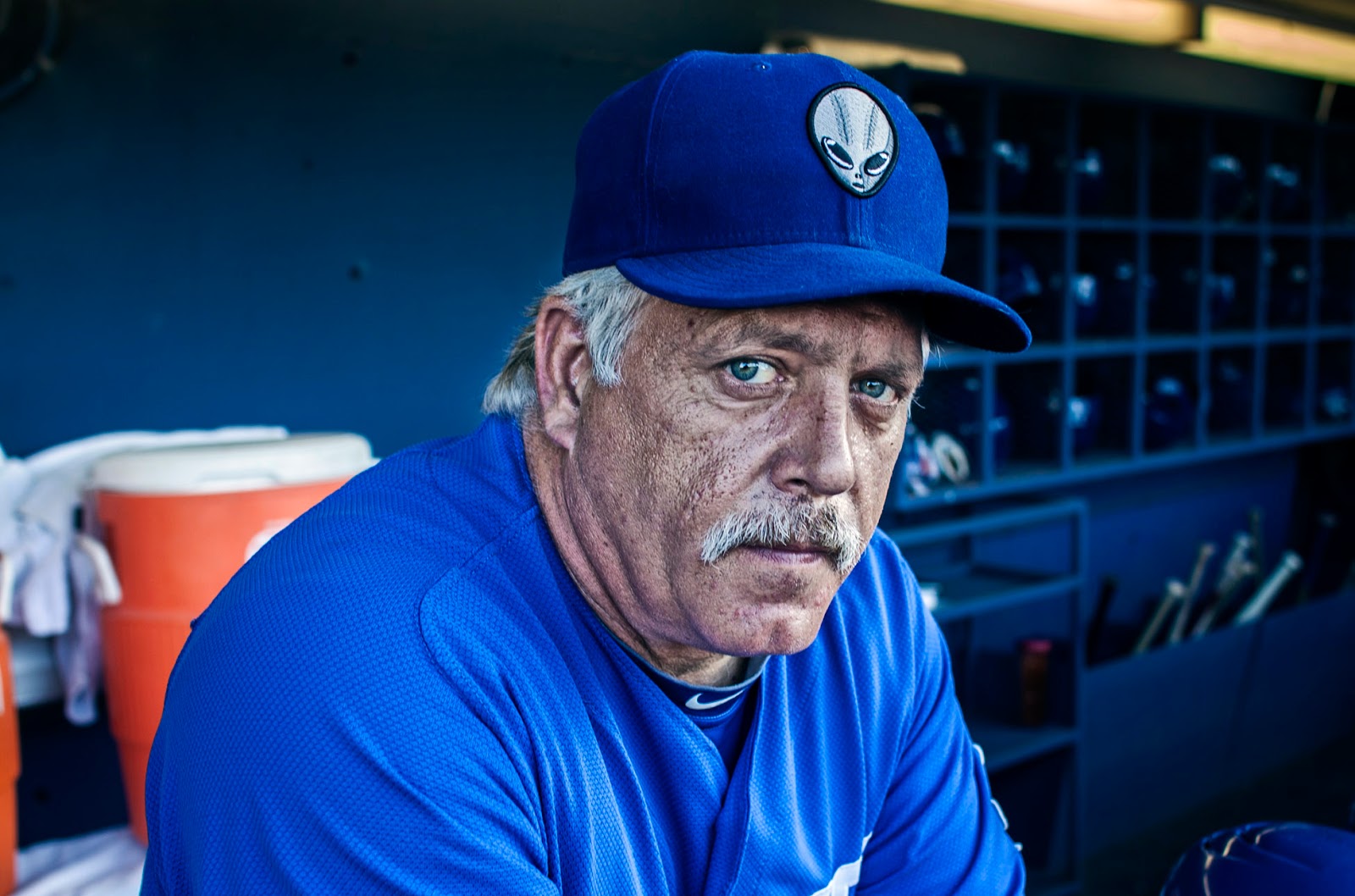 |
| The face of a disrespected man. (Kin Lui) |
Wally Backman was part of the Mets organization for the better part of four decades. From a scrappy infielder in the 1980s who was one of the spark plugs for a championship team to a fiery manager who led teams to titles wherever he managed, no one could ever say that Backman wasn't a winner. But for someone whose name was synonymous with winning, why did Backman lose so much?
Before Davey Johnson confided in him, he couldn't get anyone to believe in his ability to play the game. When the Mets promoted Gregg Jefferies, who was basically a brat with a bat, Backman couldn't stay on the field for the only organization he ever knew. Because the Arizona Diamondbacks were unaware of how background checks worked, Backman and his family suffered unnecessary embarrassment. And finally, no amount of division titles was enough to give Backman a job coaching with the Mets on a full-time basis.
For someone who has been a champion many times over, Backman's lifelong career in baseball has been more bitter than sweet. A player as beloved as he was with the Mets and a person who has given so much of himself to the game deserves better than the hand he has repeatedly been dealt by baseball.
Note: The Thrill of Victory, The Agony of the Mets is a thirteen-part weekly series spotlighting those Mets players and personnel who experienced the best of times and the worst of times with the team. For previous installments, please click on the names below:
January 2, 2017: Tom Seaver
January 9, 2017: Mike Piazza


