Showing posts with label Trevor Hoffman. Show all posts

Monday, May 13, 2019

Joey's World Tour: I'm Going Back To Cali, Cali, Cali

The Mets could have used these bats when I went to see them in San Diego.  (Ed Leyro/Studious Metsimus)

Greetings and salutations, Mets fans!  This is your favorite Studious Metsimus roving reporter and culinary expert, Joey Beartran.  I just got back from the West Coast, where I fulfilled both of my duties as reporter and eater.  On this trip, I visited Angel Stadium of Anaheim and then traveled south to see the Mets play in San Diego.  Both stadiums were beautiful.  The Mets, however, were not.

Most of the trip to Southern California was under the cover of clouds.  But the blue sky did make an appearance when we were in Anaheim, just in time for our ballpark tour.  The first stop on the tour was the area outside home plate. In addition to the gorgeous home plate entrance, which you can see in the photo above, the Angels have two large caps on either side of the plaza.  How large are they?  At size 649½, they might even be a little too big for Bruce Bochy's head.

Under one of the caps is a giant Mickey Mouse painted in Angels colors.  In 2010, Anaheim hosted the All-Star Game, making a deal with Disney (Disneyland is only a hop, skip and jump away from the stadium, you know) to produce giant Mickey Mouses (Mickey Mice?) with each team's colors and logo featured prominently on them.  The friendly rodents were then placed all around the city so that fans could find them.  This is similar to what the Mets did when Citi Field hosted the Midsummer Classic in 2013.

The other item of note outside the Home Plate entrance was a built-to-scale baseball diamond made out of bricks.  Our tour guide told us that this diamond is usually hard to spot on game days because of all the fans congregating in that area.  But on this beautiful morning, it was as visible as Brandon Nimmo's smile after he hits a home run.


Home is where the heart is, or in this case, where my sister, Iggy, is.  (EL/SM)

Once inside the ballpark, we saw reminders of the Angels' one and only World Series championship.  Even though the Angels have won nine division titles, it was their only wild card-winning season in 2002 that produced their sole pennant and Fall Classic victory.  Winning a single crown means that they only need one large display case to show off their hardware and other memorabilia from that magic campaign.  But they have many interesting items in that case.

Included in the display are various newspaper headlines, the ball and glove used to secure the final out of the World Series, a cowboy hat worn by the late owner Gene Autry (who passed away four years before the Angels won it all), photos from the championship parade in nearby Disneyland and of course, the World Series trophy.  I guess it isn't just Super Bowl MVPs that get to go to Disneyland after they win a ring.


Trophies won in the 21st century look much shinier than ones that have been collecting dust since 1986.  (EL/SM)


From here, we were brought to the visitors clubhouse, which doesn't have the amenities the home team's players have.  However, it was spacious and had its own video area where coaches can discuss flaws in swings, pitching mechanics, etc.  The bathrooms were also equipped with every kind of toiletry you can imagine so that opponents don't have to worry about trying to sneak large bottles of hair gel past the TSA agents in the airport.

Near the home team clubhouse we were taken to a special press conference room for former Angels manager Mike Scioscia.  The room was built at the request of the man who gave us post-traumatic Mets disorder in the 1988 NLCS so that he wouldn't have to trudge up a few levels to the regular press conference room to give post-game interviews.  I guess running around the bases after homering off Doc Gooden in the ninth inning of Game Four tired him out so much that he ended up having difficulty going up a few flights of stairs a quarter century later just to talk to reporters.

One of the interesting features of Angel Stadium is the dugout suites.  As you may know, all stadiums have suites for those who have large groups of people and a few thousand dollars burning a hole in their pockets.  But most of those suites are above field level.  The Angels have ten suites behind home plate that are a few feet below field level.  This gives a unique perspective to what's going on in the game, assuming you're not back in the suite trying all the delicious food that is included in the deal.  One unfortunate thing about these suites is that it's really hard to see fly balls from such a low vantage point.  Also, the suites are really HOT, as in sweat-through-your-fur hot.  I mean, I almost had to take off my Mets hoodie just to cool down, which probably would've made the tour experience less memorable for the other tourgoers in our group.

At least the dugout suites are close to - wait for it - the dugout!  That means they're also close to the field.  And why do we do ballpark tours in the first place?  It's not to see memorabilia of other teams winning championships or custom-made press conference rooms for Met killers.  It's also certainly not to visit suites we could never afford even if my colleague gave me a 100% raise.  (Speaking of which, my direct deposit never hit my bank account this week.  Just because I'm not human doesn't mean I can't complain to human resources about this.)

The reason we do these stadium tours is to sit in the dugout and walk on the field.  And that's just what this roving reporter did.  I came, I saw, I roved.


Who needs to sit in a dugout suite when we can sit right here?  (EL/SM)


After the tour was complete, we decided to walk around the park to get a glimpse of some of the banners and of course, the "Big A".

For all you kids out there, the "Big A" is not just the nickname for Angel Stadium, it's a 230-foot tall structure situated in the parking lot that's shaped like the first letter of the alphabet.  The "Big A" is topped by a halo that lights up after every Angels victory, which is perfect if you're a big fan of rubbernecking on the nearby freeway.


I give a big A-OK to the "Big A". (EL/SM)

From Anaheim, we went down the coast to San Diego, where we attended two Mets games.  Of course, the only game in the three-game series we didn't go to was the one game the Mets won.  You can thank my colleague for buying tickets to the wrong games.

Anyhow, if you're a longtime reader of my World Tour series, you know that we visited Petco Park in 2011.  (You can read about that trip by clicking here.)  But a lot has changed in those eight years.

For one thing, it's not all about Tony Gwynn anymore.  There's a lot of Trevor Hoffman love in and around the ballpark now that the closer has a plaque in Cooperstown.  And it's not just love for Gwynn and Hoffman.  The Padres now have a wall dedicated to all players and coaches who wore the team's uniform, whether it was for the old San Diego Pacific Coast League team or the current major league club.  There's even one for Mike Piazza, who played just one season in San Diego.

And the Padres Hall of Fame?  Well, that's just a sight to behold.  Within the 2,000-square-foot hall, we found photos and stories of the old PCL team, as well as newspaper clippings (including one of a game against the Mets in which a bad managerial decision may have cost the Padres a chance at their first no-hitter), bats, gloves, awards and videos of great moments in club history.  The centerpiece of the hall is a section devoted to every member of the Padres Hall of Fame.  But one particular Padre is missing.

Steve Garvey, whose No. 6 was retired by San Diego the year after he played his final game in the majors, is not in the Padres Hall of Fame.  My colleague and I were intrigued by this and asked one of the employees working in the hall about it.  The hall worker smiled and said that no one has any idea why that's the case.  Indeed, after further research by my colleague, we found nothing on the subject.  It's a mystery why Garvey's achievements as a member of the 1984 pennant-winning Padres led to his number being retired by the team, but the entirety of his five-year career in San Diego wasn't enough to warrant enshrinement into the club's Hall of Fame.  Truly bizarre.

The only way Steve Garvey will find himself in the Padres' Hall of Fame is if he buys a game ticket.  (EL/SM)


One place we had to visit when we were at Petco Park was an area that non-Mets fans wouldn't care to see.  It's certainly an area former Padres pitcher James Shields isn't comfortable with.

On May 7, 2016, Bartolo Colón hit the only home run of his long career off Shields.  The ball landed under the "Hit it Here" sign in front of the Western Metal Supply Co. building.  To mark the event, the Padres gave what Gary Cohen called "one of the great moments in the history of baseball" the Steve Garvey treatment, meaning there's nothing to mark where the ball landed.  But thanks to my colleague's calculations of exit velocities and launch angles, as well as me letting him know that he could've just watched Colón's clout on YouTube for research purposes, we were able to find the spot where the ball landed.  And we took some photos in the area before Padres security gave us their own version of the Garvey treatment.


I'm glad security didn't call the San Diego Zoo to have us removed.  That's worse than the Garvey treatment.  (EL/SM)

The Mets won the game we didn't go to, erasing a three-run, seventh-inning deficit to eke out a 7-6 victory.  The two games we did attend, the Mets scored a combined two runs and left runner after runner on base.  Because the Mets didn't give us much to cheer about in the stands, our photographer spent a good chunk of each game taking photos of the players.

Speaking of which, I'm glad our budget allows us to spend an arm and a leg on tickets and then we end up spending all of our time at the games behind a camera instead of, you know, watching the games.


They came, they played, they lost.  Twice.  (EL/SM)

The tour in Anaheim didn't take us to any of the stadium's food stands.  But the games in San Diego allowed us to pig out on a San Diego staple - burritos!  And the ones served in and around Petco Park were some of the best and most unique we've ever had.

Before going to the park, we enjoyed a California breakfast burrito filled with scrambled eggs, bacon, cheddar cheese, home fries and avocado.  That burrito was served with Mexican rice and refried beans.  Then at the Lucha Libre Taco Shop inside the ballpark, we had a Fryer Cali Burrito, which was both a play on words on the Padres being Friars and also incredibly delicious.  This burrito had steak, jack cheese, French fries, chipotle sauce and pico de gallo.  Apparently, putting potatoes in burritos is a big thing in San Diego.


As Weird Al Yankovic would say, "Might as well face it, I'm addicted to spuds."  (EL/SM)


So that's it for our California trip, in which we visited Angel Stadium of Anaheim for the first time and revisited the fun and festivities at Petco Park in San Diego.  On this trip, we learned that dugout suites are only good if you like searching in vain for fly balls while relaxing in a sauna.  We also learned that Met killers get lazy with age and there are hats that are even too big for Bruce Bochy to wear.

In addition, we found out that the Padres embrace their history more than the Mets do, but still have a strange relationship with Steve Garvey.  Also, Tony Gwynn isn't the only player who is celebrated in San Diego and oh yeah, they put taters in everything.

On behalf of the Studious Metsimus staff, I'd like to thank you for reading about our trip to Southern California and if you can find out why Steve Garvey isn't in the Padres Hall of Fame even though his number is retired, please let us know.  You should probably let Garvey know as well.

The Mets were washed out to sea on this trip.  Good thing we weren't.  (EL/SM)


For previous installments of Joey's World Tour, please click on the links below, where you will be entertained by Joey's wit, photos and love of ballpark cuisine:

World Tour Stop #1: Baltimore
World Tour Stop #2: Washington, DC
World Tour Stop #3: Pittsburgh
World Tour Stop #4: Texas
World Tour Stop #5: Los Angeles
World Tour Stop #6: San Diego
World Tour Stop #7: Toronto
World Tour Stop #8: Chicago (NL)
World Tour Stop #9: Milwaukee
World Tour Stop #10: Seattle
World Tour Stop #11: Cleveland
World Tour Stop #12: Brooklyn (Ebbets Field site) and Manhattan (Polo Grounds site)
World Tour Stop #13: Baltimore (again) and Pittsburgh (part deux)
World Tour Stop #14: Cincinnati
World Tour Stop #15: Colorado
World Tour Stop #16: Cooperstown (Baseball Hall of Fame)
World Tour Stop #17: Detroit
World Tour Stop #18: Atlanta
World Tour Stop #19: Miami
World Tour Stop #20: St. Louis
World Tour Stop #21: Kansas City


Saturday, January 6, 2018

If Studious Metsimus Had a 2018 Hall of Fame Vote...

On Wednesday, January 24, the National Baseball Hall of Fame will call several worthy inductees and tell them to book a flight to Cooperstown in the summer.  Those new members will join former Detroit Tigers teammates Jack Morris and Alan Trammell on the stage, as those former players were inducted via the Modern Baseball Era ballot last month.

Last year's class saw the inductions of Jeff Bagwell, Tim Raines and Ivan Rodriguez, as well as executives John Schuerholz and Bud Selig.  Going by this year's early indications, the Hall of Fame stage in 2018 may be just as crowded.

A total of 14 players have returned to the ballot this year, after earning at least 5% of the vote in previous elections, but not quite receiving the 75% needed for enshrinement.  Among them are three former Mets (Jeff Kent, Billy Wagner, Gary Sheffield).  In addition to those players, there are 19 first-timers on the ballot, including two former Mets pitchers (Jason Isringhausen, Johan Santana).  And of course, there's a former Met killer on the ballot named Larry; no nicknames or surnames needed for him.

According to Hall of Fame ballot tracker Ryan Thibodaux, a total of 424 ballots will by cast by those BBWAA members who are fortunate enough to have a vote.  For all you kids out there, that means 318 votes will be needed for players to receive that snazzy Hall of Fame jersey.  That also means a player will need the support of 22 voters to avoid falling off the ballot.

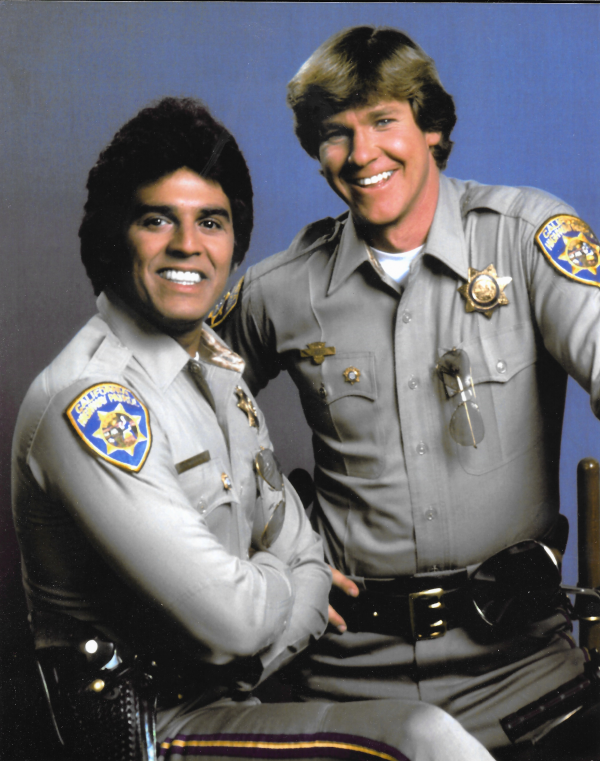
Had Studious Metsimus gotten a vote, the number of ballots cast would have jumped to 425.  But since the "W" in BBWAA stands for "writers" and not "wannabes" (as a blogger, I suppose I fall under the latter category), I won't be able to help some poor athlete worth tens of millions of dollars achieve legendary status.  Then again, perhaps it's best that I don't get a vote, especially since I'd enshrine Jeff Kent just to get his CHiPs era mustache into the Hall.

And now, before you get a chance to search on eBay for a vintage Ponch and Jon poster, it's time to reveal the ten former players who would have been on Ballot No. 425 had such a vote existed, focusing on the three players I loved to watch play the most, followed by the remaining seven in condensed form.


Baseball Mecca.  (Photo courtesy of the Cooperstown/Otsego County website)


Edgar Martinez

Face it, the only reason he's not in the Hall already is because he played a significant portion of his career as a designated hitter.  How else can you explain a lifetime .312 hitter with a .933 OPS and OPS+ just short of 150 not having a plaque in Cooperstown yet?

The voters of this generation who use the DH argument to foil the case of Martinez are like the previous generation's voters who couldn't bear to see relief pitchers making the Hall.  "If they can't pitch more than a few innings, I can't vote for them," those misinformed voters would say.  But relievers such as Rollie Fingers, Goose Gossage and Bruce Sutter (all Hall of Famers) paved the way for the one-inning closer to get recognition from the Hall.  Dennis Eckersley has a plaque in Cooperstown.  John Smoltz's three-and-a-half year period as a dominant closer also helped fuel his candidacy.  Trevor Hoffman (more on him later) is knocking on the Hall's door.  And who's going to keep Mariano Rivera out of Cooperstown once he's eligible in 2019?

The same people who are now accepting one-inning closers as potential Hall of Famers now need to focus their attention on players who left their gloves at home.  Frank Thomas, who started more than 100 games at first base in just three of his 19 seasons and played in over 1,300 games exclusively as a designated hitter, was a first ballot Hall of Famer.  Why is his lifetime .301/.419/.555 slash line considered worthy of enshrinement and Edgar's .312/.418/.515 isn't?  Is it because Thomas produced the sexy hits (521 HR) and Martinez didn't (309 HR)?  It's true Thomas had 11 seasons with 100+ RBI while Edgar had just six.  But did you know the great Mickey Mantle only had four such seasons?  No one used that argument against Mantle and no one should.  But had he played in the DH era, Mantle's knee injuries would have relegated him to "leave your glove behind" status and then people would be questioning what should have been obvious about him; that he is undoubtedly a Hall of Famer.

Martinez won two batting titles.  He was also a league leader in runs scored, RBI, OPS, OPS+ and finished first multiple times in doubles and on-base percentage.  For seven seasons (1995-2001), which coincided with all of the Mariners' postseason trips in franchise history, Martinez's averages per 162 games were mindboggling.  He produced a .329/.446/.574 slash line.  That's a 1.020 OPS in 1,020 games.  And if that's not good enough, how about his 162-game average of 47 doubles, 32 homers, 123 RBI and 111 runs scored during the seven-year stretch?

There's a reason why the annual outstanding designated hitter award is named after Edgar Martinez.  That's because he was the best at what he did.  And those who are the best deserve to be with the best in Cooperstown.

Even Jeff Kent's mustache can't compare to Edgar Martinez's classic lip fuzz. (Bruce Bennett/Getty Images)


Larry Walker

Similar to Edgar Martinez, Walker hasn't gotten as much support as he should because of one nagging element.  Martinez has failed to get votes because of the DH factor, while Walker has the Coors Field factor looming over him.

Prior to becoming a Colorado Rockie, Larry Walker was already a good hitter and complete player.  In his final three years in Montreal, Walker had a .294 batting average, .371 on-base percentage and .516 slugging percentage, averaging 33 doubles, 21 HR, 88 RBI and 21 SB.  He was also an All-Star, won a Silver Slugger Award and two Gold Gloves while in Montreal.  Although those numbers are not quite Hall of Fame worthy, they were still very good.  Then he signed with Colorado and became one of the best players in the major leagues.

In his first season with the Rockies (1995), Walker hit .306 with 36 HR and 101 RBI.  His .607 slugging percentage was second in the league and he helped lead the third-year Rockies to their first-ever playoff appearance.  Year two in Colorado was fraught with injuries, as Walker only played in 83 games but still managed 18 HR, 58 RBI and 18 SB in half a season's worth of games.  Fully healthy in 1997, Walker's career took off into the stratosphere.  Walker's 1997 numbers (.366 batting average, 46 doubles, 49 HR, 130 RBI, 143 runs scored, 33 SB, .452 OBP, .720 SLG, 1.172 OPS) almost looked like they came straight from a video game.  But Walker wasn't done after his phenomenal '97 campaign.  Over the next five seasons, Walker won three batting titles (1998, 1999, 2001), finished second another year (2002) and had a combined .350 batting average over those five seasons.  Basically, he was Tony Gwynn with power and Gwynn was a first-ballot Hall of Famer.

In ten years as a Rockie, Walker posted a .334 batting average, .426 on-base percentage, .618 slugging percentage and 1.044 OPS.  Only 24 players in major league history finished with a higher career batting average than what Walker put up in that ten-year span.  Of those 24, the only three who finished with a higher on-base percentage, slugging percentage and OPS were Ted Williams, Babe Ruth and Lou Gehrig, all first ballot Hall of Famers and all legends of the sport.

Larry Walker played 17 years in the major leagues.  However, because of injuries, he only had four seasons in which he played at least 140 games.  From 1994-2005, Walker missed an average of 44 games per season, failing to play more than 103 games in five of those 12 campaigns.  Despite his multiple trips to the disabled list, Walker finished his career with 2,160 hits, including 471 doubles and 383 HR.  He also stole 230 bases, scored 1,355 runs and drove in 1,311 more.  His combined averages (.313 BA, .400 OBP, .565 SLG) are among the highest career marks of anyone not already in the Hall of Fame, as is his 72.6 bWAR.  And he wasn't just a product of Coors Field.

Walker played in 674 games for the Expos prior to his time in Colorado and 144 games for the Cardinals after leaving the Rockies, which is approximately five full 162-game seasons.  In those 818 games in non-Rockies uniforms, Walker posted an .851 OPS and 129 OPS+, averaging 63 extra-base hits and 21 steals per 162 games.  And those numbers weren't fueled by the thin air in Denver.

All told, Walker was a five-time All-Star, won seven Gold Gloves and three Silver Slugger Awards.  He also finished in the top 20 in the MVP vote seven times, winning the 1997 MVP Award.  Not all of his awards and accolades came as a member of the Colorado Rockies, proving that Walker was an exceptional player before and after his time in Colorado.  Simply stated, Larry Walker has earned the right to become the first player with a Rockies hat on his Hall of Fame plaque.

Larry Walker sticks out his tongue to all those who won't vote for him.  (David Seelig/AllSport)


Vladimir Guerrero

He didn't reach 3,000 hits.  He didn't hit 500 homers.  He didn't collect 1,000 extra-base hits.  He didn't score 1,500 runs, nor did he drive in that amount.  And despite having a feared throwing arm, he somehow never won a Gold Glove.  (Too bad there's no Gold Arm Award.)  None of that matters.  Because Vladimir Guerrero is definitely a Hall of Famer.

Guerrero played only 14 full seasons in the major leagues.  (He played a total of 99 games between the 1996 and 1997 campaigns.)  But he was a feared player both at the plate and in the field.  Guerrero never batted lower than .290 in any of his full seasons and was a .300 hitter in 11 of the 12 years he qualified for the batting title, becoming one of just 30 players to have that many .300 campaigns.  Although he never won a batting title, Guerrero had four years with 200+ hits, leading the league in 2002.  Guerrero also had eight seasons with 30+ homers and an incredible ten years with 100+ RBI, making him one of only 18 players to have double digit seasons with triple digit RBIs.  In addition, Vlad was a nine-time All-Star and eight-time Silver Slugger recipient.

Opposing pitchers feared facing Guerrero, as evidenced by the five seasons in which he was the league leader in intentional walks.  Only Barry Bonds (12 times) and Wade Boggs (six times) led the league in intentional passes more often.  Guerrero was walked intentionally 250 times - the fifth highest total in major league history.

It wasn't just moundsmen who hated to face him; opposing base runners were afraid to run on Guerrero as well.  Guerrero had 126 outfield assists, leading the league in 2002 and 2004.  He could have thrown out many more runners, but they got the memo later in his career and stopped trying to run on his cannon.

And in case you thought it's just me singing his praises, in 2004 Guerrero won the A.L. Most Valuable Player Award.  Nice, right?  Well, that season was one of a dozen years in which the right fielder received MVP votes.  That's just about every year he played in the big leagues, meaning Guerrero was recognized as one of the best players in the game for nearly the entirety of his career.

2,590 hits.  477 doubles.  449 homers.  181 stolen bases.  1,328 runs scored.  1,496 runs batted in.  A .318 lifetime batting average.  A .553 career slugging percentage.  Never striking out 100 times in a season.  Two 30 homer/30 steal seasons.  Lots of accolades.  Lots of respect.

Without question, Vladimir Guerrero is a Hall of Famer (and he should have gotten in on the first ballot last year).

Vladimir Guerrero terrorized the Mets at Shea Stadium and other teams at their parks.  (Heinz Kluetmeier/Sports Illustrated)


In addition to Edgar Martinez, Vladimir Guerrero and Larry Walker, my other seven Hall of Fame selections would be:

  • Chipper Jones:  He didn't just destroy Mets' pitching; he hit every team's pitchers.  Jones is one of 21 players with 1,600+ RBI and 1,600+ runs scored.  Fifteen of the other 20 are already in the Hall.  The other five are not yet eligible or had steroid suspicions.  Jones is not part of that latter group and should become part of that first group.
  • Jim Thome:  Anyone who hits 612 HR and drives in 1,699 runs without any talk of steroid use has earned his pass to Cooperstown on the first ballot.  Nine seasons of 100+ walks and a .402 lifetime OBP also help his case, as do his nine 100-RBI seasons and eight campaigns with 100 or more runs scored.
  • Trevor Hoffman:  A reliever with 30 saves in a season is considered dependable.  If that dependable reliever collects 30 saves every season for two full decades, he would still fall short of Hoffman's career total of 601.  In over 1,000 innings pitched during an era that catered to hitters, Hoffman produced a 2.87 ERA and 1.058 WHIP.  That's not Hall of Very Good.  That's Hall of Fame.
  • Curt Schilling:  Like Hoffman, he posted an impressive WHIP during an era known for its offense.  From 1992 to 2004, Schilling was the owner of a 1.091 WHIP, while averaging 202 strikeouts and just 44 walks per season.  In fact, of all pitchers with at least 3,000 strikeouts, no one posted a better strikeout-to-walk ratio than Schilling's 4.38 K/BB (3,116 K, 711 BB).  And then there's this posteason thing; the one with him going 11-2 with a 2.23 ERA and 0.968 WHIP in 19 starts.  He's one of the all-time greats.
  • Mike Mussina:  Schilling is considered one of the best pitchers of his era.  Modern metrics says Mussina was a better player, as his 83.0 bWAR puts him ahead of Schilling's 79.9 bWAR.  Mussina finished in the top-six in Cy Young Award balloting nine times and won seven Gold Glove Awards.  And of all pitchers who made at least 500 starts, only Hall of Famers Christy Matthewson, Pete Alexander, Randy Johnson and soon-to-be Hall of Famer Roger Clemens posted a higher winning percentage than Mussina's .638 mark.
  • Billy Wagner:  It's a shame Wagner hasn't gotten more recognition, as he was far more dominant than Hoffman ever was.  Hoffman got the job done as effectively as any other closer who ever lived.  But Wagner would eat a hitter up and spit him out.  Injuries curtailed Wagner's career, but any pitcher who averaged nearly 12 strikeouts per nine innings, four whiffs per walk and finished his career with a WHIP under 1.00 (Wagner's WHIP was 0.998) deserves Hall of Fame consideration.  And I didn't even mention his 422 saves and 2.31 ERA.  Okay, maybe I just did.
  • Jeff Kent:  Kent was more than just a mustache.  He was one of the best hitting second basemen of all-time.  For a guy whose career didn't take off until his age-29 season, Kent finished just 16 extra-base hits shy of 1,000.  The pressures of playoff baseball didn't faze him, as Kent posted an identical .500 career slugging percentage in the regular season and postseason.  And let's not forget his eight seasons with 100+ RBI, the 1,518 runs he drove in for his career and the title of all-time leading home run hitter at the second base position.


Those are my ten Hall of Fame selections.  Some will get in.  Some won't.  And some will want to know Jeff Kent's grooming techniques.  (Or Edgar Martinez's, circa 1990.)  As always, some candidates didn't make my cut.  (Yes, I know Barry Bonds and Roger Clemens aren't among my ten guys.  They'll be there ... someday.)  But every player on the Hall of Fame ballot in 2018 had an outstanding career and all of them had qualities that at the very least put them in the Hall of Fame conversation.

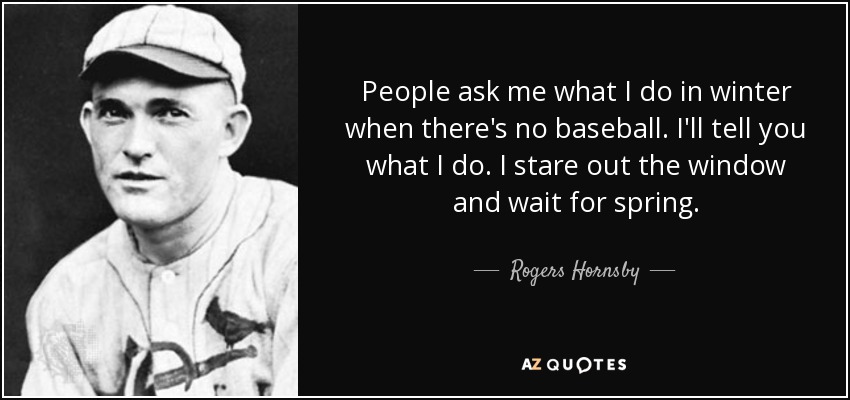
Who will get in?  And who will have to be like Johnny Damon and buy a ticket for themselves?  That will be revealed on January 24.  Until then, we'll just follow the advice of Hall of Famer Rogers Hornsby and just stare out the window, waiting for spring to arrive.