Showing posts with label Al Harazin. Show all posts

Tuesday, January 6, 2015

Mets Almost Traded For Randy Johnson In 1991

(Photo by Elaine Thompson/AP)

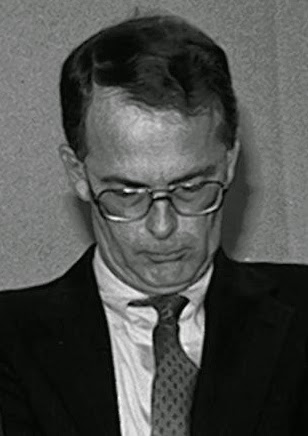
In 1991, the Mets posted their first losing season in eight years.  After winning 87 or more games from 1984 to 1990, New York finished the 1991 campaign with a disappointing 77-84 record.  As a result, general manager Al Harazin decided to shed salaries without going through a rebuilding phase.

Kevin McReynolds, one of the team's best offensive players during his five-year tenure in New York, was dealt to Kansas City.  Hubie Brooks, who returned to the Mets for one season as Darryl Strawberry's replacement in right field, was jettisoned to the Angels.

The McReynolds trade (which also sent Gregg Jefferies and Keith Miller to the Royals) brought two-time Cy Young Award winner Bret Saberhagen to Flushing.  Saberhagen was part of Harazin's plan to create a top-notch starting rotation, as long-time Met Ron Darling had been traded to Montreal during the 1991 season and Frank Viola was about to leave via free agency.

But Saberhagen was not Harazin's first choice to lead a starting rotation that already featured David Cone, Dwight Gooden and Sid Fernandez.  His original plan was to send McReynolds to Seattle for one of the Mariners' top two young starting pitchers.

Coming to New York in exchange for McReynolds would have been either Erik Hanson, a 26-year-old right-hander who posted an 18-win, 211-strikeout campaign in 1990, or a lanky 28-year-old southpaw with a 37-34 career record, 4.01 ERA and a 1991 season in which he walked 152 batters - the first time since 1977 that a pitcher had issued over 150 bases on balls.

That skinny lefty was future Hall of Fame pitcher Randy Johnson.

Harazin knew Seattle was in need of a left fielder, and was willing to part ways with the veteran McReynolds, who had signed a three-year, $10 million contract extension the previous off-season.

But Seattle did not want to trade Hanson or Johnson for McReynolds, whose salary was supposedly too high for the penny-pinching Mariners.  (Seattle's $17.5 million team payroll was the fifth-lowest in the majors in 1991.)  At least that's what Harazin was led to believe.


"The conversation we had with them was such that I didn't think they were interested in anyone's $3 million player."


That's when Harazin opted for Plan B, trading McReynolds and two others to Kansas City for Saberhagen and infielder Bill Pecota.  There was only one problem.  Seattle ended up trading for a left fielder who was due more money than McReynolds, and parted ways with three pitchers to get him.

Former Met Kevin Mitchell, who was traded for McReynolds just five years prior, was acquired by the Mariners from San Francisco for pitchers Bill Swift, Mike Jackson and Dave Burba.  Mitchell was due $10.5 million through the 1994 season, an average of $3.5 million per year.

Mitchell flopped in Seattle, hitting just nine home runs in 99 games after averaging 36 homers per season during his final three years in San Francisco.  McReynolds wasn't much better in Kansas City and was out of baseball after the 1994 season.

Randy Johnson, on the other hand, learned how to control his wildness.  After one more subpar season in 1992 (12-14, 3.77 ERA, league-leading 144 walks), Johnson became one of the game's most dominant pitchers.  Over his next dozen campaigns, the Big Unit posted three 20-win seasons (and four other years with 18+ victories) and won nine strikeout titles.  He also led the league in winning percentage four times, ERA four times, complete games four times, shutouts three times and WHIP on three occasions - all in a span of 12 years.  And most importantly, he never walked 100 batters in a season again.

Almost a quarter century ago, Seattle was willing to trade three pitchers to San Francisco for a left fielder making $10.5 million for three seasons.  Had they listened to Al Harazin, they could have saved half a million dollars over those three campaigns and would have lost just one pitcher to acquire the Mets' left fielder.

But Seattle would have potentially lost a future Hall of Famer in Randy Johnson.

Imagine how different the histories of two franchises would have been had the McReynolds-for-Johnson trade been consummated.


Monday, February 27, 2012

One Season Wonders: Bret Saberhagen

In 1991, the Mets went into the season with a manager other than Davey Johnson for the first time since 1983. Perhaps not coincidentally, the 1991 season ended with the Mets registering their first losing record since the aforementioned '83 campaign.

During the Mets' seven-year string of excellence from 1984-1990, the team prided itself on having a strong starting rotation.  Pitchers like Dwight Gooden, Ron Darling, Sid Fernandez, Bobby Ojeda, David Cone and Frank Viola had all contributed excellent seasons for the Mets during that period.  But a lot was changing as a result of the 1991 season.

Ron Darling was traded to Montreal at the 1991 trade deadline. Also gone were Bobby Ojeda, who was traded to Los Angeles prior to the 1991 season, and Frank Viola, who signed as a free agent with the Boston Red Sox after losing 10 of his last 12 decisions with the Mets in 1991.

Of the pitchers still on the Mets,  Sid Fernandez was coming off an injury-plagued season in which he only made eight starts, winning one of them.  David Cone lost a career-high 14 games in 1991, despite leading the league with 241 strikeouts.  And Dwight Gooden, the long-time ace of the staff, had undergone rotator-cuff surgery in September and was not a lock to be ready for the start of the 1992 season.

The Mets needed a quality starting pitcher and they needed one fast.  They also wanted a young pitcher who was a proven winner and could give them plenty of innings.  Five years after acquiring David Cone from Kansas City, they went back to the Royals and found themselves the ace they wanted in 27-year-old Bret Saberhagen.

The Mets hoped Bret Saberhagen would be the apple of their eye when they traded for him in 1991.


Bret William Saberhagen had done it all in the major leagues before his 28th birthday.  He was a two-time All-Star (1987, 1990), a Gold Glove Award winner (1989), a two-time Cy Young Award winner (1985, 1989), had pitched a no-hitter (1991) and was a World Series MVP, pitching the Kansas City Royals to their first and only title in 1985.  One thing he hadn't done was pitch in a large market city, as Kansas City wasn't exactly the media capital of the world, or even Missouri for that matter.

But with the Mets in need of a quality arm to anchor their depleted staff, Saberhagen seemed like the perfect fit.  So on December 11, 1991, the Mets traded Kevin McReynolds, Gregg Jefferies and Keith Miller to the Royals for Saberhagen and Bill Pecota.  The cost to acquire the front-line starter they coveted was steep, as McReynolds, Jefferies and Miller were all regulars on the 1991 Mets, but the Mets were desperate for an ace, and Saberhagen fit the bill.

As good as Saberhagen was during his eight-year stay with the Royals, he did suffer from the even-year, odd-year syndrome.  Saberhagen finished with a losing record in every even-numbered year, going a combined 36-48 with a 3.70 ERA and 1.23 WHIP in 1984, 1986, 1988 and 1990.  However, in odd-numbered years, Saberhagen was an elite pitcher.  In 1985, 1987, 1989 and 1991, Sabes combined to go 74-30 with a 2.85 ERA and 1.06 WHIP.  His first year with the Mets was going to be an even-numbered year.  You can imagine what happened next.

Bret Saberhagen was one of a number of new faces brought in by general manager Al Harazin prior to the 1992 season.  With Eddie Murray, Bobby Bonilla and manager Jeff Torborg on board, Saberhagen was supposed to be the crown jewel of the offseason haul.  Instead, he turned out to be the cubic zirconia version of his former self.

Injuries prevented Saberhagen from performing at the level the Mets expected of him, and as a result, he was only able to make 15 starts, going 3-5 with a 3.50 ERA.  The next year, everyone expected a bounceback season from Saberhagen, especially since it was an odd-numbered year.  The only problem was that it was only Saberhagen who everyone expected to bounce back.  The rest of the team was another story.

In 1993, the Mets produced their worst record in twenty-six years.  Not since the days before Gil Hodges' arrival as manager had the Mets been so awful.  The '93 squad finished the year with a 59-103 record, and it could have been much worse had it not been for a season-ending six-game winning streak.  The Mets were so bad in 1993 that even the expansion Florida Marlins finished ahead of them in the seven-team National League East.  Needless to say, Bret Saberhagen did not win a lot of ballgames in '93.  However, he wasn't that bad compared to his teammates.

Although injuries curtailed Saberhagen's season for the second consecutive year, he was the only starter to not finish the season with a losing record.  In addition to his 7-7 record in 19 starts, Saberhagen had a respectable 3.29 ERA and an outstanding 1.06 WHIP.  The low WHIP was a direct result of Saberhagen's excellent control, as he walked a mere 17 batters in his 19 starts.

After two injury-plagued seasons in 1992 and 1993, the Mets still had not gotten what they expected from their ace.  However, when Saberhagen was healthy in 1993, he showed he could be one of the stingiest pitchers in baseball.  All he needed was one season of good health, just one, to prove that he could still be one of the best pitchers in the game.  That wish became a reality in 1994.

After their horrific 1993 season, the Mets weren't expected to do much in 1994.  But they surprised most experts over the first month and a half of the season, jumping out to a quick start.  The Mets weren't doing it with their hitting (they finished next-to-last in the NL in batting average in 1994) or their baserunning skills.  (Jose Vizcaino went 1-for-12 in stolen base attempts and John Cangelosi led the team in thefts with five - that's one, two, three, four, FIVE STEALS!)  But the one thing they had in 1994 that they didn't have in 1993 was a healthy Bret Saberhagen.  And his health was instrumental in getting the Mets off to their quick start.  In the team's first 32 games, Saberhagen was 4-1 with a 3.09 ERA.  As a result, through May 10, the Mets were in second place with an 18-14 record, just 2½ games behind the first place Atlanta Braves.

Saberhagen split his next four decisions as the Mets slipped below .500.  But beginning with his start on June 13 against the defending National League champion Phillies, Saberhagen went on a roll that lasted until the end of the season.  On that fateful night, Saberhagen pitched beautifully, allowing two runs (one earned) in seven innings, needing only 94 pitches to stifle the high-powered Phillies' offense.  It was a far cry from his previous outing against Philadelphia, a four-inning, seven-run debacle on May 21.  The confidence he gained by beating the Phillies in mid-June lasted for the rest of the season, as Saberhagen was pretty much unhittable after that game.


Beginning with his final start in June, Saberhagen had one of the finest extended stretches in club history.  From June 30 to his last start of the season, Sabes went 7-0 with a 1.51 ERA and 0.85 WHIP.  Even more impressive was his strikeout-to-walk ratio, as Saberhagen struck out 62 batters over his final nine starts while walking only five.  That's one, two, three, four, FIVE WALKS, as in the same number of steals John Cangelosi had all season.


During this second-half surge, Saberhagen pitched what was perhaps his best game as a Met against the San Diego Padres on July 15.  In the second game of a twi-night doubleheader against the Padres, Saberhagen pitched ten scoreless innings, allowing five hits (all singles) while striking out 11 and walking none.  Unfortunately, Padres' starter Andy Benes matched Saberhagen zero-for-zero, striking out 14 Mets batters in eight innings of work.  Saberhagen's valiant effort went for naught, as the Mets lost the game, 2-1 in 14 innings, when Mike Maddux allowed back-to-back home runs to Tony Gwynn (the best hitter in Padres' history) and Phil Plantier (the current hitting coach for the Padres).


After Saberhagen defeated the Phillies again on August 10 to improve his record to 14-4, the Mets stood only two games under .500 with a 55-57 record.  It was Saberhagen's seventh consecutive victory, a streak that began on June 30 when the Mets entered the day in last place with a 33-43 record.  Since then, the Mets had gone 22-14 and had climbed into third place in the NL East.  The Mets lost their next game in 15 innings and then lost the season soon after, as the baseball strike put an end to the 1994 season.  Who knows what Bret Saberhagen would have accomplished had the season not been cut short?

Despite the premature ending to the 1994 season, it still went down in history as the year in which Bret Saberhagen produced one of the best pitching performances in club annals.  For the year, Saberhagen went 14-4, but that didn't tell the whole story.  His 2.74 ERA and 1.03 WHIP were both second in the National League to Atlanta's Greg Maddux.  Saberhagen also finished in the top ten in wins (14, 3rd), winning percentage (.778, 2nd), innings pitched (177
⅓, 3rd), strikeouts (143, 4th) and complete games (4, 4th).  He also had the dubious distinction of finishing the year with more wins (14) than walks (13).  In addition, by recording 143 strikeouts against only 13 bases on balls, Saberhagen finished the year with an unheard of 11:1 K/BB ratio.  How unheard of was it?  To this day, it's still a major league record.

After two injury-plagued seasons in 1992 and 1993, Saberhagen finally produced the season the Mets expected from him during his third year in New York, making the All-Star team and finishing third in the Cy Young Award vote.  His 1994 campaign came on the heels of his infamous bleach-spraying incident, a matter that earned him a four-game suspension to start the '94 season and caused him to be discussed in trade talks with the Cleveland Indians, a trade that would have brought shortstop Felix Fermin and young right-handed starter Albie Lopez to the Mets.  Fortunately for the Mets, that deal was never consummated, as Fermin went on to hit .190 in 1995 and 1996 (after a .317 campaign in 1994) and Lopez posted a career ERA just under 5.00 in a decade-long major league career.

The 1995 season didn't begin as scheduled, as the strike knocked out the first three weeks of the regular season.  The season finally did get underway in late April, but Bret Saberhagen left his best stuff behind.  Although Saberhagen was decent in 16 starts for the Mets in 1995, he only won five games.  His 3.35 ERA and 1.14 WHIP, although both good, were nowhere near his numbers from his record-setting 1994 campaign.  Also, his strikeout-to-walk ratio decreased dramatically in 1995, as Saberhagen struck out 71 batters while walking 20 in his 16 starts.  The 3.55 K/BB ratio was a far cry from his major league record 11.00 K/BB mark in 1994.


As a result, Saberhagen was traded to the Colorado Rockies in July for minor league pitchers Arnold Gooch and Juan Acevedo.  Although the move was widely speculated to be payroll-related, Mets' co-owner Fred Wilpon said it was due to Saberhagen's injury history and lack of overall productivity during his 3½-year stay in New York.  Wilpon had decided that Mets needed to get younger to get better, and Saberhagen was not part of that equation.  Besides, Generation K was about to take Flushing by storm.  Until it didn't.

One thing Fred Wilpon was right about was that Bret Saberhagen wasn't very durable.  In fact, Saberhagen only had one more injury-free season left in him, going 15-8 in 31 starts for the 1998 Red Sox.  Although Saberhagen did pitch in the majors until 2001, he was never able to stay healthy once he left the Mets, save for that 1998 season.  A career that once looked so promising fizzled out earlier than expected, as Saberhagen appeared in only three games after his 36th birthday.

If not for injuries and Bleach-gate, Bret Saberhagen's career as a Met could have been truly special.


From 1992 to 1995, Bret Saberhagen was never as bad as people made him out to be.  Although he won only 29 games as a Met (the same total won by Oliver Perez, a pitcher who really was as bad as people made him out to be), he posted a 3.16 ERA and 1.08 WHIP in his nearly four-year career in orange and blue.  Let's put his Mets career in perspective. 

Only ten pitchers in Mets history had a lower ERA than Saberhagen's 3.16 mark.  Bret Saberhagen's winning percentage as a Met was .580.  The only pitchers in team history who topped that are Dwight Gooden (.649), Rick Reed (.621), Johan Santana (.615), Tom Seaver (.615), David Cone (.614), Ron Darling (.586), Al Leiter (.586) and Pedro Martinez (.582).  And about that WHIP.  The only Met with a better career WHIP than Bret Saberhagen is Tom Seaver, and you need to go to a third decimal point to determine that Seaver's 1.076 WHIP was only slightly better than Saberhagen's 1.079 WHIP.

For all the talk about how Bret Saberhagen underachieved, he really didn't.  Although he wasn't as healthy as he could have been, when he was on the mound, he was one of the best pitchers to ever put on a Mets uniform.  Unfortunately, his career on the field in New York was overshadowed by his mischief off the field.  But once you look past his off-field behavior, you'd see that Bret Saberhagen was really a special pitcher for the Mets.

To New York sports fans, 1994 was memorable because of the Rangers winning the Stanley Cup and the Knicks making it to the seventh game of the NBA Finals.  But for Mets fans, 1994 was the year Bret Saberhagen quietly put up one of the best seasons in team history, even if the season was cut short by the players' strike.  The Mets haven't had a player win more than 17 games in a season since Frank Viola and Dwight Gooden accomplished the feat in 1990.  Just imagine what Bret Saberhagen could have done had it not been for the strike.

Although he was technically a one-season wonder in New York, Bret Saberhagen's career as a Met was not too shabby.  But because his tenure in New York coincided with some of the worst seasons in recent history, his accomplishments on the field have been largely forgotten.  They shouldn't be.  Bret Saberhagen was pretty darn good.  No amount of bleach will ever erase that.


Note: One Season Wonders is a thirteen-part weekly series spotlighting those Mets who had one and only one memorable season in New York.  For previous installments, please click on the players' names below:
 
January 2, 2012: Bernard Gilkey
January 9, 2012: Terry Leach 
January 16, 2012: George Stone
January 23, 2012: Roger CedeƱo
January 30, 2012: Frank Viola
February 6, 2012: Joe Christopher 
February 13, 2012: Dave Magadan 
February 20, 2012: Pedro Martinez

Sunday, January 22, 2012

Sandy Alderson Is Trying To Avoid The Year "2" Blues

As the dawn of the new millenium arrived, while people were talking about whether Y2K was going to give them the blues, the Mets were one of the best teams in the National League.  They were in the middle of their only back-to-back playoff appearances in franchise history and things appeared to be on the up-and-up.

Only two years later, the Mets were at the bottom of the NL East standings, becoming laughingstocks of the league and making regular appearances on David Letterman's Top Ten lists due to their futility on the field.  How did the Mets fall so quickly from their perch atop the National League?  Blame it on Y2B, otherwise known as the Year "2" Blues, a condition that occurs every time the calendar ends in a "2".

The Year "2" Blues has taken other forms in the past.  In the Mets' inaugural season of 1962, fans were happy to have National League baseball back in New York.  However, the product on the field was more Little League than National League, as the Mets lost a record 120 games.  Ten years later, the 1972 Mets actually did well, posting an 83-73 record (six games were erased due to the first players' strike in MLB history) and finishing in third place in the NL East.  However, during that strike, the team suffered through the tragedy of losing their manager, Gil Hodges, to a fatal heart attack.

Then came the 1982 season, and Y2B as we know it today hit the Mets will full force.  It all began when the Mets were looking for a power hitter and thought they found one in George Foster.

Don't look at us like that, George.  You were the one who sucked as a Met.


Prior to the 1982 season, George Foster was one of the premier home run hitters in the National League.  In 1977, he became the first player since Willie Mays to hit as many as 50 home runs in a season when he banged out 52 long balls for the Cincinnati Reds.  He followed that up by pacing the NL in homers (40) and RBI (120) in 1978.  In the six years prior to 1982, Foster was a five-time All-Star who averaged 33 HR and 112 RBI per season.  He wasn't just a home run hitter, as he batted over .300 three times and finished the six-year stretch with a .297 batting average.

In his final year in Cincinnati (1981), despite one-third of the season being wiped out by a players' strike, Foster still managed to collect 22 HR and 90 RBI, good for third place and second place in the league, respectively, and earning him his first Silver Slugger Award (the award did not exist prior to 1980).  George Foster was at the top of his game after the 1981 season, making him the top trade target for then-Mets' general manager Frank Cashen.  Oops.

On February 10, 1982, Cashen traded three players to the Reds for George Foster, hoping that this trade with Cincinnati would work out better than the ill-fated 1977 trade of Tom Seaver, which sent the Mets into the chasm they were still in.  Foster responded by turning in the worst full season of his career, batting .247 with 13 HR and 70 RBI in 151 games.  Needless to say, the Mets finished the 1982 season in last place.  Although Foster recovered to pick up 28 HR and 90 RBI for the 1983 Mets, his batting average continued to go down (.241), and his 38 walks kept his on-base percentage down to a career-low .289.  The dozens of fans at Shea Stadium had seen enough of George Foster, and he became the prime target of boo birds until his final game in New York in 1986.

The Mets did win the World Series in 1986, but by then Foster was long gone, having been released by the team in August.  After their championship season, the Mets remained in contention until 1991, when they suffered their first losing season since 1983.  Again, the front office felt a change was needed to bring the team back into contention in the NL East, so they opened their wallets and spent freely in 1992.  What they got in return was The Worst Team Money Could Buy.

Bobby Bonilla.  Bret Saberhagen.  Eddie Murray.  Jeff Torborg.  All four had participated in the postseason for other teams prior to 1992.  All four became Mets to try to recapture their prior successes in New York.  All four tanked in 1992.

For Bobby Bonilla, his free agent signing meant he was coming back home.  In his final season in Pittsburgh, the future Bronx tour guide hit .302 with a league-leading 44 doubles, 18 HR, 100 RBI and 102 runs scored.  Once in New York, his play deteriorated, as he hit .249, drove in 70 runs and scored 62 times.  His 23 doubles were barely half of his 1991 total, although he did improve his home run output by an earth-shattering one (19 HR in 2002).

Bret Saberhagen and Eddie Murray also did poorly in their first seasons in New York, as Saberhagen won only three games in an injury-plagued season and Murray batted only .261 with 16 HR, despite playing in 156 games.  As a result, the Mets lost 90 games for the first time in nine years and did not finish above .500 again until 1997.

Clearly, former Manager of the Year Jeff Torborg did not have a clue how to keep his expensive bunch of underachievers focused as Bonilla became an earplug-wearing, error-questioning, reporter-threatening malcontent, Saberhagen tried to get bleach throwing to become an Olympic event and Murray became the Sultan of Sulk.

One would assume the Mets would have learned their lesson after being hit by the Y2B bug for the second time in 1992.  But we all know what happens when you assume.  We also know that the Mets sometimes have a hard time learning from past mistakes.

In 2002, the Mets were only two years removed from the franchise's fourth World Series appearance.  They followed up their pennant-winning campaign with a disappointing 2001 season, finishing 82-80 and needing a strong final month just to push their record above .500.  General manager Steve Phillips, who wasn't present for the previous Y2B infestations (the Mets were transitioning from Frank Cashen to Al Harazin in 1992), felt the Mets were just a few trades away from erasing the mediocrity of 2001 and returning to the playoffs.  Things didn't work out exactly as planned.

Phillips sought to improve the right side of the infield by acquiring former All-Stars Mo Vaughn and Roberto Alomar.  He also wanted to add power and speed to the outfield.  Enter former Mets Jeromy Burnitz and Roger CedeƱo.  Four words can summarize how each player did for the 2002 Mets.

Bust.  Bust.  Bust.  Bust.

If only Mo Vaughn's batting average had been higher than his weight, things could have turned out differently for the 2002 Mets.  Or not.


Mo Vaughn was the only one of the foursome who had anything resembling a productive year for the Mets in 2002 (.259, 26 HR, 72 RBI).  Of course, that came from a player whose average season from 1995-2000 (.306, 38 HR, 118 RBI) left a little more to be desired.

Roberto Alomar, on the other hand, had just come off an MVP-caliber season in 2001 (Vaughn missed the entire 2001 season with an injury).  Alomar hit .336 with 34 doubles, 12 triples, 20 HR, 100 RBI, 113 runs scored and 30 stolen bases for the Cleveland Indians in 2001 and was poised to become the best all-around second baseman in Mets history.  That title still belongs to Edgardo Alfonzo, as Alomar was a shadow of himself in 2002.  In fact, his numbers in 1½ seasons as a Met (.265, 13 HR, 75 RBI, 22 SB) were less than what he produced in his final season in Cleveland.

From 1997-2001, former Met outfielder Jeromy Burnitz was among the most consistent power threats in baseball.  Playing five years in Milwaukee, Burnitz averaged 33 HR and 102 RBI per season and hoped to become the first legitimate power threat in right field for the Mets since Darryl Strawberry switched coasts following the 1990 season.  That did not happen, as Burnitz collected only 19 HR and 54 RBI in 154 games in 2002, while watching his batting average dip to .215.  Burnitz did follow Strawberry in one respect, as he became a Dodger in 2003 after being traded to Los Angeles in July.


Roger CedeƱo came out of nowhere to have an amazing season with the Mets in 1999, batting .313 and setting the franchise record with 66 stolen bases.  He was then included in the trade that netted the Mets Derek Bell and 2000 NLCS MVP Mike Hampton, but came back to New York in 2002 to join fellow ex-Met Jeromy Burnitz in the outfield.  He thanked the Mets by reporting to camp out of shape and becoming the worst speedster acquisition since Vince Coleman.  CedeƱo finished the 2002 season by batting .260 and stealing only 25 bases in 149 games.  In addition, his once-fleet feet produced only 19 doubles and two triples, but they did develop the uncanny ability to generate boos from the Shea faithful, boos that continued to be heard until the Mets' next winning season in 2005.


That was then.  This is now.  The year is 2012.  It's a Y2B season.


Second-year general manager Sandy Alderson is not falling into the trap his predecessors couldn't avoid jumping into.  There have been no blockbuster trades featuring former All-Stars to report this offseason and the only acquisitions of note have been to strengthen the bullpen (Jon Rauch, Ramon Ramirez, Frank Francisco) and outfield (Andres Torres).  Scott Hairston was re-signed to a one-year deal and four arbitration-eligible players (Mike Pelfrey, Manny Acosta and the aforementioned Ramirez and Torres) were signed as well.

This is not your father's Mets team.  Nor is it Frank Cashen's, Al Harzin's or Steve Phillips' team.  It's a new Mets team with a different general manager who, unfortunately, is restricted by what he can do by the owners' ongoing financial problems.  However, even if the team did not have money woes, Alderson was not going to be the type of GM to make big-ticket moves just to make a splash in the free agent and trade market.  He is a thinking man's GM who takes fiscally reasonable risks, rather than ones that can blow up in his face.


Is Sandy Alderson the general manager who finally has developed immunity to the Y2B bug?  Only time will tell, but the way things are being set up for the 2012 Mets and beyond, the team on the field isn't going to be laden with malcontents and aging has-beens.  The Mets are a young team that's going to play their hearts out for the fans.  They may not produce all the wins the fans would like, but they are going to be a team that's fun to root for.  That's a lot more than could be said for the teams of George Foster, Bobby Bonilla, Roberto Alomar, et al.