Showing posts with label Flux Capacitor. Show all posts

Sunday, October 23, 2011

Hey, Kids! How Do You Like The World Zzzzeries?

Despite the "Hey, Kids!" in the title, I'm going to start this post by asking a question to our older readers.  Tell me, my friends.  Do you remember when you were in school and you rushed home every October to watch a World Series game at home?  How about the times when your teacher would occasionally bring a TV or radio into the classroom so that you could watch or listen to the game in class?  No?  Well, it used to happen (unless if my father lied to me, which he would never do).

Unfortunately, like closers pitching three innings and Jason Bay being a major offensive threat, those things just don't happen anymore.  This year's World Series between the Cardinals and the Rangers will have all its games starting at 8:05 PM Eastern Daylight Time (7:05 PM local time in St. Louis and Texas).  While this is an improvement over the old 8:29 PM (or later) start times, it's still not early enough for kids to watch.

Let's take Saturday night's Game 3 for instance.  The Cardinals outslugged the Rangers, 16-7, to take a two games to one edge in the World Series.  The game, as with all World Series games this year, started at 8:05 PM (actually, the first pitch was thrown at 8:06 PM because ceremonial first pitch chucker Dirk Nowitzki needed an extra minute to warm up his seven-foot frame).  However, with all the runs and pitching changes, the game took four hours and four minutes to play.  That's what happens when you get 23 runs and six pitching changes in the middle of an inning (four made by Tony La Russa and two made by Ron Washington).  Even with the "earlier" start time, the game ended at 12:10 AM on Sunday morning.

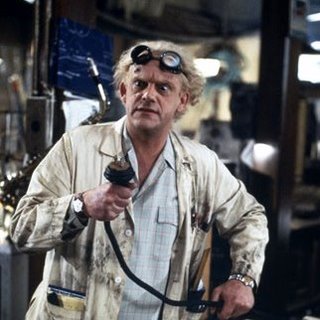
You don't need a rocket scientist or a flux capacitor inventor to figure out that World Series games take longer to play than regular season games.  Managers tend to yank their starting pitchers at the first sign of trouble, and this usually will occur during an inning rather than after it.  Also, there will be more trips to the mound to talk to rattled pitchers and these trips will occur earlier than they would in the regular season.  And of course, there are the commercial breaks.  Having the games in prime time generates more money from advertisers, which means FOX has to squeeze out every penny from said advertisers.  Simple translation:  There are more commercials per break in the action than you would see from April to September.

This is not something new.  In 2000, when the Mets played the Yankees in the World Series, no game lasted less than 3 hours and 20 minutes, with every game starting after 8:00 PM.  Game 1 (a 12-inning game) was nine minutes short of a five-hour game.  On average, each game in the five-game series lasted 3 hours and 46 minutes.  Take out the extra-inning affair in Game 1 and the other games, all of which lasted nine innings, took an average of 3 hours and 30 minutes to play.  There was no plethora of pitching changes and the games were relatively low-scoring (the Mets and Yankees combined to score 35 runs in the five-game series, an average of seven runs per game between the two teams).


I wonder how many kids stayed up to watch Roger Clemens as he thought he threw the ball towards Mike Piazza in Game 2 of the 2000 World Series.


Do you remember when the last day game was played in the World Series?  That was in 1987, when the Twins forced a seventh and deciding game against the Cardinals by defeating them in Game 6, an early afternoon start in Minnesota.  Even so, that game was played on a Saturday, when kids would have been home from school anyway.  The 1984 World Series between the Tigers and the Padres also featured two day games in Games 4 and 5, but they were also weekend affairs.

To find the last weekday day game in World Series history, you have to go back nearly four decades.  On Friday, October 20, 1972, the Cincinnati Reds defeated the Oakland A's in Game 5 of the Fall Classic.  The Reds' victory in Game 5 sent the series back to Cincinnati, where the A's would win their first of three consecutive championships in Game 7.  It would also mark the final time that lights were not needed during a World Series game that took place while kids were still in school.

Television ratings for World Series games have been in a steady decline for quite some time now.  People have more choices when it comes to what they watch on TV at night, especially since the advent of cable television.  There is nothing that seems to suggest that this trend won't continue over the next few decades.  And who is going to be watching those games in the next 10-20 years?  That's right, my friends.  Today's children are going to be the adults of tomorrow who would be watching those games.  Unfortunately, if the games start too late for children to watch in 2011, then how will they develop an interest in the Fall Classic that would make them want to watch in 2021 and beyond?

Major league baseball doesn't have to start their World Series games at 1:00 PM like they used to in the pre-cable days.  They can start them at around 5:00 PM, when children would be out of school.  Parents would be home from work before the games would end and they could watch the best teams in baseball competing for a championship together.  Since World Series games take longer to play then regular season games, these earlier starting games would still run into prime time (which normally starts at 8:00 PM), so FOX can still generate ad revenue from their sponsors at that time.  Since more people tune in to games in at the end, when the game might have the most drama and suspense, more people would be watching those ads between 8:00 and 9:00 PM.

It seems so simple, really.  A late afternoon start time for World Series games would be beneficial to everyone involved.  It would allow for kids to watch entire games without having to worry about games finishing past their bedtimes.  It would allow for parents to watch the games with their kids, which would create more of a mutual love for the game, and it would allow the networks to not only generate more revenue from their sponsors during the most exciting moments of a game, but would also allow them to air their regular programming after the games end.  Assuming games don't go into extra innings, starting them at 5:00 PM would almost always allow the networks to broadcast their regular fall lineup at the conclusion of each game.  After all, who really wants to watch the Simpsons' Treehouse of Horror episodes after Halloween?

For over two decades, Major League Baseball and television network executives have turned the World Series into the World Zzzzeries.  It's time for baseball to use common sense and think of the long-term effects of starting World Series games at such a late hour.  The future of the sport depends on it.

Sunday, May 22, 2011

Justin Turner "Un-Vail-ed"

It seems like a lot of people have sent the Justin Turner bandwagon into overdrive. From #JustinTurnerFacts on Twitter (tip of the blue Mets cap to The Daily Stache for creating what has become a trending topic on Twitter) to this guy who's written too many blogs on him recently, Justin Turner seems to be on everyone's mind. Even a certain renowned writer who has an equal amount of "faith" and "fear" in his team has weighed in on Turner's recent accomplishments.

Needless to say, I noticed a connection between Justin Turner and Rusty Staub that has nothing to do with their hair color. Unfortunately, it's not one most Mets fans would want to make.

Let's hop into the DeLorean and set the time coordinates to 1975. At the time, the Mets were in a transitional phase. Yogi Berra was fired in August, replaced by Roy McMillan. 1969 World Series hero Cleon Jones was released outright. However, the Mets did produce their highest team batting average to date (.256), saw Dave Kingman belt a franchise-record 36 home runs and watched Rusty Staub become the first player to drive in 100 runs in a single season.

That team also produced a young outfielder named Mike Vail.

Mike Vail was a hitting machine at AAA-Tidewater in 1975, hitting .342 in 115 games. He was also a clutch hitter, driving in 79 runs despite hitting only seven home runs for the Tides. On August 18, he made his major league debut as a pinch-hitter. He singled in his first at-bat. Two days later, he made his first start and went 0-for-5. He wasn't held hitless again until September 16, when ironically, he did not collect a hit in an 18-inning victory over the St. Louis Cardinals, going 0-for-7 in the extra-inning affair.

Vail's 23-game hitting streak set the franchise record, unsurpassed until 1984 when Hubie Brooks hit in 24 consecutive games. After hitting .302 in 38 games in 1975, Vail made Rusty Staub expendable in the minds of the front office, who traded Le Grand Orange to the Detroit Tigers for the rotund and past-his-prime Mickey Lolich.

The Mets did well in 1976, finishing with the second-most wins in franchise history at the time (86), but that proved to be the final respectable season for the team until 1984. Rusty Staub went on to average 106 RBI per season for the Tigers from 1976-1978 (no Met drove in as many as 106 runs in a season until Darryl Strawberry collected 108 RBI in 1990). Mike Vail went kaplooie after being anointed as the "player of the future" following the 1975 season.

A basketball injury sustained during the off-season kept Vail on the disabled list for most of the 1976 season. Upon his return, Vail struggled, hitting only .217, scoring eight runs and driving in nine in 53 games. He performed slightly better in 1977, but still only produced a .262 batting average with eight home runs and 35 RBI in 108 games.

The so-called "player of the future" helped send the Mets back to their losing past. After being an excellent contact hitter in the minors, Vail struck out 114 times in 584 career at-bats for the Mets. He attempted eight stolen bases as a Met and was thrown out all eight times. Vail also made Jeff Francoeur look like a walking machine. From 1975-1977, Vail drew only 34 bases on balls, never walking more than 19 times in a single season for the Mets. This continued throughout his major league career, as Vail walked a mere 81 times in 10 big league seasons.

Now let's get back into the DeLorean, fire up the flux capacitor (anyone have a spare piece of plutonium lying around?) and return to 2011. Justin Turner just set the Mets' rookie record by driving in at least one run in his seventh consecutive game. Prior to his streak, Turner had only driven in six runs in his major league career. But like Vail, Turner was also an outstanding contact hitter in the minor leagues, hitting .309 and striking out only 279 times in 2,202 plate appearances.

Justin Turner is also playing third base, filling in admirably for the injured David Wright, who drove in over 100 runs last season. With just about every Met having the "untradeable" tag removed from them, could it be that history is about to repeat itself?

Let's hope not. Justin Turner is on quite a bit of a roll, but he will never be David Wright, even when the longtime third baseman reverts to his David K. Wright persona. At best, Turner will platoon with Daniel Murphy at second base until Terry Collins decides that one of them has won the job outright.

Justin Turner is a nice player whose 15 minutes of fame have stretched into a second week. He's not David Wright just like Mike Vail was not Rusty Staub. Let's enjoy his hot streak while it lasts, but let's not make the mistake the front office made in 1975 by anointing him "the player of the future". For now, Justin Turner is a player of the present. We'll let the future take care of itself.