Saturday, March 2, 2019

Pete Alonso Could Rewrite the Mets Rookie Record Book

This could be a familiar sight at Citi Field very soon.  (Michael Reeves/Getty Images)

Pete Alonso has dropped the "r" from his first name.  If he plays the way we all think he's capable of, he might soon be dropping several well-known Mets first-year hitters down a spot in the team's rookie record books.

As with most rookies in this era of baseball, Alonso stands a chance to not make the Opening Day roster.  Instead, he would be called up by the team shortly after the start of the season to give the Mets an extra year of control before Alonso becomes eligible for free agency.  That could hamper his ability to catch some of the Mets' best offensive neophytes in some categories.  But then again, Alonso did manage eye-popping totals in just 132 games at the Double-A and Triple-A levels in 2018.

Which players could Alonso supplant atop the Mets' rookie leaderboard if he continues to mash at the major league level?  The names are among the best in franchise history.


Home Runs

Player
Year
HR
Darryl Strawberry
1983
26
Ron Swoboda
1965
19
Ike Davis
2010
19
John Milner
1972
17
Jay Payton
2000
17


 Runs Batted In
 
Player
Year
RBI
Darryl Strawberry
1983
74
Ty Wigginton
2003
71
Ike Davis
2010
71
Steve Henderson
1977
65
Jay Payton
2000
62


 Runs Scored

Player
Year
Runs
Cleon Jones
1966
74
Ty Wigginton
2003
73
Ike Davis
2010
73
Gregg Jefferies
1989
72
Steve Henderson
1977
67


Base Hits

Player
Year
Hits
Ty Wigginton
2003
146
Ron Hunt
1963
145
Jay Payton
2000
142
Ike Davis
2010
138
Cleon Jones
1966
136


 Doubles

Player
Year
Doubles
Ty Wigginton
2003
36
Ike Davis
2010
33
Kaz Matsui
2004
32
Justin Turner
2011
30
Ron Hunt
1963
28
Gregg Jefferies
1989
28


 On-Base Percentage (Min. 350 PA)

Player
Year
OBP
Jason Phillips
2003
.373
Steve Henderson
1977
.372
Ike Davis
2010
.351
Hubie Brooks
1981
.345
Kevin Mitchell
1986
.344


Slugging Percentage (Min. 350 PA)

Player
Year
SLG
Darryl Strawberry
1983
.512
Steve Henderson
1977
.480
Kevin Mitchell
1986
.466
Jay Payton
2000
.447
Jason Phillips
2003
.442


On-Base Plus Slugging Percentage (Min. 350 PA)
  
Player
Year
OPS
Steve Henderson
1977
.852
Darryl Strawberry
1983
.848
Jason Phillips
2003
.815
Kevin Mitchell
1986
.811
Ike Davis
2010
.791


Offensive Wins Above Replacement (Min. 350 PA)

Player
Year
oWAR
Ron Hunt
1963
3.9
Darryl Strawberry
1983
2.8
Steve Henderson
1977
2.6
Gregg Jefferies
1989
2.4
John Milner
1972
2.2
Hubie Brooks
1981
2.2


Pete Alonso finished the 2018 campaign with 36 home runs and 119 RBI, scoring 92 runs in 132 games.  He also produced 31 doubles out of his 136 hits, while reaching base at a .395 clip, slugging .579 and putting up a .975 OPS.  Looking above at the numbers produced by the Mets' top hitting rookies in club history, Alonso has the potential to be the best neophyte of them all.

One other thing about Mets rookies.  The six guys listed above on the oWAR chart all placed in the top three in the National League Rookie of the Year vote, with Milner, Brooks and Jefferies finishing third in their respective rookie campaigns.  Meanwhile, Hunt and Henderson were runners-up to baseball's all-time hits leader (Pete Rose) and a five-tool Hall of Famer (Andre Dawson), respectively.  And then there's Strawberry, who won the Rookie of the Year Award in 1983.

To this day, the Straw Man is the only everyday player to win the coveted award, as the other four Mets to take home the prize were all pitchers (Tom Seaver, Jon Matlack, Dwight Gooden, Jacob deGrom).  That means Alonso could join a very exclusive club if he approaches the numbers he put up in the minors last year.  Even without reaching those lofty figures, Alonso still has an excellent opportunity to become one of the best first-year hitters in club annals.

All he needs is a chance and his bat.  With those two things, the Mets rookie record books could soon be adding a new name.


Monday, January 21, 2019

If Studious Metsimus Had a 2019 Hall of Fame Vote...

On Tuesday, January 22, the National Baseball Hall of Fame will be using its speed dial to inform several players and their families that they'll need to cancel any plans they have for the penultimate weekend in July because new plans have been made for them.  Those players who receive 75% of the Hall of Fame vote will be joining Modern Baseball Era inductees Lee Smith and Harold Baines on stage at the Clark Sports Center in Cooperstown, New York.

Last year's class saw a starting pitcher, a closer, three infielders and an outfielder receive their plaques, as Jack Morris, Trevor Hoffman, Jim Thome, Alan Trammell, Chipper Jones and Vladimir Guerrero were immortalized as six of the game's all-time greats.  Don't be surprised if a similar number of hotel rooms need to be booked for this year's inductees.

Fifteen players returned to the ballot this year, after receiving the minimum five percent of the vote last year, but not quite the 75% needed for induction.  Three former Mets (Jeff Kent, Billy Wagner, Gary Sheffield) are among them.  In addition to the 15 returnees, there are 20 first-timers on the ballot, with three of them also wearing a Mets cap at some point in their career.  Those three are lefty long-man Darren Oliver, the underachieving Jason Bay and the winner of the "Wait, He Was A Met?" award, Rick Ankiel, who helped the Mets more as a member of 2000 Cardinals than he did as a member of the Mets in 2013.

According to Ryan Thibodaux and his helpful Hall of Fame ballot tracker, there are 412 ballots out there, with 309 votes needed for induction.  Players will be five-percented off the ballot if they do not receive a minimum of 21 votes.  And by players, I mean Darren Oliver, Jason Bay and Rick Ankiel.  Sorry, guys.  At least you played long enough to get on the ballot.

Had Studious Metsimus been honored with the right to vote, players would have needed 310 votes to be inducted, so if someone like Roger Clemens or Barry Bonds misses the cut by one vote this year, they can file a formal complaint to make my vote officially count instead of it just being a feeble attempt to get me a few dozen page views every January.  Not that I would have voted for Clemens or Bonds anyway.  I'm not a fan of bat-tossing misrememberers or people who try to compete with Bruce Bochy (another former Met!) for the title of largest noggin in baseball.

Here's what would have been Ballot No. 413, focusing on three players I would personally like to see in the Hall, followed by the other seven who would get the "X" mark next to their names on my imaginary ballot.


Baseball Mecca.  (Photo courtesy of the Cooperstown/Otsego County website)


Edgar Martinez

Face it, the only reason Martinez is still on the ballot in his tenth and final year of eligibility is because he played a significant portion of his career as a designated hitter.  How else can you explain a lifetime .312 hitter with a .933 OPS and OPS+ just short of 150 not having a plaque in Cooperstown yet?

The voters of this generation who use the DH argument to foil the case of Martinez are like the previous generation's voters who couldn't bear to see relief pitchers making the Hall.  "If they can't pitch more than a few innings, I can't vote for them," those misinformed voters would say.  But relievers such as Rollie Fingers, Goose Gossage and Bruce Sutter (all Hall of Famers) paved the way for the one-inning closer to get recognition from the Hall.  Dennis Eckersley has a plaque in Cooperstown.  John Smoltz's three-and-a-half year period as a dominant closer also helped fuel his candidacy.  Trevor Hoffman got his Hall call last year and Lee Smith just impressed the Modern Era voters.  And who, pray tell, is going to keep Mariano Rivera out of Cooperstown this year, other than Boston bloviator Bill Ballou?

The same people who are now accepting one-inning closers as potential Hall of Famers now need to focus their attention on players who left their gloves at home.  Frank Thomas, who started more than 100 games at first base in just three of his 19 seasons and played in over 1,300 games exclusively as a designated hitter, was a first ballot Hall of Famer.  Why is his lifetime .301/.419/.555 slash line considered worthy of enshrinement and Edgar's .312/.418/.515 isn't?  Is it because Thomas produced the sexy hits (521 HR) and Martinez didn't (309 HR)?  It's true Thomas had 11 seasons with 100+ RBI while Edgar had just six.  But did you know the great Mickey Mantle only had four such seasons?  No one used that argument against Mantle and no one should.  But had he played in the DH era, Mantle's knee injuries would have relegated him to "leave your glove behind" status and then people would be questioning what should have been obvious about him; that he is undoubtedly a Hall of Famer.

Martinez won two batting titles.  He was also a league leader in runs scored, RBI, OPS, OPS+ and finished first multiple times in doubles and on-base percentage.  For seven seasons (1995-2001), which coincided with all of the Mariners' postseason trips in franchise history, Martinez's averages per 162 games were mindboggling.  He produced a .329/.446/.574 slash line.  That's a 1.020 OPS in 1,020 games.  And if that's not good enough, how about his 162-game average of 47 doubles, 32 homers, 123 RBI and 111 runs scored during the seven-year stretch?

There's a reason why the annual outstanding designated hitter award is named after Edgar Martinez.  That's because he was the best at what he did.  And those who are the best deserve to be with the best in Cooperstown.


This mustache should be on Edgar's plaque.  It's Hall of Fame worthy by itself.  (Bruce Bennett/Getty Images)


Larry Walker

Similar to Edgar Martinez, Walker hasn't gotten as much support as he should because of one nagging element.  Martinez has failed to get votes because of the DH factor, while Walker has the Coors Field factor looming over him.

Prior to becoming a Colorado Rockie, Larry Walker was already a good hitter and complete player.  In his final three years in Montreal, Walker had a .294 batting average, .371 on-base percentage and .516 slugging percentage, averaging 33 doubles, 21 HR, 88 RBI and 21 SB.  He was also an All-Star, won a Silver Slugger Award and two Gold Gloves while in Montreal.  Although those numbers are not quite Hall of Fame worthy, they were still very good.  Then he signed with Colorado and became one of the best players in the major leagues.

In his first season with the Rockies (1995), Walker hit .306 with 36 HR and 101 RBI.  His .607 slugging percentage was second in the league and he helped lead the third-year Rockies to their first-ever playoff appearance.  Year two in Colorado was fraught with injuries, as Walker only played in 83 games but still managed 18 HR, 58 RBI and 18 SB in half a season's worth of games.  Fully healthy in 1997, Walker's career took off into the stratosphere.  Walker's 1997 numbers (.366 batting average, 46 doubles, 49 HR, 130 RBI, 143 runs scored, 33 SB, .452 OBP, .720 SLG, 1.172 OPS) almost looked like they came straight from a video game.  But Walker wasn't done after his phenomenal '97 campaign.  Over the next five seasons, Walker won three batting titles (1998, 1999, 2001), finished second another year (2002) and had a combined .350 batting average over those five seasons.  Basically, he was Tony Gwynn with power and Gwynn was a first-ballot Hall of Famer.

In ten years as a Rockie, Walker posted a .334 batting average, .426 on-base percentage, .618 slugging percentage and 1.044 OPS.  Only 24 players in major league history finished with a higher career batting average than what Walker put up in that ten-year span.  Of those 24, the only three who finished with a higher on-base percentage, slugging percentage and OPS were Ted Williams, Babe Ruth and Lou Gehrig, all first ballot Hall of Famers and all legends of the sport.

Larry Walker played 17 years in the major leagues.  However, because of injuries, he only had four seasons in which he played at least 140 games.  From 1994-2005, Walker missed an average of 44 games per season, failing to play more than 103 games in five of those 12 campaigns.  Despite his multiple trips to the disabled list, Walker finished his career with 2,160 hits, including 471 doubles and 383 HR.  He also stole 230 bases, scored 1,355 runs and drove in 1,311 more.  His combined averages (.313 BA, .400 OBP, .565 SLG) are among the highest career marks of anyone not already in the Hall of Fame, as is his 72.6 bWAR.  And he wasn't just a product of Coors Field.

Walker played in 674 games for the Expos prior to his time in Colorado and 144 games for the Cardinals after leaving the Rockies, which is approximately five full 162-game seasons.  In those 818 games in non-Rockies uniforms, Walker posted an .851 OPS and 129 OPS+, averaging 63 extra-base hits and 21 steals per 162 games.  And those numbers weren't fueled by the thin air in Denver.

All told, Walker was a five-time All-Star, won seven Gold Gloves and three Silver Slugger Awards.  He also finished in the top 20 in the MVP vote seven times, winning the 1997 N.L. Most Valuable Player Award.  Not all of his awards and accolades came as a member of the Colorado Rockies, proving that Walker was an exceptional player before and after his time in Colorado.  Simply stated, Larry Walker has earned the right to become the first player with a Rockies hat on his Hall of Fame plaque.


Larry Walker sticks out his tongue to all those who won't vote for him.  (David Seelig/AllSport)


Mariano Rivera

He blew a save in the 1997 ALCS, which allowed the Cleveland Indians to stave off elimination and led to the Yankees' sole postseason series loss in a five-year period.

He couldn't hold a lead in the ninth inning of Game Seven of the 2001 World Series, allowing the Arizona Diamondbacks to celebrate their first and only championship.

He was credited with back-to-back blown saves in the 2004 ALCS, when converting any one of them would have resulted in a pennant for the Yankees instead of what became a curse-ending title run for the Boston Red Sox.

He lost four games to the Mets and allowed runs in six of his final 11 appearances against his crosstown rivals, allowing players such as Matt Franco (1999), Timo Perez (2001), Raul Gonzalez (2003), Damion Easley (2007), Ike Davis (2010), Ronny Paulino (2011) and Lucas Duda (2013) to drive in runs against him.

Clearly, after suffering so much in the postseason and failing repeatedly against the Mets, especially when facing less than legendary players, it's time to give Mariano Rivera a break.  He gets my sympathy vote for the Hall.


Down, but not out (of the Hall of Fame).  (Keith Torrie/NY Daily News Archive/Getty Images)


In addition to the marvelous Martinez, the wonderful Walker and the wretched Rivera, these are the other seven players I'd vote for Hall of Fame induction:

  • Roy Halladay:  Some people wonder if he'd have gotten as much support for the Hall had he not tragically passed away in 2017.  Those people probably don't realize that for a ten-year period (2002-11), Halladay was arguably one of the top three pitchers in baseball.  In that decade of excellence, Halladay earned a victory in nearly 70% of his decisions, had three 20-win seasons and posted a 2.97 ERA (148 ERA+) with a 1.11 WHIP.  He also led the league in innings pitched and shutouts four times each and finished first in complete games an incredible seven times.  That's Hall of Fame worthy, even if he's not here to accept the honor.
  • Todd Helton:  Like former teammate Larry Walker, Helton's candidacy will be questioned because of the Coors Field factor.  After all, during his best eight-year stretch (1998-2005), Helton averaged 46 doubles, 33 HR, 113 RBI and 114 runs scored, while striking out just 76 times and drawing 96 walks per season.  That's absolutely tremendous.  Wanna know what his average season was like in road games, otherwise known as games not played at Coors Field?  While wearing road grays during those eight seasons, Helton slashed .298/.398/.520 and produced 277 extra-base hits, drove in 347 runs and scored 337 times.  That's an average of 73 extra-base hits, 91 RBI and 89 runs scored per 162 road games.  In other words, still up in the elite hitter stratosphere.  Even with injuries sapping his power in his later years, Helton still managed to finish in the top 100 all-time in home runs (80th all-time), doubles (19th), extra-base hits (40th), hits (97th), RBI (97th) and runs scored (96th).  There are over 100 hitters in the Hall of Fame.  Helton ranks in the top 100 in many major hitting categories.  You do the math if he belongs in the Hall or not.
  • Fred McGriff:  I hadn't voted for him before, but now I see the error of my ways.  The 1994-95 strike that cancelled the World Series also did a number on McGriff's Hall of Fame candidacy.  Had the Crime Dog played in the 66 games that were cancelled, he likely would have collected the seven home runs he needed for 500 and the ten hits required to get to 2,500.  He also might have approached 1,600 RBI, as he finished 50 short of that lofty total.  A total of 17 players have collected 500 HR, 2,500 hits and 1,600 RBI.  Four of them have steroid suspicions (Barry Bonds, Rafael Palmeiro, Manny Ramirez, Gary Sheffield) and two are not yet eligible for the Hall (Alex Rodriguez, Albert Pujols).  The other 11 are already in Cooperstown.  McGriff played clean, he played hard and he played consistently well.  He gets my vote.
  • Curt Schilling:  Like Hoffman, he posted an impressive WHIP during an era known for its offense.  From 1992 to 2004, Schilling was the owner of a 1.091 WHIP, while averaging 202 strikeouts and just 44 walks per season.  In fact, of all pitchers with at least 3,000 strikeouts, no one posted a better strikeout-to-walk ratio than Schilling's 4.38 K/BB (3,116 K, 711 BB).  And then there's this posteason thing; the one with him going 11-2 with a 2.23 ERA and 0.968 WHIP in 19 starts.  He's one of the all-time greats.
  • Mike Mussina:  Schilling is considered one of the best pitchers of his era.  Modern metrics says Mussina was a better player, as his 83.0 bWAR puts him ahead of Schilling's 79.9 bWAR.  Mussina finished in the top-six in Cy Young Award balloting nine times and won seven Gold Glove Awards.  And of all pitchers who made at least 500 starts, only Hall of Famers Christy Matthewson, Pete Alexander, Randy Johnson and maybe-someday Hall of Famer Roger Clemens posted a higher winning percentage than Mussina's .638 mark. 
  • Billy Wagner:  It's a shame Wagner hasn't gotten more recognition, as he was far more dominant than 2018 Hall of Fame inductee Trevor Hoffman and 2019 enshrinee Lee Smith ever were.  Hoffman and Smith got the job done as effectively as any other closer who ever lived.  But Wagner would eat a hitter up and spit him out.  Injuries curtailed Wagner's career, but any pitcher who averaged nearly 12 strikeouts per nine innings, four whiffs per walk and finished his career with a WHIP under 1.00 (Wagner's WHIP was 0.998) deserves Hall of Fame consideration.  And I didn't even mention his 422 saves and 2.31 ERA.  Okay, maybe I just did. 
  • Jeff Kent:  Kent was more than just his 1970s porn star 'stache.  He was one of the best hitting second basemen of all-time.  For a guy whose career didn't take off until his age-29 season, Kent finished just 16 extra-base hits shy of 1,000.  The pressures of playoff baseball didn't faze him, as Kent posted an identical .500 career slugging percentage in the regular season and postseason.  And let's not forget his eight seasons with 100+ RBI, the 1,518 runs he drove in for his career and the title of all-time leading home run hitter at the second base position.


Those are my ten Hall of Fame selections.  Some will get in.  Some won't.  And some will continue to wonder why they have to keep paying for a ticket to get in to see their contemporaries' plaques.  (I'm talking to you, Clemens and Bonds.)  As always, some candidates didn't make my cut.  But every player on the Hall of Fame ballot in 2019 had an outstanding career and all of them had qualities that at the very least put them in the Hall of Fame conversation.  Except Rick Ankiel, who needed 14 seasons to reach the ten-year minimum needed to qualify for Hall of Fame consideration.

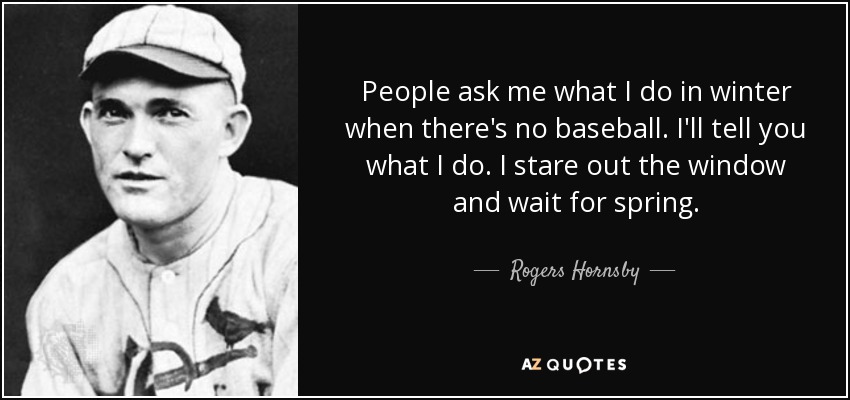
Who will get in?  And who will be joining Ankiel by buying a ticket for themselves?  That will be revealed on January 22.  Until then, we'll just follow the advice of Hall of Famer Rogers Hornsby and just stare out the window, waiting for spring to arrive.


Sunday, December 30, 2018

Studious Metsimus Presents The Happy/Crappy Recap For 2018

Another year is about to reach its conclusion, Mets fans.  Ray Ramirez is still gone, the Wilpons are still reluctant to break open their piggy banks and the Mets are still a fourth place team - something they've been for six of Citi Field's ten seasons.  In other words, the calendar may be changing, but the Mets haven't really followed suit.  Or have they?

Since Noah Syndergaard ended the 2018 campaign with a complete game shutout, some dead weight has been shown the door (Jay Bruce, Anthony Swarzak), some new blood has been added (Robinson Canó, Edwin Díaz, Wilson Ramos) and a "Familia" face has returned to his old haunts (the Danza Kuduro guy).  We've shed one last tear of joy for Wilmer Flores, and exhaled because new Rockies infielder Daniel Murphy will only be making one annual trip to Flushing instead of three.

There are still quite a few free agents available for the Mets to pass up on.  Just as there are many American League teams who should show some good ol' Junior Circuit hospitality to Bryce Harper and Manny Machado in order to keep them away from the Phillies.

But that's something for 2019.  We're here to talk about 2018 for the final time.  Optimistic Mets fans saw plenty of happy moments in the soon-to-be-over year, while the blue and orange pessimists (and there are plenty of you out there) thought the 2018 campaign was mostly manure.  Let's see what was so happy and crappy about the dearly departed season, shall we?


Two words.  Jacob deGrom.

You can't have a conversation about what made Mets fans happy in 2018 without mentioning deGrom's historic season.  You know the numbers.  1.70 ERA.  269 strikeouts.  And just ten wins in 32 starts.  Some people have compared Jake's 2018 campaign to Bob Gibson's in 1968 and Doc Gooden's in 1985.  DeGrom's season would have been better if it wasn't for those meddling wins.

Both Gibson and Gooden struck out 268 batters in their historic years.  DeGrom fanned one more.

Gibby and Doc pitched to a 1.12 and 1.53 ERA, respectively, in their Cy Young seasons.  The league average ERA in 1968 was 2.99 (or 1.87 higher than Gibson's record-setting mark), while the average N.L. pitcher in 1985 posted a 3.59 ERA (or 2.06 higher than Doctor K's figure).  Jacob deGrom would like Gibson and Gooden to hold his beer, as his 1.70 ERA was 2.32 lower than the league average 4.02 ERA.

Gibson allowed four runs or more in four of his starts in 1968, while Doc saw four men cross the plate in two of his outings in '85.  Only once did deGrom give up more than three runs in a game in 2018, as he ended the year with 29 consecutive starts allowing three runs or fewer, which is a major league record that Gibson and Gooden failed to approach in their stellar campaigns.

Sure, the Mets had breakout seasons from Brandon Nimmo (53 XBH, .404 OBP, .886 OPS) and Zack Wheeler (12-7, 3.31 ERA, 1.12 WHIP, 179 Ks) and Michael Conforto returned from his gruesome shoulder injury to post career highs in home runs (28) and RBI (82), but come on.  None of them brought Mets fans out to the ballpark as much as deGrom did.

Every deGrom start was a must-see event, and unfortunately, once the Mets were eliminated from postseason contention (which, contrary to popular belief, was not during the National Anthem on Opening Day), Jacob's starts were the only things Mets fans were looking forward to.

Which brings us to what was crappy about the 2018 campaign.


Two words.  David Wright.

Wright himself wasn't crappy.  In fact, he's arguably the best homegrown position player in franchise history.  But after playing in just 77 out of the Mets' 648 games from 2015 to 2018, Wright finally called it a career after making one final start for the only team he's ever known.

Wright looked to be on his way to a Hall of Fame career before Ray Ramirez, I mean, spinal stenosis got in the way.  One day, he will have a plaque on display in the Mets Hall of Fame and Museum.  Maybe the Mets will even retire No. 5.  But knowing the Mets, they'll probably just take the number out of circulation until Kelvin Torve Jr. is ready to be called up.

"Hey, kid!  Have we got the perfect uniform number for you!"

Anyway, the really crappy guy here is Peter O'Brien, the Marlins' first baseman who caught Wright's foul pop-up near the first base stands rather than slipping on an imaginary banana peel in order to give Wright a chance to get one final hit in a Mets uniform.  What is it about the Marlins playing the Mets in New York during the season's final three games that cause such crappy moments to happen?

On that note, I hope someone got O'Brien a copy of "How to Catch Pop-Ups at Citi Field" by respected author Luis Castillo as a stocking stuffer.


That's all she wrote for 2018, which means the 2019 season is just around the corner.  But before you put up one of those new calendars that someone got you for the holidays because they had no idea what else to get you and they've never heard of gift cards, let's pause to give credit to those hardworking Mets bloggers who still find the time to write about their favorite team even though most people have switched over to doing podcasts.

Respected and long-running blogs such as A Gal For All Seasons, Faith and Fear in Flushing, Mets Merized Online, MetsMinors.Net, Amazin' Avenue, Metstradamus, Remembering Shea, The Daily Stache, Mets360, Rising Apple, Mets Plus, Good Fundies, MetSilverman, Converted Mets Fan and Mets Daddy, just to name a few (or 15, to be exact) always have interesting stories to share, day or night.  Check them out some time.  I'd say "tell 'em Ed sent you" but I'm not sure all of them know who I am.

From all of us here at Studious Metsimus Headquarters, which is pretty much just a desk, a computer, a keyboard that needs a new battery and a guard cat (we couldn't afford a guard dog), we'd like to thank you for your continued support of this site and wish you all the best in 2019.  And when I say "we", I'm talking about Ed Leyro (the guy at the desk), Joey Beartran (the roving reporter/culinary expert who would like his computer back so he can order dinner) and Taryn "The Coop" Cooper (who would invent new curse words if I asked her to get a battery for the keyboard instead of just getting it myself).

And remember, Mets fans.  Winning isn't everything.  It's just the thing Jacob deGrom can't do whenever he pitches eight innings of one-run ball.


LET'S GO METS!!


The Studious Metsimus crew will be at a ballpark near you in 2019.  (Ed Leyro/Studious Metsimus)

Friday, December 7, 2018

Joey's Final Letter to Sandy Claus (2018)

In addition to what I ask for in this letter, I could also use a less drafty winter hat.  I almost froze taking this photo.


Dear Sandy Claus,

It's me, Joey Beartran, with my annual letter to you about what I want for the holidays.  Alas, this will be my final letter to you.  It's not because I've found someone else to write to who has a better success rate at giving me what I ask for.  It's also not because of the rumor I heard that you've been sick and had to pass along the keys to your sleigh to Brodie the Red-Nosed Reindeer.  (Although my sources can confirm that this is not a rumor.  Get well soon, you jolly old elf.)

No, the real reason why this is my final letter to you is because I'm no longer a kid.  I'm 14 years old!  Plus, I saw my Studious Metsimus colleague actually putting the presents under the tree last year instead of you, so I put two and two together when I saw that.  Don't worry.  I didn't share that information with my younger siblings.

Despite knowing the truth, I'm still a believer in tradition, so I'm penning one more wish list for you.  If your red-nosed replacement wants to read it with you, please feel free to share it with him.

This time around, the items I ask for won't be as impossible to find as they were in previous years.  So I won't be asking for Travis d'Arnaud to play past the first week of the season or for Yoenis Céspedes to drink more water.  Likewise, I won't demand for 30 pitchers to put on a Mets uniform in 2019 just to surpass last season's total of 29.  I already know no amount of pitchers can hold a lead for Jacob deGrom anyway.

No, my desires are reasonable this year.  As reasonable as it is to expect that Noah Syndergaard won't be traded before Opening Day or that Wilmer Flores won't come back to deliver a walk-off hit against the Mets instead of for them.  So grab one of those blue and orange cookies from the World's Fare Market that hardly anyone ever goes to and hear me out.  It's the least you could do for making us put up with Jose Reyes being on the 25-man roster every single day last season.


I'm feeling melancholy knowing I won't see Wilmer Flores raise the apple anymore at Citi Field.


I'd like a promise that all our prospects won't be traded away to land reclamation projects and players who aren't sure things.  First, our top picks from the 2016 and 2018 drafts were dealt to Seattle for Robinson Canó and Edwin Díaz.  Then, rumors have been swirling that Brandon Nimmo and/or Michael Conforto (a.k.a. the Mets' 2011 and 2014 first round picks, respectively) could be shipped off to Miami for J.T. Realmuto.  It's a good thing Peter Alonso was a second round pick or else I'd be worried that he'd be on the trading block.  You can't have a good future if the future is playing somewhere else.

Speaking of Peter Alonso, I'd like to see him on the Mets' Opening Day roster in 2019.  Between his time at Double-A, Triple-A and the Arizona Fall League, Alonso appeared in 159 games, or just about the equivalent of one full major league season.  In those games, he collected 81 extra-base hits (38 doubles, one triple, 42 homers), crossed the plate 108 times and drove in 146 runs.  For the record, no Met has ever produced more than 80 extra-base hits or surpassed 124 RBI in a single season.  If the team wants to save money by not starting his countdown clock to free agency so soon, may I remind the powers-that-be that Alonso might make them a sleigh-load of money in the form of extra ticket sales, merchandising, etc.  Your red-nosed friend won't be needed to light up the sky once Alonso starts to do that with his monster shots.

I'd like you to make sure Zack Wheeler eats the same meals every day, sleeps on the same side of the bed every night and answers all of Steve Gelbs' questions the same way (okay, that last one won't be too hard).  What I'm trying to say is, whatever Wheeler did last year, make sure he doesn't change a thing, especially after finally having his breakout season seven years after the Mets acquired him and five years after making his big league debut.  It's funny that once the man he was traded for (Carlos Beltran) retired, Wheeler finally stayed healthy and became a productive player.  Maybe all we need is for Michael Fulmer to call it a career in Detroit so that Yoenis Céspedes can finally earn that nine-figure salary.


Pssst!  Mr. Met!  Can you run this letter over to Sandy Claus?  And please don't pull a hamstring doing it.


For the 2019 season, I'd like Jacob deGrom to finally get some run support.  That means the Killer Cs (Canó, Céspedes, Conforto) have to hit the way we expect them to.  The Mets went 14-18 in deGrom's starts in 2018.  In eighteen of his 32 starts, deGrom allowed no more than one run.  The Mets found a way to lose eight of those games.  In approximately two-thirds of deGrom's appearances (21 of his 32 starts), the Mets failed to score more than three runs.  Had the team averaged 4.3 runs per game like they did in games not started by deGrom, they would have gone 23-9 in his outings instead of 14-18.  Those nine extra wins would have given the Mets an 86-76 record in 2018 and, more importantly, would have given the team meaningful games in September.  But hey, maybe the team likes empty seats in September.  I know I'm okay with the food lines being shorter when the team isn't playing well.  But I'd be more okay if the hitters came through when deGrom was on the mound.  On a related note, I'd like some Metropolitan Club seats next year so that food can be delivered to me at my seat.

I'd like Mickey Callaway to stop making the occasional bonehead decision or four.  You could chalk up having players batting out of order, not having relievers warming up in the bullpen when they're needed and any other head-scratching moves to his inexperience as a team's skipper.  But he now has a year under his belt.  Those mistakes in judgment won't be so easy to forgive in 2019.  He's not Jerry Manuel, so he can't depend on being gangsta to talk his way out of those errors this year.

Do you remember when we all blamed Ray Ramirez for the team's injuries?  Well, Dr. Death wasn't employed by the Mets in 2018, but players still spent as much time at the Hospital For Special Surgery as they did in the clubhouse.  It's almost getting to the point where they should just rename various wings of the hospital after the Mets players who find themselves constantly walking through the halls.  That's assuming they're able to walk, of course.  Therefore, I'd like to request that the team do whatever it can to help its players stay on the field.  I'd rather buy tickets to see the players on the field, not in the hospital recovery room.  Plus, hospital food is not an adequate replacement for the fare at Citi Field.


Is it true that I get eight days and nights of presents if I light one of these up?


Well, that's it for my final letter to you, Sandy Claus.  To recap, I'd like the team to stop being allergic to keeping first round picks.  I'd also like to see Peter Alonso in April without having to buy a plane ticket to Las Vegas.  Please make sure Zack Wheeler's second verse is the same as the first.  (And don't let Steve Gelbs show him video of the "churro dog incident".  No need for Wheeler to change his eating habits now.)  Take Harry Caray's advice and "let's get some runs" whenever the ace takes the hill.  Tell Mickey Callaway to watch "Moonstruck", especially the scene where Cher slaps Nicolas Cage.  (He'll know what I mean.)  Also, schedule an exorcism to make sure the ghost of Ray Ramirez hasn't been hanging around Citi Field.

Do all that and my retirement as a letter writer to Sandy Claus will be as happy as the one I hope David Wright is having.  (Miss you, Captain.)  Oh, and make sure you don't allow anyone to wear Wright's No. 5.  Willie Mays' previously out-of-circulation No. 24 was already handed to Robinson Canó.  The last thing we want is for the number to go to a journeyman player who's played for four teams over the last seven seasons and can't outhit Mario Mendoza in his most recent campaign but still finds a way to appear in over 100 games in said season.  Ask Jose Reyes what I'm talking about if you don't know what I mean.

Thanks so much for reading my letter, Sandy Claus.  And you too, Brodie, for being such a nosy reindeer.  (I know you were reading it over Sandy's shoulder.)  I wish you both a happy holiday season and hope Sandy makes a full recovery.  After all, I might not be writing any more letters after this one but every once in a while I might need to sit on a jolly old elf's lap to ask for a few things.  Those moments never get old.

Love and Mex Burgers forever,
Joey Beartran


I'll never forget you, Sandy Claus.  I hope your lap is always available to me.  You know, just in case.