Showing posts with label Roy Halladay. Show all posts

Monday, January 21, 2019

If Studious Metsimus Had a 2019 Hall of Fame Vote...

On Tuesday, January 22, the National Baseball Hall of Fame will be using its speed dial to inform several players and their families that they'll need to cancel any plans they have for the penultimate weekend in July because new plans have been made for them.  Those players who receive 75% of the Hall of Fame vote will be joining Modern Baseball Era inductees Lee Smith and Harold Baines on stage at the Clark Sports Center in Cooperstown, New York.

Last year's class saw a starting pitcher, a closer, three infielders and an outfielder receive their plaques, as Jack Morris, Trevor Hoffman, Jim Thome, Alan Trammell, Chipper Jones and Vladimir Guerrero were immortalized as six of the game's all-time greats.  Don't be surprised if a similar number of hotel rooms need to be booked for this year's inductees.

Fifteen players returned to the ballot this year, after receiving the minimum five percent of the vote last year, but not quite the 75% needed for induction.  Three former Mets (Jeff Kent, Billy Wagner, Gary Sheffield) are among them.  In addition to the 15 returnees, there are 20 first-timers on the ballot, with three of them also wearing a Mets cap at some point in their career.  Those three are lefty long-man Darren Oliver, the underachieving Jason Bay and the winner of the "Wait, He Was A Met?" award, Rick Ankiel, who helped the Mets more as a member of 2000 Cardinals than he did as a member of the Mets in 2013.

According to Ryan Thibodaux and his helpful Hall of Fame ballot tracker, there are 412 ballots out there, with 309 votes needed for induction.  Players will be five-percented off the ballot if they do not receive a minimum of 21 votes.  And by players, I mean Darren Oliver, Jason Bay and Rick Ankiel.  Sorry, guys.  At least you played long enough to get on the ballot.

Had Studious Metsimus been honored with the right to vote, players would have needed 310 votes to be inducted, so if someone like Roger Clemens or Barry Bonds misses the cut by one vote this year, they can file a formal complaint to make my vote officially count instead of it just being a feeble attempt to get me a few dozen page views every January.  Not that I would have voted for Clemens or Bonds anyway.  I'm not a fan of bat-tossing misrememberers or people who try to compete with Bruce Bochy (another former Met!) for the title of largest noggin in baseball.

Here's what would have been Ballot No. 413, focusing on three players I would personally like to see in the Hall, followed by the other seven who would get the "X" mark next to their names on my imaginary ballot.


Baseball Mecca.  (Photo courtesy of the Cooperstown/Otsego County website)


Edgar Martinez

Face it, the only reason Martinez is still on the ballot in his tenth and final year of eligibility is because he played a significant portion of his career as a designated hitter.  How else can you explain a lifetime .312 hitter with a .933 OPS and OPS+ just short of 150 not having a plaque in Cooperstown yet?

The voters of this generation who use the DH argument to foil the case of Martinez are like the previous generation's voters who couldn't bear to see relief pitchers making the Hall.  "If they can't pitch more than a few innings, I can't vote for them," those misinformed voters would say.  But relievers such as Rollie Fingers, Goose Gossage and Bruce Sutter (all Hall of Famers) paved the way for the one-inning closer to get recognition from the Hall.  Dennis Eckersley has a plaque in Cooperstown.  John Smoltz's three-and-a-half year period as a dominant closer also helped fuel his candidacy.  Trevor Hoffman got his Hall call last year and Lee Smith just impressed the Modern Era voters.  And who, pray tell, is going to keep Mariano Rivera out of Cooperstown this year, other than Boston bloviator Bill Ballou?

The same people who are now accepting one-inning closers as potential Hall of Famers now need to focus their attention on players who left their gloves at home.  Frank Thomas, who started more than 100 games at first base in just three of his 19 seasons and played in over 1,300 games exclusively as a designated hitter, was a first ballot Hall of Famer.  Why is his lifetime .301/.419/.555 slash line considered worthy of enshrinement and Edgar's .312/.418/.515 isn't?  Is it because Thomas produced the sexy hits (521 HR) and Martinez didn't (309 HR)?  It's true Thomas had 11 seasons with 100+ RBI while Edgar had just six.  But did you know the great Mickey Mantle only had four such seasons?  No one used that argument against Mantle and no one should.  But had he played in the DH era, Mantle's knee injuries would have relegated him to "leave your glove behind" status and then people would be questioning what should have been obvious about him; that he is undoubtedly a Hall of Famer.

Martinez won two batting titles.  He was also a league leader in runs scored, RBI, OPS, OPS+ and finished first multiple times in doubles and on-base percentage.  For seven seasons (1995-2001), which coincided with all of the Mariners' postseason trips in franchise history, Martinez's averages per 162 games were mindboggling.  He produced a .329/.446/.574 slash line.  That's a 1.020 OPS in 1,020 games.  And if that's not good enough, how about his 162-game average of 47 doubles, 32 homers, 123 RBI and 111 runs scored during the seven-year stretch?

There's a reason why the annual outstanding designated hitter award is named after Edgar Martinez.  That's because he was the best at what he did.  And those who are the best deserve to be with the best in Cooperstown.


This mustache should be on Edgar's plaque.  It's Hall of Fame worthy by itself.  (Bruce Bennett/Getty Images)


Larry Walker

Similar to Edgar Martinez, Walker hasn't gotten as much support as he should because of one nagging element.  Martinez has failed to get votes because of the DH factor, while Walker has the Coors Field factor looming over him.

Prior to becoming a Colorado Rockie, Larry Walker was already a good hitter and complete player.  In his final three years in Montreal, Walker had a .294 batting average, .371 on-base percentage and .516 slugging percentage, averaging 33 doubles, 21 HR, 88 RBI and 21 SB.  He was also an All-Star, won a Silver Slugger Award and two Gold Gloves while in Montreal.  Although those numbers are not quite Hall of Fame worthy, they were still very good.  Then he signed with Colorado and became one of the best players in the major leagues.

In his first season with the Rockies (1995), Walker hit .306 with 36 HR and 101 RBI.  His .607 slugging percentage was second in the league and he helped lead the third-year Rockies to their first-ever playoff appearance.  Year two in Colorado was fraught with injuries, as Walker only played in 83 games but still managed 18 HR, 58 RBI and 18 SB in half a season's worth of games.  Fully healthy in 1997, Walker's career took off into the stratosphere.  Walker's 1997 numbers (.366 batting average, 46 doubles, 49 HR, 130 RBI, 143 runs scored, 33 SB, .452 OBP, .720 SLG, 1.172 OPS) almost looked like they came straight from a video game.  But Walker wasn't done after his phenomenal '97 campaign.  Over the next five seasons, Walker won three batting titles (1998, 1999, 2001), finished second another year (2002) and had a combined .350 batting average over those five seasons.  Basically, he was Tony Gwynn with power and Gwynn was a first-ballot Hall of Famer.

In ten years as a Rockie, Walker posted a .334 batting average, .426 on-base percentage, .618 slugging percentage and 1.044 OPS.  Only 24 players in major league history finished with a higher career batting average than what Walker put up in that ten-year span.  Of those 24, the only three who finished with a higher on-base percentage, slugging percentage and OPS were Ted Williams, Babe Ruth and Lou Gehrig, all first ballot Hall of Famers and all legends of the sport.

Larry Walker played 17 years in the major leagues.  However, because of injuries, he only had four seasons in which he played at least 140 games.  From 1994-2005, Walker missed an average of 44 games per season, failing to play more than 103 games in five of those 12 campaigns.  Despite his multiple trips to the disabled list, Walker finished his career with 2,160 hits, including 471 doubles and 383 HR.  He also stole 230 bases, scored 1,355 runs and drove in 1,311 more.  His combined averages (.313 BA, .400 OBP, .565 SLG) are among the highest career marks of anyone not already in the Hall of Fame, as is his 72.6 bWAR.  And he wasn't just a product of Coors Field.

Walker played in 674 games for the Expos prior to his time in Colorado and 144 games for the Cardinals after leaving the Rockies, which is approximately five full 162-game seasons.  In those 818 games in non-Rockies uniforms, Walker posted an .851 OPS and 129 OPS+, averaging 63 extra-base hits and 21 steals per 162 games.  And those numbers weren't fueled by the thin air in Denver.

All told, Walker was a five-time All-Star, won seven Gold Gloves and three Silver Slugger Awards.  He also finished in the top 20 in the MVP vote seven times, winning the 1997 N.L. Most Valuable Player Award.  Not all of his awards and accolades came as a member of the Colorado Rockies, proving that Walker was an exceptional player before and after his time in Colorado.  Simply stated, Larry Walker has earned the right to become the first player with a Rockies hat on his Hall of Fame plaque.


Larry Walker sticks out his tongue to all those who won't vote for him.  (David Seelig/AllSport)


Mariano Rivera

He blew a save in the 1997 ALCS, which allowed the Cleveland Indians to stave off elimination and led to the Yankees' sole postseason series loss in a five-year period.

He couldn't hold a lead in the ninth inning of Game Seven of the 2001 World Series, allowing the Arizona Diamondbacks to celebrate their first and only championship.

He was credited with back-to-back blown saves in the 2004 ALCS, when converting any one of them would have resulted in a pennant for the Yankees instead of what became a curse-ending title run for the Boston Red Sox.

He lost four games to the Mets and allowed runs in six of his final 11 appearances against his crosstown rivals, allowing players such as Matt Franco (1999), Timo Perez (2001), Raul Gonzalez (2003), Damion Easley (2007), Ike Davis (2010), Ronny Paulino (2011) and Lucas Duda (2013) to drive in runs against him.

Clearly, after suffering so much in the postseason and failing repeatedly against the Mets, especially when facing less than legendary players, it's time to give Mariano Rivera a break.  He gets my sympathy vote for the Hall.


Down, but not out (of the Hall of Fame).  (Keith Torrie/NY Daily News Archive/Getty Images)


In addition to the marvelous Martinez, the wonderful Walker and the wretched Rivera, these are the other seven players I'd vote for Hall of Fame induction:

  • Roy Halladay:  Some people wonder if he'd have gotten as much support for the Hall had he not tragically passed away in 2017.  Those people probably don't realize that for a ten-year period (2002-11), Halladay was arguably one of the top three pitchers in baseball.  In that decade of excellence, Halladay earned a victory in nearly 70% of his decisions, had three 20-win seasons and posted a 2.97 ERA (148 ERA+) with a 1.11 WHIP.  He also led the league in innings pitched and shutouts four times each and finished first in complete games an incredible seven times.  That's Hall of Fame worthy, even if he's not here to accept the honor.
  • Todd Helton:  Like former teammate Larry Walker, Helton's candidacy will be questioned because of the Coors Field factor.  After all, during his best eight-year stretch (1998-2005), Helton averaged 46 doubles, 33 HR, 113 RBI and 114 runs scored, while striking out just 76 times and drawing 96 walks per season.  That's absolutely tremendous.  Wanna know what his average season was like in road games, otherwise known as games not played at Coors Field?  While wearing road grays during those eight seasons, Helton slashed .298/.398/.520 and produced 277 extra-base hits, drove in 347 runs and scored 337 times.  That's an average of 73 extra-base hits, 91 RBI and 89 runs scored per 162 road games.  In other words, still up in the elite hitter stratosphere.  Even with injuries sapping his power in his later years, Helton still managed to finish in the top 100 all-time in home runs (80th all-time), doubles (19th), extra-base hits (40th), hits (97th), RBI (97th) and runs scored (96th).  There are over 100 hitters in the Hall of Fame.  Helton ranks in the top 100 in many major hitting categories.  You do the math if he belongs in the Hall or not.
  • Fred McGriff:  I hadn't voted for him before, but now I see the error of my ways.  The 1994-95 strike that cancelled the World Series also did a number on McGriff's Hall of Fame candidacy.  Had the Crime Dog played in the 66 games that were cancelled, he likely would have collected the seven home runs he needed for 500 and the ten hits required to get to 2,500.  He also might have approached 1,600 RBI, as he finished 50 short of that lofty total.  A total of 17 players have collected 500 HR, 2,500 hits and 1,600 RBI.  Four of them have steroid suspicions (Barry Bonds, Rafael Palmeiro, Manny Ramirez, Gary Sheffield) and two are not yet eligible for the Hall (Alex Rodriguez, Albert Pujols).  The other 11 are already in Cooperstown.  McGriff played clean, he played hard and he played consistently well.  He gets my vote.
  • Curt Schilling:  Like Hoffman, he posted an impressive WHIP during an era known for its offense.  From 1992 to 2004, Schilling was the owner of a 1.091 WHIP, while averaging 202 strikeouts and just 44 walks per season.  In fact, of all pitchers with at least 3,000 strikeouts, no one posted a better strikeout-to-walk ratio than Schilling's 4.38 K/BB (3,116 K, 711 BB).  And then there's this posteason thing; the one with him going 11-2 with a 2.23 ERA and 0.968 WHIP in 19 starts.  He's one of the all-time greats.
  • Mike Mussina:  Schilling is considered one of the best pitchers of his era.  Modern metrics says Mussina was a better player, as his 83.0 bWAR puts him ahead of Schilling's 79.9 bWAR.  Mussina finished in the top-six in Cy Young Award balloting nine times and won seven Gold Glove Awards.  And of all pitchers who made at least 500 starts, only Hall of Famers Christy Matthewson, Pete Alexander, Randy Johnson and maybe-someday Hall of Famer Roger Clemens posted a higher winning percentage than Mussina's .638 mark. 
  • Billy Wagner:  It's a shame Wagner hasn't gotten more recognition, as he was far more dominant than 2018 Hall of Fame inductee Trevor Hoffman and 2019 enshrinee Lee Smith ever were.  Hoffman and Smith got the job done as effectively as any other closer who ever lived.  But Wagner would eat a hitter up and spit him out.  Injuries curtailed Wagner's career, but any pitcher who averaged nearly 12 strikeouts per nine innings, four whiffs per walk and finished his career with a WHIP under 1.00 (Wagner's WHIP was 0.998) deserves Hall of Fame consideration.  And I didn't even mention his 422 saves and 2.31 ERA.  Okay, maybe I just did. 
  • Jeff Kent:  Kent was more than just his 1970s porn star 'stache.  He was one of the best hitting second basemen of all-time.  For a guy whose career didn't take off until his age-29 season, Kent finished just 16 extra-base hits shy of 1,000.  The pressures of playoff baseball didn't faze him, as Kent posted an identical .500 career slugging percentage in the regular season and postseason.  And let's not forget his eight seasons with 100+ RBI, the 1,518 runs he drove in for his career and the title of all-time leading home run hitter at the second base position.


Those are my ten Hall of Fame selections.  Some will get in.  Some won't.  And some will continue to wonder why they have to keep paying for a ticket to get in to see their contemporaries' plaques.  (I'm talking to you, Clemens and Bonds.)  As always, some candidates didn't make my cut.  But every player on the Hall of Fame ballot in 2019 had an outstanding career and all of them had qualities that at the very least put them in the Hall of Fame conversation.  Except Rick Ankiel, who needed 14 seasons to reach the ten-year minimum needed to qualify for Hall of Fame consideration.

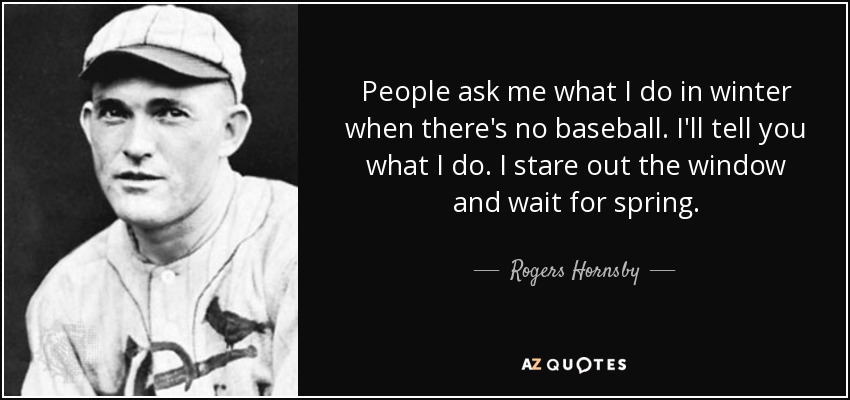
Who will get in?  And who will be joining Ankiel by buying a ticket for themselves?  That will be revealed on January 22.  Until then, we'll just follow the advice of Hall of Famer Rogers Hornsby and just stare out the window, waiting for spring to arrive.


Friday, August 16, 2013

Phillies Tell Their Manager To Get The Fuqua Out

"You can stop right there, Charlie.  I know your firing is totally Fuqua-ed up."

Charles Fuqua Manuel is the winningest manager in the 130-plus year history of the Philadelphia Phillies.  The team from the city of Brotherly Love never posted a losing record in any of Manuel's first eight seasons at the helm.  But with a 53-67 record through Thursday's games, Manuel was relieved of his duties by Phillies general manager Ruben Amaro, Jr.  His replacement on an interim basis will be Hall of Famer (and former Phillies draft pick) Ryne Sandberg.

At Studious Metsimus, we find it sacrilegious to defend anyone who is (or was) employed by the team with the most losses in baseball history.  However, we do feel for Manuel for losing his job over something that's not his fault.

Did Charlie Manuel give Ryan Howard a five-year, $125 million contract extension?  Howard has combined to produce 25 homers and 99 RBI in the first two years of his deal.  The first baseman has also struggled to stay healthy since he started collecting the big bucks.

Was Charlie Manuel responsible for signing Roy Halladay to a three-year, $60 million extension?   Halladay's wins have dropped from 19 to 11 to 2 since 2011, while his ERA his risen from 2.35 to 4.49 to 8.65 over the same time period.

What about Cole Hamels' seven-year, $153 million deal?  Did Charlie Manuel have anything to do with giving that contract to a pitcher who is currently leading the league in losses and is posting his highest ERA and WHIP since 2009?

And although Cliff Lee (five years, $120 million), Jonathan Papelbon (four years, $50 million) and Jimmy Rollins (three years, $33 million) have all been reasonably productive, they will all be expected to continue their production at a high rate of pay until they're in their mid-to-late thirties.

Charlie Manuel didn't give these players eight and nine-figure deals.  Ruben Amaro, Jr. did.  It was Amaro who made the trades, free agent signings and re-signings that are now coming back to bite the team.  And it was Amaro who had the dubious distinction of removing the manager, because of course, it was the manager's fault that players past their prime got injured or stopped producing at the same rate they did when they were in their 20s.

As Mets fans, we're quite pleased that the Phillies have gone from the self-proclaimed team to beat in 2007 to a team that gets beaten quite often in 2013.  And if the Phillies continue to expect thirty-somethings to play like twenty-somethings, they're going to remain behind the Mets in the division standings for years to come.

Manuel did a fantastic job with the Phillies, leading them to five division titles, two pennants and a World Series championship.  But he did this with players who were in their prime.  Those players are now past their prime, and the general manager who put and kept the team together has done nothing to make the team any younger.  Oh wait.  He did.  He replaced the winningest manager in franchise history with an interim manager who is fifteen years his junior.  Our bad.

Charles Fuqua Manuel is out as Phillies manager after nearly nine years at the helm.  It's too bad for Philadelphia that the man who should have lost his job for the small fortune he doled out to aging players is still collecting a paycheck of his own.

Sunday, July 28, 2013

Not Everyone Ages Gracefully - Just Ask The Phillies

Photo by Howard Smith/USA Today

Prior to the 2007 campaign, Phillies’ shortstop Jimmy Rollins declared his squad “the team to beat” in the National League East.  Rollins made his claim mere months after the Mets won the division by a dozen games and finished with the best regular season record in the National League.

Rollins’ statement proved to be prophetic, as the Phillies took home the 2007 NL East flag on the season’s final day.  Philadelphia’s successful run atop the division lasted half a decade, with the team winning five NL East crowns, two National League pennants and the 2008 World Series championship.

But in 2012, everything came crashing down for the Phillies.  Philadelphia missed the playoffs for the first time since 2006, finishing the year with an 81-81 record, their worst full-season showing since they went 80-81 in 2002.

Chase Utley and Ryan Howard combined to miss 170 games for the Phillies.  Rollins and Shane Victorino (who was traded to Los Angeles prior to the trade deadline) hit .250 and .261, respectively.  Cliff Lee won one more game all year than R.A. Dickey won in the month of June alone.  And Roy Halladay finished the year with his highest ERA since 2000.

Why did the Phillies fail last year while teams like the Washington Nationals and San Francisco Giants didn’t?  It’s all in the birth certificates.

When the Phillies began their run of excellence in 2007, the core of Jimmy Rollins, Chase Utley, Ryan Howard, Shane Victorino and Cole Hamels were all in their 20s.  They were either already in their prime (which usually begins around age 27) or about to enter their most productive years.

But once 2012 rolled around, the same players who helped the Phillies achieve sustained greatness not seen in the city of Brotherly Love since the late ‘70s and early ‘80s had all entered their early-to-mid 30s.  In addition, Philadelphia added pieces to the team in Roy Halladay and Cliff Lee who were supposed to keep the team atop the NL East standings for years to come.  Halladay and Lee started off well in Philly but both suffered through subpar seasons in 2012.  Not coincidentally, both Halladay and Lee were in their mid-thirties in 2012.

To acquire the pieces that were supposed to complement the core that’s been in place since 2007, the Phillies have parted ways with a number of prospects – prospects that could have been the Rollinses, Utleys and Howards of the next generation.  Putting it simply, the Phillies are old and they’re not getting any younger.  (Welcome aboard, Michael Young!  You’ll fit right in!)

The Mets were also an old team in 2006.  Pedro Martinez and Orlando “The Dookie” Hernandez were in their mid-to-late 30s as October rolled around.  Cliff Floyd was just two months away from turning 34.  Neither player got to experience that month the way Carlos Beltran, Carlos Delgado, Paul Lo Duca and Billy Wagner did, as Martinez and Hernandez were both disabled for the Mets’ shorter-than-expected playoff run and Floyd should have been disabled.  (And for the record, Delgado, Lo Duca and Wagner were also well into their 30s, while Beltran was six months away from blowing out 30 candles on his cake.)

In 2007 and 2008, the Mets’ thirty-somethings continued to get older and had a new forty-something to share disabled list war stories with in Moises Alou.  Not surprisingly, the aging veterans on the Mets were lapped by the much younger Jimmy Rollins and the rest of his "team to beat" in both seasons.

Now it’s 2013.  The defending World Series champion Giants have young stars at many key positions.  Players like Buster Posey, Matt Cain, Madison Bumgarner and Pablo Sandoval (and don’t forget Tim Lincecum) are all in their 20s and hope to lead the Giants to more titles.  The Washington Nationals, who won a league-high 98 games in 2012, are even younger than the Giants, with the under-30 core of Stephen Strasburg, Gio Gonzalez, Jordan Zimmermann, Bryce Harper and Ian Desmond all contributing in 2013.  And the Oakland A's and Baltimore Orioles are using youth to make another postseason push after surprising all of baseball in 2012.

The Mets are trying to shed their old man image that led to heartbreak and disappointment in 2006, 2007 and 2008.  Players like Matt Harvey, Zack Wheeler and Travis d’Arnaud are either currently contributing to the team’s success or waiting in the wings to contribute.  As the team gets younger, the brighter future promised to us by the front office is getting closer and closer to the horizon.

The Phillies fielded a young team in 2007 that became a five-year dynasty in the NL East.  But Philadelphia did not replenish their youth when their core players began to show signs of getting older and becoming more fragile.  Instead, they gave multi-year deals to their fading stars (five years to Ryan Howard, three years to Jimmy Rollins) and acquired players who are now closer to retirement than they are to their arbitration years (Roy Halladay, Cliff Lee, Jonathan Papelbon, Michael Young).

Matt Harvey faced Roy Halladay at Citizens Bank Park back on April 8, and there was no question who the better pitcher was.  Halladay might have been a part of the Phillies’ past successes, but success has now passed him by.  Meanwhile, Harvey is pitching the way Halladay used to pitch before his age caught up to him.

Hall of Fame pitcher Satchel Paige once said “don’t look back – something might be gaining on you.”  The Phillies have looked back, and all they see is a youthful Mets squad that's gunning to pass them and stay ahead of them for years to come.  (The Phillies have currently lost eight consecutive games and are just a game and a half ahead of the Mets in the standings.)  The Mets don’t have any reason to look behind them.  Their road to a successful future is right in front of them.  And they intend to drive down that road long after the Phillies have run out of gas.

Not everyone ages gracefully.  The Mets learned that the hard way in 2006, 2007 and 2008.  The Phillies are finding that out for themselves right now.
 

Sunday, September 23, 2012

R.A. Dickey vs. Gio Gonzalez: Stats You Didn't Know


R.A. Dickey.  Gio Gonzalez.  Both pitchers are gunning for the Cy Young Award.  Only one will get it (assuming we don't have a tie a la the 1979 NL MVP vote that got Keith Hernandez a co-MVP Award).

You can go to any site and find comparisons between the two.  Anyone will tell you that Gonzalez leads Dickey by one win and that Dickey leads Gonzalez in innings pitched, strikeouts, ERA, WHIP, shutouts and complete games.  But what about the stats you didn't know that should swing the Cy Young vote completely over to Dickey?

Here are those stats.  Once you read them, you'll have no doubt that R.A. Dickey should claim the top prize as the best pitcher in the National League.

R.A. Dickey is a knuckleball pitcher, but is only averaging 1.7 walks per start.  Only five pitchers in the National League (Edinson Volquez, Tim Lincecum, Aaron Harang, Yovani Gallardo, Carlos Zambrano) have walked more batters than Gio Gonzalez.

Despite not possessing a 90-mph fastball, R.A. Dickey has allowed only three stolen bases in six attempts.  Meanwhile, opposing base runners have a 92% success rate against Gio Gonzalez, going 11-for-12 against the Nationals' ace.

Gio Gonzalez has been lifted from three games this year in which the Nationals did not have the lead at the time of his removal, but got credit for the win when his offense gave him the lead in the half inning immediately following his removal.  Dickey has only earned one win in this way.  If not for the Nationals' timely hitting after his removal, Gonzalez would only have 17 wins, one less than the 18 Dickey would have if not for the sole occasion the Mets bailed him out.

The Nationals have scored seven runs or more in half of Gonzalez's 20 victories.  The Mets have scored five runs or less in thirteen of Dickey's 19 wins.

Gio Gonzalez has 21 quality starts (six or more innings pitched allowing three earned runs or less) out of his 31 starts.  He has also failed to get through the sixth inning in seven starts.  Dickey has 25 quality starts and has pitched at least six innings in all but two of his 31 starts.

Finally, Gio Gonzalez has 20 wins, but he's done it for the the team with the best record in baseball.  R.A. Dickey has won one less game than Gonzalez for a team that has 24 fewer wins.  Similarly, Gonzalez has two more losses on a 59-loss team than Dickey has for an 83-loss team.

When in doubt, always vote for the guy who makes a Dickeyface when he releases a pitch.

More often that not, the MVP Award goes to a player with the most impressive numbers on a team that's at or near the top of its division.  This is not always the case for the recipient of the Cy Young Award.

Five of the last six Cy Young Award winners in the National League played for teams that failed to make the playoffs, with the sole exception being Roy Halladay in 2010.  Two of those five winners pitched for teams that finished with losing records.  (Brandon Webb won the award in 2006 for the 76-86 Diamondbacks, while Tim Lincecum earned his hardware in 2008 for a 72-90 Giants team.)

The award is not called the Most Valuable Pitcher Award.  It's called the Cy Young Award.  It's given to the best pitcher in each league.  Gio Gonzalez has had an excellent season, one that is usually worthy of the league's top pitching honor, but R.A. Dickey has been the best pitcher in the National League this year.

Let's hope the voters consider every bit of statistical information available to them before they cast their votes and don't turn the Cy Young Award into the MVP (Most Valuable Pitcher) Award.  They're more than welcome to use the statistical facts from this piece to help them make their decision.

Tuesday, May 29, 2012

Epic Phail

In the 1985 flick, Brewster's Millions, minor league baseball player Monty Brewster (played by the late, great Richard Pryor) is given 30 days to spend $30 million so that he can inherit $300 million from his recently deceased great-uncle. 

Fast forward 27 years later.

In 2012, the Philadelphia Phillies are spending $55,285,714 on the contracts of Chase Utley, Ryan Howard and Roy Halladay.  All Utley and Howard have done this year is collect their paychecks from the comfort of their injury rehab centers, while Roy Halladay ... well, he just joined them.

Earlier today, Roy Halladay was placed on the 15-day disabled list with a strained right shoulder. However, he will be sidelined for far more than 15 days.  Phillies' assistant general manager Scott Proefrock stated that Halladay will miss six-to-eight weeks.  Halladay will be completely shut down for three weeks, then will spend the rest of his time on the DL working his way back into the Phillies' rotation.  In all likelihood, he will not return to the majors until after the All-Star Break.

Philadelphia has won five consecutive division titles, beginning in 2007, when Jimmy Rollins proclaimed the Phillies as the team to beat.    Now it seems the Phillies are no longer the team to beat, but the beaten team.  They have been in last place or next-to-last every day since April 17 and at no point this year have they been ahead of the Mets in the standings.  Halladay's absence will make it all the more tougher for them to climb out of the bottom half of the NL East.

In 2009, the Mets were plagued with injuries and they finished below .500 for the first time since 2004.   Phillies fans (the ones who hid from the ballpark prior to 2007) made fun of the Mets' maladies and told Mets fans to stop using the injuries as an excuse for their team's failures.  The tables have now been turned.

It's never a good thing to root for an injury to a player, but it sure feels sweet to see the Phillies going through what the Mets have been through for the past three seasons, especially with the Mets hanging around the top of the division while the Phillies languish at the bottom.

Shane Victorino, watch your back.  Then again, maybe you shouldn't.  You might end up straining your neck doing so.


Wednesday, October 12, 2011

Jimmy Rollins, Comedian

I've got a funny story to tell you.  No, really.  It'll crack you up.  It's about Phillies' shortstop Jimmy Rollins.  Giggling yet?  Okay, here goes.

Jimmy Rollins wants a five-year contract.

I'll give you a few moments to collect yourself.

It's true.  The former National League MVP (accent on "former") and soon-to-be free agent is seeking a five-year deal to remain with the Phillies or with whoever doesn't mind giving their money away.

 Jimmy Rollins' decision to ask for a five-year deal is certainly a head-scratcher.

Let's review this together.  This isn't the 2007 Jimmy Rollins we're taking for a spin here.  You remember that model, don't you?  Rollins was 28 years old and entering his prime when he proclaimed the Phillies as the team to beat in the National League East and then went out and delivered an MVP season.  That was four years ago.

Now Rollins is about to turn 33.  He is coming off a season in which he was placed on the disabled list for the fourth time in four seasons.  He has also continued his decline as the Phillies' leadoff hitter and spark plug.  After his magical 2007 season in which he hit .296 with 38 doubles, a league-leading 20 triples, 30 HR, 94 RBI, 41 SB and 139 runs scored (also pacing the NL in that category), his numbers have suffered.

Since 2008, Rollins has missed a total of 126 games for the Phillies.  His batting average over the past four seasons has been an unimpressive .261 and his on-base percentage (.325) has not been what a team should expect from its leadoff hitter.  Furthermore, Rollins' unexpected power surge in 2007 has proven to be a fluke, as the shortstop has averaged only 14 HR per season since his MVP season.

Speaking of flukes, do you remember those 20 triples he hit in 2007?  (You should.  I only mentioned it two paragraphs ago.)  In the four years since the 2007 campaign, Rollins has managed to hit only 19 triples.  That's one less triple in a quartet of seasons than he managed to hit in one playing-over-his-head season.

So we have a player who's clearly on the downside of his career, knows all the employees at the DL Hotel by first name, and this player is asking to be rewarded with a five-year contract?  Is he being serious or does he think we're as dumb as Turd Ferguson?

Turd Ferguson doesn't think Jimmy Rollins is being funny with his contract demands, and Turd Ferguson knows a thing or two about what's funny.


Let's talk about some of Jimmy Rollins' teammates, shall we?  First, there's Cliff Lee.  In 2010, he helped lead the Texas Rangers to their first World Series appearance in franchise history, a year after he pitched in the Fall Classic for the Phillies.  From 2008 to 2010, Lee went 48-25 with a 2.98 ERA and picked up valuable postseason experience.  For his efforts, the Phillies signed the 32-year-old Lee to a $120 million contract.  How long was this contract for?  Five years.

Now, let's discuss Rollins' infield mate, Ryan Howard.  The Phillies' behemoth has been one of the most feared power hitters in all of baseball since making his major league debut in 2004.  Since 2006, Howard has averaged 44 HR and 133 RBI per season, along with a .274 batting average and .369 on-base percentage.  In April 2010, the Phillies gave the then-30-year-old Howard a $125 million contract extension that would begin in 2012.  What was the length of Howard's deal?  Five years.

Finally, let's look at a certain Harry Leroy Halladay.  The Phillies traded for Halladay prior to the 2010 season and gave him a $60 million contract extension that began this season.  At the time of the trade and subsequent extension, Halladay was 32 years old.  Since then, Halladay has given the Phillies a regular season perfect game, a postseason no-hitter, a 40-16 won-loss record and a stellar 2.40 ERA.  So how long was that extension the Phillies gave him?  Three years.

So Cliff Lee and Roy Halladay, two of the best pitchers in the National League who have no health issues and are showing no signs of slowing down, get five years and three years, respectively.  Ryan Howard, the top slugger in the league who had no injury history prior to signing his deal, also gets five years.  None of the three players was older than 32 years old at the time they signed their deals with the Phillies.

Jimmy Rollins is currently older than all three players mentioned above at the time they put their John Hancocks on their contracts.  He also has an injury history and has seen a sharp decline in his numbers, something Lee, Halladay and Howard could not say when they signed on the dotted line.

There is no way Rollins will get a five-year contract from anyone, including the only team he has suited up for.  If the Phillies gave five years to the healthy, productive and younger Cliff Lee and Ryan Howard and only three years to one of the best pitchers of our generation in Roy Halladay, why should they give the brittle Rollins what he's asking for?

Jose Reyes might not get more than five years and that's the 28-year-old reigning National League batting champion we're talking about.  Rollins should consider himself lucky if he gets a Jeter-esque three-year deal. 

Simply stated, Wile E. Coyote, Genius has a better chance to get a five-year deal than Jimmy Rollins, Comedian.  At least with Wile E., you know he'll come back from an injury quickly to do what he does best.


Tuesday, December 14, 2010

Ho-LEE $#!% !!

Wasn't Cliff Lee upset after the 2009 season when the Phillies traded him to the Seattle Mariners in order to make room for Roy Halladay's contract extension? Apparently, he wasn't upset enough.

The mystery team vying for Cliff Lee's services was the Philadelphia Phillies and there is no longer any mystery surrounding Cliff Lee's decision as to where he'll be pitching in 2011, as the southpaw spurned the Yankees and Rangers to sign a five-year, $120 million with the Mets' rivals in Philadelphia.

According to a tweet by Ken Rosenthal, the deal can be worth as much as $135 million for six years if the option is vested. Jon Heyman tweets that the sixth-year option will kick in if Lee pitches 200 innings in 2015 (the year he turns 37) or if he pitches a combined 400 innings between 2014 and 2015.

The $24 million average annual value for the five years of Lee's deal gives Lee the highest AAV of any pitcher in baseball, surpassing the $23 million average annual value of CC Sabathia's seven-year contract with the Yankees. Not bad for a pitcher who is a combined 26-22 since his Cy Young Award-winning season in 2008.

Let's face it. If you take out Cliff Lee's two best seasons in the major leagues (18-5 in 2005 and 22-3 in 2008), Lee's career won-loss record is 62-53. To put that into perspective, in six years as a member of the New York Mets, the great Steve Trachsel went 66-59.

Cliff Lee has only had one season with an ERA under 3.00 (2.54 in 2008). He has never struck out 200 batters in a season. He has also given up more hits than innings pitched over his entire career (1419 hits allowed over 1409 innings), including the 2009 season, when he gave up more hits (245) than any pitcher in the major leagues.

Of course, none of this matters to the Philadelphia Phillies, who consider that to be good enough to warrant a $24 million per year salary that will take him through age 37 and possibly age 38 if the sixth year option vests.

Despite the obvious overpayment for a pitcher with Cliff Lee's credentials, the Phillies can boast that they have perhaps the best starting four in the major leagues now that Lee has joined his brother Roy (Halladay) and his other brother Roy (Oswalt), along with the longest-tenured Phillie of the group, Cole Hamels.

With Johan Santana's status uncertain, the Mets will probably trot out Mike Pelfrey to the mound on Opening Day. Big Pelf would probably be the Phillies' fifth starter in 2011. The gap between the Phillies' starting staff and the Mets' rotation is wider than the geographical one between the two cities.

The Phillies now have Cliff Lee while the Mets still have Ollie P. The 2011 season might be over before the first "O say, can you see".

Thursday, October 7, 2010

What If Roy Halladay Had Been Traded To The Mets?

In Game 1 of the National League Division Series, played Wednesday between Philadelphia and Cincinnati at Citizens Bank Park, Roy Halladay did what no other National League pitcher had ever accomplished in a postseason game. He held the opposition hitless. The masterful 104-pitch performance helped the Phillies take a 1-0 series lead over the Reds.

The former (and perhaps soon-to-be) Cy Young Award winner had pitched for the Blue Jays from 1998-2009 without ever sniffing the playoffs. If he had any butterflies churning in his stomach before his first postseason start for the Phillies on Wednesday, they certainly did nothing to prevent him from making history.

Ever since the Phillies acquired him via a trade with Toronto, Halladay has been nothing short of brilliant. He led the league with 21 victories in his first National League season and pitched a perfect game against the Florida Marlins in May.

But what if Omar Minaya had swung a deal with the Blue Jays to acquire Halladay before the Phillies did? Would it have been the Mets playing in October and not the Phillies? A quick look at Mets history should provide us with the answer.


Had Omar Minaya acquired Halladay, the bearded righty would have succumbed to an injury in May. Needing his leadership on the mound, the Mets would have rushed him back to the rotation (especially since the longer he stayed out of the rotation, the better chance that Jerry Manuel would have given Oliver Perez another chance to start). That would have led to a period of ineffective starts, which would have also included key losses to the Phillies and Braves.

Once Halladay righted his ship, Dead Manuel Walking would have tried to save his pitcher from overexerting himself by removing him from games after a number of seven-inning, 90-pitch efforts. Since the Mets never had quite the firepower found in the Phillies' offense, Halladay would have found himself leaving games with small leads that Frankie Kunckles would eventually give up.

Therefore, had Halladay been a Met, he still would have had a good season, but he would have led the league in no-decisions. He also would never have pitched a no-hitter or perfect game because signing with the Mets automatically prevents any pitcher from ever throwing one.

Perhaps it's for the better that Omar Minaya didn't trade for Roy Halladay. For one thing, we might never have seen R.A. Dickey become the quality starter he became. (You can ignore the fact that Dickey lost his only head-to-head matchup against Halladay at Citizens Bank Park on August 8). Also, it is a well-known fact that bearded players don't do well in blue and orange. Just ask Jeff Reardon.

Face it, Mets fans. Roy Halladay was never going to become a Met. Neither was Cliff Lee last season at the trade deadline. Neither was Roy Oswalt at this year's trade deadline. They all went to the Phillies because our now ex-general manager didn't have the clout he thought he once had.

Five years ago, Omar Minaya could just show up at any star player's door and say "if you can live with the fact that I say 'that being said' every other sentence, then I can give you more years and more money than anyone else is willing to give you." Now, players stay away from Flushing like if it had blue and orange cooties.

Jason Bay came to New York last year because no one else was willing to give him the exorbitant deal the Mets gave him, not because of Omar Minaya. The bottom line is that Omar Minaya couldn't give players what Phillies' GM Ruben Amaro Jr. could, and that was the promise that his team would be successful.

The Phillies have become one of the best teams in recent memory, while the Mets have become the team no one wants to play for. Roy Halladay is lucky the Phillies traded for him. Had he been a Met, he'd be trying to leave through the same door that Omar Minaya and Jerry Manuel used on Monday.

Wednesday, October 6, 2010

San Francisco Owes A Giant Thank You To The Mets

Leapin' lizards! For the first time since Barry Bonds left his syringe in San Francisco, the Giants are champions of the National League West. They won their first division title since 2003 (and only their sixth NL West title overall) by defeating the San Diego Padres on the final day of the regular season, capping a tremendous second half that saw them rise from mediocrity to the top of the division.

At the midway point of the season, the Giants were 41-40 and were a season high 7½ games behind the Padres. They were also 4½ games out of the wild card lead, with five teams ahead of them.

The final week before the All-Star Break saw the Giants playing the lowly Brewers and Nationals. They took both series to inch closer in the wild card race, but were still in fourth place in the NL West, with the Padres, Dodgers and Rockies ahead of them. Enter the New York Mets.

The Mets played better than expected in the first half of the season. At the All-Star Break, they were 48-40, which put them a game ahead of the San Francisco Giants in the wild card race. The two teams then played each other in the first series after the break. Everything changed after that series was completed.

The Giants took the first three games of the four-game series at AT&T Park, shutting out the Mets in the first two contests. In fact, the Mets were held scoreless by Giants pitchers for the first 24 innings of the series. The Mets did manage to salvage the final game of the series, but even then, they needed a blown call by home plate umpire Phil Cuzzi to win it.

Cuzzi called Giants' pinch-hitter Travis Ishikawa out at home when replays showed that the tag by Henry Blanco was late. The gaffe prevented what would have been the winning run from scoring in the bottom of the ninth inning. The Mets went on to win the game in ten innings.

The series with the Mets was the beginning of a stretch where the Giants won 15 out of 19 games to move into the wild card lead. The hot streak also moved them to within one game of the Padres for the division lead.

As Mets fans all know, the trip to San Francisco was the beginning of a 2-9 road trip that saw the Mets get swept in Arizona, followed by three losses in four games in Los Angeles. Meanwhile, the Giants won two out of three in Los Angeles and followed that up with a four-game sweep in Arizona. The Mets never got close to the Giants again.

The series with the Mets seemed to awaken the Giants' pitchers, who were already among the best in the National League prior to the All-Star Break. Consider these first half versus second half numbers for the Giants' starting rotation and bullpen.

  • Starting Pitchers (before break): 34-30, 3.65 ERA, 1.29 WHIP
  • Starting Pitchers (after break): 27-25, 3.39 ERA, 1.21 WHIP

  • Relief Pitchers (before break): 13-11, 3.17 ERA, 1.47 WHIP
  • Relief Pitchers (after break): 18-4, 2.78 ERA, 1.12 WHIP

The starters showed a nice improvement in the ERA and WHIP department, but the bullpen took things to another level. They were nearly unhittable in the second half, led by closer Brian Wilson, who led the National League in saves and finished with a career-best 1.81 ERA and 1.18 WHIP.

Pitching wins championships and the Giants have plenty of pitching. The top four pitchers in the Giants' rotation (Tim Lincecum, Matt Cain, Jonathan Sanchez, Madison Bumgarner) all had ERAs of 3.40 or less. No other staff in baseball can lay claim to four starters with ERAs as low as the Giants' quartet. In fact, Lincecum, who is the staff ace and the winner of the last two National League Cy Young Awards, is the starter with the 3.40 ERA. (However, he is the only one of the foursome who can claim to being the love child of Jennifer Aniston and Mitch from "Dazed and Confused".)


The Phillies might look like the team to beat in the National League, especially after today's no-hitter by Roy Halladay, but Halladay can't pitch every game. The Giants have four quality starters, all of whom are capable of keeping their opponents to a low hit total. (Like Halladay, Jonathan Sanchez can also claim a no-hitter on his résumé.)

Watch out, Atlanta. Don't start selling World Series tickets yet, Phillies. The Giants are red hot and their pitchers are leading the way. They took off once the Mets came into town and have never looked back. Therefore, on behalf of the Mets, I have two words to say to the Giants.

You're welcome.

Monday, May 31, 2010

Do The Hustle!

Some people say that as Jose Reyes goes, so do the Mets. Even SNY has gotten into the argument by constantly posting the Mets' record when Reyes scores at least one run as opposed to when he doesn't. (The Mets are 18-5 when he scores at least one run and 8-20 when he doesn't, for those keeping score at home.)

But why do the Mets have to depend on one catalyst to score runs? All nine players in the lineup should contribute towards victories (unless if you're the Phillies and you can only win games when Harry LeRoy Halladay starts).

That is why Studious Metsimus is going above and beyond to find a stat no one else is mentioning that is relevant to wins and losses.

Teams that score runs by advancing one base at a time need multiple hits to score their runs. Is it no wonder that these teams have difficulty winning games? Stealing bases puts runners in scoring position or advances runners to third base where they can score without needing a base hit.

The St. Louis Cardinals of the 1980s perfected the art of stealing bases and used it as a weapon. Their pilfering prowess allowed them to win three National League pennants (1982, 1985, 1987) and one World Series (1982).

So let's see what the Mets have done this year when they've felt frisky on the bases.


Over the first 51 games, the Mets have stolen bases in 34 of them. That leaves them with 17 games in which they did not steal a base. Their record is those 17 games is a disappointing 5-12. When they do steal at least one base, their record is 21-13. In games where they steal multiple bases, the Mets are 8-3.

To find the last time the Mets won a game in which they did not steal a base, you have to go back almost a full month to May 4, when the Mets defeated the Cincinnati Reds by the score of 5-4. Since then, the Mets have played seven games in which they failed to swipe a base and lost all of them.

So the moral of this story is quite simple, really. If the Mets are fleet on their feet, they stand a much better chance of winning ballgames. If they're stagnant on the bases, you'll see many more unhappy recaps.

Over the past few years, the Mets have not played particularly well in San Diego. If the Mets want to continue on their march towards first place, they have to remember to do the hustle once they're on the bases. Winning is contagious. Losing is as cool as Shane Victorino in a leisure suit. (Only he could turn Tony Manero into Tony Manure.)

To quote (and slightly alter) one-hit wonder Matthew Wilder's 1983 song, "Ain't nothin' gonna break their stride. Nobody's gonna slow them down. Oh no! They've got to keep on movin'!" Movin' on the bases, that is.

Sunday, May 2, 2010

In Santana We Trust

Tonight is the rubber game of the three-game series in Philadelphia between the Mets and the Phillies. The Mets head into the series finale holding on to a razor-thin half-game lead over the second place Phillies after Roy Halladay shut down the Mets' offense on Saturday with a complete game shutout and Mike Pelfrey came back down to Earth after his phenomenal and mostly scoreless April.

Just as Halladay did for the Phillies after his team lost to the Mets Friday night, it is now up to Johan Santana to be the stopper for the Mets. Santana must be the ace he's expected to be and pitch the Mets to victory tonight.

The Mets now have a renewed feeling of positivity following their recent eight-game winning record. A winning attitude has been permeating through the clubhouse and everyone is subscribing to it.

Therefore, it behooves Santana to follow Pelfrey's poor performance on the mound with a Santana-esque outing.

In 2008, Santana was 8-3 following a Mets loss. Last year, despite the fact that the Mets finished 22 games under .500, Santana finished with a winning record (5-4) when he pitched after a Mets defeat. Therefore, despite the fact that the Mets' record over the past two seasons has been below .500 (159-165), Santana has done his best to prevent losing streaks from getting longer, going 13-7 in his outings following a Mets loss.

Tonight will be the latest opportunity for Santana to pitch the Mets back into the win column after they made an appearance in the loss column in the previous game. That's what aces are paid to do. The Mets will need their ace to do just that if they want to remain in first place in the NL East.

Winning creates a positive attitude in the clubhouse. Roy Halladay gave the Phillies that feeling yesterday. It's time for the Mets' ace to do the same for the Mets. After all, in Santana we trust.

Thursday, April 1, 2010

The Studious Metsimus Jinx Is Alive And Well

Back In January, Studious Metsimus proclaimed that the Mets should sign Ben Sheets and made a reference to his son, Seaver. That post mentioned how Omar Minaya would assume that the little Sheet was named after Tom Seaver, without considering that perhaps Ben Sheets was a fan of the Seaver Family on the show "Growing Pains". There was also a comparison between Omar Minaya and Boner, a dimwitted character on "Growing Pains". Since then, the Mets failed to sign Ben Sheets and Andrew Koenig (the actor who played Boner) passed away.

Last week, there was a piece on Studious Metsimus called "To Avoid Repeating History, Mets Shouldn't Dropkick Murphy". Yesterday, it was revealed that Daniel Murphy will miss two to six weeks with a Grade 1 sprained MCL. Apparently, history has repeated itself (injuries) and the Mets will have to go with another first baseman.

There appears to be a Studious Metsimus Jinx similar to the one that affects players and teams that appear on the cover of Sports Illustrated. Remember last year when Sports Illustrated predicted that the Mets would win the World Series? Well that didn't exactly happen. Not only that, but SI predicted that the Mets would finish with a 92-70 record. Instead, they finished 70-92.

Since there is clearly a hex surrounding people, places and Boners who are mentioned on Studious Metsimus, I'd like to spend the rest of this blog praising the Philadelphia Phillies.

The Phillies are attempting to become the first National League team since the 1942-44 St. Louis Cardinals to win three consecutive National League pennants. With the addition of ace pitcher Roy Halladay, who's going to stop them? Jimmy Rollins doesn't even have to open his mouth. Everyone already knows the Phillies are the team to beat.

Manager Charlie Manuel slimmed down during the off-season. He claimed to do it for his health, but we all know why he really did it. It's because a staff fronted by soon-to-be Cy Young Award winner Halladay, followed by Cole Hamels, Joe Blanton, J.A. Happ and ageless wonder Jamie Moyer will require very few visits to the mound. Manuel certainly wasn't going to lose weight that way.

Last season, the Phillies finished at or near the top of the National League in most offensive categories. They hit more home runs with men on base (96) than the Mets hit home runs (95). Clearly, the Phillies are a juggernaut that cannot be stopped.

The Mets and the rest of the National League might as well raise the white flag now. The Phillies are clearly the team to beat and nothing will get in their way.

On that note, the Studious Metsimus staff would like to wish you all a Happy April Phools...uh...Happy April Fools Day! Perhaps this Studious Metsimus Jinx can be good for something!