Showing posts with label Charlie Hough. Show all posts

Sunday, April 22, 2012

Bears On Film: Knuckleball!

Hi, everyone!  It's us, Joey and Iggy Beartran, coming at you from the Tribeca Film Festival, where we were treated to VIP treatment for the premiere of Knuckleball!, a documentary on the dying art of knuckleball pitching and the fraternity that the pitch has created amongst its throwers.

Before we discuss the film, we'd like to share the beautiful movie poster we won (see photo to the left), which was autographed by four of the protagonists of the film.  In all, three former major league knuckleball pitchers (Jim Bouton, Charlie Hough and Tim Wakefield) and one current knuckler (the Mets' own R.A. Dickey) signed the poster.   All four were also in attendance at the premiere, as were the film's director and producer.

Before the film, we were treated to live music (courtesy of Moon Hooch) and a surprise appearance by Mr. Met.  Then, shortly after sundown, the film began.  (Did we mention it was an outdoor premiere, similar to a drive-in experience, except that we took the subway and we didn't catch anyone making out in the backseat of their car?)

The film began with the recently retired Tim Wakefield, as he was searching for his 200th career victory last year.  Most of the film dealt with Wakefield and R.A. Dickey, with occasional appearances and interviews with other knuckleball pitchers such as Jim Bouton, Charlie Hough, Wilbur Wood, Tom Candiotti and Hall of Famer Phil Niekro.

In one particular memorable scene, Dickey, Wakefield, Hough and Niekro gathered together for a golf outing (Dickey can really drive the ball, while Niekro, golfing in his Atlanta Braves cap, looked like Jack Nicklaus but couldn't play like him) and a chat.  The brothers-in-knuckles discussed the toughest hitters they faced in the major leagues among other topics.

Charlie Hough claimed Mark Salas was his toughest out.  This is the same Mark Salas who was a catcher for six teams in his eight-year career and finished with a lifetime .247 batting average and a mere 319 hits.  But against Hough, Salas turned into Babe Ruth, batting .433 (13-for-30) with three home runs.  For two seasons (1986-87), Salas was unconscious against Hough, batting .692 (9-for-13) with an ungodly 1.385 slugging percentage.  R.A. Dickey called Salas a "slappie", which was an affectionate term for a good contact hitter who would always fight off knuckleballs until they were able to get one that didn't knuckle as much.

For Phil Niekro and Tim Wakefield, their toughest outs were players who were good hitters against many pitchers, not just knuckleball artists.  Niekro admitted to having a rough time with Bill Buckner, while Wakefield hated facing Darryl Strawberry, which was proven when the film cut to footage of the Straw Man hitting a titanic home run off Wakefield in the old Yankee Stadium that cleared the side of the upper deck and hit a garage door in the back of the stadium.  (In case you were wondering, the scene with the four knucklers ended without Dickey naming his toughest out, although he later admitted that Carlos Delgado always hit him well, while Derek Jeter was a player who did not fare well against him.)

From there on, the film focused on Wakefield's rise to the major leagues as a converted infielder who couldn't hit and culminated with his 200th victory on September 13, 2011.  The use of old footage was amazing, especially when showing his rise and fall with the Pittsburgh Pirates in 1992 and 1993.

R.A. Dickey gives an interview while Tim Wakefield and Charlie Hough pose for photos behind him. 


In the case of R.A. Dickey, there were times when his story mirrored the events detailed in his book, Wherever I Wind Up.  For a moment, we thought we were watching the movie adaptation of his book and not a story about knuckleball pitchers over the years, especially in a scene that discussed his missing ulnar collateral ligament and various scenes featuring his wife, Anne.  The other knucklers' spouses did not make appearances in the film, save for a short scene with Stacy Wakefield.

As Mets fans, of course we were attracted to Dickey's rise from a highly-touted conventional pitcher to a journeyman pitcher who moved 37 times to pursue his dream.  But the Wakefield story was also intriguing and was discussed at length in the film.  The director did a fine job in showing how Wakefield became a knuckleball pitcher and how he used that unpredictable pitch to become one of the Red Sox' all-time winningest pitchers.  But it also showed just how that pitch can lead to unfortunate moments, such as the home run Wakefield gave up to Aaron Boone to end the 2003 American League Championship Series.

After giving up the home run, Wakefield claimed that he thought he was going to be Bill Buckner for a new generation of Red Sox fans (yes, Mets fans, we do get to see Mookie hitting the ball through Buckner's legs as Wakefield talks about this), but instead, he was not vilified in Boston.  Rather, he was appreciated for everything he gave the team over his long career with the Red Sox.  This revelation then led to the scene in the film when Wakefield finally achieved his landmark 200th victory, followed by footage of his retirement in February 2012, where Wakefield thanked all the knuckleballers that came before him and passed the torch to R.A. Dickey.  It was truly a beautiful story and an outstanding job of editing.

All in all, we enjoyed the film very much.  Of course, we might be biased as Mets fans because of all the attention given to R.A. Dickey.  (Look out for a scene in the film where Dickey talks about his chances of making a start after tearing his fingernail, claiming that he should have no problem because his body tends to generate an excess amount of protein, which leads to fingernail growth - he also claims this is why he has no difficulty growing hair.)   But even without Dickey's screen time, the film was quite an effort by the director/producer team of Ricki Stern and Annie Sundberg.

Unlike an actual knuckleball, which tends to go all over the place before settling in (or bouncing off) the catcher's mitt, the film Knuckleball! was easy to follow and a pleasure to watch.  It provided fantastic insight into the rarely-used pitch and the men who made a living throwing it.  We highly recommend it and give it two paws up.  (We'd give it two knuckles up, but we don't have any knuckles...)


For our review of Moneyball, please click here.  No, there is no truth to the rumor that we only review films with balls in their titles.  That's just a coincidence, although we did enjoy Meatballs and Spaceballs.

Monday, December 5, 2011

Broken News: The Two Hours Before Midnight Massacre

Welcome to the latest edition of Broken News, where someone else breaks the news and then we break it some more.  Broken News might be the perfect title for what I'm about to say because fans of Jose Reyes feel like their hearts have been broken this morning.

A little over two hours before midnight, it was revealed that Jose Reyes decided to accept the Marlins' latest contract offer of six years and $106 million to leave the only team he'd ever known.  I'll let that sink in before I continue...

 Sigh...

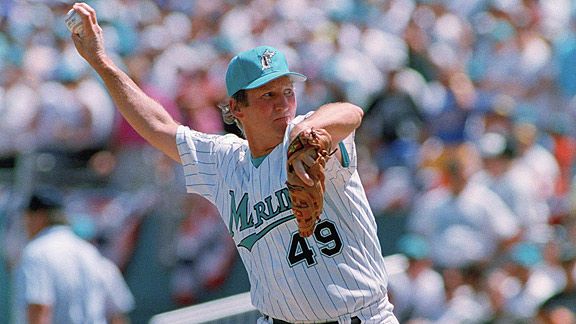
...I know.  It'll never sink in.  Soon he will take his physical, pass it and appear before the Miami media (which probably outnumber the true Marlins fans in South Florida - the ones who still proudly wear their Charlie Hough Marlins jerseys to games).

Gone will be the legs that produced 1,300 hits, 99 triples, 370 stolen bases and the only batting title in franchise history.  Replacing him at shortstop will be Ruben Tejada, who shows promise defensively and is very good at working the count.  That being said, this is the equivalent of replacing Tom Seaver in the rotation with Pat Zachry, who was also a promising young player in 1977 coming off a Rookie of the Year campaign with the Reds.  Pat Zachry was no Tom Seaver.  He was barely better than Nino Espinosa, but Nino rocked his afro better.  Ruben Tejada might not be able to rock anything, other than an occasional double or two that might hit the moved-in walls at Citi Field on three hops.

None of this is Ruben Tejada's fault and fans should not expect him to replace Jose Reyes' production on the field.  Similarly, no one should boo Angel Pagan if he's not the leadoff hitter Reyes was.  However, those two players will probably be heckled when they go through a slump, prompting the 7 Line to create "Bring Back Reyes" T-shirts and placards for display at an empty Citi Field.  (Note to the 7 Line:  If you do create "Bring Back Reyes" shirts, can I have one for free for giving you the idea?)

The Marlins are giving Jose Reyes $106 million for the next six years.  That's more than the Mets are willing to commit to every player on their roster in 2012.  The average annual value of nearly $18 million is more than the $15 million the Marlins spent on their entire 25-man roster in 2006, which coincidentally was the last (and only) time Jose Reyes played in the postseason.

 Double sigh...

You might say that $106 million is too much to pay for a player who'd been on the disabled list in each of the last three seasons.  You might also say that six years is too much for a player whose game depends on his legs, especially one who will still be earning $18 million annually when he's in his mid-thirties.

But one thing is for sure.  Jose Reyes was a dynamic player, one who could change a game like no other player on the Mets could.  The Marlins noticed that and were willing to take a risk, one that might bite then in the end, but for now makes them a far better team than the one that finished in last place in the NL East in 2011.

The Mets never had a chance.  And the way things look now, they're not going to have a chance in the NL East for years to come.  Last night, the current generation of Mets fans lived through their version of the Midnight Massacre.  If the Marlins ripped the fans' hearts out in 2007 and 2008, then they took their souls last night when they acquired Jose Reyes.

It's always been hard to be a Mets fan in this town.  It just became harder.

Friday, February 25, 2011

A Double Dose of Dickeypedia

There are times when R.A. Dickey's words of wisdom cannot be contained. They can come at you from every direction, just like an Oliver Perez fastball. So it should come as no surprise that Bill Madden's article on the Mets' knuckler/wordsmith in today's Daily News touched upon a topic that made us consult Dickeypedia.

In 2005, R.A. Dickey was coming off his second consecutive poor season for the Texas Rangers. As a result, Dickey was asked by the Rangers to consult knuckleball guru (and former Ranger pitcher) Charlie Hough so he could learn the nuances of the nomadic pitch. In discussing Hough's influence on Dickey's career-saving pitch, the Mets' righty professed:


"Charlie taught me the rudiments of the knuckleball. He changed my grip to help with the consistency and make it mechanically more compact."


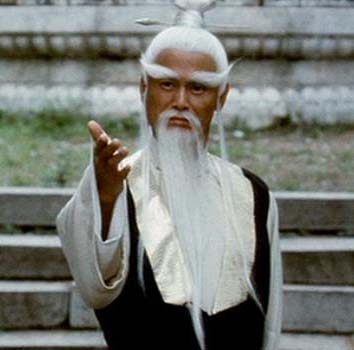
Later on, Dickey discussed how he went to Atlanta a few years after studying under Charlie Hough. There he met the Pai Mei of knuckleball instructors, Phil Niekro. After some time in the film room, Niekro made some minor changes to Dickey's delivery, evolving the pitch into what it has become.

Dickey came out of the meeting with Niekro as a new man with a devastating new pitch. So overjoyed was Dickey that he let his extensive vocabulary describe the feeling:


"Only a few people have the knuckleball vernacular. But as Phil told me, the one design of the pitch is to get people out."


R.A. Dickey learned how to throw the knuckleball so he could get people out. However, his penchant for spitting out SAT words as if they were sunflower seeds has gotten people's dictionaries out as well.

For those who only got credit on their SAT for spelling their names correctly, here are the definitions for the words "rudiments" and "vernacular":

rudiments:
  • 1. the elements or first principles of a subject.
  • 2. a mere beginning, first slight appearance, or undeveloped or imperfect form of something.

vernacular:
  • 1. the native speech or language of a place.
  • 2. the language or vocabulary particular to a class or profession.

R.A. Dickey showed us the proper way to use those words in sentences. To show you how NOT to use these words properly, we decided to contact former Met closer (and receiver of fan wrath) Armando Benitez to give us his input. In less time than he used to take to blow a crucial save, Benitez came up with these wild pitches of wisdom.


"I don't understand why Mets fans were always booing me. I always went out there and gave 100%. If that's not good enough, then tough. I won't be disrespected, so they better not be rudiments to me."


If that isn't enough for you, Benitez decided to reflect on one "disrespectful" moment in his Mets career. You might remember it as the ninth inning, game-tying, three-run homer he gave up to San Francisco's J.T. Snow in the second game of the 2000 NLDS.


"After that game, I was confronted by a Mets fan who was at the game, but couldn't get tickets. He decided to watch the game from across McCovey Cove. He told me that from where he was, he didn't even need vernaculars to see that I had just served up a meaty pitch for Snow to hit."


If only Armando Benitez had consulted Dickeypedia first, he might not have made a fool of himself when talking about Mets fans who weren't happy with his version of 100%. Then again, we are talking about the guy who put the "BS" in Blown Save...

That's all for this edition of "Dickeypedia Word of the Week". Be here next time as we proceed with your education while former Mets continue to suffer their humiliation.