Showing posts with label Chipper Jones. Show all posts

Saturday, January 6, 2018

If Studious Metsimus Had a 2018 Hall of Fame Vote...

On Wednesday, January 24, the National Baseball Hall of Fame will call several worthy inductees and tell them to book a flight to Cooperstown in the summer.  Those new members will join former Detroit Tigers teammates Jack Morris and Alan Trammell on the stage, as those former players were inducted via the Modern Baseball Era ballot last month.

Last year's class saw the inductions of Jeff Bagwell, Tim Raines and Ivan Rodriguez, as well as executives John Schuerholz and Bud Selig.  Going by this year's early indications, the Hall of Fame stage in 2018 may be just as crowded.

A total of 14 players have returned to the ballot this year, after earning at least 5% of the vote in previous elections, but not quite receiving the 75% needed for enshrinement.  Among them are three former Mets (Jeff Kent, Billy Wagner, Gary Sheffield).  In addition to those players, there are 19 first-timers on the ballot, including two former Mets pitchers (Jason Isringhausen, Johan Santana).  And of course, there's a former Met killer on the ballot named Larry; no nicknames or surnames needed for him.

According to Hall of Fame ballot tracker Ryan Thibodaux, a total of 424 ballots will by cast by those BBWAA members who are fortunate enough to have a vote.  For all you kids out there, that means 318 votes will be needed for players to receive that snazzy Hall of Fame jersey.  That also means a player will need the support of 22 voters to avoid falling off the ballot.

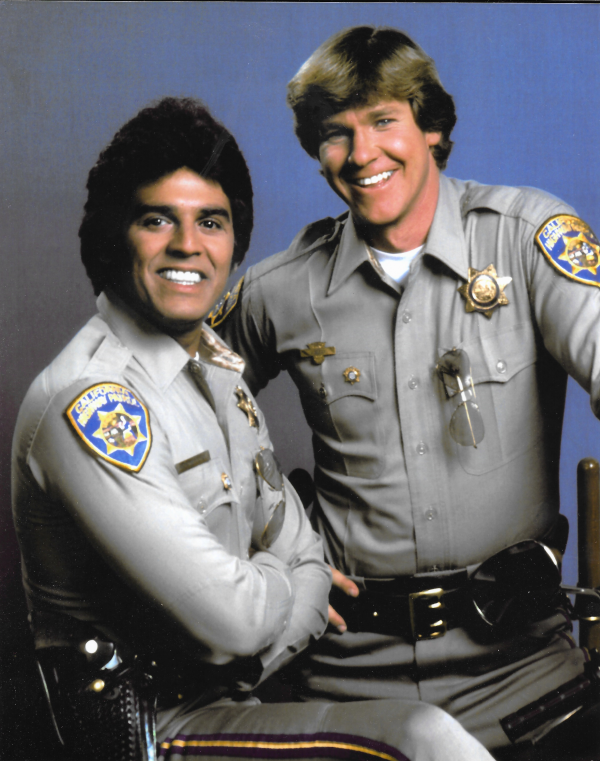
Had Studious Metsimus gotten a vote, the number of ballots cast would have jumped to 425.  But since the "W" in BBWAA stands for "writers" and not "wannabes" (as a blogger, I suppose I fall under the latter category), I won't be able to help some poor athlete worth tens of millions of dollars achieve legendary status.  Then again, perhaps it's best that I don't get a vote, especially since I'd enshrine Jeff Kent just to get his CHiPs era mustache into the Hall.

And now, before you get a chance to search on eBay for a vintage Ponch and Jon poster, it's time to reveal the ten former players who would have been on Ballot No. 425 had such a vote existed, focusing on the three players I loved to watch play the most, followed by the remaining seven in condensed form.


Baseball Mecca.  (Photo courtesy of the Cooperstown/Otsego County website)


Edgar Martinez

Face it, the only reason he's not in the Hall already is because he played a significant portion of his career as a designated hitter.  How else can you explain a lifetime .312 hitter with a .933 OPS and OPS+ just short of 150 not having a plaque in Cooperstown yet?

The voters of this generation who use the DH argument to foil the case of Martinez are like the previous generation's voters who couldn't bear to see relief pitchers making the Hall.  "If they can't pitch more than a few innings, I can't vote for them," those misinformed voters would say.  But relievers such as Rollie Fingers, Goose Gossage and Bruce Sutter (all Hall of Famers) paved the way for the one-inning closer to get recognition from the Hall.  Dennis Eckersley has a plaque in Cooperstown.  John Smoltz's three-and-a-half year period as a dominant closer also helped fuel his candidacy.  Trevor Hoffman (more on him later) is knocking on the Hall's door.  And who's going to keep Mariano Rivera out of Cooperstown once he's eligible in 2019?

The same people who are now accepting one-inning closers as potential Hall of Famers now need to focus their attention on players who left their gloves at home.  Frank Thomas, who started more than 100 games at first base in just three of his 19 seasons and played in over 1,300 games exclusively as a designated hitter, was a first ballot Hall of Famer.  Why is his lifetime .301/.419/.555 slash line considered worthy of enshrinement and Edgar's .312/.418/.515 isn't?  Is it because Thomas produced the sexy hits (521 HR) and Martinez didn't (309 HR)?  It's true Thomas had 11 seasons with 100+ RBI while Edgar had just six.  But did you know the great Mickey Mantle only had four such seasons?  No one used that argument against Mantle and no one should.  But had he played in the DH era, Mantle's knee injuries would have relegated him to "leave your glove behind" status and then people would be questioning what should have been obvious about him; that he is undoubtedly a Hall of Famer.

Martinez won two batting titles.  He was also a league leader in runs scored, RBI, OPS, OPS+ and finished first multiple times in doubles and on-base percentage.  For seven seasons (1995-2001), which coincided with all of the Mariners' postseason trips in franchise history, Martinez's averages per 162 games were mindboggling.  He produced a .329/.446/.574 slash line.  That's a 1.020 OPS in 1,020 games.  And if that's not good enough, how about his 162-game average of 47 doubles, 32 homers, 123 RBI and 111 runs scored during the seven-year stretch?

There's a reason why the annual outstanding designated hitter award is named after Edgar Martinez.  That's because he was the best at what he did.  And those who are the best deserve to be with the best in Cooperstown.

Even Jeff Kent's mustache can't compare to Edgar Martinez's classic lip fuzz. (Bruce Bennett/Getty Images)


Larry Walker

Similar to Edgar Martinez, Walker hasn't gotten as much support as he should because of one nagging element.  Martinez has failed to get votes because of the DH factor, while Walker has the Coors Field factor looming over him.

Prior to becoming a Colorado Rockie, Larry Walker was already a good hitter and complete player.  In his final three years in Montreal, Walker had a .294 batting average, .371 on-base percentage and .516 slugging percentage, averaging 33 doubles, 21 HR, 88 RBI and 21 SB.  He was also an All-Star, won a Silver Slugger Award and two Gold Gloves while in Montreal.  Although those numbers are not quite Hall of Fame worthy, they were still very good.  Then he signed with Colorado and became one of the best players in the major leagues.

In his first season with the Rockies (1995), Walker hit .306 with 36 HR and 101 RBI.  His .607 slugging percentage was second in the league and he helped lead the third-year Rockies to their first-ever playoff appearance.  Year two in Colorado was fraught with injuries, as Walker only played in 83 games but still managed 18 HR, 58 RBI and 18 SB in half a season's worth of games.  Fully healthy in 1997, Walker's career took off into the stratosphere.  Walker's 1997 numbers (.366 batting average, 46 doubles, 49 HR, 130 RBI, 143 runs scored, 33 SB, .452 OBP, .720 SLG, 1.172 OPS) almost looked like they came straight from a video game.  But Walker wasn't done after his phenomenal '97 campaign.  Over the next five seasons, Walker won three batting titles (1998, 1999, 2001), finished second another year (2002) and had a combined .350 batting average over those five seasons.  Basically, he was Tony Gwynn with power and Gwynn was a first-ballot Hall of Famer.

In ten years as a Rockie, Walker posted a .334 batting average, .426 on-base percentage, .618 slugging percentage and 1.044 OPS.  Only 24 players in major league history finished with a higher career batting average than what Walker put up in that ten-year span.  Of those 24, the only three who finished with a higher on-base percentage, slugging percentage and OPS were Ted Williams, Babe Ruth and Lou Gehrig, all first ballot Hall of Famers and all legends of the sport.

Larry Walker played 17 years in the major leagues.  However, because of injuries, he only had four seasons in which he played at least 140 games.  From 1994-2005, Walker missed an average of 44 games per season, failing to play more than 103 games in five of those 12 campaigns.  Despite his multiple trips to the disabled list, Walker finished his career with 2,160 hits, including 471 doubles and 383 HR.  He also stole 230 bases, scored 1,355 runs and drove in 1,311 more.  His combined averages (.313 BA, .400 OBP, .565 SLG) are among the highest career marks of anyone not already in the Hall of Fame, as is his 72.6 bWAR.  And he wasn't just a product of Coors Field.

Walker played in 674 games for the Expos prior to his time in Colorado and 144 games for the Cardinals after leaving the Rockies, which is approximately five full 162-game seasons.  In those 818 games in non-Rockies uniforms, Walker posted an .851 OPS and 129 OPS+, averaging 63 extra-base hits and 21 steals per 162 games.  And those numbers weren't fueled by the thin air in Denver.

All told, Walker was a five-time All-Star, won seven Gold Gloves and three Silver Slugger Awards.  He also finished in the top 20 in the MVP vote seven times, winning the 1997 MVP Award.  Not all of his awards and accolades came as a member of the Colorado Rockies, proving that Walker was an exceptional player before and after his time in Colorado.  Simply stated, Larry Walker has earned the right to become the first player with a Rockies hat on his Hall of Fame plaque.

Larry Walker sticks out his tongue to all those who won't vote for him.  (David Seelig/AllSport)


Vladimir Guerrero

He didn't reach 3,000 hits.  He didn't hit 500 homers.  He didn't collect 1,000 extra-base hits.  He didn't score 1,500 runs, nor did he drive in that amount.  And despite having a feared throwing arm, he somehow never won a Gold Glove.  (Too bad there's no Gold Arm Award.)  None of that matters.  Because Vladimir Guerrero is definitely a Hall of Famer.

Guerrero played only 14 full seasons in the major leagues.  (He played a total of 99 games between the 1996 and 1997 campaigns.)  But he was a feared player both at the plate and in the field.  Guerrero never batted lower than .290 in any of his full seasons and was a .300 hitter in 11 of the 12 years he qualified for the batting title, becoming one of just 30 players to have that many .300 campaigns.  Although he never won a batting title, Guerrero had four years with 200+ hits, leading the league in 2002.  Guerrero also had eight seasons with 30+ homers and an incredible ten years with 100+ RBI, making him one of only 18 players to have double digit seasons with triple digit RBIs.  In addition, Vlad was a nine-time All-Star and eight-time Silver Slugger recipient.

Opposing pitchers feared facing Guerrero, as evidenced by the five seasons in which he was the league leader in intentional walks.  Only Barry Bonds (12 times) and Wade Boggs (six times) led the league in intentional passes more often.  Guerrero was walked intentionally 250 times - the fifth highest total in major league history.

It wasn't just moundsmen who hated to face him; opposing base runners were afraid to run on Guerrero as well.  Guerrero had 126 outfield assists, leading the league in 2002 and 2004.  He could have thrown out many more runners, but they got the memo later in his career and stopped trying to run on his cannon.

And in case you thought it's just me singing his praises, in 2004 Guerrero won the A.L. Most Valuable Player Award.  Nice, right?  Well, that season was one of a dozen years in which the right fielder received MVP votes.  That's just about every year he played in the big leagues, meaning Guerrero was recognized as one of the best players in the game for nearly the entirety of his career.

2,590 hits.  477 doubles.  449 homers.  181 stolen bases.  1,328 runs scored.  1,496 runs batted in.  A .318 lifetime batting average.  A .553 career slugging percentage.  Never striking out 100 times in a season.  Two 30 homer/30 steal seasons.  Lots of accolades.  Lots of respect.

Without question, Vladimir Guerrero is a Hall of Famer (and he should have gotten in on the first ballot last year).

Vladimir Guerrero terrorized the Mets at Shea Stadium and other teams at their parks.  (Heinz Kluetmeier/Sports Illustrated)


In addition to Edgar Martinez, Vladimir Guerrero and Larry Walker, my other seven Hall of Fame selections would be:

  • Chipper Jones:  He didn't just destroy Mets' pitching; he hit every team's pitchers.  Jones is one of 21 players with 1,600+ RBI and 1,600+ runs scored.  Fifteen of the other 20 are already in the Hall.  The other five are not yet eligible or had steroid suspicions.  Jones is not part of that latter group and should become part of that first group.
  • Jim Thome:  Anyone who hits 612 HR and drives in 1,699 runs without any talk of steroid use has earned his pass to Cooperstown on the first ballot.  Nine seasons of 100+ walks and a .402 lifetime OBP also help his case, as do his nine 100-RBI seasons and eight campaigns with 100 or more runs scored.
  • Trevor Hoffman:  A reliever with 30 saves in a season is considered dependable.  If that dependable reliever collects 30 saves every season for two full decades, he would still fall short of Hoffman's career total of 601.  In over 1,000 innings pitched during an era that catered to hitters, Hoffman produced a 2.87 ERA and 1.058 WHIP.  That's not Hall of Very Good.  That's Hall of Fame.
  • Curt Schilling:  Like Hoffman, he posted an impressive WHIP during an era known for its offense.  From 1992 to 2004, Schilling was the owner of a 1.091 WHIP, while averaging 202 strikeouts and just 44 walks per season.  In fact, of all pitchers with at least 3,000 strikeouts, no one posted a better strikeout-to-walk ratio than Schilling's 4.38 K/BB (3,116 K, 711 BB).  And then there's this posteason thing; the one with him going 11-2 with a 2.23 ERA and 0.968 WHIP in 19 starts.  He's one of the all-time greats.
  • Mike Mussina:  Schilling is considered one of the best pitchers of his era.  Modern metrics says Mussina was a better player, as his 83.0 bWAR puts him ahead of Schilling's 79.9 bWAR.  Mussina finished in the top-six in Cy Young Award balloting nine times and won seven Gold Glove Awards.  And of all pitchers who made at least 500 starts, only Hall of Famers Christy Matthewson, Pete Alexander, Randy Johnson and soon-to-be Hall of Famer Roger Clemens posted a higher winning percentage than Mussina's .638 mark.
  • Billy Wagner:  It's a shame Wagner hasn't gotten more recognition, as he was far more dominant than Hoffman ever was.  Hoffman got the job done as effectively as any other closer who ever lived.  But Wagner would eat a hitter up and spit him out.  Injuries curtailed Wagner's career, but any pitcher who averaged nearly 12 strikeouts per nine innings, four whiffs per walk and finished his career with a WHIP under 1.00 (Wagner's WHIP was 0.998) deserves Hall of Fame consideration.  And I didn't even mention his 422 saves and 2.31 ERA.  Okay, maybe I just did.
  • Jeff Kent:  Kent was more than just a mustache.  He was one of the best hitting second basemen of all-time.  For a guy whose career didn't take off until his age-29 season, Kent finished just 16 extra-base hits shy of 1,000.  The pressures of playoff baseball didn't faze him, as Kent posted an identical .500 career slugging percentage in the regular season and postseason.  And let's not forget his eight seasons with 100+ RBI, the 1,518 runs he drove in for his career and the title of all-time leading home run hitter at the second base position.


Those are my ten Hall of Fame selections.  Some will get in.  Some won't.  And some will want to know Jeff Kent's grooming techniques.  (Or Edgar Martinez's, circa 1990.)  As always, some candidates didn't make my cut.  (Yes, I know Barry Bonds and Roger Clemens aren't among my ten guys.  They'll be there ... someday.)  But every player on the Hall of Fame ballot in 2018 had an outstanding career and all of them had qualities that at the very least put them in the Hall of Fame conversation.

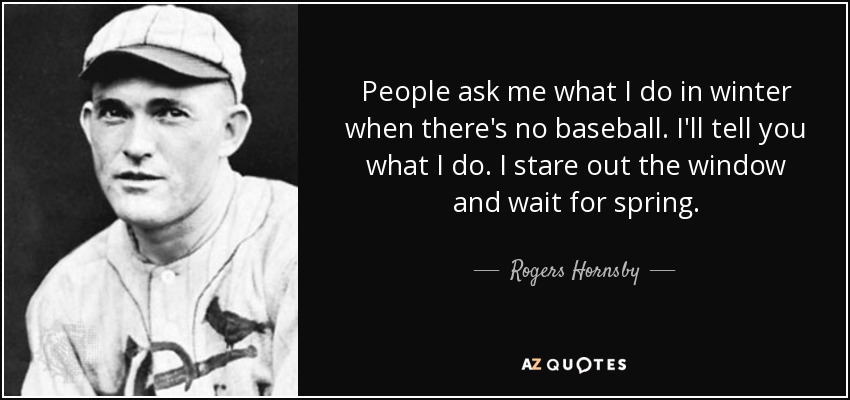
Who will get in?  And who will have to be like Johnny Damon and buy a ticket for themselves?  That will be revealed on January 24.  Until then, we'll just follow the advice of Hall of Famer Rogers Hornsby and just stare out the window, waiting for spring to arrive.


Monday, March 13, 2017

The Thrill of Victory, The Agony of the Mets: Bobby Valentine

There are moments in history that are so unforgettable, people can always remember where they were at the moment the historic events took place.  Where were you on November 22, 1963?  Probably mourning the death of President John F. Kennedy.  Do you remember what you were doing on July 20, 1969?  Most likely it involved a small step for man and a giant leap for mankind.  (For some of you, it might also have involved the Mets and Expos splitting a Sunday doubleheader at Parc Jarry.)

Mention the date June 15, 1977 to a Mets fan, however, and they'll all respond with the same two words: Midnight Massacre.

The darkest day in Mets history saw the team deal its best player, Tom Seaver, to the Cincinnati Reds at the trade deadline.  In a separate transaction, the Mets rid themselves of their best power hitter, Dave Kingman, sending him to the San Diego Padres for a seldom-used relief pitcher and a light-hitting utility player.  By the end of the 1978 campaign, the reliever (Paul Siebert) had pitched his final game in the majors.  The other player acquired for Kingman wore a Mets uniform far longer than Siebert did.  And when he took his jersey off for the final time, he had managed to make a little history of his own.

The field general responsible for a great run in Mets history.  (Scott Jordan Levy/Getty Images)

Robert John Valentine became a Met because of a Massacre.  He then proceeded to kill what was left of his playing career, producing a .222/.295/.280 slash line for the Mets in 1977 and 1978 before he was released by the team mere days before the start of the 1979 campaign.  Valentine, who was originally selected by the Los Angeles Dodgers with the fifth overall pick in the 1968 June Amateur Draft, played briefly for the Seattle Mariners after he was let go by the Mets before calling it a career at the age of 29.

Despite never quite fulfilling the expectations that come with being a top-five pick in the draft, Valentine spent much of his playing career studying the game.  One of his minor league managers, Tom Lasorda, was influential in Valentine's decision to continue to be a part of the game once his playing career had come to an end.

"Tommy had told me to start thinking about how I could stay in baseball," Valentine said.  "That's what I wanted to do.

Valentine became a coach with the Mets just four years after playing his final game in the majors.  Two years later, he was hired by the Texas Rangers to replace Doug Rader after the Rangers got off to a miserable 9-23 start.  Although Texas finished in last place in the American League West in 1985, Valentine turned things around in his first full season as the team's skipper in 1986, leading the team to a second-place finish and an 87-75 record.  Valentine remained in Texas until 1992, when he was fired by then-managing general partner George W. Bush after getting off to a 45-41 start.

Although Valentine never led Texas to the postseason, he was the Rangers' all-time leader in managerial wins for over two decades.  Valentine was not surpassed in that category until Ron Washington bumped him down to No. 2 in 2014.  But once he was fired, the always opinionated Valentine made sure to remind his former employers who he thought was responsible for the Rangers' turnaround from cellar dwellers to contenders.

"I don't think anybody would've done better than I did while I was here," Valentine said.  "People are going to look back and say in 1985, this is where the Texas Rangers were and in 1992, this is where they were when he left.  I think people are going to say that's one hell of a job."

After working for the Cincinnati Reds in 1993 as a scout and third base coach, Valentine returned to the Mets' organization in 1994 to manage the team's Triple-A affiliate in Norfolk.  With major league players on strike from 1994 to 1995, Valentine took the opportunity to become a manager in Japan in 1995 before he returned to Norfolk to manage the Tides once again in 1996.  Under Valentine, the Tides went 82-59, which was the second-best record in the ten-team International League.

Meanwhile, the Mets, who were on their way to a sixth consecutive losing season, had gotten tired of manager Dallas Green's comments about their young pitchers not belonging in the majors.  With 31 games left in the 1996 season, Green was fired, allowing Valentine to make the jump from Triple-A to the big leagues to manage the Mets.  And just like he did with the Rangers, his leadership was instrumental in the revival of a moribund franchise.

The 1996 Mets finished the year with a 71-91 record, with Valentine going 12-19 after replacing Green at the helm.  Valentine, who had a reputation of getting the most out of otherwise ordinary players, continued to thrive in that respect during his first full season as the Mets' skipper.  Butch Huskey (.287, 24 HR, 81 RBI) had a career year in 1997, while Edgardo Alfonzo batted .315 and reached double digits in home runs and stolen bases for the first time.  On the pitching side, Bobby Jones (15-9, 3.63 ERA) became an All-Star and journeyman Rick Reed (13-9, 2.89 ERA, 1.042 WHIP) finally found a home in New York.  What did all four of those players have in common besides having breakout years for the Mets in 1997?  They all played for Valentine at Norfolk during his two stints as the Tides' manager.

Fonzie was one of many who thrived under Bobby V in both the minors and majors.  (Jonathan Daniel/Getty Images)

New York surprised the league in '97, staying in contention for the National League wild card berth until the final week of the season.  The Valentine-led Mets finished the year with an 88-74 record, which represented a 17-win increase from the previous year.  Only the 1969 and 1984 Mets had shown a greater improvement from one year to the next.

Another reason why the Mets were so successful in 1997 was the acquisition of first baseman John Olerud, who batted .294 with 22 homers in his first season with the Mets.  Olerud led the team in doubles (34), runs scored (90), RBI (102) and on-base percentage (.400), while providing Gold Glove-caliber defense at his position.

The Mets' sudden rise to contention in 1997 caused a flurry of transactions during the off-season.  First, the Mets re-signed Olerud to a two-year deal.  They then traded for veteran left-handed starting pitcher Al Leiter.  But the coup de grâce didn't come until the season had gotten underway, when general manager Steve Phillips acquired All-Star slugger Mike Piazza from the Florida Marlins.

Olerud and Piazza batted .354 and .348, respectively, making Valentine's job of filling out the lineup card that much easier.  But they weren't the only players who helped prove that the previous season's resurgence wasn't a fluke.  Alfonzo continued to blossom under Valentine, improving his power numbers (17 HR, 78 RBI) from the previous year.  In addition, new center fielder Brian McRae's vision of a 20/20 season came to fruition, as he hit 21 homers and stole 20 bases.  But it was Valentine's use of the bullpen that really helped the team succeed.

For the first time in franchise history, five relievers appeared in 50 or more games.  Closer John Franco set a team record with 38 saves, while Dennis Cook and Turk Wendell combined to appear in 139 games, with Cook becoming the first left-handed reliever to pitch in 70 or more games for the Mets in a single season and Wendell appearing in a club-record nine consecutive games during the team's playoff push in September.

Alas, Valentine and the Mets fell short in their quest to end their decade-long postseason drought, as the team lost its final five games of the season to once again finish the year with an 88-74 record.  Valentine had now managed over ten years in the major leagues with nary a playoff berth to show for his efforts.  He was poised to finally crash the postseason party in 1999.  But first, he had to stop everything from crashing down on him.

The Mets played decently, but not spectacularly over the first two months of the season before losing eight straight games from late May to early June.  The eighth defeat in the skein gave the Mets an unsightly 27-28 record, which moved them under the .500 mark for the first time since their Opening Day loss to the Marlins.  The loss also led to the sudden firing of the team's hitting, pitching and bullpen coaches.  Although Valentine's job was spared, he knew that if the team didn't improve quickly after their less than mediocre 55-game start, his days as the team's skipper were numbered.  And so, Valentine decided to share a few numbers of his own.

"In the next 55 games, if we're not better, I shouldn't be the manager," Valentine proclaimed. "I'd rather have a sustained run; something like 40 and 15 would be good."

The team responded to the firings by winning their next three games in lopsided fashion, outscoring the Yankees and Blue Jays by a combined 26-7 score.  The outburst of offense seemed to come to an end in the series finale against Toronto, as the Blue Jays took a 3-0 lead into the bottom of the ninth inning.  But a three-run rally by the Mets, which included a rare stolen base by Piazza, sent the game to extra innings.  In the 12th, a questionable catcher's interference call led to Valentine's ejection.  Valentine left the dugout briefly, only to be replaced a few minutes later by what appeared to be his mustachioed doppelganger.  Except it wasn't his hirsute twin.  It was Valentine himself attempting to go incognito behind Orel Hershiser in the corner of the dugout.  The disguise was discovered by Major League Baseball and Valentine was fined $5,000 and suspended for two games.  One thing that couldn't be disguised, however, was the Mets' newfound streak of success, as two innings after Valentine was ejected, the Mets won in walk-off fashion for their fourth consecutive victory.

The Mets were winning again?  That's incog-NEAT-o!  (Fox Sports Net screen shot)

By early August, the Mets' 27-28 record had turned into a 67-43 mark, as the team did indeed win 40 of their next 55 games as per Valentine's prophetic statement.  New York had five separate winning streaks of four or more games during their torrid two-month stretch, while never losing more than two in a row.  The Mets briefly took over first place in August before the Braves reclaimed their customary spot in the division by the end of the month.  New York then pulled back to within one game of Atlanta as they entered a critical three-game series at Turner Field on September 21.  When the series was over, the focus had shifted from the division race to the wild card chase, as the Chipper Jones One-Man Wrecking Crew had essentially torn down the Mets' N.L. East aspirations.

No matter who Valentine put on the mound, Jones found a way to take that pitcher deep.  Jones homered four times in the series, hitting long balls off southpaws (Al Leiter, Dennis Cook) and right-handed hurlers (Rick Reed, Orel Hershiser).  Jones drove in seven runs in the three games, or one more run than the Mets scored in the series.  After the final game, Jones reflected on what had transpired in the Braves' three-game sweep of the Mets.

"It was one of those dream series," Jones said.  "It's almost like the ball is hitting my bat.  I don't think I'm doing anything different, but it seems like the ball keeps hitting my sweet spot."  

Meanwhile, in the other clubhouse, Valentine had his own feelings on the sweep, one that increased the Braves' lead in the division to four games over the Mets.  He was particularly vocal about what Jones had been able to accomplish.

"They sure did the job they needed to give themselves some room.  At least Chipper did," Valentine said.  "It's uncanny that he's so hot right now."

The use of the word "uncanny" caused the media to suggest that Valentine was accusing Jones of cheating, especially after Jones had hit several well-placed pitches with authority.  Valentine, who was known to occasionally suffer from foot-in-mouth syndrome, had to quickly recant his unfortunate utterance, saying: "Maybe I shouldn't have used that word."

Although the Mets' dreams of winning the division were derailed by the Braves, the wild card was still well within reach, as New York still had a two-game lead over the Cincinnati Reds with nine games to play.  There was only one problem.  The Mets kept losing.  And losing.  And losing some more.

Following the sweep in Atlanta, the Mets traveled to Philadelphia and promptly lost three more games.  This wasn't the perennially contending Braves the Mets got swept by; it was a Phillies team that was 11 games under .500 entering the series.  The loss in the series finale officially gave the Braves the division title.  It also vaulted the Reds over the Mets in the wild card race.

The Mets limped home from Philadelphia to open their final homestand of the season, still having memories of the previous season, when the team lost its final five games to deny them a spot in the playoffs.  Their losing streak extended to seven games in the opener of a three-game set against the Braves.  New York finally won a game when they walloped Greg Maddux in the middle game of the series, thanks mostly to a grand slam by John Olerud, but then dropped an extra-inning heartbreaker in the finale after coming back twice in the late innings to tie the game.  After the game, the uncanny Jones made a very candid statement, one that forever made him Public Enemy No. 1 in Flushing.

"Now all the Mets' fans can go home and put their Yankees stuff on."

If Jones's comments suggested that the fans would be watching playoff baseball from their couches instead of from their seats at Shea Stadium, he was gravely mistaken.  With the Mets two games out of the wild card spot with three games to play, they responded by sweeping the Pittsburgh Pirates.  Starting pitchers Kenny Rogers and Rick Reed struck out 22 batters between them in the first two games, while Orel Hershiser and four relievers combined to pitch a three-hitter against the Pirates in the series finale.  But it was a move by Valentine in Game No. 162 that may have saved the Mets' season.

Melvin Mora had played in 65 games for the Mets coming into the season's final home game.  He had started just three of them, with Valentine using him mostly as a late-inning defensive replacement.  Mora had just 38 plate appearances in those 65 games, which didn't allow him to remain fresh as a hitter and resulted in a .133 batting average entering the finale against the Pirates.  With the game tied, 1-1, in the bottom of the seventh, Mora came into the game as a pinch-runner for Rickey Henderson.  Although it was the tenth time Valentine had used Mora to run for a teammate, it was the first time Mora had run for the game's all-time stolen base leader.  The Mets failed to score in the inning, but Mora stayed in the game as the new left fielder.  More importantly, he took over Henderson's leadoff spot in the batting order.  That came into play two innings later, when the bottom of the ninth rolled around with the game still tied.

Pinch-hitter Bobby Bonilla led off the inning by grounding out.  That brought up Mora, who had just four hits in 30 at-bats.  Rather than replacing the light-hitting Mora, Valentine rolled the dice and allowed him to take his turn at bat.  The gamble paid off, as Mora delivered an opposite-field single.  Two pitches later, Edgardo Alfonzo also went the other way with a hit, pushing Mora over to third base.  An intentional walk to Olerud set up a force play at every base.  But it also brought up Mike Piazza to the plate.  New pitcher Brad Clontz didn't even have time to get nervous about facing the future Hall of Famer, as his first pitch bounced up and over the tall protective screen behind the plate, allowing Mora to scamper home with the winning run.

The mojo was risin' for Melvin Mora when Bobby V allowed him to hit in the '99 finale.  (Ezra Shaw/Getty Images)

The sweep of the Pirates, coupled with the Reds losing two out of three to the Milwaukee Brewers, forced a one-game playoff to determine the wild card winner.  After the tight affair that forced the 163rd game, the Mets had a relatively easy time in Cincinnati against the Reds, scoring early and extending their lead throughout the game before Al Leiter put the icing on the cake with a masterful complete-game, two-hit shutout.

For the first time since 1988, the Mets were going to the postseason.  That drought wasn't nearly as long as Valentine's, as he had endured ten seasons as a player without appearing in the playoffs, followed by a decade as a manager with his season ending after the 162nd game.

Valentine's first postseason series ended on a high note, with backup catcher Todd Pratt hitting a game-winning home run off Arizona closer Matt Mantei in Game Four of the National League Division Series.  The thrilling victory sent the Mets to the NLCS to face Chipper Jones and the Braves.  During the regular season, Atlanta had taken nine out of 12 matchups against New York, outscoring the Mets, 63-40.  But Arizona had been just as dominant against the Mets in the regular season, winning seven of nine games by a combined 63-39 tally before the Mets defeated the Diamondbacks in the NLDS.  That gave the Mets hope against an experiences Braves squad.  By the end of Game Three, however, that hope was nearly gone.

Atlanta took the first three games of the series, defeating Masato Yoshii, 4-2, in Game One, followed by two one-run victories in Games Two and Three.  The Mets recovered to eke out a comeback win against Braves' closer and renowned people watcher on the No. 7 train, John Rocker, forcing a fifth game at Shea Stadium.  The 15-inning, rain-soaked affair featured Valentine at his best.  First, he removed Yoshii after three innings even though he had allowed just two runs.  He then brought in Turk Wendell in the seventh inning to face Chipper Jones.  Wendell's trademark slider proved to be too much for the switch-hitting Jones, who struck out much to the home crowd's delight.  Valentine also ordered five intentional walks during the game.  None of the recipients of the free passes came around to score.

The game remained tied until the 15th inning, when the Braves finally broke through for a run against the Mets' tired bullpen.  New York could have easily conceded the pennant right there, but Valentine and his players would have nothing of it.  Shawon Dunston, who had been put into the game by Valentine five innings earlier, ran the count full before fouling off six consecutive pitches.  On the 12th pitch of the at-bat, the man who wore No. 12 for the Mets hit a sharp ground ball up the middle for a single.  Dunston then stole second.  After reliever Kevin McGlinchy walked pinch-hitter Matt Franco, Alfonzo bunted the runners over to second and third.  An intentional walk to Olerud brought up cleanup hitter Todd Pratt, who came in for Piazza in the 14th inning when Piazza injured his left forearm.  Pratt drew the third walk of the frame, tying the game and bringing Robin Ventura up to the plate, who delivered his famous Grand Slam Single to win the game for the Mets.

After five hours and 46 minutes, the Mets had finally forced their way back to Atlanta for a Game Six showdown.  Tired and bruised, the Mets fell behind by five runs in the first inning before coming back to tie the game in the seventh.  An inning later, they had gone out in front of the Braves.  The Mets failed to hold that precarious lead, then coughed up another one-run lead in the tenth.  Finally, in the 11th inning, after the two teams had played for over ten hours in their last two games, Valentine went to starting pitcher Kenny Rogers in an attempt to extend the game and their season.  It was one of the few decisions that did not go right for Bobby V in his first postseason experience.  A double, a sacrifice bunt, two intentional walks and one unintentional walk later, the Braves had ended the Mets' storybook season, leaving a stunned Valentine to repeatedly say "no, no, no" while pounding his fists on the dugout railing as Gerald Williams crossed the plate with the pennant-winning run.

The look of disappointment on Bobby V's face says it all.  (NBC Sports screen shot)

The most successful year in over a decade had come to a crashing halt for the Mets after their Game Six defeat.  But despite the sudden end to the season, Valentine was proud of his players and praised their ability to fight back when all appeared lost.

''I'm going to take some time in the winter to watch these games, and try to enjoy them,'' Valentine said.  ''I told my guys after the game that it might be a shorter winter or a longer winter for them but I think they played like champions.  They should feel like champions.  It's very difficult to come back from five runs and have a couple of leads.  It's difficult to give it up, but we gave everything we had."

A year after being told by their manager that they played like champions in defeat, the Mets became champions of the National League.  Unlike the 1999 campaign, the Mets did not need to produce a 40-15 record during the middle of the 2000 season, nor did they require a frenetic finish to qualify for the playoffs.  Instead, they clinched the wild card with several games to play and nearly beat out the Braves for the division title.  And once the St. Louis Cardinals knocked off Atlanta in the division series, the Mets were faced with the reality that they would not have to go up against the Hall of Fame triumvirate of Greg Maddux, Tom Glavine and John Smoltz.  Rather, they'd be facing a Cardinals' pitching staff that had produced a 4.38 ERA during the regular season and allowed a then-franchise record 196 home runs.  It was enough to make the Mets' hitters salivate in anticipation of their NLCS feast.

New York defeated St. Louis in five games, scoring six or more runs in each of their four victories.  In addition to going homer happy against the Cards, the Mets produced a deluge of doubles, with four balls leaving the park and a dozen more ending up with the Mets' batter on second base.  The Mets were on their way to the World Series for the first time since 1986, as Valentine joined the pantheon of pennant-winning managers in franchise history.  Their opponent was the crosstown New York Yankees, creating the first Subway World Series since 1956.  But just like they did in 1999, the Mets came up short in a series where every game was decided by one or two runs.

Going into the 2001 season, Valentine was trying to become the first manager in Mets history to lead the team to back-to-back World Series berths.  At the same time, he was trying to keep general manager Steve Phillips off his back.  Just like Davey Johnson and Frank Cashen couldn't see eye-to-eye at the end of their respective tenures with the Mets, Valentine and Phillips were also in a strained professional relationship.  Valentine wasn't a fan of some of the trades Phillips made.  He also didn't like that Phillips wouldn't allow him to talk to other teams about their vacant managerial positions after gaining some leverage with his consecutive postseason appearances.  The feud would continue into the 2001 campaign, and got progressively worse once the Mets got off to an awful start.

By mid-May, New York was ten games under .500 and showing no signs of improvement.  Instead of being buyers at the trade deadline, they started to part ways with several of the key players that helped them rise to the top of the baseball world.  In an eight-day span, the Mets traded backup catcher and 1999 postseason hero Todd Pratt, cut ties with set-up men Turk Wendell and Dennis Cook and dealt starting pitcher Rick Reed, all of whom were favorites of Valentine.  Phillips had raised the white flag on the season.  Valentine, on the other hand, never surrendered his dreams of raising another kind of flag at Shea.

After the Mets reached their nadir in mid-August with a 54-68 record, Valentine led his troops to victory in 17 of the team's next 22 games.  Although the Mets still had a losing record at 71-73, they had climbed to within eight games of the first-place Braves with 18 games to play.  It would still take a monumental effort to cut further into the Braves' lead.  But then September 11 happened.  And Valentine had a new mission to accomplish.

Bobby Valentine was a healer at the helm.  In more ways than one.  (Ezra Shaw/Getty Images)

On the morning of September 11, 2001 the Mets were in Pittsburgh, waiting to open a three-game series against the Pirates that night.  But after the terrorist attack on the United States, the series was postponed and the Mets returned via bus to New York.  Upon arriving in their home city, Valentine immediately went to Ground Zero to offer assistance.  Valentine also worked tirelessly at Shea Stadium, working to distribute relief goods to those in need.  John Franco, himself a native New Yorker, noticed how involved his manager was in the healing process.

"Bobby was a great leader," Franco said.  "He had us out there, and even when we were done, he stood out there by himself helping everybody else, all the volunteers."

When baseball resumed a week later, the Mets returned to Pittsburgh with the entire country supporting them.  Overcoming fatigue and emotional stress, New York emerged victorious in all three games, moving them back over .500 and within five games of first place.  The Mets then returned to Shea Stadium to face the Braves and gave the patriotic crowd a reason to smile again.  Mike Piazza's home run in the series opener turned a loss into a thrilling victory.  The second game also went to New York, as RBIs by Tsuyoshi Shinjo, Rey Ordoñez and Armando Benitez (not a typo) helped turn a one-run lead into a four-run cushion.  It also moved the Mets to within 3½ games of the division lead.

Unfortunately, the Mets dropped the series finale to the Braves, then lost two out of three games in Atlanta the following week.  Although the Mets managed to finish the year with a winning record - Valentine's fifth straight as manager of the team - they failed to catch the Braves and missed the playoffs for the first time since 1998.  A year later, the Mets couldn't repeat their late-season magic and finished below .500 for the first time since Valentine took over for Dallas Green in 1996.  Valentine's first season of failure became his last season at the helm of a rapidly sinking ship, as he was fired by the Mets a few days after the season came to an end.  General manager Phillips got to keep his job, which finally brought out all the animosity Valentine had felt for him over the years.

"What (Phillips) has done isn't proper," Valentine said.  "He's done what he could so I wouldn't be around.  I told Fred (Wilpon) that he had to give the next manager authority in the clubhouse and on the field, that he had to get Steve off the field and out of the clubhouse.  You can't let a GM high-five guys and joke around after a win and then after a loss act like it's the end of the world.  Get him out of there for the sake of the next guy."

The Mets did indeed get Phillips out of there, but waited until the 2003 season was nearly half-over to do so.  By then, the manager with the second-most wins in franchise history was just a distant memory.

When Bobby Valentine became the Mets' manager in 1996, he took over a team that hadn't had a winning season since 1990 and was a combined 91 games under .500 since the start of the 1991 campaign.  He proceeded to lead the team to five consecutive winning seasons, which included two postseason appearances and a National League pennant.  Despite his final season in which he went 75-86, Valentine's .534 winning percentage ranks third in team history behind Davey Johnson (.588) and Willie Randolph (.544).

(Focus On Sport/Getty Images)
As controversial as Valentine was with his outspokenness and relationship with his general manager, his players - especially the ones that played for him in the minor leagues - remained fiercely loyal to him.  Benny Agbayani, who played for Valentine at Norfolk in 1996 and in New York from 1998 to 2001, followed his manager to Japan in 2004, then retired from the game once Valentine was unceremoniously fired in 2010.  Eric Hillman, who pitched for the Mets from 1992 to 1994, blossomed under Valentine in both the United States (Norfolk) and Japan (Chiba Lotte) before injuries ended his career in 1997.  Once he retired, Hillman had a telling statement about what it was like to play for Valentine.

"Either you love Bobby Valentine or you hate him," Hillman said.  "There's no middle ground.  I'll tell you what - I'd take a bullet for that guy.  He did everything for me in my career."

Valentine was both respected and reviled.  He was also cherished and criticized.  But no one can deny that Valentine was part of the Mets' renaissance in the late 1990s.  His relationship with management may have been testy at times, but his relationship with the win column was always strong.

He first came to the Mets in 1977 during one of the darkest periods in franchise history.  By the time Valentine left the team for good a quarter century later, he was responsible for some of the club's brightest moments.

Mets fans with vivid memories of the late '90s and early '00s will always have a place in their hearts for Valentine.


Note: The Thrill of Victory, The Agony of the Mets is a thirteen-part weekly series spotlighting those Mets players and personnel who experienced the best of times and the worst of times with the team.  For previous installments, please click on the names below:

January 2, 2017: Tom Seaver
January 9, 2017: Mike Piazza
January 16, 2017: Wally Backman
January 23, 2017: Daniel Murphy
January 30, 2017: Frank Cashen
February 6, 2017: Ed Kranepool
February 13, 2017: Doug Sisk
February 20, 2017: Joan Whitney Payson 
February 27, 2017: John Franco and Armando Benitez 
March 6, 2017: Dwight Gooden


Thursday, November 14, 2013

The Corey Hart Conundrum


Earlier today, while I was perusing through various Mets blogs, I came across this recent post by Kirk Cahill on Mets Merized Online.  I actually hadn't been thinking much about the Mets potentially signing Corey Hart, but after reading Señor Cahill's piece, I now have to consider him as one of the players Sandy Alderson should definitely be looking at this offseason.

Corey Hart has been a top-notch player for the Milwaukee Brewers for many years.  He has also been somewhat of a silent Met killer.  Whereas players such as Chipper Jones and Pat Burrell tormented the Mets with dozens of home runs, Corey Hart found other ways to beat the Mets.  For example, in 2008, Hart almost single-handedly defeated the Mets in a game won by the Brewers at Shea Stadium.  Hart went 4-for-5 in the game, igniting a four-run game-tying rally in the fourth inning.  Two innings later, Hart had a run-scoring single that gave the Brewers their eighth run of the game.  The hit proved to be the game-winner in Milwaukee's 9-7 victory over the Mets.  And for those with short memories, the Brewers finished one game ahead of the Mets for the wild card in 2008.

Two years later, Hart demolished the Mets, driving in a dozen runs against New York in just seven games.  Hart delivered a two-run, walk-off homer off Mets' reliever Ryota Igarashi to break a scoreless tie on May 28, then followed it up with a six-RBI performance the next day, which included a grand slam off Oliver Perez.  Finally, during the season's last week, Hart helped end the Mets' chase for a .500 record.  On September 29, the Mets stood two games under .500 with six games to play.  After spotting the Brewers a 6-0 cushion in the first game of a doubleheader at Citi Field (Hart drove in the first run in the Brewers' six-run third inning), the Mets roared back to take a 7-6 lead.  But with the Mets just four outs away from claiming a dramatic come-from-behind victory and putting themselves a game under the .500 mark, Corey Hart delivered a game-tying RBI single, then scored the go-ahead run two batters later in the Brewers' 8-7 victory.

Unlike Chipper Jones and Pat Burrell, Corey Hart has only hit six home runs against the Mets.  But in 30 starts against New York, Hart has delivered 12 extra-base hits, scored 24 runs and driven in 24.  He's also been a .303 career hitter versus the Mets (Hart has a lifetime .277 batting average) and has delivered in the clutch repeatedly at Miller Park, Shea Stadium and Citi Field.  So signing Hart would obviously turn a Met killer into a Met.  But a Hart signing would do much more than just take away a potential lethal bat against the Mets' staff.

Hart can play two defensive positions - first base and right field.  Although much of his time in the majors has been spent playing right, Hart transitioned into Milwaukee's first baseman in 2012 after Prince Fielder moved on to Detroit.  Hart is not a smooth fielder, as evidenced by his -1.3 defensive WAR in 2012.  But that's still better than Lucas Duda's -2.1 dWAR from last season.  Hart's dWAR would place him smack dab in the middle of Duda's dWAR and Ike Davis' -0.6 dWAR from 2013.

Now you may have noticed that I've been comparing Duda and Davis' numbers from last year to Corey Hart's defensive metrics from 2012.  That's because Hart missed the entire 2013 season recovering from surgeries performed on both of his knees.  And you know what that means.  It means Corey Hart is the classic Sandy Alderson player, meaning he won't be expensive, he could be a "high-reward" player (a la Marlon Byrd) and can be dealt at the trade deadline if the team doesn't compete.  Of course, if they do compete, Hart could be one of the main contributors to the team's success.

In his last three healthy seasons (2010-2012), Hart's average slash line was .279/.343/.514.  Hart also averaged 31 doubles, four triples, 29 homers, 83 RBI and 87 runs scored.  No Mets player - not even David Wright - has posted a .514 slugging percentage over the last three seasons.  The last Met to even come close was Carlos Beltran, who slugged .510 from 2007 to 2009.  And the only players to hit as many as 29 homers over the past five seasons were Wright (29 HR in 2010) and Ike Davis (32 HR in 2012).

The Mets need outfielders.  They could also use a first baseman.  And they also need to give smart contracts to players.  They can have it all in Corey Hart.  Would they be taking a chance signing a player with recent knee problems?  Absolutely.  But if that player's knees hold up, would that chance be worth it?  You betcha!  That's the Corey Hart conundrum.  And it'll be up to Sandy Alderson to see if it's a conundrum worth solving.
 

Sunday, January 20, 2013

Potential New Rule Is Open To Interpretation

Former Mets reliever Ryota Igarashi reacts to the news that his interpreter has left the building.

A Japanese pitcher, a catcher and a pitching coach walk into a bar.  Think you understand where this joke is going?  No?  Well, the protagonists of the joke didn't understand it either.  But come Opening Day, they'll have a better chance of getting it.

According to Jayson Stark of espn.com, baseball owners have approved a new rule that would allow interpreters to join managers and pitching coaches on trips to the mound.  The new rule would go into effect this season and would cover all languages.  If a Japanese pitcher needs a Japanese interpreter, one with fluency in Japanese would accompany the coach or manager to the mound.  Similarly, a Spanish-speaking pitcher would be afforded an interpreter fluent in Spanish, and so on.

Having an interpreter on the mound would eliminate potential confusion and misunderstanding between a pitcher, his catcher and his pitching coach or manager.  This is especially true in Asian pitchers, who might convey that he understands what his coach is saying with a simple nod, when in reality, he's just nodding to be polite and doesn't understand any part of his coach's instructions.

As told to David Waldstein of the New York Times, former Mets pitching coach Rick Peterson once paid a visit to South Korean-born pitcher Jae Weong Seo on the mound in a game against the Atlanta Braves in 2004.  With the newly-retired Chipper Jones still in the prime of his Met-killer career, Peterson instructed Seo not to throw Jones a strike.  He had a number of statistics to back up his reasoning for the instruction, but did not tell Seo because he wanted to make it as simple as possible for his non-English-speaking pitcher.  Seo simply nodded and said okay, leading Peterson to believe that his pupil had understood what he was asking him to do.  Jones promptly crushed a perfect strike off the Shea Stadium center field fence for a double, causing Peterson to say:


"You know, I don't think he understood a word I said."


Jae Weong Seo is no longer pitching in the major leagues, while Rick Peterson has bounced around from team to team since being fired by the Mets in 2008.  He is currently the director of pitching development for the Baltimore Orioles.  It should be noted that in Peterson's first year with the Orioles in 2012, the pitching staff lowered its ERA to 3.90 after registering a 4.89 ERA in 2011.  It was the first time the Orioles' team ERA was under 4.00 since 1997, which was the last time the team made the playoffs before 2012.

It's imperative that a pitching coach or manager get his point across to the pitcher every time they come out to the mound.  But what hope does the pitcher have of heeding his coach's advice if he has no clue what he's saying?

While he was a member of the Mets' coaching staff, Rick Peterson had difficulty conveying his point to his non-English-speaking pitchers.  Many other coaches have had the same problem as well.  But beginning in 2013, the language barrier between pitchers and coaches will drop due to an interpreter being present for all mound conversations.  Perhaps now, the barrier between being a successful pitcher and a mediocre pitcher will also drop for some foreign-born pitchers as well.

Saturday, September 29, 2012

Top 3 Lefty Homegrown Starters: Koosman, Matlack ... Niese?


On Friday night, Jonathon Niese made his 30th and final start of the season for the Mets, holding the Braves to one run in seven innings to collect his career-high 13th win.  Niese also held Chipper Jones hitless in three at-bats on the night the Braves were celebrating the future Hall of Famer's career in Atlanta.  This was nothing new for Niese, as he held Jones to a .174 career batting average against him (4-for-23), with half of those hits coming before Niese became a regular in the Mets' starting rotation.

Since Niese joined the staff for good in 2010, Jones has batted 21 times against the Mets' southpaw and has only reached base twice for a .095 on-base percentage.  Niese has also never walked Jones in 24 career plate appearances.  That's not a typo, as every Niese-Jones confrontation has ended without the home plate umpire telling Jones to take his base.

Jonathon Niese's ability to retire Chipper Jones is one that eluded many Mets pitchers over the years.  But Jones is not the only batter who has struggled against Niese.  In fact, as Niese has matured from a 21-year-old rookie pitching at Shea Stadium in 2008 to one of the most reliable arms on the staff as a 25-year-old, many hitters have gone back to the dugout shaking their heads after failing to reach base against him.

In 2012, Niese enjoyed his finest season to date, establishing career highs across the board.  Niese achieved personal bests in wins (13), ERA (3.40), WHIP (1.17), innings pitched (190⅓), strikeouts (155), batting average against (.241), walks per nine innings (2.3) and strikeout-to-walk ratio (3.2).  At age 25, Niese has been a Met for all or parts of five seasons, making his way up the franchise's all-time pitching leaderboards with every start he makes.

Those leaderboards are loaded with names like Seaver, Gooden, Darling, Cone, etc.  What do all of those pitchers have in common?  They were all right-handed starters.  Similarly, left-handed starting pitchers Sid Fernandez, Al Leiter and (ahem) Tom Glavine are also all over the Mets' all-time leaderboards for pitchers but none of them came up through the Mets' farm system and all of them made their major league debuts pitching for another team.

If not for Jerry Koosman and Jon Matlack, the Mets' all-time pitching leaderboards would be bereft of homegrown southpaws.  So if Koosman and Matlack are the two best homegrown left-handed starters in franchise history, then who would be third?  Believe it or not, that third member might just be Jonathon Niese.  Don't believe it?  Let's look at where Niese ranks among all other homegrown left-handed starting pitchers in Mets history who had a minimum of 20 starts and made at least half of his appearances in a starting role.


Starts:
Jerry Koosman
  1. Jerry Koosman - 346 
  2. Jon Matlack - 199
  3. Jonathon Niese - 94
  4. Pete Schourek - 47
  5. Eric Hillman - 36


Wins:
Jon Matlack
  1. Jerry Koosman - 140
  2. Jon Matlack - 82
  3. Jonathon Niese - 35
  4. Pete Schourek - 16
  5. Bill Pulsipher - 5


ERA:
Jonathon Niese
  1. Jon Matlack - 3.03
  2. Jerry Koosman - 3.09
  3. Jonathon Niese - 4.06
  4. Bill Pulsipher - 4.63
  5. Pete Schourek - 4.65


WHIP:
Eric Hillman
  1. Jon Matlack - 1.195
  2. Jerry Koosman - 1.219
  3. Jonathon Niese - 1.360
  4. Eric Hillman - 1.422
  5. Bill Pulsipher - 1.442


Strikeouts:
Pete Schourek
  1. Jerry Koosman - 1,799
  2. Jon Matlack - 1,023
  3. Jonathon Niese - 470
  4. Pete Schourek - 199
  5. Bill Pulsipher - 101


K/BB Ratio:
Bill Pulsipher
  1. Jonathon Niese - 2.73
  2. Jon Matlack - 2.44
  3. Jerry Koosman - 2.19
  4. Eric Hilman - 2.13
  5. Bill Pulsipher - 1.80


Did you notice anything interesting about each top five list?  In each list, the top three pitchers were always Jerry Koosman, Jon Matlack and Jonathon Niese, although not necessarily in that order.  Also, when players such as Pete Schourek, Bill Pulsipher and Eric Hillman start cracking all-time top five lists for the Mets, it's fairly obvious that the Mets haven't had much success drafting, developing and calling up left-handed starters.

Say what you what about Jonathon Niese.  Say he's only a middle-of-the-rotation starter.  Say he hasn't fully realized his potential.  Say all of that, but then don't forget to say that he's also one of the best homegrown left-handed starting pitchers in team history.  And with the improvement he continues to show year after year, we may have to remove the word "left-handed" from the previous sentence before long.  Not bad for a southpaw who has yet to reach his 26th birthday.

Saturday, September 8, 2012

David Wright May Be Great, But He's Not Chipper Jones

I am a David Wright fan.  I've been an ardent supporter of the Mets' third baseman since his first call-up to the big leagues in 2004.  I've seen him produce some of the greatest offensive seasons in franchise history and I've seen him make outstanding defensive plays.  I've also seen him represent the Mets at the All-Star Game more often that not.

I have never been a Chipper Jones fan.  I've disliked him since before anyone knew his name was Larry.  I've seen him win only two Silver Slugger Awards and I've never seen him win a Gold Glove.  I've also seen him very little at the All-Star Game, as he has missed the Midsummer Classic more than he has played in it.

I gladly cheer for David Wright.  I loudly boo Chipper Jones.  That being said, David Wright has a long way to go to be as great as Chipper Jones.

Chipper Jones and David Wright.  One is an all-time great.  The other is just a Mets great.

The soon-to-be-retired Jones has been killing the Mets for nearly two decades.  But then again, fans in Miami, Philadelphia and Washington (Montreal, too) can claim the same thing, as Jones has been an equal opportunity slugger against every team in the National League East.

Since making his debut for the Braves in 1993, Jones has torn the cover off the ball against every division rival.  Don't believe me?  Here are the numbers to prove it:

vs. Mets:            .312/.408/.550, 46 doubles, 49 HR, 158 RBI, 167 runs in 240 games.
vs. Marlins:       .299/.393/.505, 47 doubles, 40 HR, 165 RBI, 151 runs in 242 games.
vs. Phillies:        .332/.442/.599, 70 doubles, 49 HR, 151 RBI, 165 runs in 243 games.
vs. Expos/Nats: .299/.405/.505, 62 doubles, 41 HR, 160 RBI, 173 runs in 262 games.

Simply stated, Jones has been a dynamo against the teams in his own division.  His production has been one of the main reasons why the Braves have been competitive in the National League East for two decades, despite the constant player turnaround.

Jones has also been wonderful in the postseason.  In the playoffs, the Braves' third baseman has a .288 career batting average and .411 on-base percentage.  He also has 18 doubles, 13 HR, 47 RBI and has scored 58 runs.  But more incredibly, Jones has been a part of countless postseason rallies for the Braves, reaching base a whopping 169 times in only 92 games.  That's almost two times on base per playoff game over his entire career!

Meanwhile, David Wright has also been very good against teams from his own division, but has only gotten a small taste of the postseason, not doing particularly well in his one October experience with the Mets.

In nine seasons with the Mets (which is approximately half of the service time accumulated by his fellow hot corner handler in Atlanta), Wright has complied the following career numbers against the other teams in the National League East:

vs. Braves:         .268/.347/.489, 29 doubles, 28 HR, 76 RBI, 65 runs in 142 games.
vs. Marlins:        .328/.396/.537, 35 doubles, 22 HR, 94 RBI, 95 runs in 136 games.
vs. Phillies:        .282/.352/.508, 36 doubles, 26 HR, 93 RBI, 79 runs in 137 games.
vs. Expos/Nats: .303/.381/.502, 48 doubles, 19 HR, 84 RBI, 97 runs in 146 games.

Wright's splits are just slightly below what Jones has produced in batting average, on-base percentage and slugging percentage over his career, but his extra-base hits and run production have been on par with Jones.  Just looking at those numbers would lead anyone to believe that Wright's career is taking a similar path as Jones.

But there is one glaring difference between Jones and Wright that keeps the Mets' third baseman a notch below his counterpart.  Jones has always come up big in key spots.  David Wright, on the other hand, isn't quite there yet.

In 1999, Chipper Jones willed the Braves over the Mets in the NL East.  In a three-game sweep over the Mets in late September, Jones sealed the deal on the National League MVP Award, hitting four home runs and driving in seven of the 13 runs the Braves scored in the series.  Jones continued to hurt the Mets in the NLCS that year, reaching base 15 times in 29 plate appearances.

Before Shea Jones was born, Chipper Jones came to life at Shea.

Meanwhile, David Wright didn't factor much in his sole postseason appearance in 2006.  In the Mets' seven-game loss to the Cardinals in the NLCS, Wright batted .160, collecting as many strikeouts (four) as hits.

For his career, Wright is a .301 hitter with a .382 on-base percentage.  But in the final month of the regular season, his numbers aren't nearly as good.  In September (and those few regular season games played in October), Wright's batting average dips to .291 with a .359 on-base percentage.  Meanwhile, Jones gets hotter as the season progresses.  The lifetime .304 hitter (with a sparkling .401 OBP) is batting .305 with a .408 on-base percentage after September 1st.  The dog days of summer don't affect Jones the way they do Wright.

Finally, as good as Wright has been for the Mets, Jones was better at a similar point in his career.  Here are Wright's numbers through games of September 7 (his ninth season with the Mets), followed by Jones' numbers with the Braves after his ninth season:

Wright: .301/.382/.507, 318 doubles, 19 triples, 200 HR, 804 RBI, 778 runs, 992 Ks
Jones:  .309/.404/.541, 305 doubles, 26 triples, 280 HR, 943 RBI, 966 runs, 781 Ks

Jones leads Wright in all offensive categories except doubles, but Wright has also struck out 211 more times than Jones had at the same point in their careers.  In fact, Wright has averaged approximately 120 strikeouts in every full season he's played in the majors.  Jones has NEVER struck out 100 times in a season.  His career high of 99 whiffs was achieved in his first full season with the Braves in 1995.

David Wright has five 100-RBI seasons to his credit.  Jones had eight consecutive 100-RBI campaigns from 1996-2003.  (He has nine 100-RBI seasons overall.)  From 1998-2008, Jones had a .400 on-base percentage in every year but one (2004).  In 2007, Wright enjoyed his only season with an on-base percentage over .400.

Wright has batted over .315 only once in his career (2007).  Jones has had six such seasons.  In fact, from 2006-2008, when he was in his mid-thirties and supposedly in the twilight of his career, Jones batted a combined .342, winning the National League batting title in 2008 with a .364 batting average.

So how valuable has David Wright been to the Mets in the eyes of the MVP voters?  Not very much, as Wright has finished in the top 20 in MVP voting only four times.  Meanwhile, Jones has finished in the top 20 eleven times, including each of his first nine full seasons in the majors, which coincidentally is the same number of years that David Wright has played in the big leagues for the Mets.

Chipper Jones has always stood tall next to David Wright.


David Wright has been one of the best players in the history of the Mets, ranking among the team leaders in almost every offensive category.  But Wright's competition on the Mets' all-time leaderboard includes Ed Kranepool, Darryl Strawberry and Howard Johnson.  Those players were great Mets, but they're not all-time greats in the sport.

Chipper Jones is also omnipresent on his team's all-time offensive leaderboard.  But take a look at the top three in most of those categories.  You won't find any Kranepools, Strawberrys or Johnsons there.  Instead, you'll find two names joining Jones in the majority of those categories - Hank Aaron and Eddie Mathews, both of them Hall-of-Famers and among the all-time greats of the sport.

So the next time someone talks about how great David Wright has been, you can agree with them, but only in comparison with other Mets.  When someone brings up Chipper Jones, however, feel free to mention him in the company of the game's all-time greats.  As good as he's been for the Mets, David Wright has a long way to go to be an all-time great.  By the same token, Wright also has a long way to go to be like Chipper Jones.  Love him or hate him, Chipper Jones deserves the respect given to the best players in the game's history.  He's done everything on the field to earn it.