Showing posts with label Todd Hundley. Show all posts

Monday, January 12, 2015

One Mo-MET In Time: Dave Mlicki

Some players have careers that are so nondescript, it's fairly simple to find their greatest moment on a baseball diamond.  For Chicago Cubs rookie Jimmy Qualls, it was his clean single to left field that ended Tom Seaver's bid for a perfect game in 1969.  The safety was Qualls' 12th hit in the big leagues.  He would have just 19 more over a major league career that lasted parts of three seasons.

Qualls' career was quite brief, as he played in only 63 total games with the Cubs, Expos and White Sox.  It should come as no surprise, then, that the hit off Seaver would be the one he'd always be remembered for.

Sometimes, players who have just one defining moment can play in the majors for a decade or longer and never do anything else remotely worth remembering.  Their lengthy careers would be instantly forgotten if not for that one shining moment.  One such player played for the Mets in the mostly forgettable mid-1990s.  But no one will ever forget what he did on a late spring night in the Bronx.

Arguably the most memorable end-of-game reaction by a Mets pitcher since Jesse Orosco.  (Getty Images)

David John Mlicki was as average as average could be.  And that's probably giving him too much credit.  Mlicki pitched in the power-happy 1990s and early 2000s, spending a total of ten seasons in the big leagues.  In seven of those ten years, he made at least ten starts.  His ERA was 4.00 or higher in all seven of those seasons.  Mlicki also never had a season in which he finished more than two games above .500 and was within two games of the break-even point in seven of his ten campaigns.

In addition, Mlicki made 193 starts and pitched 69 games in relief, posting a 4.72 ERA in those 252 appearances.  That made Mlicki one of just eight pitchers in the long history of baseball to make that many starts and that many relief appearances with an ERA of at least 4.72.  Needless to say, Mlicki was lucky to have lasted in the big leagues as long as he did.

Mlicki made seven starts for the Cleveland Indians in 1992 and 1993.  He won none of them.  But that didn't discourage the Mets when Cleveland packaged him with two other pitchers - Paul Byrd and Jerry Dipoto - in exchange for Dallas Green doghouse resident Jeromy Burnitz.  The former 30/30 player in the minor leagues had incensed Mets manager Green with his poor plate discipline and perceived lack of hustle, making himself expendable.

Burnitz went on to become an All-Star and MVP candidate after the trade, while Byrd and Dipoto joined Burnitz as former Mets following the 1996 season.  Entering the 1997 campaign, Mlicki was the only player remaining from the ill-fated Burnitz trade.  Splitting time between the starting rotation and the bullpen, Mlicki had gone 15-14 with a 3.91 ERA and 1.36 WHIP in his first two years with the Mets, numbers that were fairly average but slightly better than the team's cumulative 4.06 ERA and 1.37 WHIP.

Under new manager Bobby Valentine, Mlicki became a full-time starter in 1997.  But while fellow starting pitchers Rick Reed and Bobby Jones were off to All-Star caliber starts, Mlicki regressed.  The Mets got off to a disappointing 8-14 start under Valentine, but the team then went on a roll, winning 20 of the next 29 contests from April 27 to May 28.  Mlicki did not receive credit for any of those 20 wins, going 0-2 with three no-decisions and an eye-popping 5.61 ERA during his team's unexpected hot streak.

By mid-June, Mlicki had won just two of his 13 starts, and his spot in the rotation was potentially in jeopardy.  But Valentine stuck with his beleaguered starter, putting him under the spotlight for the highly anticipated first-ever regular season matchup between the Mets and Yankees on June 16.  It was a decision that would be remembered well past the end of the 1997 season.

"I give Dave Mlicki a 50/50 chance at beating the Yankees on June 16."

The Yankees were the defending World Series champions, and by winning their first title in 18 years, had taken over the city much like the Mets had done so a decade earlier.  The Mets, on the other hand, had completed their sixth consecutive losing season in 1996.  But they were off to an impressive start in 1997 and were poised to claim bragging rights in the first regular season game played between two New York teams since the Brooklyn Dodgers and New York Giants squared off against each other on September 8, 1957.

Before a raucous Yankee Stadium crowd, the Mets got off to a quick start, scoring three runs in the top of the first.  Lance Johnson led off the game by grounding out, but over the next 16 pitches, the Mets produced two doubles, a walk, a single and a steal of home by the normally slow-footed Todd Hundley.  The unlikely theft occurred when Butch Huskey appeared to be picked off first base by Yankee starter Andy Pettitte.  Huskey stayed in the rundown long enough to allow Hundley to scamper home with the third tally of the inning.  The botched rundown gave Mlicki a comfortable lead before he had thrown his first pitch.

That first pitch by Mlicki, a single by Jeter - who reached second base on an error by center fielder Johnson - immediately gave the Yankees a chance to erase some of the momentum generated by the Mets in the top half of the inning.  But in a portent of things to come, Mlicki induced a groundout by Pat Kelly, followed by back-to-back strikeouts of Paul O'Neill and Cecil Fielder.  The Yankees had just gone 0-for-3 with runners in scoring position, and Mlicki wasn't done stranding base runners.

In the third inning, Yankee catcher Joe Girardi hit an one-out, opposite-field double.  He was stranded at second after Mlicki struck out the next two batters.  An inning later, it was Fielder's turn to hit a one-out double to the opposite field.  But yet again, the Yankees couldn't score the run, as Mlicki got Tino Martinez to ground out and Charlie Hayes to line out to end the inning.

The fifth inning saw the Yankees put another runner in scoring position, this time with two outs.  But Derek Jeter could not produce a clutch hit, and the score remained 3-0.  The Mets, however, were having no problems producing with runners in scoring position.

With two outs and runners on first and second in the top of the seventh, Bernard Gilkey drew a four-pitch walk to load the bases.  Gilkey's free pass was followed by an opposite-field single by John Olerud, which scored two runs.  Two innings later, it was Gilkey who drove in a runner in scoring position, lifting a sacrifice fly to left to make it 6-0.

Armed with a 6-0 lead, Mlicki continued to mow Yankee hitters down.  (Photo by Linda Cataffo/Daily News)

By then, it had become a foregone conclusion that the Mets were going to win the game.  The only thing left to be seen was whether Mlicki could finish off the Yankees without allowing any runs to score.  Mlicki appeared to struggle in the eighth when he allowed back-to-back one-out hits to Kelly and O'Neill.  But just as he had done in the earlier innings, he retired the next two batters, stranding both runners.

With a six-run lead going to the bottom of the ninth, Valentine could have pulled Mlicki from the game.  After all, Mlicki had already thrown 106 pitches and had far surpassed what the Mets expected from him in the game.  But Mlicki had never pitched a shutout in five seasons in the majors, nor had he ever pitched a complete game.  He had the opportunity to do both by getting three more outs against the defending world champions.

He was not coming out of that game.

Charlie Hayes led off the ninth with a single but was thrown out at second trying to take the extra base.  Mark Whiten followed with another single.

He was not coming out of that game.

After Chad Curtis grounded into a fielder's choice, Girardi followed with his third hit of the game.  Mlicki had allowed hits to three of the the first four batters to face him in the ninth inning.  He had thrown 114 pitches.  He was about to face Derek Jeter with two runners on base.  It was the Yankees' 11th at-bat of the game with a runner in scoring position.

He was NOT coming out of that game.

Mlicki alternated balls and strikes with Jeter at the plate.  Finally, on a 2-2 pitch and with thousands of Mets fans in attendance loudly cheering on every pitch, Mlicki froze Jeter, throwing strike three past the Yankee shortstop.  After 119 pitches, Mlicki could finally walk off the mound and into the waiting arms of catcher Todd Hundley, but not before he let out a celebratory whoop as he pumped his fists in victory.

27 outs, no runs.  Dave went where no Mlicki had gone before.  (Photo by Linda Cataffo/Daily News)

For one night, the Mets had taken over New York from the Yankees, and it was the most unlikely candidate who plastered the Mets all over the front and back pages of the following day's New York papers.

Dave Mlicki had never pitched a shutout or a complete game in his first 47 starts in the big leagues.  After holding the Yankees scoreless for nine innings on June 16, 1997, Mlicki started another 145 games until his retirement in 2002, completing just five of those contests and tossing one more shutout.

The win against the Yankees was one of only 24 victories posted by Mlicki in the three and a half years he played with the Mets.  It was also his only shutout as a Met.  In a year the Mets surprised all of baseball by going 88-74 and competing for the wild card until the final week of the season, Mlicki won just eight of 20 decisions.  But it was his third victory of the season that became the biggest of his career.

Since the Mets came into the league in 1962, they've shared the city with the Yankees.  They've also shared the city's baseball fans - supporters who have declared their loyalty to one team and strong dislike for the other.  But prior to 1997, Mets and Yankees fans could only watch the two teams face each other in Grapefruit League action and the Mayor's Trophy exhibition game.

When Dave Mlicki took the mound against Andy Pettitte on a late spring night at Yankee Stadium, it certainly wasn't an exhibition game.  The only thing being exhibited that night was Mlicki's finest performance as a Met.  In a ten-year career that saw Mlicki post a 66-80 won-loss record, it was his 18th career win that stood out above all others.

The Mets and Yankees had shared the spotlight in the city for 35 years.  But no one was going to share the spotlight with Dave Mlicki on the night of June 16, 1997.  Because of that one special moment in time, Mlicki will never be shut out from the minds and hearts of Mets fans.

Charles Wenzelburg/NY Post


"I felt like it was a World Series game.  I still have people who tell me I'm their hero because of that one game.  It's kind of cool."


Note:  One Mo-MET In Time is a thirteen-part weekly series spotlighting those Mets players who will forever be known for a single moment, game or event, regardless of whatever else they accomplished during their tenure with the Mets.  For previous installments, please click on the players' names below:

January 5, 2015: Mookie Wilson 

Monday, January 6, 2014

The Best On The Worst: Todd Hundley

With apologies to Jerry Grote, the two most beloved catchers in Mets history are Gary Carter and Mike Piazza.  Both Carter and Piazza were considered to be the best hitting catchers of their time and both made their teams better while they were in their prime.  Carter helped the Mets win two division titles and one World Series championship, while Piazza led the team to its only back-to-back postseason appearances and the 2000 National League pennant.

Because of their success and popularity, the uniform numbers of Carter and Piazza have been taken out of circulation, with fans clamoring for both No. 8 and No. 31 to be retired by the team.  Carter's five years with the Mets coincided with the team's greatest era, as New York won more games from 1985 to 1989 than any other team in baseball.  Similarly, Piazza kept the Mets competitive during his first four years with the club (1998-2001), with the team playing meaningful games in September and October all four seasons.

Carter entered the Hall of Fame in 2003.  Piazza hopes to follow in Carter's footsteps in 2014.  But there was a gap of nearly a decade between last game as a Met in 1989 and Piazza's inaugural contest with the team in 1998.  And there was one backstop who was behind the plate for most of that time, bridging the gap from one championship-caliber catcher to another.

This catcher never led the Mets to the playoffs, and most of his seasons ended with the team playing out the stretch in September in front of empty Shea Stadium seats.  But that didn't deter him from giving his best performance day in and day out, regardless of where the Mets stood in the division race.  It's too bad that he saw more losses behind the plate than any Mets catcher since Jerry Grote.

A young Todd Hundley keeps his eye on the ball. (Photo by Jonathan Daniel/Getty Images)

Todd Randolph Hundley was born on May 27, 1969, at a time when his father, Randy, was behind the plate for the division-leading Chicago Cubs.  Less than four months after Todd was born, Randy's squad had let its division lead slip away to the Miracle Mets.  It was something the Hundley family would get used to once Todd became a Met two decades later.

The Mets drafted Todd Hundley in the second round of the 1987 June amateur draft via the Baltimore Orioles, who lost a draft pick when World Series MVP Ray Knight signed a free agent contract with the O's following the 1986 season.  Hundley was a skinny kid with a familiar last name, especially within the catching community.  But Hundley made it to the majors on more than just nepotism; he made it with his superb talent.

Hundley struggled as a teenager in his first two minor league seasons, batting .146 in 34 games in 1987 and .186 in 53 games in 1988.  But everything came together for the young catcher in 1989, a year in which he batted .269 with 23 doubles, four triples, 11 homers and 66 RBI.  By 1990, Hundley was ranked as one of Baseball America's top prospects, earning him his first call-up to the big leagues in May.

Davey Johnson, who had a penchant for wanting good, young players on his team since becoming the Mets' manager in 1984, inserted Hundley into the starting lineup on May 18 against the San Diego Padres, and Hundley delivered a double off Bruce Hurst, who just four years earlier had almost been named World Series MVP as a member of the Boston Red Sox before the aforementioned Knight snatched it away from him.  Hundley would go on to start each of the next three games for the Mets, but would fail to get another hit.  Four days after his major league debut, Hundley saw his manager relieved of his duties by general manager Frank Cashen.  A week later, Hundley was back in the minor leagues and Mackey Sasser, with his .300-plus batting average, was named the team's primary backstop.  It would be another two years before Hundley took the job back from Sasser.

Hundley spent most of the 1990 and 1991 campaigns in the minor leagues, putting up excellent offensive numbers there, but struggling during his various call-ups to the big leagues.  Hundley combined to play in 57 games for the Mets in 1990 and 1991, batting .173 with one homer and nine RBI.  Hundley finally took over as the team's top catcher on Opening Day of the 1992 season, but by then, the Mets had turned into The Worst Team Money Could Buy.  A number of veteran players had been added to the team to complement Hundley, but many of them underachieved.  Players like Bobby Bonilla and Bret Saberhagen couldn't live up to the hype of the big stage in New York, and the team wilted in the hot, summer months.  As the team struggled, so did its young catcher, as Hundley could only muster one home run and 12 RBI in his last 68 games after posting six homers and 20 RBI in his first 55 contests.  But perhaps the misfortune of the team was a blessing in disguise for the 23-year-old Hundley, as the team focused more on the shortcomings of its high-priced veterans, allowing Hundley (who still had a .200 career batting average through 1992) to continue his development at the major league level.  The team sunk to new depths in 1993, but Hundley's star was just beginning to rise.

The 1993 season was one to forget for the Mets and their fans, as the team suffered its first 100-loss campaign since 1967.  But it an important year for Todd Hundley, as the switch-hitter reached double digits in home runs for the first time.  Hundley managed just a .228 batting average (which represented a career-high at the time), but he also had 11 HR and 53 RBI in 417 at-bats.

Over the next two seasons, both of which were shortened because of the players' strike, Hundley's power continued to evolve.  Because of the truncated seasons, Hundley combined to produce only 566 at-bats in 1994 and 1995, but in those at-bats, Hundley hit 31 homers and drove in 93 runs.  How far had Hundley advanced in the power department in those two years?  The only National League catcher with more home runs than Hundley in those two seasons was the Dodgers' Mike Piazza.  That's how much Hundley had improved.   In addition to his newfound power stroke, Hundley also showed dramatic improvement in his plate discipline, batting .258 with a .343 on-base percentage in '94 and '95, after posting .213 and .261 marks in those respective categories from 1990 to 1993.

Hundley's final 51 games in 1995 were very Piazza-like, as he batted .311 with 11 HR and 32 RBI.  The team also responded, going 27-24 in those 51 games.  For the first time since Hundley became a regular in the Mets' lineup, the team had something to look forward to in 1996.  Not only was Hundley turning into a top offensive threat, but a young trio of starting pitchers was about to burst onto the scene for the Mets.  The group of Jason Isringahusen, Bill Pulsipher and former No. 1 overall draft pick Paul Wilson, dubbed Generation K, was supposed to herald a new era of greatness in Mets history.  The threesome didn't become the second coming of Seaver, Koosman and Matlack, but the man who tried to mold them behind the plate did produce an historic season of his own.

In 1996, the Mets finished the year with a 71-91 record.  It was the sixth consecutive losing mark for a once-proud team who had ridden the championship wave just a decade before.  But when the trio of Isringhausen, Pulsipher and Wilson failed to live up to the lofty expectations, it was another trio who took baseball by storm in '96, as Bernard Gilkey, Lance Johnson and Todd Hundley set their sights on breaking as many offensive team records as they could.

Gilkey produced one of the most complete seasons ever put up by a Mets' everyday player in 1996, setting or tying club records in doubles (44) and runs batted in (117), while adding 30 homers, a .317 batting average and a league-leading 18 outfield assists.  Gilkey also became the first Met ever to have an 8.0 WAR in a single season.  Johnson, meanwhile, broke team records in hits (227), triples (21), total bases (327) and runs scored (117), becoming an All-Star for the first time.  But as mentioned in the 1990s Nike commercial, "chicks dig the long ball", and in 1996, everyone was digging the long balls being hit by Todd Hundley.

Hundley began the 1996 season the way he ended the previous year, batting .323 with eight homers and 19 RBI over his first 18 games.  Although his average dipped below .300 by May 1, Hundley continued to hit bombs with aplomb.  By the time the All-Star Game rolled around, Hundley had already taken 23 balls over the wall and had driven in 66 runs.  It was a Midsummer Classic Hundley would not miss, as the Mets' catcher was named to his first All-Star team in July.  After the break, Hundley continued to mash the ball.  By season's end, Hundley had become the first Met to reach 40 homers in a season.  His 41 taters also set a major league record for home runs by a catcher.  Furthermore, he became the first switch-hitter in National League history to hit more than 40 homers in a season.  The only major leaguer who had accomplished the feat before 1996 was Hall of Famer Mickey Mantle.  When all was said and done for the 1996 season, Hundley had batted .259 with 32 doubles, 41 homers and 112 RBI.  But he still had not played a meaningful game in September since his rookie season in 1990.  That all changed in 1997.

Under new manager Bobby Valentine, the losing attitude that had permeated the Mets clubhouse from 1991 to 1996 vanished.  Gone were the Vince Colemans, Bobby Bonillas and Bret Saberhagens from the previous six seasons.  Replacing them were players like Hundley, Butch Huskey (who posted a career-best .287, 24 HR, 81 RBI season in 1997) and veteran trade acquisition John Olerud, who brought an exceptional bat and glove with him to Shea Stadium from Toronto.  The pitching staff also finally came together, with Bobby Jones becoming an All-Star and Rick Reed getting a second chance to make a first impression.  Turk Wendell also came over to the Mets in an August deal that included center fielder Brian McRae.  Those extra pieces helped the Mets finish the year with an 88-74 record, with the team remaining in competition for the wild card until the final week of the season.  The seeds for success were planted in 1997, and Todd Hundley continued to blossom.

Although Hundley hit 11 fewer homers in 1997 than he did in '96, he still became the first Mets catcher to post multiple 30-homer seasons.  Hundley also made the All-Star team for a second consecutive season and walked a career-high 83 times in 1997, en route to posting a career-best .394 on-base percentage.  But a late-season slump by Hundley irked Bobby Valentine, causing him to lash out against his All-Star catcher.  The skipper caused headlines of his own when he was quoted as saying...


"I think he doesn't sleep enough.  He's a nocturnal person.  He needs more rest.  He has a really tough time getting to sleep after games.  I heard one night he stayed out until 4 o'clock in the morning before he was ready to go to sleep."


At the time, Hundley was going through many personal issues.  His wife was pregnant with their third child and his mother was very sick.  In addition, Hundley was recovering from nagging injuries to his toe and ribs.  But Hundley persevered through all of his distractions and still managed to lead the team to its best record since his rookie campaign.  The distraction he had in 1998, however, was one he could not recover from.

At the conclusion of the 1997 season, Hundley underwent a major surgical procedure on his right elbow.  It was a procedure his surgeon, Dr. David Altchek, claimed could have him out of action until the following April or could wipe out his entire 1998 season.  Mets general manager Steve Phillips prayed for the best but prepared for the worst.  The Mets began the season with Tim Spehr and Alberto Castillo as their top two catchers, but also used Rick Wilkins and Todd Pratt behind the plate in May.  By mid-May, it was clear Hundley was not going to be back any time soon.  It was also clear that the four-headed monster at the catcher's position needed a big-time upgrade.  Phillips immediately went to work, and despite denying he was interested in Mike Piazza, claiming he "wasn't a fit" for the Mets, acquired the slugging catcher in a trade with the Florida Marlins.

With Piazza now on the team, Hundley was out of a job.  And despite a valiant effort to redefine himself as an outfielder, the experiment flopped, as Hundley batted .161 with three homers and 12 RBI in 53 games.  During the offseason, the Mets signed Piazza to a seven-year, $91 contract and traded Hundley to Piazza's first team, the Dodgers.  Hundley played five more seasons in the majors with the Dodgers and Cubs, hitting 24 homers in both 1999 and 2000 for his first major league manager, Davey Johnson, who was now managing in Los Angeles.  Hundley had two subpar seasons in Chicago and 2001 and 2002, before returning to the Dodgers for his final major league season in 2003, the same year the Cubs won their first postseason series in 97 years.

In 14 major league seasons, Hundley hit 202 home runs, making him one of only 18 players who played the majority of his games at catcher to hit at least 200 homers.  As a Met, Hundley hit 124 home runs, which is currently the seventh-highest total for any player in franchise history.  Hundley also ranks in the team's top 20 in games played (829; 18th all-time), runs scored (340; 18th), RBI (397; 13th), walks (299; 20th), doubles (118; 19th), total bases (1,116; 16th) and slugging percentage (.438; 17th).  But most of those numbers were compiled on some bad Mets teams.  And Hundley also had some of the worst timing of any player in recent history.

Hundley began his career just two seasons after the Mets won a division title.  By his second year, the Mets were beginning the third-longest stretch of sub-.500 seasons in franchise history.  Hundley also played his last year as a Met just before the team embarked on their only back-to-back playoff appearances in club annals.  And Hundley's bad timing continued after he left the Mets, as he went back to Los Angeles from Chicago the year before the Cubs came five outs away from advancing to their first World Series in nearly six decades.

Wearing white or black, Todd Hundley knew how to attack.  (Photo by David Seelig/Getty Images)

Todd Hundley was one of the best players to ever put on a Mets uniform.  Unfortunately for him, his time with the team came during one of the most embarrassing eras in team history.  It also occurred between the careers of two of the most beloved catchers who ever called Flushing home - Gary Carter and Mike Piazza, two Hall of Fame-caliber players who are still respected and revered by Mets fans.

Hundley's Mets career began under the tutelage of Davey Johnson and ended with Bobby Valentine as his skipper - the two winningest managers in team history.  But Hundley saw very little winning during his nine seasons in New York.  The years Hundley spent with the Mets may have been some of the worst the team has experienced in the last few decades.  That doesn't mean Hundley shouldn't be remembered as one of the best players the team has ever seen.  He was one of the few reasons to look forward to a Mets game in the mid-1990s.


Note:  The Best On The Worst is a thirteen-part weekly series spotlighting the greatest Mets players who just happened to play on some not-so-great Mets teams.  Please come back next week for the next installment.

Saturday, February 16, 2013

The Kid Is Gone, Long Live The Kid


One year ago today, Gary Carter lost his battle with brain cancer at the young age of 57.  Carter's loss was felt throughout the Mets community, with tributes ranging from t-shirts to a home plate candlelight vigil to commemorative patches on the team's jerseys and the outfield wall at Citi Field.

Carter was a leader both on and off the field, despite his relative short time as a Met.  His five years with the team produced two division titles, one World Series championship and a plaque in the Mets Hall of Fame.  Since Carter played his last game for the Mets in 1989, only Todd Hundley and Mike Piazza have spent at least five seasons as the Mets' No. 1 catcher.  And since Mike Piazza waved goodbye to the Shea Stadium crowd in 2005, the Mets have played musical chairs at the catcher's position, employing four different Opening Day backstops and 17 catchers overall.

Needless to say, there hasn't been much stability at a position that has historically been one of the most stable for the Mets.  But the new kid in town might change that.

Travis d'Arnaud was the 37th overall pick in the 2009 amateur draft.  After four minor league seasons, d'Arnaud is poised to make his major league debut for the Mets in 2013.  When he does, it will be as the team's No. 1 catcher, a position he hopes to hold for as long as Gary Carter did, if not longer.

Gary Carter was the 53rd overall pick in the 1972 amateur draft.  Although he only hit .262 in parts of three minor league seasons, Carter was called up to the struggling Expos in 1974 after displaying outstanding power at the Triple-A level (23 HR, 83 RBI in 135 games).  He also showed tremendous arm strength, was an excellent caller of games, and was able to effectively handle his pitching staff at a very young age.  Sounds an awful lot like what the experts are saying about Travis d'Arnaud today.

Travis d'Arnaud can look up to Gary Carter for a player whose career he'd like to emulate.

When Gary Carter was a Met, he gave the team everything they were looking for in a starting catcher.  He was a field manager.  He was a mentor to his pitchers.  He studied the game.  He came through when the team needed him.

In 1984, the Mets had six pitchers who made at least ten starts.  Of those six, only Dwight Gooden had an ERA under 3.50.  In 1985, when Carter played his first year in New York, the Mets had five pitchers make at least ten starts.  All five of them finished the year with an ERA under 3.50.  Clearly, their collective improvement was a result of having a great catcher behind the plate.  And of course, having a catcher who could produce a 30 HR, 100 RBI campaign - as Carter did in 1985 - didn't hurt either.

Travis d'Arnaud has the potential to be a solid hitter in the major leagues - one who can produce many runs for his pitchers to work with.  Barring any setbacks, he should be a Met at some point in 2013.  When he does make the team, he'll be catching the likes of Matt Harvey, Jonathon Niese and quite possibly Zack Wheeler.  All three pitchers are young and all three pitchers will need a catcher whose presence behind the plate will make them better on the mound.

For all the wonderful things Gary Carter did as a batter, it was his contribution as a molder of a young pitching staff that helped fuel the team to a World Series championship.  Like Carter before him, Travis d'Arnaud has a chance to be a special hitter in the big leagues.  But if he can replicate what Gary Carter did behind the plate, then the Mets have a chance to become a special team.

The Kid left us one year ago today.  But he also left the new kid a blueprint for how to help the team get back to a level of success it hasn't experienced in over a quarter century.  Good pitchers produce championships.  Good catchers produce good pitchers.  It worked for Gary Carter.  It can work for Travis d'Arnaud.  Long live the new kid.

Wednesday, December 19, 2012

D'Arnaud Hoping To Go Where No Met Has Gone Befo'


The Mets have had a number of great catchers in their half century of existence.  Jerry Grote was behind the plate for two pennant winners, nurturing a young and dominant pitching staff.  John Stearns was a four-time All-Star who was at times the best player on his team.  Ron Hodges was always No. 2 on the depth chart but in his 12 seasons in New York, but was the perfect complement to Grote and Stearns.

Gary Carter was a tremendous leader, who molded a young staff into an elite squad and ignited a memorable World Series rally.  Todd Hundley evolved from a good-field, no-hit catcher to a two-time All-Star and one of the best power-hitting catchers the Mets had ever employed to date.  Of course, the best power-hitting catcher in team history replaced Hundley, as Mike Piazza made the position his own for eight seasons.

All six of those catchers combined to crouch behind the plate for approximately forty seasons, making the catcher's position one of the most stable in team history.  But Jerry Grote wasn't a homegrown Met, playing for the Houston Colt .45s in 1963 and 1964 before being traded to the Mets in 1965.  John Stearns played in 810 games over his major league career, but 809 of them came in a Mets uniform, as he made his major league debut as a member of the Philadelphia Phillies in 1974 before being traded to New York in the Dave Schneck trade (although most of you might refer to it as the Tug McGraw trade).  Gary Carter and Mike Piazza were All-Stars in Montreal and Los Angeles, respectively, before going on to great things with the Mets.

Of the six main catchers in team history, only Ron Hodges and Todd Hundley made their major league debuts as members of the Mets.  But Hodges was mostly a backup catcher, surpassing 155 at-bats in a season only twice in his 12-year career.  That leaves Todd Hundley as the most productive catcher in franchise history who made his way onto the major league scene as a member of the New York Mets.  But even Hundley didn't become a star until half a decade into his Mets career.

Over his first five major league seasons, Hundley batted a mere .219 with 35 HR and 136 RBI, reaching base at a .271 clip.  Although Hundley was showing signs of having some pop in his bat, he was pretty much an automatic out when he wasn't hitting the ball over the wall.  But in 1995, Hundley started to show signs that he was about to break out, hitting a career-high .280 and showing a more selective eye at the plate, as evidenced by his .382 on-base percentage.  Sure enough, his next two seasons were some of the best produced by a catcher in team history.

In 1996, Hundley went where no Kingman or Strawberry had gone before, becoming the first player in club annals to reach and surpass the 40 HR plateau.  Hundley also set a franchise record for catchers by driving in 112 runs.  In 1997, Hundley became the first Met catcher to hit 30 or more home runs in consecutive seasons, despite collecting 123 fewer at-bats than he did in his historic 1996 campaign.  He also set a career high with a .394 on-base percentage, a far cry from the .271 mark he posted from 1990 to 1994.  For his efforts, Hundley was selected to play in the All-Star Game in both 1996 and 1997.

In nine years as a Met, Hundley hit .240 with 124 HR and 397 RBI to go with a .323 on-base percentage.  No other catcher in Mets history who began his major league career in New York has been able to approach those numbers.

Enter Travis d'Arnaud.

Although it took a Cy Young Award winner (and two catchers) to pry d'Arnaud and friends away from the Blue Jays, the 23-year-old has the credentials to become the most successful catcher to make his big league debut as a Met.  In 2011, his first season above A-ball, d'Arnaud had a .311/.371/.542 slash line.  He also collected 33 doubles, 21 HR and 78 RBI in 114 games.  In 2012, d'Arnaud improved his slash line to .333/.380/.595.  A knee injury limited him to 67 games, but not before he amassed 21 doubles, 16 HR and 52 RBI.  If you double his games to 134 (which is about average for a No. 1 catcher in the major leagues), his cumulative numbers would project to 42 doubles, 32 HR and 104 RBI.  And this is for a catcher who is still years away from entering his prime.

As a 23-year-old in 1992, Hundley hit .209 with 17 doubles, seven homers and 32 RBI in 123 games for the Mets.  At the same age, d'Arnaud surpassed all of those numbers while playing in only 67 games at AAA-Las Vegas.

It's true that playing in the altitude of Las Vegas helps a hitter's offensive numbers.  But if that's the case, then what's the explanation for d'Arnaud collecting 38 doubles, 13 HR and 71 RBI as a 20-year-old in 2009 for the Lakewood BlueClaws?  For those who do not know, Lakewood is in New Jersey, a state that's known more for its attitude than its altitude.

Lakewood's height might not have helped Travis d'Arnaud, but d'Arnaud helped Lakewood reach new heights.

Travis d'Arnaud will make his major league debut for the Mets at some point during the 2013 season.  Whether it be on Opening Day or midway through the season, d'Arnaud will bring his potent bat to Citi Field when he steps up to the plate for the first time.

The Mets have had some excellent catchers in their 50-plus seasons.  Some of them have been defensive stalwarts while others have been powerful producers at the plate.  But most of them played elsewhere before coming to the Mets.

Todd Hundley is the best hitting catcher who made his major league debut as a Met.  And that's with a .240 batting average over nine seasons in New York.  If Travis d'Arnaud can produce anything near what he has shown he's capable of doing, then he can potentially surpass all of Hundley's marks before he's out of his twenties.  If he does, d'Arnaud can indeed go where no Met catcher has gone before. 

Thursday, September 6, 2012

Ike Davis Continues To Rack Up Extra-Base Hits


On Wednesday, R.A. Dickey cruised to his 18th victory of the season, defeating the Cardinals, 6-2.  Dickey wasn't cruising the entire time, taking a precarious 2-1 lead into the middle innings.  But with one swing of Ike Davis' bat, a one-run lead turned into a four-run cushion, which was more than enough for Dickey and the bullpen.

Davis' three-run blast was his 26th homer of the year.  He also has 22 doubles to give him 48 extra-base hits on the season.  The stunning thing about Davis' extra-base hit total is that he still has not reached 100 total hits on the season.

An incredible 48.5% of Davis' 99 hits have gone for extra bases this season, which is one of the main reasons why he has 77 RBI despite his low .224 batting average.  At his current pace, Davis would finish the year with 57 extra-base hits, which would make him the 25th Met with that many extra-base hits in a single season.  However, very few of those players have had as high an extra-base hit percentage as Davis.  Here are the ten highest extra-base hit percentages in Mets history (min. 57 XBH).

  1. Carlos Beltran (2006): 140 hits, 80 XBH (57.1%)
  2. Mike Cameron (2004): 114 hits, 61 XBH (53.5%)
  3. Todd Hundley (1996): 140 hits, 74 XBH (52.9%)
  4. Howard Johnson (1991): 146 hits, 76 XBH (52.1%)
  5. Dave Kingman (1975): 116 hits, 59 XBH (50.9%) 
  6. Carlos Delgado (2006): 139 hits, 70 XBH (50.4%)
  7. Darryl Strawberry (1987): 151 hits, 76 XBH (50.3%)
  8. Howard Johnson (1989): 164 hits, 80 XBH (48.8%)
  9. Darryl Strawberry (1986): 123 hits, 59 XBH (48.0%)
  10. Darryl Strawberry (1988): 146 hits, 69 XBH (47.3%)

Note: In 1989, Darryl Strawberry collected 107 hits, of which 56 went for extra bases.  A total of 52.3% of his hits were of the extra-base variety.  Also, Mike Piazza's best extra-base hit percentage was 43.3%, which he accomplished in 2002 (134 hits, 58 XBH).


Should Ike Davis continue his extra-base hit pace, he would enter the top ten with his 48.5% XBH rate, just three-tenths of one percent behind Howard Johnson for eighth place.  But Davis also has a chance to post only the eighth season in franchise history in which at least half of a player's hits went for extra bases (min. 57 XBH), especially considering what he has done at the plate over the past three months.

Since June 6, Davis has collected 71 base hits.  But only 33 of them have been singles.  A total of 53.6% of all his hits since June 6 have gone for extra bases (17 doubles, 21 HR).

Yes, Ike Davis is still sporting a Kingman-esque batting average.  But like the Sky King, Davis is making the most of his safeties, cranking out extra-base hit after extra-base hit.  If he can keep this up, he's going to join some exclusive company at the end of the season.  No wonder Mets fans like Ike.

Saturday, July 28, 2012

Ike Davis Is Having An Odd Season


In Saturday's 6-3 loss to the Diamondbacks, Ike Davis became the ninth player in Mets history to hit three home runs in one game.  With his triple assault on Arizona starter Ian Kennedy, Davis reached the 20-HR plateau for the first time in his career.  He now has 60 RBI on the year and his batting average is at a season-high .216.

Despite Davis' low batting average, his power production has put him among the league leaders.  Should he continue to hit the longball at his current pace, he will enter rarefied air in club annals.

Fifteen players have hit 30 HR or more in a single season for the Mets, accomplishing the feat a total of 28 times.  In addition, the Mets have had 14 players drive in 100 or more in one campaign a total of 26 times.  Only ten players have been able to combine the two, reaching the 30 HR, 100 RBI mark in the same season.  Davis is trying to become the 11th man to accomplish this rare feat.  (Through the team's first 101 games, Davis' 20 HR and 60 RBI put him on pace for 32 HR and 96 RBI for the entire season.)

Of the ten players to collect a 30 HR, 100 RBI season for the Mets, the only ones to hit under .260 were Howard Johnson (.259, 38 HR, 117 RBI in 1991) and Todd Hundley (.259, 41 HR, 112 RBI in 1996).  Hundley also had the fewest hits of any member of the 30 HR, 100 RBI club when he finished the 1996 season with 140 hits.

Should Ike Davis reach the magic numbers for home runs and runs batted in, he would more than likely have the lowest batting average and the fewest number of hits of any member in that exclusive club.  As of Saturday night's game, Davis was hitting .216 and had collected only 71 hits.  That means that despite the season being nearly two-thirds complete, Davis is barely halfway to Hundley's 1996 hit total.

Let's take this a little further.  In 1982, Dave Kingman just missed becoming one of the few 30 HR, 100 RBI players in Mets history, finishing the year with 37 HR and 99 RBI.  For the season, Kingman collected 109 hits, finishing the year with a Mario Mendoza-like .204 batting average.  The Sky King's batting average and hit total were the lowest for any Met who hit at least 30 HR in a single season.

Four years later, Gary Carter hit 24 HR and drove in 105 runs for the 1986 World Champions.  The Kid racked up his high RBI total with only 125 hits and a .255 batting average.  Both figures are the lowest for any member of the Mets' 100-RBI fraternity.

Ike Davis is well on his way to hitting over 30 HR this season.  Although he is only on pace for 96 RBI, he has been driving in runs at a torrid pace since June 10.  Over his last 39 games, Davis has driven in 39 runs, an average of exactly one per game.  (He has also hit 15 HR over that time period.)  To reach 100 RBI, Davis would have to collect 40 RBI over the team's final 61 games, a figure well within his reach, especially with the way he's been driving the ball lately.

Will Ike Davis become a statistical anomaly for the Mets, erasing the names of fan-favorites Howard Johnson, Todd Hundley and Gary Carter from the team record books?  Will be able to stay ahead of Dave Kingman's futile all-or-nothing pace?  One thing's for sure.  Ike Davis has had a very odd season for the Mets in 2012.  But it's sure been fun to watch.

Friday, May 11, 2012

Around The World In 8,000 Games


Friday night's game against the Miami Marlins was already going to be special for the Mets because it was to be their first game in the Marlins' new ballpark.  But Mets historians such as myself will remember the game for another reason, as it was the 8,000th regular season game in franchise history.

In their first 8,000 games, the Mets have emerged victorious 3,829 times, while falling short on 4,163 occasions.  They have also played eight games to a tie.  In addition, the Mets have finished with a winning record in 23 of their 50 campaigns, making the playoffs seven times (five division titles, two wild cards).  All that you know.  But what if I broke down the 8,000 games into eight 1,000-game periods?  What would the Mets' record be in each period?  Which team did they defeat the most?  Which team gave them the most trouble?  Which pitcher was the most successful?  Who hit the most home runs?

Ladies and gentle-Mets, without further ado, I invite you to join me as we go around the Mets' world in 8,000 games (1,000 games at a time) to answer all these questions and perhaps find a nugget or two we weren't expecting to find.


Games 1 - 1,000: April 11, 1962 - May 12, 1968 (1st game of DH)

Record: 332 wins, 664 losses, 4 ties
Easiest victim: Chicago Cubs (47 wins, 67 losses, 1 tie)
Toughest opponent: Los Angeles Dodgers (27 wins, 87 losses, 1 tie)
Winningest pitcher: Al Jackson (40 wins, 74 losses)
Saves leader: Jack Hamilton (14 saves)
Top home run hitter: Jim Hickman (60 HR)
RBI leader: Ed Kranepool (223 RBI)


Games 1,001 - 2,000: May 12, 1968 (2nd game of DH) - June 17, 1974

Record: 517 wins, 482 losses, 1 tie
Easiest victim: Philadelphia Phillies (67 wins, 42 losses)
Toughest opponent: Cincinnati Reds (30 wins, 51 losses)
Winningest pitcher: Tom Seaver (121 wins, 66 losses)
Saves leader: Tug McGraw (83 saves)
Top home run hitter: Tommie Agee (81 HR)
RBI leader: Cleon Jones (379 RBI)


Games 2,001 - 3,000: June 18, 1974 - July 18, 1980

Record: 451 wins, 548 losses, 1 tie
Easiest victim: Chicago Cubs (63 wins, 52 losses), Atlanta Braves (46 wins, 32 losses)
Toughest opponent: Philadelphia Phillies (40 wins, 73 losses)
Winningest pitcher: Jerry Koosman (55 wins, 65 losses)
Saves leader: Skip Lockwood (65 saves)
Top home run hitter: Dave Kingman (82 HR)
RBI leader: Lee Mazzilli (233 RBI)


Games 3,001 - 4,000: July 19, 1980 - April 19, 1987

Record: 500 wins, 498 losses, 2 ties
Easiest victim: Pittsburgh Pirates (66 wins, 44 losses, 1 tie)
Toughest opponent: St. Louis Cardinals (49 wins, 64 losses)
Winningest pitcher: Dwight Gooden (58 wins, 19 losses)
Saves leader: Jesse Orosco (94 saves)
Top home run hitter: Darryl Strawberry (113 HR)
RBI leader: Darryl Strawberry (358 RBI)


Games 4,001 - 5,000: April 20, 1987 - May 24, 1993

Record: 527 wins, 473 losses
Easiest victim: St. Louis Cardinals (62 wins, 46 losses)
Toughest opponent: Chicago Cubs (50 wins, 57 losses)
Winningest pitcher: Dwight Gooden (89 wins, 51 losses)
Saves leader: John Franco (79 saves)
Top home run hitter: Howard Johnson (166 HR)
RBI leader: Howard Johnson (527 RBI)


Games 5,001 - 6,000: May 25, 1993 - September 5, 1999

Record: 499 wins, 501 losses
Easiest victim: St. Louis Cardinals (38 wins, 27 losses)
Toughest opponent: Houston Astros (27 wins, 41 losses)
Winningest pitcher: Bobby Jones (63 wins, 50 losses)
Saves leader: John Franco (189 saves)
Top home run hitter: Todd Hundley (112 HR)
RBI leader: Todd Hundley (338 RBI)


Games 6,001 - 7,000: September 6, 1999 - April 7, 2006

Record: 488 wins, 512 losses
Easiest victim: Colorado Rockies (28 wins, 17 losses)
Toughest opponent: Atlanta Braves (44 wins, 70 losses), St. Louis Cardinals (14 wins, 26 losses)
Winningest pitcher: Al Leiter (67 wins, 52 losses)
Saves leader: Armando Benitez (143 saves)
Top home run hitter: Mike Piazza (165 HR)
RBI leader: Mike Piazza (477 RBI)


Games 7,001 - 8,000: April 9, 2006 - May 11, 2012

Record: 515 wins, 485 losses
Easiest victim: Pittsburgh Pirates (27 wins, 17 losses)
Toughest opponent: Atlanta Braves (52 wins, 62 losses)
Winningest pitcher: Mike Pelfrey (50 wins, 54 losses)
Saves leader: Billy Wagner (100 saves)
Top home run hitter: David Wright (143 HR)
RBI leader: David Wright (595 RBI)

Thursday, January 26, 2012

Ten Things You May Have Forgotten About John Franco

Photo courtesy of Associated Press/New York Mets

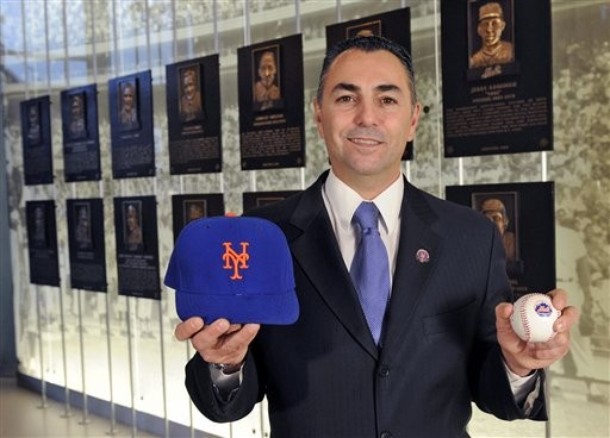
Earlier today, the Mets announced that John Franco will be inducted into the team's Hall of Fame in a ceremony prior to the June 3rd game against the World Champion St. Louis Cardinals.  Franco will become the 26th member of the Mets' Hall of Fame and the first to be inducted since Davey Johnson, Darryl Strawberry, Dwight Gooden and Frank Cashen were bestowed the honor in 2010.

Many people know that John Franco played more years for the Mets (14) than any player not named Ed Kranepool and was the team's last captain.  It's also fairly common knowledge amongst Mets fans that Franco holds the club record for saves (276) and is the all-time leader for saves by a left-handed pitcher (424).

But what about the things you may have forgotten about the Brooklyn-born Franco?  He was much more than just a pitcher who racked up saves and years played with the team.  In fact, I've come up with ten things you may not remember about the man who came into games as Chuck Berry serenaded him over the Shea Stadium speakers.  In honor of the newest member of the Mets' Hall of Fame, I present to you...


Ten Things You May Have Forgotten About John Franco

1.  Before Mike Piazza became synonymous with No. 31, John Franco wore the number.  In fact, he wore it longer than Piazza did as a Met, but gave it up to the superstar catcher upon his arrival in May 1998.  Franco switched to No. 45, the number he wore as a player at St. John's University and the number of his childhood hero, Tug McGraw.

2.  When John Franco was traded from Cincinnati to the Mets in December 1989, he was the Reds' all-time saves leader with 148.  In 1994, Franco recorded his 108th save as a Met, taking over the team's top spot from Jesse Orosco.  For ten seasons, John Franco held the No. 1 spot in saves for both the Reds and the Mets until Reds' closer Danny Graves surpassed Franco in 2004.

3.  John Franco is one of only two Mets players who played for both Davey Johnson and Bobby Valentine, joining his battery mate, Todd Hundley.  Johnson was fired as Mets' manager during Franco's first season in New York, while Valentine dialed Franco's number in the bullpen 295 times.  Unfortunately for Johnson, Franco gave up two runs in two-thirds of an inning during a loss to the Padres on May 27, 1990.  It would be Davey's final game as Mets' manager.

4.  Although most fans remember Tom Seaver throwing out the first pitch at Citi Field, it was actually John Franco who threw out the ceremonial first pitch at the inaugural baseball game played at the Mets' home.  On March 29, 2009, Franco took the mound before the college baseball game between St. John's and Georgetown, opening up the ballpark with its first toss to the plate.

5.  The Mets lost the 2000 World Series to the Yankees in five games.  Who was the only Mets' pitcher credited with a victory in the first Subway Series in 44 years?  None other than John Franco, who earned the victory in Game 3 after Benny Agbayani's RBI double gave the Mets an eighth-inning lead.

6.  John Franco was once relieved by Matt Franco.  On Fireworks Night in 1999, Matt Franco traded in his pinch-hitting role to be the "pinch-pitcher" after John Franco left the game with a strained tendon in the middle finger of his throwing hand.  Franco (Matt) would give up a three-run homer to the first batter he faced, adding two runs to Franco's (John) pitching line for the night.  The Mets would go on to lose the game to the Braves, 16-0.  That wouldn't be the only thing lost that night, as Franco (John, not Matt) lost his job as Mets' closer to Armando Benitez because of his injury.

7.  Darryl Strawberry and David Wright are widely considered to be the two best homegrown hitters in franchise history, with both players popping up all over the Mets' all-time offensive leaderboards.  John Franco is the only player who was a teammate of both players while with the Mets.  Franco's first season in New York (1990) coincided with the Straw Man's last year as a Met, while his last year (2004) was the year David Wright made his Met debut.

8.  John Franco is one of only three Mets' relievers to finish in the top ten in the Cy Young Award vote in a particular year.  In the strike-shortened 1994 season, Franco led the National League with 30 saves and placed 7th in the Cy Young vote.  Jesse Orosco (3rd in 1983) and Billy Wagner (6th in 2006) are the other Mets who have received Cy Young Award votes in addition to Franco.

9.  With 33 saves in 1990, John Franco became the first Met ever to lead the league in saves.  He repeated the feat in 1994 when he saved 30 games for the Mets to pace the NL.  To this day, Franco remains the only Mets pitcher to lead the National League in saves.

10.  John Franco is one of only two men to pitch for the Mets at age 44.  In 1965, Hall of Famer Warren Spahn became the first player to accomplish the feat, pitching in 20 games (19 starts) for the Mets at the age of 44.  Franco's final appearance as a Met (October 3, 2004) was also his only appearance as a 44-year-old.  That's not the only thing Spahn and Franco have in common.  Both pitchers are first all-time in wins and saves for left-handed pitchers, respectively.  Spahn's 363 career victories and Franco's 424 saves lead all southpaws in major league history.

Monday, January 23, 2012

One Season Wonders: Roger Cedeño

When the Mets acquired Mike Piazza from the Florida Marlins in 1998, the writing was on the wall for Todd Hundley.  Hundley was one of only two Mets left on the team who had played for Davey Johnson (John Franco was the other), but had spent the first three months of the 1998 season on the disabled list while recovering from major reconstructive surgery on his right elbow.  Needless to say, Hundley was not happy that the Mets were giving up on him, especially after he had given the team his best two seasons in 1996 and 1997.

Surprisingly, Hundley was not traded immediately upon his return from the DL in July.  Instead, the Mets moved him to left field, displacing Bernard Gilkey, whose poor performance (.237, 3 HR, 24 RBI in 64 games at the time of Hundley's return) moved him to the bench and eventually to the Arizona Diamondbacks three weeks later.  Despite the Mets' willingness to play Hundley, an outfield neophyte, on a regular basis, his performance at the plate suffered.  Hundley finished the injury-shortened 1998 campaign with his poorest line (.161, 3 HR, 12 RBI in 53 games) since his first full season in the majors in 1992.

Finally, after months of speculation, the Mets traded Hundley to the Los Angeles Dodgers for two players.  One of the players was All-Star catcher Charles Johnson, who was immediately shipped off to Baltimore for reliever Armando Benitez.  The other was a 24-year-old utility outfielder who had played parts of four seasons in Los Angeles, never establishing himself as a full-time player.  But once he came over to the Mets, his game took off (literally) and he became a key contributor on a team that was trying to make its first postseason appearance in 11 years.  That player was Roger Cedeño.

Before Jose Reyes wowed Mets fans with his speed, there was Roger Cedeño.


Roger Leandro Cedeño had never accumulated more than 240 at-bats in any of his four seasons as a Dodger.  He also had never shown the ability to be a prolific base stealer in the major leagues.  In 311 games with the Dodgers, Cedeño stole 23 bases, with a career-high of nine of 1997.  However, he was a base-stealing threat in the minors, as evidenced by his 121 stolen bases from 1992-1995.

At the time of the trade, it was assumed that Cedeño would not be the answer to the team's leadoff hitter conundrum.  His career on-base percentage was .317 and he was not a good contact hitter, striking out 158 times in 687 at-bats with the Dodgers.  Therefore, it was not a surprise when the Mets used him primarily as a pinch-hitter and late-inning defensive replacement over the first month of the season.  But that all started to change once May rolled around.

From Opening Day to May 2, Roger Cedeño played in 24 games.  However, he only started nine of those games, as he appeared in eight games as a pinch-hitter, two games as a pinch-runner and five games as a defensive replacement.  As a result, he didn't get much of an opportunity to establish himself as an offensive threat.  Through May 2, Cedeño was hitting .289 with five stolen bases, but had only picked up 45 at-bats.  Then came a rare start on May 3 against the Houston Astros.  It was a night that turned Cedeño's season around.

Given the opportunity to start a game, Roger Cedeño took full advantage.  Against the Astros, Cedeño went 2-for-4 with a walk, two runs scored and two stolen bases.  He got things started with a leadoff single to center in the first inning, then promptly stole second base.  He took third base on a weak groundout to third, then scored on an RBI single by Mike Piazza.  The Mets batted around in that first inning, scoring four times.

By the sixth inning, the Astros had cut the lead to one, as Richard Hidalgo's two-run homer had turned an early 4-0 lead into a tight 4-3 game.  Once again, a rally started by Roger Cedeño gave the Mets some breathing room.  With one out in the sixth, Cedeño doubled to left, then stole third base, giving Edgardo Alfonzo the opportunity to drive in a run without getting a hit, which he promptly did by lifting a sacrifice fly to center, scoring Cedeño and giving the Mets an insurance run.  The bullpen did the rest, and the Mets held on for a 5-3 victory.

The game against the Astros began a stretch in which Cedeño started 10 times in 12 games.  Given his first chance as an everyday player, Cedeño went on a blistering tear, batting .400 and reaching base 27 times (18 hits, nine walks) in those 12 games.  On May 12, Cedeño went 4-for-4 with a walk, three runs scored and a stolen base against the Phillies.  He followed that up two days later by picking up two more hits, scoring three runs and tying a franchise record with four stolen bases against the Rockies.  Naturally, both efforts led the Mets to victories in each game.

Despite a brilliant first half in which hit .332, had a .432 on-base percentage, scored 53 runs and led the league with 46 steals, Cedeño was left off the National League All-Star roster.  Perhaps feeding off his snub, Cedeño continued to excel after the break.  In his first two games following the Midsummer Classic, Cedeño went 4-for-9 with two doubles, three runs scored, three RBIs and four stolen bases.  The four steals gave him 50 thefts on the year, making him the third Met to reach that mark after Mookie Wilson (1982, 1983) and Lance Johnson (1996).

Mets fans saw this quite often in 1999, as Roger Cedeño was the master of his stolen base domain.


Cedeño tied Mookie Wilson's club record for steals when he stole his 58th base on August 10 against Padres' reliever Donne Wall.   He then waited nearly three weeks to break Mookie's mark, but when he did it, he made sure it occurred in a game Mets fans would never forget.

On August 30, the Mets were leading the Astros, 2-0 in the second inning when Cedeño stepped up to the plate after a home run by Darryl Hamilton.  Cedeño followed Hamilton's homer with a single up the middle.  After a strikeout by Rey Ordoñez and a sacrifice bunt by Masato Yoshii, Cedeño stole third base, breaking Mookie Wilson's club record.  The stolen base rattled Astros' starter Shane Reynolds, as he proceeded to give up an RBI single to Rickey Henderson, a single to Edgardo Alfonzo, a two-run double to Robin Ventura and a two-run homer to Mike Piazza.  By the time the inning was over, the Mets had taken a 7-0 lead and the onslaught was on.  The Mets went on to defeat the Astros, 17-1, but the lead story was no longer Cedeño breaking Mookie Wilson's single-season stolen base record, but Edgardo Alfonzo's one-for-the-ages performance, as Fonzie went 6-for-6 with three home runs, a double, two singles, six runs scored and five RBIs.

A week after breaking the stolen base record, Cedeño's batting average had fallen to .306, threatening to dip below the .300 mark for the first time since the day after he became an everyday player in early May.  But then Cedeño turned it up a notch for the stretch run, hitting .359 over the team's final 22 games.  He also reached base at a .431 clip, scored 13 runs and stole six bases as the Mets clinched the wild card berth in a one-game playoff against the Cincinnati Reds.  It was on to the playoffs for the Mets and Cedeño's first postseason experience was one both he and the Mets would always remember.

After starting 106 of the team's final 138 games, Roger Cedeño only started one game in the NLDS against the Arizona Diamondbacks.  But in Game 4, Cedeño kept the Mets' hopes alive with a crucial at-bat.  After the Mets had fallen behind on a two-out, two-run double by Arizona shortstop Jay Bell in the top of the eighth inning, the Mets were six outs away from having to go back to the desert to face eventual Cy Young Award winner Randy Johnson in a fifth and deciding game.  But an error by rightfielder Tony Womack gave the Mets hope and put two runners in scoring position for Cedeño, who had entered the game one inning earlier as a defensive replacement for Benny Agbayani.  Cedeño came through in the clutch, driving in the tying run with a sacrifice fly.  With the new life afforded to them via the bat of Roger Cedeño, the Mets were able to win the game and the series when Todd Pratt hit a walk-off homer to straightaway center over the not-completely outstretched glove of Steve Finley in the bottom of the tenth inning.

Cedeño and the Mets were now off to the National League Championship Series to face their division rivals in Atlanta.  This time, manager Bobby Valentine made sure to get him more playing time.  Cedeño made sure to save the best for last.

The Mets lost the first three games of the NLCS to the Braves, even with Cedeño hitting .429 over the first two games (he did not play in Game 3).  Just like they did in Game 4 of the NLDS, the Mets let a one-run eighth inning lead slip away in Game 4 of the NLCS, as Brian Jordan and Ryan Klesko hit back-to-back home runs off Mets' starter Rick Reed after Reed had faced the minimum 21 batters through the first seven innings.

With the Mets six outs away from elimination, Roger Cedeño led off the bottom of the eighth with a single off Braves' starter John Smoltz.  After Rey Ordoñez popped out on a failed bunt attempt and Benny Agbayani struck out against reliever Mike Remlinger, the Mets were only four outs away from ending their season prematurely.  But Cedeño wasn't about to let the season end without a fight, as he stole second base to put the tying run in scoring position.  Needing to pitch more carefully, Remlinger walked Melvin Mora, putting the go-ahead run on base and setting the stage for volatile closer John Rocker to come into the game to face John Olerud.  In an instant, Cedeño and Mora pulled off a daring double steal, putting two runners in scoring position for the Mets' first baseman.  Olerud then stroked a single to center, giving the Mets a lead they would not relinquish, a lead made possible by the bat and legs of Roger Cedeño.

As Roger Cedeño and Melvin Mora celebrated scoring the tying and go-ahead runs behind him, John Rocker was left to ponder what time he could catch the 7 train out of Shea.


The Mets and Braves battled for 15 innings in Game 5.  Although Cedeño didn't play in the first 14 innings, he did find himself in the right spot at the right time, coming into the game as a pinch-runner for Matt Franco in the 15th.  Cedeño ended up scoring the winning run on Robin Ventura's Grand Slam Single, the only run the Mets needed to take a 4-3 victory over the Braves.

Unfortunately, Cedeño's season ended earlier than it did for his teammates, as he was pulled for a pinch-hitter in the sixth inning of Game 6, as the Mets were rallying from an early five-run deficit.  The Mets had already scored three runs in the sixth and had the tying run at the plate in Cedeño when Bobby Valentine decided to go with a power threat in Benny Agbayani.  The Mets failed to tie the game in the sixth inning and Cedeño was out of the game, five innings before the Mets' season ended when Kenny Rogers gambled and threw ball four to Andruw Jones in the 11th inning.  Who knows if Cedeño would have provided the Mets with a key hit or stolen base in extra innings had he remained in the game?

Despite the disappointing end to the 1999 season, Cedeño had sparkled in the postseason.  Although he started only five games against the Diamondbacks and Braves, the speedster batted .421, scored three runs, drove in three more and stole three bases.  Cedeño had just completed a memorable season, one in which he finally established himself as an everyday player in the major leagues.  His fabulous postseason followed a regular season in which he hit .313, scored 90 runs and stole a franchise-record 66 bases.  So what did the Mets do to reward him for his efforts?  They traded him.

After one season in New York, the Mets dealt Roger Cedeño, Octavio Dotel (who was the winning pitcher in Game 5 of the NLCS) and minor leaguer Kyle Kessel to Houston in exchange for 22-game winner Mike Hampton and rightfielder Derek Bell.  Both Hampton and Bell were one-and-done in New York, as Hampton signed an eight-year free agent contract with the Colorado Rockies following the 2000 season and Bell inked a one-year deal with Pittsburgh.

Cedeño played one injury-plagued season in Houston, batting .282 with 54 runs scored and 25 stolen bases in 74 games before signing a one-year contract to play in Detroit in 2001.  He returned to his past glory in the Motor City, hitting .293 with a career-high 11 triples and 55 stolen bases in 131 games.  Once again, Cedeño was a free agent following the 2001 campaign and the Mets were looking for a speedster.  This time, however, it was a match that should never have been made.

On December 17, 2001, the Mets signed Roger Cedeño to a four-year, $18 million contract.  However, Cedeño showed up at training camp overweight and out of baseball shape, and it showed during the regular season.  In his first year back with the Mets, Cedeño batted .260, had a .318 on-base percentage and only stole 25 bases.  Going into the 2003 season, the Mets were hoping that Cedeño could return to his 1999 self.  Instead, they got more of the 2002 version, as Cedeño batted .267 and reached base at a .320 clip.  However, his stolen bases dropped to 14 despite playing in 148 games and his 60.9% success rate was also the worst of his nine-year career.

Those orange batting practice jerseys weren't very slimming, nor did they help Roger Cedeño recapture the form he once showed for the Mets in 1999.


Finally, after two years of high expectations and an endless stream of boos from the Shea faithful, Cedeño was traded to the St. Louis Cardinals in 2004 for Wilson Delgado.  The Mets did agree to pay all but $1 million of the remaining $10 million left on Cedeño's contract, but they were finally rid of him.

Roger Cedeño came to New York in 1999 after never establishing himself in Los Angeles.  He then put together one of the most unexpected seasons in club annals, helping the Mets reach the playoffs for the first time in 11 years.  Almost as quickly as he got here, Cedeño was gone, traded to Houston for a pitcher who helped the team make it back to the postseason in 2000.  However, despite his comeback season in Detroit in 2001, Cedeño was never as good as he was for that one wonderful season in 1999.  The Mets made the mistake to re-sign him following the 2001 season and the team suffered in the standings, finishing in last place in both years of Cedeño's second stint in New York.

Sometimes it's best to quit when one is ahead.  The Mets and Roger Cedeño were ahead of everyone but the Braves in 1999.  Three years later, both parties were behind everyone in the NL East.  It just goes to show that sometimes a one-season wonder should stop after that one wonderful season.


Note: One Season Wonders is a thirteen-part weekly series spotlighting those Mets who had one and only one memorable season in New York.  For previous installments, please click on the players' names below:
 
January 2, 2012: Bernard Gilkey
January 9, 2012: Terry Leach 
January 16, 2012: George Stone