Showing posts with label Mariano Rivera. Show all posts

Monday, January 21, 2019

If Studious Metsimus Had a 2019 Hall of Fame Vote...

On Tuesday, January 22, the National Baseball Hall of Fame will be using its speed dial to inform several players and their families that they'll need to cancel any plans they have for the penultimate weekend in July because new plans have been made for them.  Those players who receive 75% of the Hall of Fame vote will be joining Modern Baseball Era inductees Lee Smith and Harold Baines on stage at the Clark Sports Center in Cooperstown, New York.

Last year's class saw a starting pitcher, a closer, three infielders and an outfielder receive their plaques, as Jack Morris, Trevor Hoffman, Jim Thome, Alan Trammell, Chipper Jones and Vladimir Guerrero were immortalized as six of the game's all-time greats.  Don't be surprised if a similar number of hotel rooms need to be booked for this year's inductees.

Fifteen players returned to the ballot this year, after receiving the minimum five percent of the vote last year, but not quite the 75% needed for induction.  Three former Mets (Jeff Kent, Billy Wagner, Gary Sheffield) are among them.  In addition to the 15 returnees, there are 20 first-timers on the ballot, with three of them also wearing a Mets cap at some point in their career.  Those three are lefty long-man Darren Oliver, the underachieving Jason Bay and the winner of the "Wait, He Was A Met?" award, Rick Ankiel, who helped the Mets more as a member of 2000 Cardinals than he did as a member of the Mets in 2013.

According to Ryan Thibodaux and his helpful Hall of Fame ballot tracker, there are 412 ballots out there, with 309 votes needed for induction.  Players will be five-percented off the ballot if they do not receive a minimum of 21 votes.  And by players, I mean Darren Oliver, Jason Bay and Rick Ankiel.  Sorry, guys.  At least you played long enough to get on the ballot.

Had Studious Metsimus been honored with the right to vote, players would have needed 310 votes to be inducted, so if someone like Roger Clemens or Barry Bonds misses the cut by one vote this year, they can file a formal complaint to make my vote officially count instead of it just being a feeble attempt to get me a few dozen page views every January.  Not that I would have voted for Clemens or Bonds anyway.  I'm not a fan of bat-tossing misrememberers or people who try to compete with Bruce Bochy (another former Met!) for the title of largest noggin in baseball.

Here's what would have been Ballot No. 413, focusing on three players I would personally like to see in the Hall, followed by the other seven who would get the "X" mark next to their names on my imaginary ballot.


Baseball Mecca.  (Photo courtesy of the Cooperstown/Otsego County website)


Edgar Martinez

Face it, the only reason Martinez is still on the ballot in his tenth and final year of eligibility is because he played a significant portion of his career as a designated hitter.  How else can you explain a lifetime .312 hitter with a .933 OPS and OPS+ just short of 150 not having a plaque in Cooperstown yet?

The voters of this generation who use the DH argument to foil the case of Martinez are like the previous generation's voters who couldn't bear to see relief pitchers making the Hall.  "If they can't pitch more than a few innings, I can't vote for them," those misinformed voters would say.  But relievers such as Rollie Fingers, Goose Gossage and Bruce Sutter (all Hall of Famers) paved the way for the one-inning closer to get recognition from the Hall.  Dennis Eckersley has a plaque in Cooperstown.  John Smoltz's three-and-a-half year period as a dominant closer also helped fuel his candidacy.  Trevor Hoffman got his Hall call last year and Lee Smith just impressed the Modern Era voters.  And who, pray tell, is going to keep Mariano Rivera out of Cooperstown this year, other than Boston bloviator Bill Ballou?

The same people who are now accepting one-inning closers as potential Hall of Famers now need to focus their attention on players who left their gloves at home.  Frank Thomas, who started more than 100 games at first base in just three of his 19 seasons and played in over 1,300 games exclusively as a designated hitter, was a first ballot Hall of Famer.  Why is his lifetime .301/.419/.555 slash line considered worthy of enshrinement and Edgar's .312/.418/.515 isn't?  Is it because Thomas produced the sexy hits (521 HR) and Martinez didn't (309 HR)?  It's true Thomas had 11 seasons with 100+ RBI while Edgar had just six.  But did you know the great Mickey Mantle only had four such seasons?  No one used that argument against Mantle and no one should.  But had he played in the DH era, Mantle's knee injuries would have relegated him to "leave your glove behind" status and then people would be questioning what should have been obvious about him; that he is undoubtedly a Hall of Famer.

Martinez won two batting titles.  He was also a league leader in runs scored, RBI, OPS, OPS+ and finished first multiple times in doubles and on-base percentage.  For seven seasons (1995-2001), which coincided with all of the Mariners' postseason trips in franchise history, Martinez's averages per 162 games were mindboggling.  He produced a .329/.446/.574 slash line.  That's a 1.020 OPS in 1,020 games.  And if that's not good enough, how about his 162-game average of 47 doubles, 32 homers, 123 RBI and 111 runs scored during the seven-year stretch?

There's a reason why the annual outstanding designated hitter award is named after Edgar Martinez.  That's because he was the best at what he did.  And those who are the best deserve to be with the best in Cooperstown.


This mustache should be on Edgar's plaque.  It's Hall of Fame worthy by itself.  (Bruce Bennett/Getty Images)


Larry Walker

Similar to Edgar Martinez, Walker hasn't gotten as much support as he should because of one nagging element.  Martinez has failed to get votes because of the DH factor, while Walker has the Coors Field factor looming over him.

Prior to becoming a Colorado Rockie, Larry Walker was already a good hitter and complete player.  In his final three years in Montreal, Walker had a .294 batting average, .371 on-base percentage and .516 slugging percentage, averaging 33 doubles, 21 HR, 88 RBI and 21 SB.  He was also an All-Star, won a Silver Slugger Award and two Gold Gloves while in Montreal.  Although those numbers are not quite Hall of Fame worthy, they were still very good.  Then he signed with Colorado and became one of the best players in the major leagues.

In his first season with the Rockies (1995), Walker hit .306 with 36 HR and 101 RBI.  His .607 slugging percentage was second in the league and he helped lead the third-year Rockies to their first-ever playoff appearance.  Year two in Colorado was fraught with injuries, as Walker only played in 83 games but still managed 18 HR, 58 RBI and 18 SB in half a season's worth of games.  Fully healthy in 1997, Walker's career took off into the stratosphere.  Walker's 1997 numbers (.366 batting average, 46 doubles, 49 HR, 130 RBI, 143 runs scored, 33 SB, .452 OBP, .720 SLG, 1.172 OPS) almost looked like they came straight from a video game.  But Walker wasn't done after his phenomenal '97 campaign.  Over the next five seasons, Walker won three batting titles (1998, 1999, 2001), finished second another year (2002) and had a combined .350 batting average over those five seasons.  Basically, he was Tony Gwynn with power and Gwynn was a first-ballot Hall of Famer.

In ten years as a Rockie, Walker posted a .334 batting average, .426 on-base percentage, .618 slugging percentage and 1.044 OPS.  Only 24 players in major league history finished with a higher career batting average than what Walker put up in that ten-year span.  Of those 24, the only three who finished with a higher on-base percentage, slugging percentage and OPS were Ted Williams, Babe Ruth and Lou Gehrig, all first ballot Hall of Famers and all legends of the sport.

Larry Walker played 17 years in the major leagues.  However, because of injuries, he only had four seasons in which he played at least 140 games.  From 1994-2005, Walker missed an average of 44 games per season, failing to play more than 103 games in five of those 12 campaigns.  Despite his multiple trips to the disabled list, Walker finished his career with 2,160 hits, including 471 doubles and 383 HR.  He also stole 230 bases, scored 1,355 runs and drove in 1,311 more.  His combined averages (.313 BA, .400 OBP, .565 SLG) are among the highest career marks of anyone not already in the Hall of Fame, as is his 72.6 bWAR.  And he wasn't just a product of Coors Field.

Walker played in 674 games for the Expos prior to his time in Colorado and 144 games for the Cardinals after leaving the Rockies, which is approximately five full 162-game seasons.  In those 818 games in non-Rockies uniforms, Walker posted an .851 OPS and 129 OPS+, averaging 63 extra-base hits and 21 steals per 162 games.  And those numbers weren't fueled by the thin air in Denver.

All told, Walker was a five-time All-Star, won seven Gold Gloves and three Silver Slugger Awards.  He also finished in the top 20 in the MVP vote seven times, winning the 1997 N.L. Most Valuable Player Award.  Not all of his awards and accolades came as a member of the Colorado Rockies, proving that Walker was an exceptional player before and after his time in Colorado.  Simply stated, Larry Walker has earned the right to become the first player with a Rockies hat on his Hall of Fame plaque.


Larry Walker sticks out his tongue to all those who won't vote for him.  (David Seelig/AllSport)


Mariano Rivera

He blew a save in the 1997 ALCS, which allowed the Cleveland Indians to stave off elimination and led to the Yankees' sole postseason series loss in a five-year period.

He couldn't hold a lead in the ninth inning of Game Seven of the 2001 World Series, allowing the Arizona Diamondbacks to celebrate their first and only championship.

He was credited with back-to-back blown saves in the 2004 ALCS, when converting any one of them would have resulted in a pennant for the Yankees instead of what became a curse-ending title run for the Boston Red Sox.

He lost four games to the Mets and allowed runs in six of his final 11 appearances against his crosstown rivals, allowing players such as Matt Franco (1999), Timo Perez (2001), Raul Gonzalez (2003), Damion Easley (2007), Ike Davis (2010), Ronny Paulino (2011) and Lucas Duda (2013) to drive in runs against him.

Clearly, after suffering so much in the postseason and failing repeatedly against the Mets, especially when facing less than legendary players, it's time to give Mariano Rivera a break.  He gets my sympathy vote for the Hall.


Down, but not out (of the Hall of Fame).  (Keith Torrie/NY Daily News Archive/Getty Images)


In addition to the marvelous Martinez, the wonderful Walker and the wretched Rivera, these are the other seven players I'd vote for Hall of Fame induction:

  • Roy Halladay:  Some people wonder if he'd have gotten as much support for the Hall had he not tragically passed away in 2017.  Those people probably don't realize that for a ten-year period (2002-11), Halladay was arguably one of the top three pitchers in baseball.  In that decade of excellence, Halladay earned a victory in nearly 70% of his decisions, had three 20-win seasons and posted a 2.97 ERA (148 ERA+) with a 1.11 WHIP.  He also led the league in innings pitched and shutouts four times each and finished first in complete games an incredible seven times.  That's Hall of Fame worthy, even if he's not here to accept the honor.
  • Todd Helton:  Like former teammate Larry Walker, Helton's candidacy will be questioned because of the Coors Field factor.  After all, during his best eight-year stretch (1998-2005), Helton averaged 46 doubles, 33 HR, 113 RBI and 114 runs scored, while striking out just 76 times and drawing 96 walks per season.  That's absolutely tremendous.  Wanna know what his average season was like in road games, otherwise known as games not played at Coors Field?  While wearing road grays during those eight seasons, Helton slashed .298/.398/.520 and produced 277 extra-base hits, drove in 347 runs and scored 337 times.  That's an average of 73 extra-base hits, 91 RBI and 89 runs scored per 162 road games.  In other words, still up in the elite hitter stratosphere.  Even with injuries sapping his power in his later years, Helton still managed to finish in the top 100 all-time in home runs (80th all-time), doubles (19th), extra-base hits (40th), hits (97th), RBI (97th) and runs scored (96th).  There are over 100 hitters in the Hall of Fame.  Helton ranks in the top 100 in many major hitting categories.  You do the math if he belongs in the Hall or not.
  • Fred McGriff:  I hadn't voted for him before, but now I see the error of my ways.  The 1994-95 strike that cancelled the World Series also did a number on McGriff's Hall of Fame candidacy.  Had the Crime Dog played in the 66 games that were cancelled, he likely would have collected the seven home runs he needed for 500 and the ten hits required to get to 2,500.  He also might have approached 1,600 RBI, as he finished 50 short of that lofty total.  A total of 17 players have collected 500 HR, 2,500 hits and 1,600 RBI.  Four of them have steroid suspicions (Barry Bonds, Rafael Palmeiro, Manny Ramirez, Gary Sheffield) and two are not yet eligible for the Hall (Alex Rodriguez, Albert Pujols).  The other 11 are already in Cooperstown.  McGriff played clean, he played hard and he played consistently well.  He gets my vote.
  • Curt Schilling:  Like Hoffman, he posted an impressive WHIP during an era known for its offense.  From 1992 to 2004, Schilling was the owner of a 1.091 WHIP, while averaging 202 strikeouts and just 44 walks per season.  In fact, of all pitchers with at least 3,000 strikeouts, no one posted a better strikeout-to-walk ratio than Schilling's 4.38 K/BB (3,116 K, 711 BB).  And then there's this posteason thing; the one with him going 11-2 with a 2.23 ERA and 0.968 WHIP in 19 starts.  He's one of the all-time greats.
  • Mike Mussina:  Schilling is considered one of the best pitchers of his era.  Modern metrics says Mussina was a better player, as his 83.0 bWAR puts him ahead of Schilling's 79.9 bWAR.  Mussina finished in the top-six in Cy Young Award balloting nine times and won seven Gold Glove Awards.  And of all pitchers who made at least 500 starts, only Hall of Famers Christy Matthewson, Pete Alexander, Randy Johnson and maybe-someday Hall of Famer Roger Clemens posted a higher winning percentage than Mussina's .638 mark. 
  • Billy Wagner:  It's a shame Wagner hasn't gotten more recognition, as he was far more dominant than 2018 Hall of Fame inductee Trevor Hoffman and 2019 enshrinee Lee Smith ever were.  Hoffman and Smith got the job done as effectively as any other closer who ever lived.  But Wagner would eat a hitter up and spit him out.  Injuries curtailed Wagner's career, but any pitcher who averaged nearly 12 strikeouts per nine innings, four whiffs per walk and finished his career with a WHIP under 1.00 (Wagner's WHIP was 0.998) deserves Hall of Fame consideration.  And I didn't even mention his 422 saves and 2.31 ERA.  Okay, maybe I just did. 
  • Jeff Kent:  Kent was more than just his 1970s porn star 'stache.  He was one of the best hitting second basemen of all-time.  For a guy whose career didn't take off until his age-29 season, Kent finished just 16 extra-base hits shy of 1,000.  The pressures of playoff baseball didn't faze him, as Kent posted an identical .500 career slugging percentage in the regular season and postseason.  And let's not forget his eight seasons with 100+ RBI, the 1,518 runs he drove in for his career and the title of all-time leading home run hitter at the second base position.


Those are my ten Hall of Fame selections.  Some will get in.  Some won't.  And some will continue to wonder why they have to keep paying for a ticket to get in to see their contemporaries' plaques.  (I'm talking to you, Clemens and Bonds.)  As always, some candidates didn't make my cut.  But every player on the Hall of Fame ballot in 2019 had an outstanding career and all of them had qualities that at the very least put them in the Hall of Fame conversation.  Except Rick Ankiel, who needed 14 seasons to reach the ten-year minimum needed to qualify for Hall of Fame consideration.

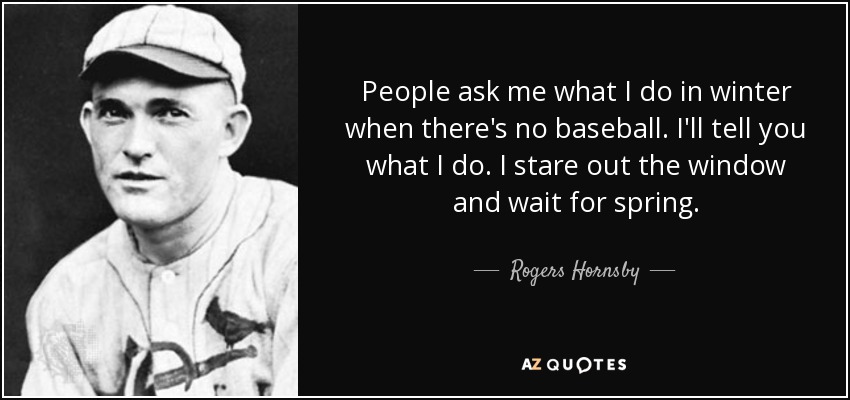
Who will get in?  And who will be joining Ankiel by buying a ticket for themselves?  That will be revealed on January 22.  Until then, we'll just follow the advice of Hall of Famer Rogers Hornsby and just stare out the window, waiting for spring to arrive.


Saturday, April 23, 2016

Matt Harvey and the Mets' Mediocrity in His Starts

Until last night, the Mets hadn't won a regular season game started by Matt Harvey since last season's division clincher.  (Photo by Ed Leyro/Studious Metsimus)

Matt Harvey earned his first regular season victory in last night's 6-3 win over the Atlanta Braves.  But more importantly, the Mets earned their first win in a Matt Harvey start since last year's division clincher.  Harvey had made four regular season appearances since the team won the N.L. East crown on September 26.  Those four contests included his un-Harvey-like three-game start to this season and the next-to-last regular season game of 2015 - a game in which the Mets were no-hit by Max Scherzer.

All told, Harvey has made 69 starts in his Mets career and the team has lost more than half of them, going 34-35 in the Dark Knight's appearances.  There are many reasons for the Mets' mediocrity in starts made by the pitcher many deemed to be the future of the franchise.

Harvey's bullpen has failed to protect his leads.  Like Johan Santana in 2008, who had seven leads blown by the team's bullpen, turning a potential 23-win, Cy Young campaign into a 16-win, third place finish in the balloting for top pitcher in the National League, Harvey has been occasionally victimized by his relief corps as well.  It all began in his final start in 2012, when Harvey pitched seven innings of one-hit ball against the Phillies, leaving the game with a 2-1 lead, only to see Josh Edgin surrender a two-run homer to Ryan Howard with two outs in the ninth.  The Mets lost that game, 3-2.

In 2013, the Mets won each of Harvey's first five starts, but then went 8-13 in his next 21 starts before his season was cut short in August due to the injury that caused him to undergo Tommy John surgery.  In three of those 13 losses, the Mets were leading the game when Harvey was removed by Terry Collins, only to see the bullpen become BFFs with opposing hitters, giving up Harvey's leads in eventual Mets losses.

Upon returning from Tommy John surgery in 2015, Harvey finally had some success helping the Mets earn victories, but the team still lost a dozen times in Harvey's 29 starts.  Once again, New York dropped three games in which Harvey left them with a lead to protect.  Add it all up and the Mets have lost seven games when Harvey was removed with the lead - or the same number of times the Mets' bullpen blew leads for Johan Santana in 2008 alone.  Had the bullpen been more successful for Harvey and the Mets in those seven instances, the team's 34-35 record in Harvey's starts could have been a more impressive 41-28.

But don't just blame the bullpen for the team's mediocrity in Harvey's starts.  In fact, the team has saved Harvey from a number of losses several times during his career as well.

On April 24, 2013, Harvey allowed three runs to the Dodgers in six innings.  When he left the game, the Mets trailed Los Angeles, 3-1.  New York tied the game in the ninth, then won it in the tenth on Jordany Valdespin's walk-off grand slam.  A month later, Harvey was all set to pick up a hard-luck loss when he pitched eight masterful innings against the Yankees but left the game with his team down, 1-0.  The Mets rallied for two runs in the ninth, marking the only time in Mariano Rivera's career that he came into a save situation and earned the loss without retiring a batter.

Fast forward two years later during the Mets' run to the N.L. East title in 2015.  On September 8, Harvey pitched an awful game in Washington, allowing seven runs to the Nats before he was removed with one out in the sixth and his team trailing by six.  Then Wilmer Flores happened (RBI single).  Then Curtis Granderson happened (bases-loaded walk).  Then Yoenis Cespedes joined the party (three-run bases-clearing double).  Then Lucas Duda remained patient (game-tying bases-loaded walk).  Finally, an inning later, Kirk Nieuwenhuis hit his final homer as a Met, taking Jonathan Papelbon deep for what became the winning run in the Mets' 8-7 victory.

There were also a game in 2015 where Harvey was actually helped out by his bullpen to help the Mets earn a victory.  On July 31, Harvey was removed from a 1-1 game against the Nationals with two runners on base.  But Tyler Clippard won a 13-pitch battle against Jayson Werth, striking out the hirsute slugger to preserve the tie.  Had Werth driven in a run or two against Clippard, those runs would have been charged to Harvey and the game might never have gone to extra innings.  But because Clippard and the rest of the bullpen (and eventually Wilmer Flores in the 12th inning) did their jobs, Harvey escaped with a no-decision and the Mets escaped with a much-needed win.

So that's four wins where Harvey could very well have been saddled with a loss, but the Mets stormed back to victory.  That 34-35 overall record by the team could have been a more disturbing 30-39 had those rallies not ensued.

It's true that Harvey has been more effective than not.  His 2.66 ERA and 1.03 WHIP in his career says that's the case.  It's also true that the Mets' bats have had a tendency to hit the snooze button more than they've hit baseballs in too many of Harvey's starts.  Harvey has allowed two runs or fewer in 45 of his 69 starts, or 65.2% of the time.  In those starts, the Mets are just 27-18, for a .600 winning percentage.  That might seem okay until you look at how the Mets have fared when Jacob deGrom has allowed two runs or fewer.  DeGrom has held opponents to two runs or fewer in 36 of his 53 starts, or 67.9% of the time, which is not much higher than Harvey's percentage.  However, New York has a phenomenal 29-7 record when deGrom holds opponents to no more than two tallies.  That's good for an .806 winning percentage, which is far higher than Harvey's mark in similar outings.

To summarize, Matt Harvey has been a victim of everything that can contribute to his team's mediocre record in his starts.  He's been a victim of an occasionally shoddy bullpen.  He's also had his teammates take several days off at the plate when he's been on the mound.  But on the flip side, both the bullpen and the offense have also bailed Harvey out a few times.

Sometimes, it's better to be lucky than good.  In Matt Harvey's case, he's been very good throughout his career, but he also hasn't had the best of luck.  Put it all together and you have a four-year career that has produced just 34 victories by his team in his 69 starts.  It's a trend that's been going on for far too long and needs to change very soon if Harvey is ever going to be the type of pitcher everyone expects him to be.  His win against Atlanta last night needs to be the stepping stone for bigger and better things in the future.

Monday, March 2, 2015

One Mo-MET In Time: Matt Franco

Prior to 1997, the Mets had only faced their crosstown rivals from the Bronx in Grapefruit League games and Mayor's Trophy exhibitions.  In addition, neither the Mets nor the Yankees had ever qualified for the postseason in the same year.  But thanks to interleague play, meaningful games between the two squads became a reality as the 20th century came to a close.

The first regular season contest between the two teams in 1997 ended with Dave Mlicki pumping his fists on the Yankee Stadium mound in celebration of the Mets' 6-0 victory over the Bronx Bombers.  It was the defining game for the journeyman Mlicki - an extraordinary moment in an otherwise ordinary ten-year major league career.

The Subway Series has become a venue for some of the most dramatic victories in Mets history.  Entering the 2015 season, the Mets have won 42 regular season games against the Yankees, including 13 one-run victories and six walk-off wins.  Perhaps the most dramatic of these one-run, walk-off triumphs occurred on July 10, 1999, as both the Mets and Yankees were trying to reach the playoffs in the same season for the first time.  And when the game ended, one Met became a hero for life, delivering the game-winning hit in a pinch.

Matt Franco proves that even bench players can become Mets legends.  (AP Photo)

Matthew Neil Franco was born for Hollywood endings.  His uncle, Kurt Russell, has been an actor since childhood, following in the footsteps of Franco's grandfather, Bing Russell.  Franco also has immediate family working behind the scenes, as his father is acclaimed movie producer Larry Franco.

Franco was drafted by the Chicago Cubs in the seventh round of the 1987 June amateur draft.  As is the case with many struggling actors, it took Franco several years to make it to the big show.  He didn't advance past the Double-A level until his seventh professional season and didn't make his major league debut until the final month of the 1995 campaign.

Following his 16-game cup of coffee with the Cubs in 1995, Franco was traded to the Mets at the outset of the 1996 season.  Once again, Franco's only time spent in the big leagues in 1996 was during a brief September call-up.  But after starting the 1997 campaign in the minors, Franco was called up by the Mets following an injury to outfielder Andy Tomberlin, who also served as the team's primary pinch-hitter from the left side of the plate.  Tomberlin never played for the Mets again as Franco took over as the team's top lefty-swinging pinch-hitter, batting .306 with three homers and 13 RBI in 66 plate appearances as a pinch-hitter.

In 1998, Franco continued to be one of the baseball's most productive pinch-hitters, reaching base 26 times (14 hits, 12 walks) in 68 pinch-hitting appearances.  But his best season off the bench came in 1999, and he punctuated his year with a dramatic at-bat against the top closer in the game.

On July 10, the Mets and Yankees entered the second game of their three-game set at Shea Stadium with both teams playing their best baseball.  The Yankees were in first place in the AL East and were owners of the third-best record in the game.  Meanwhile, the Mets were the hottest team in the sport, winning 22 of their last 32 games to move them within striking distance of the first-place Braves.

The Mets took the first game of the series, 5-2, with the deciding runs scoring on a tie-breaking three-run homer by Mike Piazza off Roger Clemens in the sixth inning.  Power was on full display in the second game - a Saturday matinee at Shea - but most of it came from the players sitting in the road team's dugout.

The Yankees hit six home runs that afternoon (two by Paul O'Neill, two by Jorge Posada, one each by Ricky Ledee and Chuck Knoblauch), becoming the seventh team to hit at least six homers in one game against the Mets.  The Mets had lost the six previous contests in which they were taken deep half a dozen times, losing those games by a combined 94-26 score.  They were determined not to go 0-for-7 in those situations.

Mike Piazza did his part, hitting one of the longest home runs in Shea Stadium's history - a 482-foot blast over the picnic area tents in left field - to give the Mets a temporary 7-6 lead in the seventh inning.  But a two-run homer by Jorge Posada an inning later helped the Yankees retake the lead.  The score remained 8-7 as future Hall of Fame closer Mariano Rivera came into the game in the ninth inning.

Rivera had never allowed a run to the Mets in four career appearances, notching saves in all four games.  But that streak was in jeopardy when Edgardo Alfonzo followed Rickey Henderson's one-out walk with a double.  With the tying and winning runs in scoring position, John Olerud grounded out to first baseman Tino Martinez, leaving Henderson and Alfonzo on base and Yankees manager Joe Torre with a decision to make.  Should he have Rivera face cleanup hitter Mike Piazza or should he walk him intentionally to face Melvin Mora, who had entered the game two innings earlier as a late-inning defensive replacement for Benny Agbayani?  Torre chose the latter, and had Rivera issue a four-pitch free pass to the Mets catcher.

Mets manager Bobby Valentine counteracted by inserting Matt Franco into the game to pinch-hit for Mora.  Franco had never gotten a hit against Rivera in two previous plate appearances, but he had drawn a walk.  And a walk against Rivera with the bases loaded would have tied the game.  But Franco had his eye on a bigger prize, and with the Mets down to their final strike, Franco delivered.


YouTube video courtesy of Courtside Tweets


After taking a borderline 0-2 pitch from Rivera that was called a ball by home plate umpire Jeff Kellogg - a call that did not please Torre, who could be seen mouthing "that ball's not low" in the Yankee dugout - Franco laced a single to right on Rivera's next offering.  Running on contact, Henderson scored easily from third base and Alfonzo slid home safely ahead of Paul O'Neill's throw, giving the Mets a thrilling 9-8 victory before 53,792 raucous fans at Shea Stadium.

The two-run single by Franco would be the only safety he'd record against Rivera in four career plate appearances.  Franco's clutch hit was also the first of four times the Mets defeated Rivera during his illustrious career.  The only teams to defeat Rivera more often during his 19-year tenure with the Yankees were the Orioles (nine losses), Red Sox (seven) and Rays (six) - all teams that played in Rivera's division.

Matt Franco's game-winning single on July 10 was one of 14 pinch-hits he collected in 1999.  Franco also set a major league record in 1999 when he walked 20 times as a pinch-hitter.  By reaching base 34 times in 80 pinch-hit appearances, Franco posted a stellar .425 on-base percentage, one of the highest marks in team history.

But despite being one of the best substitute players in club annals, Franco is mainly remembered for his one big hit on a warm summer day at Shea.

Photo by Ed Leyro


''In batting practice alone, I've been through that same situation a million times.  Everyone has.  Bottom of the ninth, bases loaded, two outs, two strikes.  To get the game-winning hit at Shea Stadium, playing the Yankees, with 53,000 people in the stands, the bases loaded, down a run, in the bottom of the ninth, I don't know how it's going to get any better than that.  It's a dream come true.''


Ed Kranepool set a team record with 90 pinch-hits.  Rusty Staub's 72 RBI are also best among all Mets' subs.  Both figures are nearly double the amount of hits and RBI put by Matt Franco as a pinch-hitter (58 hits, 37 RBI) during his five seasons with the Mets.  But for all the regular season records set by Kranepool and Staub during their times as the top hitter off the bench for the Mets, none of their hits or runs batted in have resonated as much with Mets fans as Franco's game-winner off Mariano Rivera.

Matt Franco was born to a family that spent a lot of time in front of the camera.  But in a season where the Yankees and Mets qualified for the postseason together for the first time and one year before the teams squared off in the first Subway World Series in 44 years, it was Franco who took center stage in a mid-July game at Shea Stadium.

Hollywood is known for producing storybook endings in film and television.  On July 10, 1999, Matt Franco produced a storybook ending of his own.  And in doing so, he became a beloved Met for life, all because he came through in a pinch against one of the most dependable pitchers of this or any other generation.

No script could have produced a better ending.


Note:  One Mo-MET In Time is a thirteen-part weekly series spotlighting those Mets players who will forever be known for a single moment, game or event, regardless of whatever else they accomplished during their tenure with the Mets.  For previous installments, please click on the players' names below:

January 5, 2015: Mookie Wilson 
January 12, 2015: Dave Mlicki
January 19, 2015: Steve Henderson 
January 26, 2015: Ron Swoboda
February 2, 2015: Anthony Young
February 9, 2015: Tim Harkness
February 16, 2015: Kenny Rogers, Aaron Heilman, Tom Glavine
February 23, 2015: Mike Vail

Saturday, May 31, 2014

A Curious Comparison Between Jonathan Papelbon and Mariano Rivera

Maybe this is why Jonathan Papelbon gets no respect.  He's a catcher fondler.  (Photo by Drew Hallowell/Getty Images)

Disclaimer:  I know no one compares to Mariano Rivera.  Without question, Rivera was the best closer in the history of the game.  Even we Mets fans can admit that without cringing.  But the point of this blog post is to point out a stunning similarity between the careers of Rivera and Jonathan Papelbon.  I respect Rivera.  I hate Papelbon.  But those numbers tell quite a story - a story that I will share right now...


Jonathan Papelbon is 33 years old, an age when most players begin to enter their "past-their-prime" years.  Papelbon has had a solid career, but no one has ever thought of him as the best closer in the game.  Meanwhile, back in 2003, Mariano Rivera was also in his age 33 season, but by then everyone considered him the top fireman in baseball.

Papelbon doesn't have Rivera's reputation as being the dominant closer of his day, but looking at their stats through their age 33 season, we may have to think of Papelbon a little differently.

Here are the key stats for both Papelbon and Rivera, looking at Papelbon's entire career and Rivera's career through the 2003 season - the year in which he pitched as a 33-year-old.  The similarities, as you'll be able to see, are quite shocking.

  • Papelbon: 549 GP, 299 saves, 2.38 ERA, 1.04 WHIP, 676 K, 153 BB, 185 ERA+, 2.69 FIP
  • Rivera: 512 GP, 283 saves, 2.49 ERA, 1.07 WHIP, 582 K, 177 BB, 186 ERA+, 2.94 FIP

Papelbon has pitched in 37 more games through his age 33 season than Rivera did, which explains his 16 save lead over the future Hall of Fame closer.  But Papelbon has a better ERA, lower WHIP and has nearly 100 more strikeouts than Rivera did at age 33.  Papelbon also has better control than Rivera, as evidenced by the two dozen fewer walks despite pitching in more games than Rivera.  Furthermore, Papelbon has a lower FIP than Rivera and has a nearly identical ERA+.

Now let's look at postseason numbers, which is where Rivera cemented his career as a Hall of Famer.  Through 2003, Rivera had a mindboggling 0.75 ERA and a similar 0.75 WHIP.  He also recorded 30 saves and allowed opposing hitters to post a .176/.208/.241 slash line.  Papelbon has not pitched nearly as much in the postseason as Rivera did, which is more the fault of his teams than the individual, but in 18 postseason appearances, he has a 1.00 ERA and 0.815 WHIP.  And what about his slash line?  Well, that's a Rivera-esque .154/.220/.209.  Or perhaps I should say Rivera has a Papelbon-esque postseason slash line?

Before you forget that this is a Mets site, let's consider one other closer's numbers through his age 33 season.  He began his Mets career at age 34, but by that time, his pitching statistics were just as good, if not better, than both Papelbon and Rivera.  Let's look at the career numbers of Billy Wagner through 2005, the year he began as a 33-year-old.

  • Wagner: 584 GP, 284 saves, 2.40 ERA, 0.99 WHIP, 840 K, 217 BB, 182 ERA+, 2.77 FIP

Now you can see why former Mets general manager Omar Minaya was adamant about bringing Wagner into the fold.  His numbers were virtually identical to what Rivera produced through his age 33 season and are right on par with what Papelbon has accomplished.  But the reason why my main comparison is between Papelbon and Rivera and not all three pitchers is because Wagner - to put it bluntly - sucked in the postseason.  Through his age 33 season, Wagner posted a 9.64 ERA in October and allowed hitters to bat .364 against him.

No one will ever confuse Jonathan Papelbon with Mariano Rivera.  Rivera posted a major league record 652 saves and was undoubtedly the best relief pitcher in postseason history.  But through age 33, Papelbon and Rivera have been virtually the same pitcher.  And although Papelbon's total postseason numbers aren't as gaudy as Rivera's because his teams have not been annual playoff participants, his October averages (ERA, WHIP, BAA, OBP, SLG) are quite comparable to the Sandman.

As Mets fans, we may hate Jonathan Papelbon.  We may also make fun of him because he gave up game-winning home runs to non-prime-time-players Omir Santos and Jordany Valdespin.  But he deserves to be mentioned in the same sentence as Mariano Rivera, at least as far as his accomplishments through his age 33 season are concerned.

Papelbon may not continue to dominate until he's 43 like Rivera did.  And he may never appear in as many postseason games.  But as loath as I am to admit it, he's far better than most of us would like to admit, even if he does like to grope his catcher at times.

Wednesday, February 12, 2014

Dirk Jitters Has The Balls To Know When It's Time To Retire

At Studious Metsimus, we take pride in our Mets-themed posts.  On those rare occasions when the topic of a blog post veers in the direction of Philadelphia or the Bronx, we make sure it's not complimentary in any way, shape or form.  When we've written pieces on Cole Hamels, we've made sure to use a photo of his identical twin brother.  And when we "honored" Mariano Rivera last year, we made sure to include a special video tribute.

So now it's time to write something special on one of Rivera's former teammates, who announced earlier today that he will be retiring from baseball at the end of the 2014 season.  It's a player whose name we promised would never be uttered in a Studious Metsimus blog post, so as always, we've changed his name to protect the guilty.  This is our special "tribute" to the one and only Dirk Jitters.

To paraphrase ZZ Top, "he's got balls; he knows how to use them."

Jitters made his major league debut in 1995, and his first two seasons were an absolute joy to watch, mainly because interleague play did not exist until 1997.  Once the Yankees and Mets began their regular season rivalry, Jitters became a one-man wrecking crew.  In games against the Mets, Jitters is the Yankees' all-time leader in hits (127), doubles (19), home runs (13), runs scored (66), RBI (43), stolen bases (19) and total bases (189).  Jitters has so dominated the boys from Flushing that no other Yankee is even halfway to his career total versus the Mets in hits (Alex Rodriguez has 62) and stolen bases (Alfonso Soriano has nine), and Jitters has almost twice as many runs, doubles and total bases as the next-closest Bronx Bummer.

But you can rejoice about one thing, Mets fans.  Jitters' .368 career batting average against your fav'rit team is not the highest of all-time.  You can thank Rico Carty (.380) and Don Slaught (.376) for that.  Of course, Jitters' batting average doesn't include his .409 mark against the Mets in the 2000 World Series.  He kinda also won the MVP in that series as well, but that's not important right now.

In 2013, Jitters spent almost the entire year on the disabled list for various maladies.  It was almost as if Ray Ramirez was his personal trainer for the season.  That came on the heels of his worst season against the Mets, as Jitters hit just .200 with no extra-base hits and no RBI against his crosstown rivals in 2012.  It was the first time Jitters did not drive in a single run against the Mets in a season series.  (Jitters hit .190 against the Mets in 1999, but he made his few hits count, managing a double, a home run and three RBI.)

Jitters may tell you the reason he's retiring is because he's accomplished everything he can on a baseball field and also because he'd like to start a family, but we know better.  He's leaving the game because he finally stopped hitting against the Mets, following in the footsteps of Pat Burrell, who hit 42 career home runs against New York's National League team, but none in his last 18 games versus the Mets.

Congratulations to Dirk Jitters, who is retiring upon the completion of his 20th season with the Yankees in 2014.  He had a career worthy of first-ballot enshrinement in the Hall of Fame, and also made a career of beating the Mets every chance he got.  It's nice to know Jitters and his balls will no longer be stepping into the batter's box against the Mets after the upcoming season comes to a conclusion.

Sunday, September 22, 2013

Exit Sandman - Studious Metsimus-Style

Screen shot courtesy of TBS Sports

Today at Yankee Stadium, Mariano Rivera's career was celebrated by the only team he's ever known.  The celebration included all the pomp and circumstance you'd expect for a player of Rivera's caliber, including a live performance by Metallica, whose "Enter Sandman" let opposing hitters know that Mariano was about to send them off to Never-Never Land.

As you all know, Rivera is the greatest closer in the history of the game.  His 652 regular season saves and 42 postseason saves are the most in major league history.  He also has a 2.21 ERA prior to October baseball and a 0.70 ERA during it.  Only 12 pitchers with 1,000 or more innings pitched have a lower regular season ERA than Rivera and no one has a lower postseason ERA.

To put Rivera's records in perspective, John Franco (276 saves) and Armando Benitez (160 saves) have the two highest career save totals as Mets.  The rest of the top ten (Jesse Orosco, Billy Wagner, Tug McGraw, Roger McDowell, Francisco Rodriguez, Neil Allen, Skip Lockwood, Braden Looper) have a combined 652 saves as Mets - the same number of saves Mariano Rivera had on his own as a Yankee.

Mariano has also registered nine seasons of 40 or more saves.  The Mets have had three - ever.  Furthermore, no Met has recorded more than 43 saves in a single season (Benitez saved 43 games in 2001).  Rivera has surpassed that number in six seasons, including this year at the age of 43.

But Rivera hasn't been infallible, especially against the Mets.

In 34 appearances against the Mets, Mariano Rivera has a 3.53 ERA, his highest against any National League team.  The only team in the majors against whom Rivera has a higher ERA is the Los Angeles Angels (3.75 ERA).  Since 2007, Rivera has allowed more earned runs against the Mets (7) than he has saves (4).  His ERA against the Mets since 2007 is 6.10.  And let's not forget his blown save and loss to the Mets this past May, which remains the only time Rivera has blown a save in his career without recording a single out.

The Mets have also defeated Rivera four times over his storied career.  Meanwhile, the rest of the National League has pinned just five losses on No. 42.  The only teams to beat Rivera more times than the Mets are the Orioles (9 times), Red Sox (7 times) and Rays (6 times) - all of whom play in the same division as the Yankees.  But Baltimore has faced Rivera 134 times, while Boston has seen him in 115 games and Tampa Bay has squared off against him 102 times.  That's far more than the 34 times the Mets have faced the Sandman.

Mariano Rivera has had his troubles against the Mets, but most of the time he's come through with the save.  Even with their success against him over the years, there's no question the Mets will not miss Rivera when the ninth inning comes around in future Subway Series matchups.  After all, they and mostly everyone else in baseball have been shipped off to Never-Never Land far too many times.

Friday, July 26, 2013

To Be The Best, You Have To Beat The Best

Jenrry Mejia photo by Evan Vucci/AP

The Mets have the best record in the NL East since June 18, playing .600 ball over the last six weeks.  Slowly, but surely, they have been creeping closer to the Phillies and Nationals in the standings.  They are also starting to appear in the Braves' rear view mirror, although Atlanta is still a safe distance ahead on the highway.

New York is defeating everyone these days.  They're beating lefties, righties, rookies, veterans.  They're even defeating pitchers who rarely lose to anyone.

Here is a list of some of the pitchers the Mets have defeated this year, along with their win-loss record or number of saves for the season:

  • April 21:  Mets defeat Jordan Zimmermann (12 wins, 6 losses).
  • May 9:  Mets defeat Jason Grilli (league-leading 30 saves).
  • May 16:  Mets defeat Adam Wainwright (13 wins, 5 losses).
  • May 28:  Mets defeat Mariano Rivera (second in the majors with 33 saves).
  • June 12:  Mets defeat Shelby Miller (10 wins, 6 losses).
  • June 20:  Mets defeat Mike Minor (10 wins, 5 losses).
  • July 2:  Mets defeat Patrick Corbin (12 wins, 1 loss).
  • July 21:  Mets defeat Cliff Lee (10 wins, 4 losses).
  • July 26:  Mets defeat Jordan Zimmermann again (see record above).

There are five pitchers in baseball with 30 or more saves.  The Mets have pinned losses on two of them.  There are four pitchers in the National League with 12 or more wins.  The Mets have defeated three of them, including the Diamondbacks' Patrick Corbin, who has not lost to anyone else this season.

In addition to the above pitchers, the Mets have also defeated Roy Halladay, Stephen Strasburg, Dan Haren, Matt Cain and Cole Hamels (twice).  All of those pitchers have had very successful careers - except against the Mets in 2013.

The Mets still have a sub-.500 record.  But they are getting strong pitching, clutch hitting, and they are beating some of the best pitchers in baseball.  That's a recipe for long-term success and makes the Mets a formidable opponent.

There is no pitcher in baseball and no team in baseball that is scaring the Mets right now.  But perhaps it should be the Mets' opponents who should be scared of them.  To be the best, the Mets have to beat the best.  They've been doing just that and are showing no signs of stopping.
 

Wednesday, May 29, 2013

Song Parody: Turner Pie

On Tuesday night at Citi Field, the Mets scored two runs off Mariano Rivera in the bottom of the ninth to walk off with an unexpected victory.  The winning run was driven in by Lucas Duda, who sacrficed his bat for the decisive RBI single.

As has become custom for the Mets following a walk-off victory at Citi Field, Duda became Soupy Sales after the win, taking not one, but two pies to the face courtesy of Ruben Tejada and the pie-father himself, Justin Turner.

Justin Turner has made it clear to his teammates that if they are responsible for a thrilling walk-off victory, a congratulatory pie in the face is warranted.  On that note, I think a parody based on a song by late '80/early '90s hair band, Warrant, is in order. (See what I did there?)

In 1990, Warrant used several baseball references in their top ten smash, "Cherry Pie".  Now it's Justin Turner who is smashing pies on the faces of his fellow baseball players.  Ladies and gentle-Mets, here is my own smash hit inspired by Justin Turner's literal smash hits.  This song parody is called "Turner Pie".


Here’s my Turner pie
Cool Whip for walk-offs
Right into your eyes
Tastes so good
Even Burkhardt would try
Sweet Turner pie

Swingin’ for the Pepsi Porch
Swingin’ till it’s gone
Swingin’ for a walk-off
Sendin’ everybody home
Swingin’ toward left field
Swingin’ toward right
If I see a good fastball
I’ll swing all night, yeah

Swingin’ till I make it boom
Swingin’ cause I’m itchin’
Most pitchers don’t
‘Cause they’re too busy pitchin’
Pitch it in there
‘Cause I want to see your heater
But you mixed in a hanger
That’s uglier than Jeter

I scream, you scream
We all scream harder
Don’t even run
From the Mets’ pie-father

Here’s my Turner pie
Cool Whip for walk-offs
Right into your eyes
Tastes so good
Even Burkhardt would try
Sweet Turner pie (oh yeah)
Here’s my Turner pie
Smothered on your face
In your eyes
Looks so good
When it’s on SNY
Sweet Turner pie

Swingin’ (not a bunt)
Swingin’ (it went far)
Swingin’ for a place
That is out of the yard
Ain’t got a strikeout
Ain’t got a free pass
But I’ll get that Cool Whip
If I drive ‘em in last

I scream, you scream
We all scream harder
Don’t even run
From the Mets’ pie-father

Here’s my Turner pie
Cool Whip for walk-offs
Right into your eyes
Tastes so good
Even Burkhardt would try
Sweet Turner pie (oh yeah)
Here’s a Turner pie
Smothered on your face
In your eyes
Looks so good
When it’s on SNY
Sweet Turner pie

Swing it!
Walk-off run!
Swing it!

Swingin’ for the Shea Bridge
Swingin’ so we score
Swingin’ so hard
We’re not takin’ ball four
In walks Duda
Standin’ six-foot-fo’
He said “I ain’t ‘fraid to swing
At that Yankee named Mo.”

Here’s my Turner pie
Cool Whip for walk-offs
Right into your eyes
Tastes so good
Even Burkhardt would try
Sweet Turner pie (oh yeah)
Here’s my Turner pie
Smothered on your face
In your eyes
Looks so good
When it’s on SNY
Sweet Turner pie
Sweet Turner pie!

Swing it!


Saturday, March 9, 2013

A Tribute To Mariano Rivera, Courtesy of Matt Franco

With Mariano Rivera announcing his retirement, major league teams can now begin to prepare their special tributes and gifts for the great Yankee closer as he makes his final rounds through major league stadiums.

As is common for players of his ilk, video tributes will be shown at each ballpark when Rivera makes his last appearance in that city.  Rivera's last regular season appearance at Citi Field (he will more than likely make his 13th All-Star Game appearance at Citi Field in July) will be in late May.  If the Mets' brass really want to show their fans that they want them back at the ballpark, offering this video tribute to Rivera would be a good start.


Mariano Rivera has been a great player for almost two decades.  Matt Franco had a great moment for about 15 seconds.  Wouldn't it be something if he made a trip to Citi Field in late May to present Rivera his special gift, 14 years after giving Mets fans an unforgettable gift at Shea Stadium?

Not every tribute has to include cars, paintings and uniforms under glass.  This is one tribute Mets fans would stand up and cheer loudly for, don't you think?

Thursday, March 7, 2013

Mariano Rivera And Tom Seaver Are "The Franchises"

On Saturday, all-time saves leader Mariano Rivera will formally announce that the 2013 season will be his last in the majors.  He will retire with a handful of World Series rings and the unofficial title of  greatest closer in baseball history.

How great has Rivera been over his career?  Let's look at a few examples, comparing Rivera's accomplishments to those of various Mets greats.


Entering the 2013 campaign, Rivera has notched 608 saves.  That's more than twice the amount recorded by John Franco on his way to becoming the Mets' all-time leader and surpasses the combined total posted by Armando Benitez, Jesse Orosco, Billy Wagner, Tug McGraw and Roger McDowell by 70 saves.  It should be noted that those five pitchers rank No. 2 through 6 all-time on the Mets' saves leaderboard.

Just four pitchers in Mets history have recorded a single-season ERA under 2.00 with at least 50 innings pitched.  Tom Seaver (1.76 ERA in 1971), Jesse Orosco (1.47 ERA in 1983) and Dwight Gooden (1.53 ERA in 1985) accomplished the feat once, while Tug McGraw (1.70 ERA in both 1971 and 1972) is the only Met to have two separate sub-2.00 ERA seasons.  Mariano Rivera has 11 such seasons, including eight sub-2.00 ERA campaigns over a nine-year stretch (2003-2011).

Only six Mets relievers (Tug McGraw, Jesse Orosco, John Franco, Armando Benitez, Billy Wagner, Francisco Rodriguez) have been selected to represent the team in the All-Star Game, combining to appear in eight Midsummer Classics.  (Orosco and Wagner were selected to two All-Star Games.)  Rivera has gotten the call a dozen times.

And although we're loath to admit this as Mets fans, we have to acknowledge one more important fact about Mariano Rivera.  Rivera has saved 42 postseason victories for the Yankees.  The Mets have 43 postseason victories ... period.

Tom Seaver has always been known as "The Franchise" to Mets fans.  And why wouldn't he be?  After all, he holds virtually every pitching record for the team and won two pennants and one World Series during his 12½ seasons in New York.

When Seaver was elected to the Hall of Fame in 1992, his name was on a record 98.8% of the ballots.  Former teammate Nolan Ryan, Baltimore Orioles legend Cal Ripken, Jr. and Kansas City Royals great George Brett came closest to Seaver's percentage, but couldn't quite match him.  Mariano Rivera will become eligible for the Hall of Fame in 2019.  Surely, he will be a first ballot Hall of Famer.  But can anyone see him not getting at least 98.8% of the votes?

Derek Jeter has contributed greatly to the Yankees during their near-two decade run of excellence.  But as much as he's meant to the franchise, Mariano Rivera has been "The Franchise" in the Bronx.  Rivera is to the Yankees what Seaver was to the Mets.  And all baseball fans, even Mets fans, have to agree that there will never be another closer like him.


Wednesday, April 25, 2012

Lifetime Mets, We've Had A Few (But Just Enough To Mention)

With apologies to Frank Sinatra, the Mets have had very few players who spent their entire professional careers with the team.  I'm talking about players who originally signed with the Mets, came up through their minor league system and spent their entire major league careers wearing the orange and blue.

So many players spent a decade or more with the Mets, but all of them managed to play at least one game for another team.  Players such as Tom Seaver, Jerry Koosman and Buddy Harrelson all came up through the Mets' minor league system and were teammates for most of their careers, but none of them retired as Mets.

Tom Seaver played for the Reds, White Sox and Red Sox after leaving New York (twice).  Jerry Koosman pitched for the Twins, Phillies and White Sox after playing his final game for the Mets.  And Bud Harrelson stuck around for a few years, toiling for the Phillies and Rangers once his days in New York were through.

There have also been a handful of players who most people don't remember as playing for an organization other than the Mets.  Do you remember Cleon Jones as a member of the White Sox?  No?  He was indeed a member of the Pale Hose, albeit for only 12 games in 1976 after playing a dozen years in New York.  How about Craig Swan?  The former ERA champion who led the Mets in wins during the Dark Ages of 1977-1983 finished his career with a two-game stint as a California Angel.  John Stearns played in a total of 809 games during his ten years in New York.  But the Bad Dude made his major league debut in 1974 for the Philadelphia Phillies, spending less time in Philly (two at-bats) than a cheesesteak spends in Rusty Staub's hands.

So which players can be considered true lifetime Mets?  Only three players who played at least seven years with the team fall into this category.  Let's take a look at that loyal trio.


Ed Kranepool

Of course the list has to begin with Steady Eddie.  Kranepool is the franchise's all-time leader in many categories due to his longevity with the team.  After the Mets drafted him in 1962 out of James Monroe High School in the Bronx, Kranepool made his major league debut as a 17-year-old on September 22, replacing Gil Hodges at first base in a blowout loss to the Cubs just days before the end of the team's inaugural season.  Seventeen years and eight days later, Kranepool played his final game for the Mets, collecting a double as a pinch-hitter for starting pitcher John Pacella.

In an interesting piece of symmetry, Kranepool began his career by replacing a Brooklyn legend and ended it by pinch-hitting for a kid from Brooklyn.  (Pacella was born in Brooklyn in 1956, 11 months after Hodges won is only championship in the borough.)

Ed Kranepool played 18 seasons in the big leagues, all with the Mets, before being granted free agency after the 1979 season.  When no other team offered him a contract, Kranepool chose to retire at the age of 35.


Ron Hodges

Look up the term backup catcher in a baseball dictionary and Ron Hodges' picture will more than likely accompany the definition.  Although Hodges played 12 years with the Mets, beginning in 1973 with the "Ya Gotta Believe" Mets and ending in 1984, the first year of Davey and Doc, he was rarely the No. 1 option behind the plate.

Stuck behind Jerry Grote for the first four years of his career, Hodges continued to be the Mets' backup catcher when John Stearns took over for Grote in 1977.  Stearns went on to become the first non-pitcher to represent the Mets as a National League All-Star four times.  Hodges went on to familiarize himself with the Shea Stadium bench.  However, with Stearns suffering from an assortment of injuries in the early '80s, Hodges began to receive more playing time.

In 1982, his tenth season with the Mets, Hodges collected 200 at-bats in a season for the first time.  The following year, Hodges surpassed the 100-game mark for the only time in his career.  In 1984, Hodges went back to being a backup, this time to Mike Fitzgerald, before being released after the season at the age of 35.


David Wright

When Mike Hampton decided to leave the bright lights of New York to get a Rocky Mountain high for himself, his wife and his school-age children, the Mets were rewarded with a "sandwich pick" in the 2001 amateur draft.   With that pick, the team selected third baseman David Wright, a Mets fan who grew up watching the team's future stars in Tidewater and Norfolk.  Since then, Wright has become one of the team's biggest stars.

Wright made his way up the minor league ladder quickly, making his major league debut on July 21, 2004, batting seventh and playing third base against the Montreal Expos.  He's been a fixture at the hot corner ever since.

Now entering his ninth year with the Mets, Wright is the team's all-time leader in doubles, extra-base hits, total bases and RBI.  By year's end, Wright could potentially also be the team leader in runs scored, base hits and walks.  And just think, before Wright made his major league debut, the Mets used to go through third basemen like Davey Johnson went through bottles of Rolaids.


Of all the players who played more than seven seasons in Flushing, Ed Kranepool, Ron Hodges and David Wright are the only three to be drafted and signed by the Mets, played their way through their minor league system and suited up for no other team but the Mets.  Out of all the pitchers in team history, only Jeff Innis (1987-93) and Mike Pelfrey (2006-12) were Mets for as many as seven seasons, without having ever known another organization since the day they were drafted.

Chipper Jones is about to end an 18-year career in the major leagues, all with the Atlanta Braves.  Mariano Rivera is expected to do the same for the Yankees.  This comes a year after his long-time teammate, Jorge Posada, called it a career after 17 years in pinstripes.  And I'm not even going to mention Derek Jeter (even though I just did).  All of these players have had long, successful careers with the only organization they've ever known.  But the Mets have only produced three such players who played for the team for just half the time of Jones, Rivera, Posada and Jeter.

The Mets have had very few "lifetime" players, and even fewer who played at least a decade for the team.  It's something that they will hopefully correct with David Wright leading the way, followed by the abundance of young homegrown players currently on the team.

Tuesday, November 22, 2011

The New CBA Cancels Summer Vacations For All-Stars

Earlier today, Major League Baseball and the Players Association signed off on a new five-year collective bargaining agreement that will keep the players on the field through the 2016 season.  And when I say "keep the players on the field", I mean that in every respect.  What do I mean by that?  Allow me to explain.

This past July, there was much hullabaloo over certain players who chose to skip the All-Star Game.  Some of these players, such as Mariano Rivera and David Price, were selected to play in the Midsummer Classic, but declined so they could recover from nagging injuries.  However, neither player was on the disabled list at the time and did not miss any time from their respective teams once the season resumed after the All-Star Break.

There was another player (who was not injured, mind you) who also did not make the trip to Arizona.  Instead, he chose to be with his then-girlfriend in Miami, rather than participate in the All-Star Game or the pregame festivities.  To protect the name of the guilty, let's call him Dirk Jitters.

For someone with two balls, Dirk Jitters had none when it came to his 2011 All-Star Game no-show.


Mr. Jitters had just achieved one of the most impressive milestones in baseball - collecting his 3,000th hit.  It was a feat that should have been celebrated on a national stage, the type of stage the All-Star Game could provide.  But no, Mr. Jitters decided to soak in the Florida sun rather than soak in the adulation of baseball fans all over the world who tuned in to the game or were fortunate enough to have tickets.

Needless to say, Major League Baseball was put in an uncomfortable spot with Mr. Jitters' snub.  Fortunately, that will never happen again.

If you peruse the summary of the new collective bargaining agreement, you'll notice things you already knew about, such as the move of the Houston Astros from the National League Central to the American League West in 2013, the addition of two wild card teams beginning as early as the 2012 season, and the necessity of interleague play throughout the entire season.

But scroll down to the very bottom of the summary, where it says "7 X.. Other".  Under subsection 'a', there is a new rule in place that Mr. Jitters and his fellow summer vacationers should pay attention to.  It says:

"Participation in the All-Star Game will be required unless the Player is unable to play due to injury or is otherwise excused by the Office of the Commissioner."

There was a time when players considered it an honor to be selected for the All-Star Game.  They wouldn't dream of missing the game.  Fans knew when they attended the game or tuned into it on the television or radio, they would see (or hear) the very best players in the game displaying their talents on the same field.

Since 1969, fans have punched holes through paper ballots and more recently, clicked their mouse to vote for their favorite players.  Imagine all those people spending all that time to vote for a particular player, only to have that player blow the game off.  That would tick off anyone, let alone a die-hard fan of that player.

Jose Reyes has been selected for the All-Star Game four times.  However, he has had the misfortune of being injured for three of those games.  Nevertheless, he has managed to make the trip to each game.  When asked about this, Reyes said:


"Every time I've had the opportunity to come here I'm going to come, no matter what happens...three of the last four years in the All-Star Game I've been injured, but I still come here."


Even Phillies' centerfielder Shane Victorino, who has drawn the ire of Mets fans for years, and has had his issues with how Reyes conducts himself on the field, agreed with Jose on the topic of showing up to the All-Star Game regardless of whether a player can play or not.

This past July, Victorino himself was injured and on the disabled list, but had been voted in by fans in the All-Star Game Final Vote.   Despite spraining a ligament in his right thumb, Victorino did not need to be held back from making the trek to Arizona to be with his fellow All-Stars, saying:


"My trainers and I talked about staying in Philly and getting my finger better and trying to get back healthy, but I'm like 'Well, I can do the same things here that I can do in Philly so I'd like to come and be with my teammates, being around players that are deserving.'  One, I got voted in and I want to tip my hat to the fans and say thank you and represent the National League."


Reyes and Victorino "get it".  Certain other players don't.  Players like Mr. Jitters and the Cubs' Aramis Ramirez, who turned down his All-Star invitation, will now have to get it, according to the new rules.

Players have approximately four months to take their vacations from the final pitch of the World Series to the day pitchers and catchers report to Spring Training.  If they feel the need to take more vacation time, then they shouldn't be in the game to begin with.

Fans who help pay the players' salaries want to see these players for one night in July.  Is that really so much to ask for?  Fortunately, that question will never have to be asked again.  If you vote them in, they will come.  They no longer have any choice in the matter.

Friday, July 15, 2011

DJ Joey B Presents: Frankie Knuckles' Greatest Hits

What's up, homies? You may know me as Joey Beartran, the roving reporter and culinary expert for Studious Metsimus. But ever since I met Howie Rose during a Mets game in Texas a few weeks ago, I've begun to dream about a career in radio.

The Mets aren't currently hiring, so I decided to go into the radio business for myself as DJ Joey B. And as a bonus to you, the Studious Metsimus reader, I've decided to give you a firsthand look at my first Top Ten countdown. Today's countdown will focus on a former Met who was just traded to Milwaukee. That's right, Mets fans. I'm talking about Frankie Knuckles.

Now, in case you forgot, Frankie Knuckles is not the name of the newest character on MTV's "Jersey Shore". Rather, it is the pseudonym for Francisco Rodriguez, a nickname given to him by my colleague after he took part in last year's "Beat Your Dad-In-Law At Work" Day.

Now that Frankie Knuckles has been traded to the Milwaukee Brewers for two players to be named later, (I'm surprised they don't have names yet. Their parents are either very slow or expected to have a girl.) I'd like to present to you Frankie Knuckles' Greatest Hits (pun very much intended). These are the top ten infamous moments in Francisco Rodriguez's short Mets career.


10. Justin Maxwell Goes Grand (9/30/09)

With the season winding down and the Mets already having lost over 90 games for the first time since 2004, Frankie Knuckles was called upon to protect a two-run lead in the ninth inning against the Washington Nationals. In what was a microcosm of the Mets' lost season, K-Rod loaded up the bases with two outs, then forced in a run by walking Adam Dunn. He then found the plate and Justin Maxwell found his home run swing. Maxwell's walk-off grand slam gave the Mets their final loss of the season.


9. Second Verse, Same As The First (7/3/10)

Less than a year after his Maxwell Meltdown, it was deja vu all over again for Frankie Knuckles and the Mets. In a game started by Nationals' phenom Stephen Strasburg, it was the Mets who held a 5-3 lead going to the bottom of the ninth inning. Three walks and three hits later (including a two-run double by Adam Dunn that might have been called a walk-off grand slam had it not been for instant replay), the Nationals had the victory and K-Rod had ruined my first Mets game in Washington (yes, I was there...you can read about my experience at the game here.)


8. When A Win Feels Like A Loss (7/18/10)

In yet another game I attended (this time at AT&T Park in San Francisco), the Mets held a two-run lead over the Giants going to the bottom of the ninth inning. Of course, your fav'rit Mr. Knuckles coughed up the lead, giving up two runs in the inning. However, it should have been three runs and a loss for K-Rod and the Mets, but a blown call by home plate umpire Phil Cuzzi on what should have been Travis Ishikawa's game-winning run, gave the Mets a second chance. The Mets took advantage of Cuzzi's call, scoring a run in the tenth inning, before K-Rod got out of a self-induced jam in the bottom of the inning. We gave a courtesy cheer after K-Rod retired the final batter with the tying and winning runs on base, but it sure felt like a loss.


7. The Game Just Kept Going...And Going...And Going (4/17/10)

In one of the craziest games in recent memory, the Mets and Cardinals played to a scoreless tie through 18 innings at Busch Stadium. St. Louis had already used their entire bullpen and utility infielder Felipe Lopez (who pitched a scoreless 18th). Then they relieved their position player with another position player, Joe Mather, who promptly gave up the first run of the game in the top of the 19th inning. Enter Frankie Knuckles. He allowed St. Louis to tie the game in the bottom of the 19th. Fortunately, Mather was left in the game to pitch the 20th inning and the Mets re-took the lead. This time, K-Rod was not allowed to finish what he started, and Mike Pelfrey was brought in to record his first career save.


6. S.D.S.D. (San Diego Slam Dancing) (8/7/09)

Everth Cabrera had hit a whopping one home run in his major league career. Then he came up to bat against Frankie Knuckles with the bases loaded in the bottom of the ninth inning after the Padres had already tied the game. Nine pitches later, Cabrera had doubled his career home run total. Another day, another walk-off grand slam.


5. What The 'Eck Is Going On Here? (6/2/10)

Little David Eckstein, all three feet, six inches of him (give or take a few inches) was the Padres' last chance when he batted against Frankie Knuckles with two outs in the bottom of the ninth inning in a game led by the Mets, 1-0. K-Rod had just struck out the previous two batters (Matt Stairs, Jerry Hairston) with the tying run in scoring position. First pitch to Eckstein, strike one. Second pitch, strike two. Third pitch, base hit up the middle, tying run scores. Sigh. At least K-Rod didn't lose this game. That "honor" went to Raul Valdes, who gave up the Frankie Knuckles Special, a walk-off grand slam to Adrian Gonzalez.


5. Thank You Sir, May I Have Another? (5/27/11)

The Mets had come from behind against their arch-rivals from Philadelphia at Citi Field, erasing a 2-0 deficit by scoring single runs in the fifth, sixth and seventh innings. They kept that 3-2 lead until the eighth inning, when the Phillies tied it. With the game knotted at 3 going to the ninth inning, Frankie Knuckles was summoned from the bullpen, trying desperately to keep the game tied. He started out fine, retiring Raul Ibañez on a fly ball to center. Then the hits kept coming, and coming, and coming some more. Carlos Ruiz stroked a single. Then Ross Gload picked up a hit. Then Domonic Brown did the same. So did Chase Utley. And Placido Polanco. When all was said and done, the Phillies had scored three runs on five hits off K-Rod. At least there was a bright side to this performance, as K-Rod didn't give up a grand slam.


4. A Gift For Mariano (6/28/09)

In this game, K-Rod did not blow a lead. Rather, he was called upon to keep the game close. The Mets were trailing the Yankees by a run in the ninth inning. However, K-Rod decided to give the gift that keeps on giving, walking Brett Gardner and Derek Jeter after allowing a leadoff single to Jorge Posada. Up came Mariano Rivera, the Yankees' closer who had never driven in a run in his storied major league career. After this at-bat, that was no longer the case, as Frankie Knuckles gave Rivera a free pass, forcing in a run. Mariano went on to record his 500th career save after retiring the Mets in the bottom of the ninth, making K-Rod's gift take on a special meaning.


3. Conrad The Barbarian (6/16/11)

In the most recent addition to the list, the Mets appeared to have registered one of their most spirited wins of the year, erasing a four-run deficit against the Braves to take an 8-6 lead into the bottom of the ninth inning. Terry Collins brought in K-Rod to protect the two-run lead, but he gave up a one-out single to Jason Heyward. Up came pinch-hitter Brooks Conrad, who wasn't exactly tearing it up at the major league level (.205, 1 HR, 5 RBI, 17 strikeouts in 39 at-bats) at the time. Too bad Frankie Knuckles wasn't aware of those numbers, as Conrad launched a game-tying two-run homer off the Mets closer. The Braves went on to win the game in the tenth inning, preventing the Mets from going above .500.


2. Two Hands (6/12/09)

Although this moment ranks at No. 2, it was the lack of that number that caused K-Rod to lose the game, as Luis Castillo failed to use two hands to catch Alex Rodriguez's pop-up on what should have been the final out in a Mets victory. Instead, he dropped the ball, the Yankees scored the tying and winning runs (with Mark Teixeira hustling all the way home from first), and Frankie Knuckles probably pondered using those knuckles on Luis Castillo's head. Speaking of using one's fists...


The No. 1 Infamous Moment For Frankie Knuckles As A Met Is...

What else could it be? It's the one moment that didn't take place on the baseball diamond, but got more coverage than anything K-Rod ever did on the field. On August 11, 2010, Francisco Rodriguez earned the name Frankie Knuckles by assaulting his girlfriend's father in the Mets clubhouse following the Mets' 6-2 loss to the Colorado Rockies. He was arrested and did not play for the Mets again in 2010, as the Papi Punch tore a ligament in K-Rod's thumb. It also bought him an anger management course and began the countdown towards his departure from the Mets, which was made official after this week's All-Star Game.

So long, K-Rod. You can leave your time card behind. We'll remember to punch out for you.