Showing posts with label Fernando Valenzuela. Show all posts

Thursday, October 29, 2020

In Honor of My Grandfather, Who Taught Me About Love and Baseball

My grandparents moved to Puerto Rico when I was three years old.  After they moved to San Juan, I only saw them for a few weeks at a time when my parents and I visited them during my summer vacation from school.  Because those trips coincided with the middle of baseball season, my grandfather always wanted to talk to me about the game.

When I was eight years old, I discovered that Abuelo (that's Spanish for "grandfather") was a Brooklyn Dodgers fan.  He, my grandmother and their four children (one of which is my father) moved from the Island of Enchantment to New York in 1947, the same year Jackie Robinson broke the color barrier in baseball.  Robinson wasn't the only reason Abuelo became a Dodger fan, as 1947 was also the year Gil Hodges and Duke Snider came up to the major leagues to stay.  The Dodgers won the pennant in 1947, making only their second trip to the World Series since 1920.  They would make many more over the next few decades.  Abuelo was hooked for life.

The summer of 1981 was special for both Abuelo and I.  It was the year I became a Mets fan, but it was also the year of Fernandomania.  That summer, when my parents and I went to visit my grandparents in Puerto Rico, the players' strike was nearing its conclusion.  But just because there was no baseball to watch didn't mean there were no baseball stories to share. 

Any time I wanted to talk about Mookie Wilson, my grandfather would remind me that he wasn't as fast as Maury Wills.  (Wills was the first major league player in the modern era to steal 100 bases in a season, swiping 104 bags for the Dodgers in 1962, which was 45 more than the entire Mets team stole in their inaugural season.)  I knew better than to argue with him.

After a few minutes, the conversation would always turn to Fernando Valenzuela, who had taken the country by storm during his rookie season.  Abuelo would normally be in bed by 10 PM every night, but if Valenzuela was pitching and the game just happened to be broadcast on the local television channel, he'd always stay up to watch the game on a 13-inch black and white TV.  He'd keep the volume low so as not to wake my grandmother, telling me that he didn't need to hear the game because Fernando's pitching would tell the story.  In the summer of 1981, he was absolutely right.

I'll always remember talking to him on the phone after the Mets won the World Series in 1986.  He was thrilled that I was finally able to celebrate a championship, but he was also quick to remind me that despite the Mets boasting a pitching staff that included Dwight Gooden, Ron Darling, Bob Ojeda and Sid Fernandez, it was Fernando Valenzuela who led the National League in wins.  (Valenzuela won 21 games for the Dodgers in 1986; his only 20-win campaign in 17 years in the big leagues.)

Oh, Abuelo.  He really loved his Dodgers.

Two years after the Mets won the World Series, they played for the right to appear in another.  But this time it was different.  This time, the Mets were playing the Dodgers for the pennant.  A member of the Leyro family was going to see his favorite team play in the World Series in 1988.  But for that to happen, another member of the Leyro family was going to be disappointed that his team failed to reach the Fall Classic.  It was about as awkward as it was ever going to get between me and Abuelo when it came to our shared love of the national pastime.  In the end, it became one of the most important times in our relationship.

The Dodgers defeated the Mets in the 1988 NLCS, upsetting them in seven games.  The Mets weren't the only ones upset by that result.  The day after Game Seven, the phone rang in our house.  My mother picked it up, spoke for a few seconds, then called me over to the phone.  It was for me, she said.  It was Abuelo.

I thought it was strange that Abuelo would call me.  After all, any time I'd speak to him on the phone, it would be my grandmother who called us and then she'd pass the phone over to Abuelo.  (The men in the Leyro family have never been known as "phone people".)  But this time, my grandfather let his fingers do the walking and he called me directly.  Over three decades have passed since this call was made, but I'll never forget that conversation.

Not once did he mention the Dodgers while talking to me.  Nor did he mention the Mets.  Instead, he reminded me that there would be times in life when we'd question why things happened the way they did.  He told me that he once went on a date with a girl when he was eighteen.  She was his definition of "the perfect girl".  She was smart, beautiful and came from a great family.  He was sure after one date that he was going to marry her.  Two dates later, she decided she didn't want to see him anymore.  He was crushed.

After two years of wondering where he went wrong, he made the acquaintance of another local girl.  Abuelo admitted to me that he wasn't attracted to her at first, but she listened to his story of lost love and gave him words of encouragement.  They continued to talk as friends for nearly a year until he realized something.

He was falling in love.  And this time, the girl he loved felt the same way about him.

The year was 1933.  In 1934, they were married.

When Abuelo finished telling me the story of how he and Abuela met and fell in love, I thanked him for making me smile.  I thought that was the reason he was sharing his story with me, because I was upset that my Mets had lost to his Dodgers and I would need some cheering up.  But that wasn't why he told me the story.  He then went back to the beginning of our conversation, the part where he said there would be times in life when we'd question why things happened the way they did.

For two years, he wondered to himself why the love of his life didn't love him back.  But without that unexpected breakup, he never would have met my grandmother, a woman he would be married to until she passed away in 2001.  He then told me to think about his words and to "never stop believing" before hanging up.

It took me until that evening, but as I was getting ready for bed, it finally hit me.  Abuelo was using his story as an analogy.  I was questioning how the Mets could lose to the Dodgers in the playoffs after defeating them 10 of 11 times during the regular season, just like he had questioned why the girl he loved couldn't reciprocate those feelings for him.  He had to wait two years after suffering through a devastating heartbreak, but in the end, it netted him the love of his life.  Therefore, what Abuelo was telling me was that he knew I was heartbroken because of the Mets' loss to the Dodgers, but before long, they'd be back and I'd love them more than ever.

You know what?  He was right.

Sure, it took 11 years for the Mets to make it back to the postseason, but when they did, they went to the playoffs in back-to-back seasons and made their first trip to the World Series since 1986.  And when they did win the pennant, Abuelo was the first person who called me to offer a congratulatory message.

Abuelo didn't make it to see the next two Mets/Dodgers postseason matchups in 2006 and 2015, as he passed away five days after his 90th birthday in 2002.  But when the Mets defeated the Dodgers to advance to the NLCS in both campaigns, the first person I thought of was him.  What did I think of?  That he didn't have to feel sad because the team he loved would be back.  And they did, as the Dodgers have won eight consecutive division titles and three National League pennants in the last four years.  Somewhere in Heaven, I knew Abuelo was smiling.  And now he's probably smiling even more, as the Dodgers just won their first World Series championship since the year he called me to tell me a story about love and patience.

There is a point to this personal story.  You see, Abuelo was born on October 29, 1912.  That means today would have been his 108th birthday.  He and I never went to a Mets/Dodgers game together, but we didn't have to.  The stories took us there.

When I was eight years old, Abuelo shared his love of the Dodgers with me at the same time I was trying to share my love of the Mets with him.  He never became a Mets fan, just as I never became a Dodgers fan.  But we shared that love of baseball that no rivalry can break.  That love brought us together and provided me with some of my most wonderful childhood memories - memories that I continue to cherish as an adult.

Sometimes we question why things happen the way they do.  I never have to question why I loved my grandfather.  He was the most important man I've ever known.

Happy 108th birthday, Abuelo.  And thank you for always taking me out to the ballgame.


Dedicated to Horacio Leyro (October 29, 1912 - November 3, 2002)


Sunday, October 29, 2017

A Tribute to My Grandfather, Who Taught Me Love and Baseball

My grandparents moved to Puerto Rico when I was three years old.  After they moved to San Juan, I would only see them for a few weeks at a time when my parents and I would visit them during my summer vacation from school.  Because those trips would coincide with the middle of baseball season, my grandfather would always want to talk to me about the game.

When I was eight years old, I discovered that Abuelo (that's Spanish for "grandfather") was a Brooklyn Dodgers fan.  He, my grandmother and their four children (one of which is my father) moved from the Island of Enchantment to New York in 1947, the same year Jackie Robinson broke the color barrier in baseball.  Robinson wasn't the only reason he became a Dodger fan, as 1947 was also the year Gil Hodges and Duke Snider came up to the major leagues to stay.  The Dodgers won the pennant in 1947, making only their second trip to the World Series since 1920.  They would make many more over the next few decades.  Abuelo was hooked for life.

The summer of 1981 was special for both Abuelo and I.  It was the year I became a Mets fan, but it was also the year of Fernandomania.  That summer, when my parents and I went to visit my grandparents in Puerto Rico, the players' strike was nearing its conclusion.  But just because there was no baseball to watch didn't mean there were no baseball stories to share. 

Any time I wanted to talk about Mookie Wilson, my grandfather would remind me that he wasn't as fast as Maury Wills.  (Wills was the first major league player in the modern era to steal 100 bases in a season, swiping 104 bags for the Dodgers in 1962, which was 45 more than the entire Mets team stole in their inaugural season.)  I knew better than to argue with him.

After a few minutes, the conversation would always turn to Fernando Valenzuela, who had taken the country by storm during his rookie season.  Abuelo would normally be in bed by 10 PM every night, but if Valenzuela was pitching and the game just happened to be broadcast on the local television channel, he'd always stay up to watch the game on a 13-inch black and white TV.  He'd keep the volume low so as not to wake my grandmother, telling me that he didn't need to hear the game because Fernando's pitching would tell the story.  In the summer of 1981, he was absolutely right.

I'll always remember talking to him on the phone after the Mets won the World Series in 1986.  He was thrilled that I was finally able to celebrate a championship, but he was also quick to remind me that despite the Mets boasting a pitching staff that included Dwight Gooden, Ron Darling, Bob Ojeda and Sid Fernandez, it was Fernando Valenzuela who led the National League in wins.  (Valenzuela won 21 games for the Dodgers in 1986; his only 20-win campaign in 17 years in the big leagues.)

Oh, Abuelo.  He really loved his Dodgers.

Two years after the Mets won the World Series, they played for the right to appear in another.  But this time it was different.  This time, the Mets were playing the Dodgers for the pennant.  A member of the Leyro family was going to see his favorite team play in the World Series in 1988.  But for that to happen, another member of the Leyro family was going to be disappointed that his team failed to reach the Fall Classic.  It was about as awkward as it was ever going to get between me and Abuelo when it came to our shared love of the national pastime.  In the end, it became one of the most important times in our relationship.

The Dodgers defeated the Mets in the 1988 NLCS, upsetting them in seven games.  The Mets weren't the only ones upset by that result.  The day after Game Seven, the phone rang in our house.  My mother picked it up, spoke for a few seconds, then called me over to the phone.  It was for me, she said.  It was Abuelo.

I thought it was strange that Abuelo would call me.  After all, any time I'd speak to him on the phone, it would be my grandmother who called us and then she'd pass the phone over to Abuelo.  (The men in the Leyro family have never been known as "phone people".)  But this time, my grandfather let his fingers do the walking and he called me directly.  Nearly three decades have passed since this call was made, but I'll never forget that conversation.

Not once did he mention the Dodgers while talking to me.  Nor did he mention the Mets.  Instead, he reminded me that there would be times in life when we'd question why things happened the way they did.  He told me that he once went on a date with a girl when he was 18.  She was his definition of "the perfect girl".  She was smart, beautiful and came from a great family.  He was sure after one date that he was going to marry her.  Two dates later, she decided she didn't want to see him anymore.  He was crushed.

After two years of wondering where he went wrong, he made the acquaintance of another local girl.  Abuelo admitted to me that he wasn't attracted to her at first, but she listened to his story of lost love and gave him words of encouragement.  They continued to talk as friends for nearly a year until he realized something.

He was falling in love.  And this time, the girl he loved felt the same way about him.

The year was 1933.  In 1934, they were married.

When Abuelo finished telling me the story of how he and Abuela met and fell in love, I thanked him for making me smile.  I thought that was the reason he was sharing his story with me, because I was upset that my Mets had lost to his Dodgers and I would need some cheering up.  But that wasn't why he told me the story.  He then went back to the beginning of our conversation, the part where he said there would be times in life when we'd question why things happened the way they did.

For two years, he wondered to himself why the love of his life didn't love him back.  But without that unexpected breakup, he never would have met my grandmother, a woman he would be married to until she passed away in 2001.  He then told me to think about his words and to "never stop believing" before hanging up.

It took me until that evening, but as I was getting ready for bed, it finally hit me.  Abuelo was using his story as an analogy.  I was questioning how the Mets could lose to the Dodgers in the playoffs after defeating them 10 of 11 times during the regular season, just like he had questioned why the girl he loved couldn't reciprocate those feelings for him.  He had to wait two years after suffering through a devastating heartbreak, but in the end, it netted him the love of his life.  Therefore, what Abuelo was telling me was that he knew I was heartbroken because of the Mets' loss to the Dodgers, but before long, they'd be back and I'd love them more than ever.

You know what?  He was right.

Sure, it took 11 years for the Mets to make it back to the postseason, but when they did, they went to the playoffs in back-to-back seasons and made their first trip to the World Series since 1986.  And when they did, Abuelo was the first person who called me to offer a congratulatory message.

Abuelo didn't make it to see the next two Mets/Dodgers postseason matchups in 2006 and 2015, as he passed away five days after his 90th birthday in 2002.  But when the Mets defeated the Dodgers to advance to the NLCS in both campaigns, the first person I thought of was him.  What did I think of?  That he didn't have to feel sad because the team he loved would be back.  And they did, as the Dodgers have won seven division titles in the last ten seasons.  Somewhere in Heaven, I knew Abuelo was smiling.  And now he's probably smiling even more, as the Dodgers are playing for their first World Series title since the year he called me to tell me a story about love and patience.

There is a point to this personal story.  You see, Abuelo was born on October 29, 1912.  That means today would have been his 105th birthday.  He and I never went to a Mets/Dodgers game together, but we didn't have to.  The stories took us there.

When I was eight years old, Abuelo shared his love of the Dodgers with me at the same time I was trying to share my love of the Mets with him.  He never became a Mets fan, just as I never became a Dodgers fan.  But we shared that love of baseball that no rivalry can break.  That love brought us together and provided me with some of my most wonderful childhood memories - memories that I continue to cherish as an adult.

Sometimes we question why things happen the way they do.  I never have to question why I loved my grandfather.  He was the most important man I've ever known.

Happy 105th birthday, Abuelo.  And thank you for always taking me out to the ballgame.


Dedicated to Horacio Leyro (October 29, 1912 - November 3, 2002)


Monday, October 29, 2012

For My Grandfather, Who Taught Me Love And Baseball

My grandparents moved to Puerto Rico when I was three years old.  After they moved to San Juan, I would only see them for a few weeks at a time when my parents and I would visit them during my summer vacation from school.  Because those trips would coincide with the middle of baseball season, my grandfather would always want to talk to me about baseball.

When I was eight years old, I discovered that Abuelo (that's Spanish for "grandfather") was a Brooklyn Dodgers fan.  He, my grandmother and their four children (one of which is my father) moved from the Island of Enchantment to New York in 1947, the same year Jackie Robinson broke the color barrier in baseball.  Robinson wasn't the only reason he became a Dodger fan, as 1947 was also the year Gil Hodges and Duke Snider came up to the major leagues to stay.  The Dodgers won the pennant in 1947, making only their second trip to the World Series since 1920.  They would make many more over the next few decades.  Abuelo was hooked for life.

The summer of 1981 was special for both Abuelo and I.  It was the year I became a Mets fan, but it was also the year of Fernandomania.  That summer, when my parents and I went to visit my grandparents in Puerto Rico, the players' strike was nearing its conclusion.  But just because there was no baseball to watch didn't mean there were no baseball stories to share. 

Any time I wanted to talk about Mookie Wilson, my grandfather would remind me that he wasn't as fast as Maury Wills.  (Wills was the first major league player to steal 100 bases in a season, swiping 104 bags for the Dodgers in 1962, which was 45 more than the entire Mets team stole in their inaugural season.)  I knew better than to argue with him.

After a few minutes, the conversation would always turn to Fernando Valenzuela, who had taken the country by storm during his rookie season.  Abuelo would normally be in bed by 10 PM every night, but if Valenzuela was pitching and the game just happened to be broadcast on the local television channel, he'd always stay up to watch the game on the 13-inch black and white TV.  He'd keep the volume low so as not to wake my grandmother, telling me that he didn't need to hear the game because Fernando's pitching would tell the story.  In the summer of 1981, he was absolutely right.

I'll always remember talking to him on the phone after the Mets won the World Series in 1986.  He was thrilled that I was finally able to celebrate a championship, but he was also quick to remind me that despite the Mets boasting a pitching staff that included Dwight Gooden, Ron Darling, Bob Ojeda and Sid Fernandez, it was Fernando Valenzuela who led the National League in wins.  (Valenzuela won 21 games for the Dodgers in 1986, his only 20-win campaign in 17 years in the big leagues.)

Oh, Abuelo.  He really loved his Dodgers.

Two years after the Mets won the World Series, they played for the right to appear in another.  But this time it was different.  This time, the Mets were playing the Dodgers for the pennant.  A member of the Leyro family was going to see his favorite team play in the World Series in 1988.  But for that to happen, another member of the Leyro family was going to be disappointed that his team failed to reach the Fall Classic.  It was about as awkward as it was ever going to get between me and Abuelo when it came to our shared love of the national pastime.  In the end, it became one of the most important times in our relationship.

The Dodgers defeated the Mets in the 1988 NLCS, upsetting them in seven games.  The Mets weren't the only ones upset by that result.  The day after Game 7, the phone rang in our house.  My mother picked it up, spoke for a few seconds, then called me over to the phone.  It was for me, she said.  It was Abuelo.

I thought it was strange that Abuelo would call me.  After all, any time I'd speak to him on the phone, it would be my grandmother who called us and then she'd pass the phone over to Abuelo.  (The men in the Leyro family have never been known as "phone people".)  But this time, my grandfather let his fingers do the walking and he called me directly.  Although almost a quarter century has passed, I'll never forget that conversation.

Not once did he mention the Dodgers in the conversation.  Nor did he mention the Mets.  Instead, he reminded me that there would be times in life when we'd question why things happened the way they did.  He told me that he once went on a date with a girl when he was 18.  She was his definition of "the perfect girl".  She was smart, beautiful and came from a great family.  He was sure after one date that he was going to marry her.  Two dates later, she decided she didn't want to see him anymore.  He was crushed.

After two years of wondering where he went wrong, he made the acquaintance of another girl.  He wasn't attracted to her at first, but she listened to his story of lost love and gave him words of encouragement.  They continued to talk as friends for nearly a year until he realized something.

He was falling in love.  And this time, the girl he loved felt the same way about him.

The year was 1933.  In 1934, they were married.

When Abuelo finished telling me the story of how he and Abuela met and fell in love, I thanked him for making me smile.  I thought that was the reason he was sharing his story with me, because I was upset that my Mets had lost to his Dodgers and I would need some cheering up.  But that wasn't why he told me the story.  He then went back to the beginning of our conversation, the part where he said there would be times in life when we'd question why things happened the way they did.

For two years, he wondered to himself why the love of his life didn't love him back.  But without that unexpected breakup, he never would have met my grandmother, a woman he would be married to until her death in 2001.  He then told me to think about his words and to "never stop believing" before hanging up.

It took me until that evening, but as I was getting ready for bed, it finally hit me.  Abuelo was using his story as an analogy.  I was questioning how the Mets could lose to the Dodgers in the playoffs after defeating them 10 of 11 times during the regular season, just like he had questioned why the girl he loved couldn't reciprocate those feelings for him.  He had to wait two years after suffering through a devastating heartbreak, but in the end, it netted him the love of his life.  Therefore, what Abuelo was telling me was that he knew I was heartbroken because of the Mets' loss to the Dodgers, but before long, they'd be back and I'd love them more than ever.

You know what?  He was right.

Sure, it took 11 years for the Mets to make it back to the postseason, but when they did, they went to the playoffs in back-to-back seasons and made their first trip to the World Series since 1986.  And when they did, Abuelo was the first person who called me to offer a congratulatory message.

Abuelo didn't make it to see the next Mets/Dodgers postseason matchup in 2006, as he passed away five days after his 90th birthday in 2002.  But when the Mets swept the Dodgers to advance to the NLCS in that magical season, the first person I thought of was him.  What did I think of?  That he didn't have to feel sad because the team he loved would be back.  And they did, winning back-to-back division titles in 2008 and 2009.  Somewhere in Heaven, I knew Abuelo was smiling.

There is a point to this personal story.  You see, Abuelo was born on October 29, 1912.  That means today would have been his 100th birthday.  He and I never went to a Mets/Dodgers game together, but we didn't have to.  The stories took us there.

When I was eight years old, Abuelo shared his love of the Dodgers with me at the same time I was trying to share my love of the Mets with him.  He never became a Mets fan, just as I never became a Dodgers fan.  But we shared that love of baseball that no rivalry can break.  That love brought us together and provided me with some of my most wonderful childhood memories - memories that I continue to cherish as an adult.

Sometimes we question why things happen the way they do.  I never have to question why I loved my grandfather.  He was the most important man I've ever known.

Happy 100th birthday, Abuelo.  And thank you for always taking me out to the ballgame.


Dedicated to Horacio Leyro (October 29, 1912 - November 3, 2002)


Sunday, August 26, 2012

R.A. Dickey, 20-Game Winners And Losing Teams

Photo by Jim McIsaac/Getty Images North America

On Saturday, R.A. Dickey pitched seven strong innings to defeat the Houston Astros by the final score of 3-1.  In doing so, Dickey improved his record to 16-4.  Despite the win, the Mets are still 11 games under .500 with a 58-69 mark.

A few weeks ago, I wrote a piece on R.A. Dickey accomplishing two things that had never been done by a Mets pitcher in their 50-year history.  He could become the first starting pitcher for the Mets over a 162-game season to finish at least 10 games over .500 on a team with a losing record.  (Bret Saberhagen was 14-4 for the 1994 Mets, who finished three games under .500, but that was in a strike-shortened 113-game season.)  Dickey could also set a team record by winning the highest percentage of his team's games.  In 1975, Tom Seaver went 22-9 for a Mets team that finished 82-80.  Seaver was credited with a franchise-best 26.8% of his team's wins that year.  As of today, Dickey has 16 of the Mets' 58 victories, or 27.6% of the team's wins.

But now I'm looking at the bigger picture.  Barring a "ya gotta believe" 1973-style miracle, the Mets will finish the 2012 campaign with a losing record.  However, with approximately seven starts remaining on the season, Dickey still has a fair chance to win 20 games.  How rare has it been for a player to win 20 games on a team with a losing record?  It looks like it's time to put on my research shoes and tap out some stats for you.

Recently, there have been several pitchers who won 20 games for teams that were mediocre.  For example, last year Clayton Kershaw won 21 games for the 82-79 Dodgers.  In 2008, each league's leading winner played for so-so teams.  National League leader Brandon Webb won 22 games for the 82-80 Diamondbacks and American League leader Cliff Lee won 22 games for the 81-81 Indians.  But as mediocre as those teams were, none of them finished with a sub-.500 record.

You have to go back to 1997 to find the last pitcher who won 20 games or more for a team that finished with a losing record.  Two pitchers accomplished that rare feat a decade and a half ago.

Fifteen years ago, Roger Clemens went 21-7 for the Toronto Blue Jays.  Although the 1997 Blue Jays also had 15-game winner Pat Hentgen, who, like Clemens, was a former Cy Young Award winner (Hentgen won in 1996, Clemens won his fourth in 1997), Toronto didn't have other good horses to trot out to the mound on days when Clemens and Hentgen weren't pitching.  Despite Clemens' best efforts, the Blue Jays finished the 1997 season in last place in the AL East with a 76-86 record.

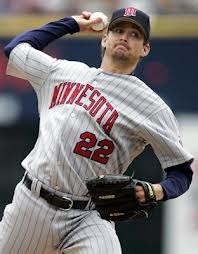
Even more outstanding than Clemens' mark was what Brad Radke did for the Minnesota Twins that same year.

In only his third season in the major leagues, Radke went 20-10 for the Twins in 1997.  But no other pitcher on the team won more than eight games that year.  As a result, the Twins finished the season with an abysmal 68-94 record, or 48-84 when Radke didn't get a decision.  Although it would mark the only time Radke won more than 15 games in a season, the lifelong Twin finished his career with 148 wins in 12 seasons with Minnesota, good for fourth place on the Washington Senators/Minnesota Twins' all-time list (the Senators moved to the Twin Cities in 1961), behind Hall of Famers Walter Johnson and Bert Blyleven, as well as 283-game winner Jim Kaat.  Radke is in great company on the Twins' all-time wins list, but when it came to his company on the 1997 Twins staff, there was none to be found.

Both Clemens and Radke won 20 or more games for American League teams with losing records in 1997, but to find the last National League pitcher to do it, you have to go back a little further, before each league split up into three divisions.

In 1992, Greg Maddux finished his final season in Chicago with a 20-11 record.  Like fellow 350-game winner Roger Clemens did five years later, Maddux also had a fine sidekick on the staff in Mike Morgan, who went 16-8 for the Cubs.  The rest of the team didn't fare so well, going 42-65 in games that the M & M boys didn't earn a decision.  The 1992 Cubs finished the season with a 78-84 record, then let Maddux walk away to sign a lucrative free agent contract with the Atlanta Braves, allowing Greg Hibbard to become the team's ace in 1993.  Of course, the Cubs somehow improved in 1993, finishing six games over .500, led by Hibbard's 15 wins (Hibbard only won one game in the major leagues after 1993, which is probably why you don't remember him).  Maddux also improved, winning the Cy Young Award in each of his first three seasons in Atlanta, en route to what will likely be a one-way ticket to Cooperstown when he becomes eligible for the Hall of Fame in 2014.

Out of curiosity, since two pitchers won 20 games for losing teams in the American League in 1997, I decided to go back and see who was the last National League pitcher before Greg Maddux to win 20 games for a sub-.500 team.  That honor went to a pitcher who was far more popular than Maddux ever was (the "Chicks Dig The Longball" ad notwithstanding"), although his lengthy career failed to produce half of Maddux's career win total.

In 1986, Fernando Valenzuela had arguably his most complete season in the major leagues.  Although he was thrust into the national spotlight in 1981, winning both the Rookie of the Year and Cy Young awards (not to mention the Silver Slugger Award) for a team that won the World Series, he only won 20 games once in his nearly two-decade major league career.  Valenzuela went 21-11 for the Dodgers in 1986, leading the league in complete games (20).  He also flashed the leather at his position, winning the Gold Glove Award for the only time in his career.  Despite a Mets pitching staff that featured four pitchers with a .700 winning percentage (Bob Ojeda, Dwight Gooden, Sid Fernandez and Ron Darling finished 1-2-3-4, respectively, in winning percentage in 1986), it was Fernando Valenzuela who led the National League in victories, doing so for a Dodgers team that finished with a 73-89 record.

Valenzuela's 1986 season was also special in one other regard.  It was the last time a pitcher in either league completed 20 of his starts.  Since Valenzuela's 20-win, 20-complete-game season in 1986, no National League pitcher has finished a season with more than 15 complete games (Orel Hershiser and Danny Jackson each had 15 complete games in 1988, as did Curt Schilling in 1998).  The most complete games by an American League pitcher since 1986 is 18, which was accomplished by Roger Clemens one year after Valenzuela's 20-complete-game season.  Only one pitcher (Jack McDowell in 1991) has reached the 15-complete-game plateau in the American League since Clemens did it in 1987.  By comparison, R.A. Dickey is currently the National League leader in complete games with four.

I am Dickey, hear me roar!
(AP Photo/Paul J. Bereswill)


With that mention of R.A Dickey, we have now come full circle.  Dickey already has a good chance of becoming the first Mets pitcher over a full 162-game season to finish at least 10 games over .500 while his team finishes with a losing record, as well as recording the highest percentage of his team's victories over a single season.  But it's not just Mets history he might make this year.

Dickey is also in line to become the first 20-game winner to pitch for a sub-.500 team since Roger Clemens and Brad Radke did so for their teams in 1997, and the first National League pitcher to accomplish the feat in two decades.  Dickey would join Greg Maddux as the only pitchers in the last quarter century to win 20 games for a losing team in the National League.

R.A. Dickey has already become one of the best pitchers in the National League.  Now he has a chance to do something that hasn't been accomplished in the major leagues since the 20th century by pitchers who are among baseball's all-time greats (Maddux, Clemens) as well as pitchers who were all-time greats on their respective teams (Valenzuela, Radke).

The Mets team might not be winning as much as its players and their fans would like, but R.A. Dickey has shown that it's possible for a losing team to have a winner on it.