Showing posts with label Hubie Brooks. Show all posts

Thursday, April 8, 2021

Thirty Years of Opening Days

Home sweet home.  (Photo by Ed Leyro/Studious Metsimus)
 

For the first time in over 18 months, Citi Field opened its gates today for baseball-starved fans.  And just like they did on September 29, 2019, the Mets sent their fans home happy after walking off with a win.  Back then, the celebration came on a three-run homer by Dominic Smith.  Today, it was a combination of a Jeff McNeil game-tying birthday blast followed by a bizarre hit-by-pitch of Michael Conforto with the bases loaded.  The Mets scored two runs in the bottom of the ninth to defeat the Miami Marlins in the home opener by a score of 3-2.

Today's win marked the 30th consecutive Opening Day game that I attended in which fans were allowed in the building.  And the victory came thirty years to the day of my first home opener.

I've had many memorable moments throughout those three decades of Opening Day affairs.  I've seen a franchise's first game in 1993 when the Mets defeated the Colorado Rockies, 3-0.  Two years later, I saw the Mets erase a five-run deficit when I wasn't watching fans running on the field throwing dollar bills at players in New York's first home game after the eight-month players' strike.  I've also witnessed the fielding excellence of Rey Ordoñez in a 1996 Opening Day victory and saw Alberto Castillo's sole magical moment as a Met in a 1-0, 14-inning win two years later.  Two National League pennants have been raised with me in attendance and a new ballpark opened its doors with yours truly cheering the Mets on.

But my first home opener took place on April 8, 1991, exactly 30 years ago today.  And that one was special for more than just a Mets victory.  You see, that trip to the ballpark was also my first date.  And what better place to take someone special than Shea Stadium to see Mets legends Tommy Herr, Charlie O'Brien and new shortstop Howard Johnson taking the field against Von Hayes and the Philadelphia Phillies.  In fact, that game was more than just a first date; it also began an Opening Day tradition that has continued to this day. 


******************************


I love my wife.  And I met her at a Mets game.  True story.  She was a blogger, as was I, and we were both going to "Build-A-Bear Night" at Citi Field on August 1, 2009.  So we decided to meet up on the Promenade Level before the game.  Of course, we had our new bears in tow, and I had a few other bears with me.  We talked about bears and the Mets, then saw the game separately from our regular seats.


Later that month, we went to our first game together.  Naturally, the bears were our chaperones.  We met up a few more times during the season's final month.  Then I asked her what she was doing during the off-season.  Notice I didn't say "during the winter" because to a Mets fan, there are only two seasons - baseball season and the off-season.  Well, that phrasing struck a chord with her.  Needless to say, what we did during the off-season was spend more time together and fall in love.  The following May, we got married, then waited two months to go on our honeymoon in San Francisco.  Why the wait?  Because the Mets weren't due to play the Giants on the road until July.  Yup, I gave her a diamond AFTER we got married.

I never said we were a conventional couple.

Almost 20 years before I met the love of my life, I went on my first-ever date.  The day was April 8, 1991, and my date's name was K.V.  (I'm using her initials in case she's reading this and doesn't want to be associated with a bear-carrying Mets fanatic.)  Most people go to the movies or dinner or a combination of the two on a first date.  Not me.  Where did I take K.V. on our date?  Like you need to ask...

It was Opening Day.  So we went to Shea Stadium.

The temperature that day was an unseasonably hot 90º.  At the time, it was the earliest date on the calendar that New York had ever registered a 90º reading.  We were both undergraduates at St. John's University, finishing up our sophomore years.  Her mother worked in the school library, so I had already gotten that first meeting with her out of the way.  We actually went to visit K.V.'s mother prior to leaving for Shea, at which time she told us to have a good time and stay out of the sun, if at all possible.

The Mets were fielding a brand-new team in 1991 as they embarked on what the team hoped would be its eighth consecutive winning season.  But this would also be the first time since 1983 that Davey Johnson wouldn't come out of the dugout during the Opening Day introductions, as Buddy Harrelson had taken over for the former skipper during the previous season.

K.V. confessed to me that it was her first baseball game as we proceeded to sit in our Upper Deck seats on the first base side.  I confessed to her that it was my first-ever date with anyone, to which she said, "Awww, and you chose me.  I'm so honored."

As the game began, I noticed that four of the starting nine players on the Mets had not been with the team at the beginning of the previous campaign.  Charlie O'Brien was calling the game behind the plate, while former Cardinal nemeses Tommy Herr and Vince Coleman were the Mets' new second baseman and center fielder, respectively.  Right field used to be where Darryl Strawberry had his patch, but he had left for Los Angeles as a free agent.  In his stead was a player who was very special to long-time Mets fans, including myself, but had not worn a Mets uniform since 1984.  And this was how he was re-introduced.

"Playing right field, No. 7.  Welcome back, Huuuubie Brooooks."

I'd have bought one of these, but I chose to save the money for my date.


Hubie Brooks made a quick impression on me during his first stint in New York.  It was Brooks who hit the first home run I ever saw in person.  On June 15, 1983, I was at Shea Stadium with my Little League teammates when Brooks took future Hall of Famer Ferguson Jenkins deep in the fourth inning.  It was the only home run Brooks would ever hit off Jenkins in 18 career plate appearances, and one of only two hits he would muster off the pitching legend.

Eight years after I cheered Brooks as he touched home plate following his homer, I would cheer him again as he scored, although this time he touched the plate in a completely different way.

The Mets were leading the Phillies, 1-0, as the game headed into the bottom of the fourth.  Hubie Brooks led off the inning by roping a double to right field - his first hit as a Met in seven years.  Brooks then advanced to third on a fly ball by Howard Johnson.  Left fielder Kevin McReynolds failed to bring him home when he grounded out weakly to third base.  With two outs, Tommy Herr drew a walk to put runners on the corners.  That brought up Charlie O'Brien, whose .209 career batting average entering the game was six points lower than Mario Mendoza's .215 lifetime mark.

You read that right.  The namesake of the "Mendoza Line" was a better hitter than Charlie O'Brien.

Clearly, if the Mets were going to extend their lead, manager Buddy Harrelson was going to have to try something different.  So he did.  On an 0-1 pitch, Harrelson had Herr steal second.  When Phillies catcher Darren Daulton threw the ball to second in an attempt to nail Herr, Brooks darted for the plate, sliding home safely to give the Mets a 2-0 lead.

The unexpected play caused K.V. and I to simultaneously jump out of seats and embrace.  Yup, it was our first hug, and Hubie Brooks made it happen.  With the Mets now holding a two-run lead, we decided to get some refreshing ice cream to cool down on the sweltering day.  By the time we got to the concession stand, John Kruk had homered off Dwight Gooden to cut the Mets' lead back to a single run.

Needless to say, we went back to our seats and didn't leave our section again until the final out was recorded.

In the seventh inning, as we were singing "Take Me Out To The Ballgame", K.V. accidentally bumped into my leg.  So I bumped her back.  We ended up doing what appeared to be a strange leg-bump dance for the duration of the song.  It was then that I realized that I could do something other than calculate players' batting averages in my head.  I could also flirt.  Score one for me.

Speaking of scoring, there were no more runs scored after Kruk's fifth-inning homer.  The Mets held on for a 2-1 victory, making my first date - and my first-ever Opening Day game - a complete success.

After the game, K.V. and I walked back to Main Street in Flushing, where we had two additional ice cream cones (mint chocolate chip for both of us), then we took the bus back to her house.  I was a gentleman, and didn't ask to go in, but she insisted.  I didn't spend much time inside, but when I left, I did get a kiss goodbye.

I scored more that day than the Phillies did.

K.V. and I continued to hang out during our remaining college years, but we never went to another Mets game.  We also didn't really date much more after that hot April afternoon.  Perhaps that's a good thing.  After all, had something happened between us, I might never have met my wife on "Build-A-Bear Night" nearly two decades later.

Hubie Brooks and I go way back.  He was responsible for the first home run I ever witnessed at a ballgame, and he was responsible for the first (and to this date, only) double steal I've ever had the privilege to see in person.  He may also have helped me get that special kiss at the end of my first date.

April 8, 1991 was most certainly a good day.


******************************


Just like April 8, 1991 was a memorable day at Shea Stadium that culminated with a one-run victory by the Mets, April 8, 2021 was also one to remember at Citi Field, and not just because of the Mets' 3-2 walk-off win.  Today's game was the first in which fans were allowed to attend since before the pandemic caused daily fan attendance to be zero.  It was also the 30th consecutive Opening Day I've been fortunate to attend and the eleventh I've been to with my wife.

Many things have changed in this world since 1991.  Heck, mostly everything has changed just since the start of 2020.  But the more things change, the more one thing remains the same.  I'll always be present at a Mets home opener.  And I'll always be there with my favorite date.  There's no one else I'd rather open up a season with.
 

Monday, June 15, 2020

June 15, 1983: My Ten-Year-Old Self Shares Memories of My First Mets Game

The Internet did not exist in 1983.  Neither did winning baseball at Shea Stadium.  As a ten-year-old Mets fan in '83, I knew as much about the World Series as I did the World Wide Web, as both were still years away from becoming a reality.

So when my Little League team decided to attend a Mets game together on Wednesday, June 15, 1983, I was naturally excited but I didn't have a forum to document my experience.  (My mother had discovered my diary just a weeks before the game and because of her find, I wasn't allowed to write in it anymore.  Censorship at its overprotective motherly worst.)

It's been exactly 37 years since I attended that game, so I thought now would be a perfect time to finally tell that story.  To make this recap even more special, I have decided to allow my ten-year-old self access to my computer.  I figured more people would be able to read the recap that way instead of trying to read it on my just-returned-to-me diary.

Take it away, Eddie!


Hi, everyone!  My name is Eddie Leyro and I'm ten-and-a-half years old.  I just got home from Shea Stadium where I saw my first-ever Mets game!  I went to the game with my Little League team and some of the coaches and I had an awesome time.  Well, it would have been better than awesome had the Mets actually won the game.  But stupid Rusty Staub made a dumb error in the tenth inning that helped the Chicago Cubs win the game.  I mean, seriously.  Even Orko from the "He-Man" cartoon could've made that play and he floats in mid-air!

Anyway, the game started with Craig Swan sucking more than Madonna's music.  (I mean, do you really think she's going to have a long career as a singer?  She's no Toni Basil!)  Swan was knocked out of the game in the second inning after giving up an RBI single to Bill Buckner in the first and allowing Jody Davis, Mel Hall and Ryne Sandberg to drive in runs in the second.

Once Swan hit the showers, I figured I'd hit the concession stand with my teammates, David and Robby.  But I never got my hot dog because the coaches had to get off the line to break up a fight by our pitcher, Walter and our second baseman, Ricky in the bathroom.  Walter was also the son of our manager, so you can imagine who got blamed for starting it.  (Hint: Not Walter.)  Needless to say, I never got my hot dog.  The coaches made us all go back to our upper deck seats and no hot dog vendor came around.  The only other time they allowed us to get out of our seats was when a few of the guys had to go to the bathroom.  I didn't go because I don't like peeing in public.  I'm as afraid of public restrooms as B.A. Baracus is of flying on a plane.

Anyway, by the time we got back to our seats, the Mets had already scored a run to cut the Cubs' lead to 4-1 and I just managed to see my first major league home run, a shot by Hubie Brooks in the bottom of the third to make it 4-2.  I didn't get why people were booing him until I was told that the fans were actually saying "HUUUUUUUUUU-bie".  Baseball fans are very weird.

The fans also cheered a message that was posted on the DiamondVision about some guy named Keith Hernandez.  Apparently, he was just traded to the Mets for a few pitchers.  He can't be as bad as the guys already on the team, right?

Oh, I almost forgot!  The Mets tied the game right after the DiamondVision announcement on an RBI double by Jose Oquendo and a run-scoring single by Danny Heep.  But of course, Heep got greedy like Boss Hogg and got thrown out trying to get to second base.  Had Heep not gotten thrown out, the Mets might have taken the lead in that inning.  Instead, the game was just tied, 4-4, and stayed that way through nine innings.

Maybe if Danny Heep didn't have such a big ear flap on his helmet, he'd have seen he was going to be out by a mile.

Coach Walter, Sr., announced that we would stay for the tenth inning, but we'd have to go home if the game kept going.  It was a Wednesday night and we had to go to school the next day.  So I started praying for the Mets to hold the Cubs scoreless in the tenth and then maybe Hubie Brooks could hit another home run to win it in the bottom of the inning.  But while I was alternating between one of my many Hail Marys and Our Fathers, the Cubs scored three runs, all because our first baseman, Rusty Staub, made a lousy error.

The Mets didn't score in the bottom of the tenth, as Hubie Brooks made an out and the skinny rookie, Darryl Strawberry, grounded into a double play to end the game.  All I kept thinking as we walked down the Shea Stadium ramps was:

a)  This Keith Hernandez better be a good first baseman so that this Rusty Staub guy isn't allowed to make more stupid errors.

2)  Why do we have to go down these long ramps when there are escalators all over the place?

iii)  Oh, snap!  I never got my hot dog!

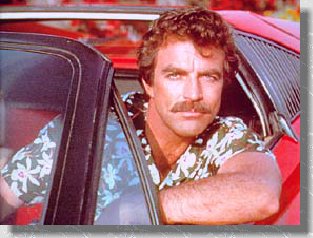
So that's it.  My first Shea Stadium experience.  Craig Swan sucked.  My teammates fought in the bathroom.  And Rusty Staub should never play first base again.  But at least the experience was more fun than having to sit through another rerun of "The Facts of Life", which I would have done had I stayed home.  (They should really move "Magnum P.I." from Thursday to Wednesday.  That would be, like, totally awesome.)

I hope you liked my recap.  Maybe I should ask my mom to get me a Commodore 64.  I'm sure it's a lot better to write on than my diary! 


I certainly didn't adore my easily-read diary.

Monday, November 7, 2016

The Mets Who Came Close to Winning a Major Award

In the classic film, "A Christmas Story", Ralph Parker's Old Man became quite excited when he realized he had won a major award.  And why shouldn't he?  It's not every day that someone is recognized with a prize, even if it's just a leg lamp wrapped in vintage Old West tumbleweed.

Just like Mr. Parker was rightfully pleased with what he won, major league ballplayers are tickled pink when they are bestowed with their sport's most prestigious single-season honors.  After all, a player's performance can vary dramatically from one campaign to another, especially for a player who might be considered, shall we say, fra-jee-lay.  (Those players must be Italian.)

What I'm trying to say is that nothing is guaranteed in baseball, so winning a major award might be what separates a so-so career from one that causes a player to be remembered long after his career is over.  For example, Jon Matlack had a mediocre 82-81 won-loss record in seven seasons as a Met and never approached the lofty statuses afforded his fellow moundsmen, Tom Seaver and Jerry Koosman.  But he won the National League Rookie of the Year Award in 1972 - one of five Mets players to take home the prize for top neophyte - and even the most casual Mets fan today knows about Matlack, even though the southpaw pitched his final game for the team nearly 40 years ago. 

Some all-time Mets greats came close to taking home the hardware, such as Koosman, who finished second in the 1968 N.L. Rookie of the Year vote to future Hall of Famer Johnny Bench and second to future Met Randy Jones for the 1976 N.L. Cy Young Award.  Similarly, Seaver and Keith Hernandez were runners-up in the 1969 and 1984 National League Most Valuable Player Award race.  Koosman, Seaver and Hernandez are now all in the Mets Hall of Fame and are beloved by Mets fans to this day.

But several former Mets who were near-misses come awards time aren't Mets Hall of Famers such as Kooz, the Franchise and Mex.  Perhaps with a little more support from awards voters, they would have earned a plaque of their own at Citi Field.  Here are ten players who came oh-so close to winning the baseball version of a leg lamp.


Ron Hunt

After making their National League debut in 1962 with a slew of veteran players, the Mets decided they needed to add some fresh faces to their roster in 1963.  One of those faces belonged to 22-year-old rookie Ron Hunt.  Hunt was purchased from the Milwaukee Braves at the conclusion of the 1962 season, but did not get into a game with the Mets until the team's seventh contest in 1963.  But once he got into the lineup at second base, Hunt made it impossible for manager Casey Stengel to take him out.

In the first of his 12 big league seasons, Hunt posted career highs in several offensive categories that he would never surpass.  Among these categories were at-bats (533), hits (145), doubles (28), home runs (10) and RBI (42).  Hunt finished second in the 1963 Rookie of the Year vote to Cincinnati's Pete Rose, even though Hunt had more doubles, homers and RBI than Rose and finished the year with an identical .334 on-base percentage.  It should be noted that Hunt accomplished his numbers while compiling nearly 100 fewer at-bats than Rose and playing in a much weaker lineup that gave him far less protection than Rose enjoyed.


John Milner

The first ten years of the Mets' existence saw the team produce several good, young players.  Among these players were one Rookie of the Year Award winner (Seaver) and two runners-up (Hunt, Koosman).  But in 1972, New York had its first third-place finisher for top rookie in the league.  And as impressive as a top-three finish is for any rookie, this particular Mets neophyte wasn't even the best rookie on his own team.

Playing in just 117 games in 1972, John Milner showed Mets fans why he would become known as "The Hammer", pounding 17 home runs in his inaugural campaign.  Milner also showed a keen eye at the plate, walking 51 times in just 423 plate appearances.  As Milner showed his prowess at the plate, his teammate, Jon Matlack, topped his performance on the mound.  Matlack's first full season in the majors produced a 15-10 record, 2.32 ERA, 1.17 WHIP and 169 strikeouts, which earned him the 1972 Rookie of the Year Award.  But instead of settling for second place, Milner also finished behind Giants' catcher Dave Rader, whose .640 OPS was dwarfed by Milner's .762 mark.


Steve Henderson

In 1976, Steve Henderson was one of the Reds' top prospects, hitting for average (.312), flashing good power (17 HR) and displaying great speed (44 SB).  Henderson continued to tear it up at the Triple-A level in 1977, batting .326 with seven homers and 19 steals in just 60 games.  But Henderson was an outfielder, and with top slugger George Foster in left, perennial Gold Glove winner Cesar Geronimo in center, and batting title contender Ken Griffey in right, Henderson's chances of making the Reds was slim to none.  With no room on the roster for him, Cincinnati traded Henderson to the Mets for the team's first Rookie of the Year winner, Tom Seaver.

In his first season in New York, Henderson blossomed, posting a .297/.372/.480 slash line.  Despite not playing his first game for the Mets until June 16, Henderson led the team in RBI (65) and tied for the team lead in homers (12).  He also finished second to Lenny Randle in both runs scored (67) and triples (6).  Henderson lost the Rookie of the Year Award to Montreal's Andre Dawson, finishing just one vote behind the future Hall of Famer, despite having a higher batting average, OBP and slugging percentage than Dawson.  Henderson also scored more runs, drew more walks and tied Dawson in runs batted in despite playing in 40 fewer games than the Hawk.


Hubie Brooks

In 1980, the Mets marketing campaign tried to convince fans that the magic was back at Shea Stadium.  Sure enough, in September, three promising rookies made their debuts with the team, as Mookie Wilson, Wally Backman and Hubie Brooks all made their first appearances at the major league level during the final month of the 1980 campaign.  Although Backman spent most of the next few seasons in the minors, Wilson and Brooks were with the Mets to stay, and both took advantage of their new everyday player status.

Wilson impressed the Mets with his speed, but Brooks had a better all-around game.  Two weeks before the player's strike began in 1981, Brooks was contending for a batting title.  Once the players came back from their two-month hiatus, Brooks began to drive the ball, collecting ten extra-base hits and driving in 13 runs in his first 19 games after the strike.  For the season, Brooks batted .307 with 21 doubles, four homers and 38 RBI.  That was good enough for third place in the National League Rookie of the Year vote, behind Fernando Valenzuela and Tim Raines.  How impressive was Brooks' rookie season?  To this day, Brooks remains the only Met rookie with at least 350 at-bats to finish his first year with a batting average above .300.


Jesse Orosco

When the Mets traded Minnesota native Jerry Koosman to the Twins following the 1978 campaign, they received two minor league pitchers in return.  One of the young hurlers was Greg Field, who never played in the Mets organization, as he was dealt to the Pittsburgh Pirates the following April.  The other was a 21-year-old southpaw who spent his first professional season getting himself in and out of jams, as evidenced by his stellar 1.12 ERA and mediocre 1.23 WHIP pitching for the Elizabethton Twins.  It's no wonder he was eventually known by the moniker Messy Jesse.

Jesse Orosco will always be known for recording the final out of the 1986 World Series and for appearing in more games than any pitcher in major league history.  But as a part-time closer who spent most of his career coming into games long before the ninth inning, Orosco had little hope of ever being considered for an individual award.  At least until he put up one of the best seasons ever recorded by a reliever in 1983, posting a 13-7 won-loss record with 17 saves.  In 110 innings, Orosco posted a 1.47 ERA, becoming the only Met (starter or reliever) to post a sub-1.50 ERA in 100 or more innings.  In fact, Orosco is one of only seven pitchers since 1920 to accomplish the feat, joining players such as Hall of Famers Bob Gibson (1968) and Bruce Sutter (1977).  For his efforts, Orosco finished third in the N.L. Cy Young Award ballot, finishing behind John Denny and Mario Soto.


Kevin Mitchell

In 1986, the Mets had several players locked into their defensive positions such as Keith Hernandez, Gary Carter and Darryl Strawberry.  Manager Davey Johnson also employed several platoons, making it difficult for a rookie to find his way into the starting lineup.  But one rookie learned how to play many positions in order to make the team.  Contending for a batting title during the first half of the season and lashing extra-base hit after extra-base hit throughout the entire season forced Johnson to put him in the lineup as many times as he could, even if he couldn't promise him a regular position on the field.

After having a cup of coffee with the big club in 1984, Kevin Mitchell made it back to New York in 1986.  By July 6, Mitchell was batting .370 with 16 doubles and five homers, despite starting just 33 games.  But Mitchell had also played six defensive positions by then, playing everywhere but second base, pitcher and catcher.  By season's end, Mitchell's batting average had sunk to .277, but he still managed 22 doubles, 12 homers and 43 RBI in just 328 at-bats, which placed him third in the Rookie of the Year ballot behind Todd Worrell of the St. Louis Cardinals and Robby Thompson of the San Francisco Giants.  Mitchell became the second Met rookie (after Ron Hunt) to record 20 doubles and 10 HR and will always be remembered for his hit that continued the Mets' miraculous tenth-inning rally in Game 6 of the 1986 World Series.  Unfortunately, that hit was his last in a Mets uniform, as the versatile slugger was traded to the San Diego Padres during the off-season, which brings us to the next player on this list.


Kevin McReynolds

Following the 1986 World Series victory, general manager Frank Cashen traded Kevin Mitchell to his hometown San Diego Padres, mainly because he thought Mitchell was a problem in the clubhouse.  In return, he received an outfielder who also had World Series experience but wouldn't hurt a fly (as long as he wasn't hunting it).  Kevin McReynolds gave the Mets several solid, All-Star caliber seasons and almost led the Mets to a second pennant in three years in 1988.

McReynolds had the most complete season of his career in 1988, batting .288 with 30 doubles, 27 homers, 99 RBI and a perfect 21-for-21 in stolen bases, which at the time was a major league record for most steals in a season without being caught.  He finished in the top five in the league in home runs and RBI, while placing in the league's top ten in extra-base hits and slugging percentage.  And on the defensive side, he led all National League outfielders with 18 assists and five double plays turned.  But because his fellow outfielder and teammate Darryl Strawberry also had a spectacular season (39 HR, 101 RBI, 29 SB), McReynolds and Strawberry split the MVP vote, allowing Dodgers outfielder Kirk Gibson to limp home with the award.  McReynolds, who never made an All-Star team in a dozen seasons in the big leagues, finished third in the 1988 N.L. MVP vote.


Gregg Jefferies

Not since Darryl Strawberry in 1983 had a Met rookie been promoted to the big leagues with such potential.  But that was a different team in 1983 - a team that was on the rise and destined for greatness.  The 1988 squad had recently won a championship and appeared poised to become a dynasty.  But the team was getting older and needed an infusion of young talent.  Gregg Jefferies had destroyed minor league pitching from 1985 to 1987, recording two 100-RBI campaigns and batting .354 over the three years.  By 1988, the 21-year-old was ready to become a full-time player at the major league level.  Unfortunately, his maturity level hadn't caught up with his talent level.

Jefferies batted .321 after his late-season call-up to the Mets, and despite not playing enough to remove his rookie status for the following season, Jefferies still got enough support from the voters to finish sixth in the 1988 Rookie of the Year vote.  A year later, his production at the plate suffered, as his batting average slumped to .258, although he did record 28 doubles, 12 homers, 21 stolen bases and a clubhouse full of dissenting veteran players.  His attitude notwithstanding, he still finished third in the 1989 Rookie of the Year ballot, trailing Cubs teammates Jerome Walton and Dwight Smith.  At least Jefferies got the last laugh, making multiple All-Star teams (albeit with the St. Louis Cardinals) while Walton and Smith never played in the Midsummer Classic.


Frank Viola

After losing the pennant to the Dodgers in 1988, Frank Cashen started to part ways with several players who were instrumental in the team's rise to title contention.  By late July 1989, fan-favorite players such as Wally Backman, Roger McDowell, Lenny Dykstra and Mookie Wilson were all former Mets.  Although Cashen was trying to rebuild the team, he wasn't giving up on the 1989 campaign.  That was made clear when the general manager traded five pitchers to the Twins for 1987 World Series MVP and 1988 A.L. Cy Young winner Frank Viola.

Viola was a local kid from Long Island who became one of the most durable pitchers in the game, averaging over 250 innings pitched per season from 1984 to 1988.  And as a left-handed starter, that durability made him all the more valuable.  Although Viola couldn't help the Mets defend their 1988 N.L. East division crown, he did go on to win 20 games for the team in 1990, joining Jerry Koosman as the team's only left-handed starters to win that many games in a season.  The Mets won 91 games in 1990 but fell short of their postseason goals, finishing behind the Pittsburgh Pirates in the East.  No Mets pitcher was able to duplicate Viola's 20-win campaign for over two decades, when R.A. Dickey accomplished the rare feat.  Viola's 20-win season earned him a third-place finish in the 1990 N.L. Cy Young Award vote behind fellow 20-game winners Doug Drabek and Ramon Martinez.


Jay Payton

The Mets did not produce many five-tool players in their minor league system in the 1990s, but one player stood out among all the others.  In the mid-'90s, Jay Payton was recognized by Baseball America as one of the top prospects in the game.  He was never better than he was in 1995, when he batted .307 with 31 doubles, 18 homers and 27 stolen bases, all while playing an above-average center field.  But injuries held Payton to 71 games in 1996 and wiped out his entire 1997 campaign.  Payton split time between the majors and minors in 1998 and 1999, before finally getting his first chance to stick with the Mets in 2000.  He took full advantage of the opportunity.

Payton led all Mets outfielders in games played during their pennant-winning season, batting .291 with 23 doubles, 17 homers, 62 RBI and 63 runs scored.  He also made great contact and had a keen eye at the plate, as evidenced by his low strikeout total (Payton whiffed just 60 times in 523 plate appearances in 2000).  But the voters were more impressed by Rafael Furcal's speed (40 SB) and Rick Ankiel's arm (194 Ks in 175 IP) than Payton's complete game, dropping Payton to third in the Rookie of the Year vote behind the Braves' speedster and the Cardinals' promising young pitcher.  The Mets wouldn't have another top-three finisher in the Rookie of the Year vote for another 14 years, when Jacob deGrom took home the award.


Wednesday, June 15, 2016

June 15, 1983: Ten-Year-Old Me Recaps My First Mets Game

The Internet did not exist in 1983.  Neither did winning baseball at Shea Stadium.  As a ten-year-old Mets fan in '83, I knew as much about the World Series as I did the World Wide Web, as both were still years away from becoming a reality.

So when my Little League team decided to attend a Mets game together on Wednesday, June 15, 1983, I was naturally excited but I didn't have a forum to document my experience.  (My mother had discovered my diary just a weeks before the game and because of her find, I wasn't allowed to write in it anymore.  Censorship at its overprotective motherly worst.)

It's been exactly 33 years since I attended that game, so I thought now would be a perfect time to finally tell that story.  To make this recap even more special, I have decided to allow my ten-year-old self access to my computer.  I figured more people would be able to read the recap that way instead of trying to read it on my just-returned-to-me diary.

Take it away, Eddie!


Hi, everyone!  My name is Eddie Leyro and I'm ten-and-a-half years old.  I just got home from Shea Stadium where I saw my first-ever Mets game!  I went to the game with my Little League team and some of the coaches and I had an awesome time.  Well, it would have been better than awesome had the Mets actually won the game.  But stupid Rusty Staub made a dumb error in the tenth inning that helped the Chicago Cubs win the game.  I mean, seriously.  Even Orko from the "He-Man" cartoon could've made that play and he floats in mid-air!

Anyway, the game started with Craig Swan sucking more than Madonna's music.  (I mean, do you really think she's going to have a long career as a singer?  She's no Toni Basil!)  Swan was knocked out of the game in the second inning after giving up an RBI single to Bill Buckner in the first and allowing Jody Davis, Mel Hall and Ryne Sandberg to drive in runs in the second.

Once Swan hit the showers, I figured I'd hit the concession stand with my teammates, David and Robby.  But I never got my hot dog because the coaches had to get off the line to break up a fight by our pitcher, Walter and our second baseman, Ricky in the bathroom.  Walter was also the son of our manager, so you can imagine who got blamed for starting it.  (Hint: Not Walter.)  Needless to say, I never got my hot dog.  The coaches made us all go back to our upper deck seats and no hot dog vendor came around.  The only other time they allowed us to get out of our seats was when a few of the guys had to go to the bathroom.  I didn't go because I don't like peeing in public.  I'm as afraid of public restrooms as B.A. Baracus is of flying on a plane.

Anyway, by the time we got back to our seats, the Mets had already scored a run to cut the Cubs' lead to 4-1 and I just managed to see my first major league home run, a shot by Hubie Brooks in the bottom of the third to make it 4-2.  I didn't get why people were booing him until I was told that the fans were actually saying "HUUUUUUUUUU-bie".  Baseball fans are very weird.

The fans also cheered a message that was posted on the DiamondVision about some guy named Keith Hernandez.  Apparently, he was just traded to the Mets for a few pitchers.  He can't be as bad as the guys already on the team, right?

Oh, I almost forgot!  The Mets tied the game right after the DiamondVision announcement on an RBI double by Jose Oquendo and a run-scoring single by Danny Heep.  But of course, Heep got greedy like Boss Hogg and got thrown out trying to get to second base.  Had Heep not gotten thrown out, the Mets might have taken the lead in that inning.  Instead, the game was just tied, 4-4, and stayed that way through nine innings.

Maybe if Danny Heep didn't have such a big ear flap on his helmet, he'd have seen he was going to be out by a mile.

Coach Walter, Sr., announced that we would stay for the tenth inning, but we'd have to go home if the game kept going.  It was a Wednesday night and we had to go to school the next day.  So I started praying for the Mets to hold the Cubs scoreless in the tenth and then maybe Hubie Brooks could hit another home run to win it in the bottom of the inning.  But while I was alternating between one of my many Hail Marys and Our Fathers, the Cubs scored three runs, all because our first baseman, Rusty Staub, made a lousy error.

The Mets didn't score in the bottom of the tenth, as Hubie Brooks made an out and the skinny rookie, Darryl Strawberry, grounded into a double play to end the game.  All I kept thinking as we walked down the Shea Stadium ramps was:
a)  This Keith Hernandez better be a good first baseman so that this Rusty Staub guy isn't allowed to make more stupid errors.

2)  Why do we have to go down these long ramps when there are escalators all over the place?

iii)  Oh, snap!  I never got my hot dog!
So that's it.  My first Shea Stadium experience.  Craig Swan sucked.  My teammates fought in the bathroom.  And Rusty Staub should never play first base again.  But at least the experience was more fun than having to sit through another rerun of "The Facts of Life", which I would have done had I stayed home.  (They should really move "Magnum P.I." from Thursday to Wednesday.  That would be, like, totally awesome.)

I hope you liked my recap.  Maybe I should ask my mom to get me a Commodore 64.  It's sure a lot better to write on than my diary! 

I certainly didn't adore my easily-read diary.


Friday, April 8, 2016

25 Years Ago: Memories of My First Opening Day Game (And My First Date)

The Mets defeated the Philadelphia Phillies in their home opener today, 7-2.  It marked the 26th consecutive year I've attended the Mets' first home game of the season.  In fact, it was 25 years ago on this date that I attended my first home opener - a day in which the temperature reached a record high of 90 degrees, or about twice as many degrees as today's affair.

Speaking of dates, that game also marked the first time I went out on a date, because what better place to take your date than to Shea Stadium to see the rapidly declining post-Davey Johnson era Mets play?  So to mark the 25th anniversary of my first date and first home opener - a game in which the Mets were also playing gracious hosts to the Phillies - here is the happy recap of that game and date (plus some other interesting anecdotes).  Enjoy!

**************************


I love my wife.  And I met her at a Mets game.  True story.  She was a blogger, as was I, and we were both going to "Build-A-Bear Night" at Citi Field on August 1, 2009.  So we decided to meet up on the Promenade Level before the game.  Of course, we had our new bears in tow, and I had a few other bears with me.  We talked about bears and the Mets, then saw the game separately from our regular seats. 

Later that month, we went to our first game together.  Naturally, the bears were our chaperones.  We met up a few more times during the season's final month.  Then I asked her what she was doing during the off-season.  Notice I didn't say "during the winter", because to a Mets fan, there are only two seasons - baseball season and the off-season.  Well, that phrasing struck a chord with her.  Needless to say, what we did during the off-season was spend more time together and fall in love.  The following May, we got married, then waited two months to go on our honeymoon in San Francisco.  Why the wait?  Because the Mets weren't due to play the Giants on the road until July.  Yup, I gave her a diamond AFTER we got married.

I never said we were a conventional couple.

Almost 20 years before I met the love of my life, I went on my first-ever date.  The day was April 8, 1991, and my date's name was K.V.  (I'm using her initials in case she's reading this and doesn't want to be associated with a bear-carrying Mets fanatic.)  Most people go to the movies or dinner or a combination of the two on a first date.  Not me.  Where did I take K.V. on our date?  Like you need to ask...

It was Opening Day.  So we went to Shea Stadium.

The temperature that day was an unseasonably hot 90º.  At the time, it was the earliest date on the calendar that New York had ever registered a 90º reading.  We were both undergraduates at St. John's University, finishing up our sophomore years.  Her mother worked in the school library, so I had already gotten that first meeting with her out of the way.  We actually went to visit K.V.'s mother prior to leaving for Shea, at which time she told us to have a good time and stay out of the sun, if at all possible.

The Mets were fielding a brand-new team in 1991 as they embarked on what the team hoped would be its eighth consecutive winning season.  But this would also be the first time since 1983 that Davey Johnson wouldn't come out of the dugout during the Opening Day introductions, as Buddy Harrelson had taken over for the former skipper during the previous season.

K.V. confessed to me that it was her first baseball game as we proceeded to sit in our Upper Deck seats on the first base side.  I confessed to her that it was my first-ever date with anyone, to which she said "Awww, and you chose me.  I'm so honored."

As the game began, I noticed that four of the starting nine players on the Mets had not been with the team at the beginning of the previous campaign.  Charlie O'Brien was calling the game behind the plate, while former Cardinal nemeses Tommy Herr and Vince Coleman were the Mets' new second baseman and center fielder, respectively.  Right field used to be where Darryl Strawberry had his patch, but he had left for Los Angeles as a free agent.  In his stead was a player who was very special to long-time Mets fans, including myself, but had not worn a Mets uniform since 1984.  And this was how he was re-introduced.

"Playing right field, No. 7.  Welcome back, Huuuubie Brooooks."

I'd have bought one of these, but I chose to save the money for my date.

Hubie Brooks made a quick impression on me during his first stint in New York.  It was Brooks who hit the first home run I ever saw in person.  On June 15, 1983, I was at Shea Stadium with my Little League teammates when Brooks took future Hall of Famer Ferguson Jenkins deep in the fourth inning.  It was the only home run Brooks would ever hit off Jenkins in 18 career plate appearances, and one of only two hits he would muster off the pitching legend.

Eight years after I cheered Brooks as he touched home plate following his homer, I would cheer him again as he scored, although this time he touched the plate in a completely different way.

The Mets were leading the Phillies, 1-0, as the game headed into the bottom of the fourth.  Hubie Brooks led off the inning by roping a double to right field - his first hit as a Met in seven years.  Brooks then advanced to third on a fly ball by Howard Johnson.  Left fielder Kevin McReynolds failed to bring him home when he grounded out weakly to third base.  With two outs, Tommy Herr drew a walk to put runners on the corners.  That brought up Charlie O'Brien, whose .209 career batting average entering the game was six points lower than Mario Mendoza's .215 lifetime mark.

You read that right.  The namesake of the "Mendoza Line" was a better hitter than Charlie O'Brien.

Clearly, if the Mets were going to extend their lead, manager Buddy Harrelson was going to have to try something different.  So he did.  On an 0-1 pitch, Harrelson had Herr steal second.  When Phillies catcher Darren Daulton threw the ball to second in an attempt to nail Herr, Brooks darted for the plate, sliding home safely to give the Mets a 2-0 lead.

The unexpected play caused K.V. and I to simultaneously jump out of seats and embrace.  Yup, it was our first hug, and Hubie Brooks made it happen.  With the Mets now holding a two-run lead, we decided to get some refreshing ice cream to cool down on the sweltering day.  By the time we got to the concession stand, John Kruk had homered off Dwight Gooden to cut the Mets' lead back to a single run.

Needless to say, we went back to our seats and didn't leave our section again until the final out was recorded.

In the seventh inning, as we were singing "Take Me Out To The Ballgame", K.V. accidentally bumped into my leg.  So I bumped her back.  We ended up doing what appeared to be a strange leg-bump dance for the duration of the song.  It was then that I realized that I could do something other than calculate players' batting averages in my head.  I could also flirt.  Score one for me.

Speaking of scoring, there were no more runs scored after Kruk's fifth-inning homer.  The Mets held on for a 2-1 victory, making my first date - and my first-ever Opening Day game - a complete success.

After the game, K.V. and I walked back to Main Street in Flushing, where we had two additional ice cream cones (mint chocolate chip for both of us), then we took the bus back to her house.  I was a gentleman, and didn't ask to go in, but she insisted.  I didn't spend much time inside, but when I left, I did get a kiss goodbye.

I scored more that day than the Phillies did.

K.V. and I continued to hang out during our remaining college years, but we never went to another Mets game.  We also didn't really date much more after that hot April afternoon.  Perhaps that's a good thing.  After all, had something happened between us, I might never have met my wife on "Build-A-Bear Night" nearly two decades later.

Hubie Brooks and I go way back.  He was responsible for the first home run I ever witnessed at a ballgame, and he was responsible for the first (and to this date, only) double steal I've ever had the privilege to see in person.  He may also have helped me get that special kiss at the end of my first date.

April 8, 1991 was most certainly a good day.
 

Sunday, July 27, 2014

Jacob deGrom and the Mets' Top Rookie of the Year Runners-Up

Jacob deGrom looks at how high his stock has risen since making his Mets debut.  (Photo by Jim McIsaac/Getty Images)

There are certain years in which a rookie class produces some outstanding first-year players.  Just seven years ago, the National League saw Ryan Braun, Troy Tulowitzki and Hunter Pence finish 1-2-3 in the Rookie of the Year vote.  All three players have made multiple All-Star teams, combining to make a dozen Midsummer Classic appearances.

But for every 2007 in the National League, there is a 2014 - a year in which no rookie player is having a stellar season.  It is because there are very few standout neophytes in the Senior Circuit this season that a player like Jacob deGrom is being talked about as a viable Rookie of the Year candidate.  Including today's win over the Brewers, deGrom is 5-5 with a 2.79 ERA, allowing just five homers in 14 starts.  He also leads all rookie pitchers in innings pitched (87) and strikeouts (83).  The only players other than deGrom who are legitimate contenders for the Rookie of the Year Award are Cincinnati's Billy Hamilton and San Diego's Jesse Hahn.

Hamilton is leading all first-year National League hitters in most categories, including hits (101), doubles (20), triples (6), RBI (40) runs scored (50) and stolen bases (40).  But Hamilton has been slumping, batting .176 since the All-Star break.  Hamilton has also struggled to keep his on-base percentage above .300 all season and is on pace to strike out well over 100 times this year, a double no-no for a leadoff hitter.

Meanwhile, Hahn is 6-2 with a 2.12 ERA and 1.05 WHIP.  He's also leading all rookie pitchers with 9.8 K/9 IP.  Although those numbers are impressive, Hahn is averaging nearly four walks per nine innings and has made just eight starts.  That's barely more than half the number of starts deGrom has for the Mets.

Unless deGrom completely falls apart over the last two months of the season, he stands a good chance to finish in the top three of the National League Rookie of the Year vote.  In addition to the four Mets who won the award (Tom Seaver, Jon Matlack, Darryl Strawberry, Dwight Gooden), there have been eight other former Metropolitans who finished in the top three.


Ron Hunt

After making their National League debut in 1962 with a slew of veteran players, the Mets decided they needed to add some fresh faces to their roster in 1963.  One of those faces belonged to 22-year-old rookie Ron Hunt.  Hunt was purchased from the Milwaukee Braves at the conclusion of the 1962 season, but did not get into a game with the Mets until the team's seventh contest in 1963.  But once he got into the lineup at second base, Hunt made it impossible for manager Casey Stengel to take him out.

In the first of his 12 big league seasons, Hunt posted career highs in several offensive categories that he would never surpass.  Among these categories were at-bats (533), hits (145), doubles (28), home runs (10) and RBI (42).  Hunt finished second in the 1963 Rookie of the Year vote to Cincinnati's Pete Rose, even though Hunt had more doubles, homers and RBI than Rose and finished the year with an identical .334 on-base percentage.  It should be noted that Hunt accomplished his numbers while compiling nearly 100 fewer at-bats than Rose and playing in a much weaker lineup that gave him far less protection than Rose enjoyed.


Jerry Koosman

One year after Tom Seaver broke through with the Mets during his Rookie of the Year campaign, Koosman had an even better inaugural season than Seaver did.  Whereas Seaver went 16-13 with a 2.76 ERA and 1.20 WHIP in his rookie campaign, Koosman was far better in his, going 19-12 with a 2.08 ERA and 1.10 WHIP.  Koosman also recorded eight more strikeouts than Seaver did in his first season and pitched five more shutouts than "The Franchise".

But Seaver didn't have much competition for the 1967 Rookie of the Year Award.  A year later, Koosman faced stiff competition from future Hall of Famer Johnny Bench.  Five years after Ron Hunt finished second to a legendary member of the Cincinnati Reds, Koosman did the same, as Bench edged Koosman for the top rookie honor by just one vote.  Jim Enright, a writer for the Chicago American, could not decide between the two candidates, and cast a split ballot for Bench and Koosman, saying, "In all fairness I could not vote for one and not the other."  Had he voted for Koosman instead of splitting his decision, the Mets' southpaw would have shared the 1968 Rookie of the Year Award with Bench.


John Milner

The first ten years of the Mets' existence saw the team produce several good, young players.  Among these players were one Rookie of the Year Award winner (Seaver) and two runners-up (Hunt, Koosman).  But in 1972, New York had its first third-place finisher for top rookie in the league.  And as impressive as a top-three finish is for any rookie, this particular Mets neophyte wasn't even the best rookie on his own team.

Playing in just 117 games in 1972, John Milner showed Mets fans why he would become known as "The Hammer", pounding 17 home runs in his inaugural campaign.  Milner also showed a keen eye at the plate, walking 51 times in just 423 plate appearances.  As Milner showed his prowess at the plate, his teammate, Jon Matlack, topped his performance on the mound.  Matlack's first full season in the majors produced a 15-10 record, 2.32 ERA, 1.17 WHIP and 169 strikeouts, which earned him the 1972 Rookie of the Year Award.  But instead of settling for second place, Milner also finished behind Giants' catcher Dave Rader, whose .640 OPS was dwarfed by Milner's .762 mark.


Steve Henderson

In 1976, Steve Henderson was one of the Reds' top prospects, hitting for average (.312), flashing good power (17 HR) and displaying great speed (44 SB).  Henderson continued to tear it up at the Triple-A level in 1977, batting .326 with seven homers and 19 steals in just 60 games.  But Henderson was an outfielder, and with top slugger George Foster in left, perennial Gold Glove winner Cesar Geronimo in center, and batting title contender Ken Griffey in right, Henderson's chances of making the Reds was slim to none.  With no room on the roster for him, Cincinnati traded Henderson to the Mets for the team's first Rookie of the Year winner, Tom Seaver.

In his first season in New York, Henderson blossomed, posting a .297/.372/.480 slash line.  Despite not playing his first game for the Mets until June 16, Henderson led the team in RBI (65) and tied for the team lead in homers (12).  He also finished second to Lenny Randle in both runs scored (67) and triples (6).  Henderson lost the Rookie of the Year Award to Montreal's Andre Dawson, finishing just one vote behind the future Hall of Famer, despite having a higher batting average, OBP and slugging percentage than Dawson.  Henderson also scored more runs, drew more walks and tied Dawson in runs batted in despite playing in 40 fewer games than the Hawk.


Hubie Brooks

In 1980, the Mets marketing campaign tried to convince fans that the magic was back at Shea Stadium.  Sure enough, in September, three promising rookies made their debuts with the team, as Mookie Wilson, Wally Backman and Hubie Brooks all made their first appearances at the major league level during the final month of the 1980 campaign.  Although Backman spent most of the next few seasons in the minors, Wilson and Brooks were with the Mets to stay, and both took advantage of their new everyday player status.

Wilson impressed the Mets with his speed, but Brooks had a better all-around game.  Two weeks before the player's strike began in 1981, Brooks was contending for a batting title.  Once the players came back from their two-month hiatus, Brooks began to drive the ball, collecting ten extra-base hits and driving in 13 runs in his first 19 games after the strike.  For the season, Brooks batted .307 with 21 doubles, four homers and 38 RBI.  That was good enough for third place in the National League Rookie of the Year vote, behind Fernando Valenzuela and Tim Raines.  How impressive was Brooks' rookie season?  To this day, Brooks remains the only Met rookie with at least 350 at-bats to finish his first year with a batting average above .300.


Kevin Mitchell

In 1986, the Mets had several players locked into their defensive positions such as Keith Hernandez, Gary Carter and Darryl Strawberry.  Manager Davey Johnson also employed several platoons, making it difficult for a rookie to find his way into the starting lineup.  But one rookie learned how to play many positions in order to make the team.  Contending for a batting title during the first half of the season and lashing extra-base hit after extra-base hit throughout the entire season forced Johnson to put him in the lineup as many times as he could, even if he didn't have a regular position on the field.

After having a cup of coffee with the big club in 1984, Kevin Mitchell made it back to New York in 1986.  By July 6, Mitchell was batting .370 with 16 doubles and five homers, despite starting just 33 games.  But Mitchell had also played six defensive positions by then, playing everywhere but second base, pitcher and catcher.  By season's end, Mitchell's batting average had sunk to .277, but he still managed 22 doubles, 12 homers and 43 RBI in just 328 at-bats, which placed him third in the Rookie of the Year ballot behind Todd Worrell of the St. Louis Cardinals and Robby Thompson of the San Francisco Giants.  Mitchell became the second Met rookie (after Ron Hunt) to record 20 doubles and 10 HR and will always be remembered for his hit that continued the Mets' miraculous tenth-inning rally in Game 6 of the 1986 World Series.  Unfortunately, that hit was his last in a Mets uniform, as the versatile slugger was traded to the San Diego Padres during the off-season.


Gregg Jefferies

Not since Darryl Strawberry in 1983 had a Met rookie been promoted to the big leagues with such potential.  But that was a different team in 1983 - a team that was on the rise and destined for greatness.  The 1988 squad had recently won a championship and appeared poised to become a dynasty.  But the team was getting older and needed an infusion of young talent.  Gregg Jefferies had destroyed minor league pitching from 1985 to 1987, recording two 100-RBI campaigns and batting .354 over the three years.  By 1988, the 21-year-old was ready to become a full-time player at the major league level.  Unfortunately, his maturity level hadn't caught up with his talent level.

Jefferies batted .321 after his late-season call-up to the Mets, and despite not playing enough to remove his rookie status for the following season, Jefferies still got enough support from the voters to finish sixth in the 1988 Rookie of the Year vote.  A year later, his production at the plate suffered, as his batting average slumped to .258, although he did record 28 doubles, 12 homers, 21 stolen bases and a clubhouse full of dissenting veteran players.  His attitude notwithstanding, he still finished third in the 1989 Rookie of the Year ballot, trailing Cubs teammates Jerome Walton and Dwight Smith.  At least Jefferies got the last laugh, making multiple All-Star teams (albeit with the St. Louis Cardinals) while Walton and Smith never played in the Midsummer Classic.


Jay Payton

The Mets did not produce many five-tool players in their minor league system in the 1990s, but one player stood out among all the others.  In the mid-'90s, Jay Payton was recognized by Baseball America as one of the top prospects in the game.  He was never better than he was in 1995, when he batted .307 with 31 doubles, 18 homers and 27 stolen bases, all while playing an above-average center field.  But injuries held Payton to 71 games in 1996 and wiped out his entire 1997 campaign.  Payton split time between the majors and minors in 1998 and 1999, before finally getting his first chance to stick with the Mets in 2000.  He took full advantage of the opportunity.

Payton led all Mets outfielders in games played during their pennant-winning season, batting .291 with 23 doubles, 17 homers, 62 RBI and 63 runs scored.  He also made great contact and had a keen eye at the plate, as evidenced by his low strikeout total.  Payton whiffed just 60 times in 523 plate appearances in 2000.  But the voters were more impressed by Rafael Furcal's speed (40 SB) and Rick Ankiel's arm (194 Ks in 175 IP) than Payton's complete game, dropping Payton to third in the Rookie of the Year vote behind the Braves' speedster and the Cardinals' promising young pitcher.  The Mets haven't had a top-three finisher in the Rookie of the Year vote since.
 

Sunday, March 9, 2014

A "Best On The Worst" Side Story: The Dating Game with Hubie Brooks

I love my wife.  And I met her at a Mets game.  True story.  She was a blogger, as was I, and we were both going to "Build-A-Bear Night" at Citi Field on August 1, 2009.  So we decided to meet up on the Promenade Level before the game.  Of course, we had our new bears in tow, and I had a few other bears with me.  We talked about bears and the Mets, then saw the game separately from our regular seats.

Later that month, we went to our first game together.  Naturally, the bears were our chaperones.  We met up a few more times during the season's final month.  Then I asked her what she was doing during the off-season.  Notice I didn't say "during the winter", because to a Mets fan, there are only two seasons - baseball season and the off-season.  Well, that phrasing struck a chord with her.  Needless to say, what we did during the off-season was spend more time together and fall in love.  The following May, we got married, then waited two months to go on our honeymoon in San Francisco.  Why the wait?  Because the Mets weren't due to play the Giants on the road until July.  Yup, I gave her a diamond AFTER we got married.

I never said we were a conventional couple.

Almost 20 years before I met the love of my life, I went on my first-ever date.  The day was April 8, 1991, and my date's name was K.V.  (I'm using her initials in case she's reading this and doesn't want to be associated with a bear-carrying Mets fanatic.)  Most people go to the movies or dinner or a combination of the two on a first date.  Not me.  Where did I take K.V. on our date?  Like you need to ask...

It was Opening Day.  So we went to Shea Stadium.

The temperature that day was an unseasonably hot 90º.  At the time, it was the earliest date on the calendar that New York had ever registered a 90º reading.  We were both undergraduates at St. John's University, finishing up our sophomore years.  Her mother worked in the school library, so I had already gotten that first meeting with her out of the way.  We actually went to visit K.V.'s mother prior to leaving for Shea, at which time she told us to have a good time and stay out of the sun, if at all possible.

The Mets were fielding a brand-new team in 1991 as they embarked on what the team hoped would be its eighth consecutive winning season.  But this would also be the first time since 1983 that Davey Johnson wouldn't come out of the dugout during the Opening Day introductions, as Buddy Harrelson had taken over for the former skipper during the previous season.

K.V. confessed to me that it was her first baseball game as we proceeded to sit in our Upper Deck seats on the first base side.  I confessed to her that it was my first-ever date with anyone, to which she said "awww, and you chose me.  I'm so honored."

As the game began, I noticed that four of the starting nine players on the Mets had not been with the team at the beginning of the previous campaign.  Charlie O'Brien was calling the game behind the plate, while former Cardinal nemeses Tommy Herr and Vince Coleman were the Mets' new second baseman and center fielder, respectively.  Right field used to be where Darryl Strawberry had his patch, but he had left for Los Angeles as a free agent.  In his stead was a player who was very special to long-time Mets fans, including myself, but had not worn a Mets uniform since 1984.  And this was how he was re-introduced.

"Playing right field, No. 7.  Welcome back, Huuuubie Brooooks."

I'd have bought one of these, but I chose to save the money for my date.

Hubie Brooks made a quick impression on me during his first stint in New York.  It was Brooks who hit the first home run I ever saw in person.  On June 15, 1983, I was at Shea Stadium with my Little League teammates when Brooks took future Hall of Famer Ferguson Jenkins deep in the fourth inning.  It was the only home run Brooks would ever hit off Jenkins in 18 career plate appearances, and one of only two hits he would muster off the pitching legend.

Eight years after I cheered Brooks as he touched home plate following his homer, I would cheer him again as he scored, although this time he touched the plate in a completely different way.

The Mets were leading the Phillies, 1-0, as the game headed into the bottom of the fourth.  Hubie Brooks led off the inning by roping a double to right field - his first hit as a Met in seven years.  Brooks then advanced to third on a fly ball by Howard Johnson.  Left fielder Kevin McReynolds failed to bring him home when he grounded out weakly to third base.  With two outs, Tommy Herr drew a walk to put runners on the corners.  That brought up Charlie O'Brien, whose .209 career batting average entering the game was six points lower than Mario Mendoza's .215 lifetime mark.

You read that right.  The namesake of the "Mendoza Line" was a better hitter than Charlie O'Brien.

Clearly, if the Mets were going to extend their lead, manager Buddy Harrelson was going to have to try something different.  So he did.  On an 0-1 pitch, Harrelson had Herr steal second.  When Phillies catcher Darren Daulton threw the ball to second in an attempt to nail Herr, Brooks darted for the plate, sliding home safely to give the Mets a 2-0 lead.

The unexpected play caused K.V. and I to simultaneously jump out of seats and embrace.  Yup, it was our first hug, and Hubie Brooks made it happen.  With the Mets now holding a two-run lead, we decided to get some refreshing ice cream to cool down on the sweltering day.  By the time we got to the concession stand, John Kruk had homered off Dwight Gooden to cut the Mets' lead back to a single run.

Needless to say, we went back to our seats and didn't leave our section again until the final out was recorded.

In the seventh inning, as we were singing "Take Me Out To The Ballgame", K.V. accidentally bumped into my leg.  So I bumped her back.  We ended up doing what appeared to be a strange leg-bump dance for the duration of the song.  It was then that I realized that I could do something other than calculate players' batting averages in my head.  I could also flirt.  Score one for me.

Speaking of scoring, there were no more runs scored after Kruk's fifth-inning homer.  The Mets held on for a 2-1 victory, making my first date (and my first-ever Opening Day game; I hadn't mentioned that before, had I?) a complete success.

After the game, K.V. and I walked back to Main St. in Flushing, where we had two additional ice cream cones (mint chocolate chip for both of us), then we took the bus back to her house.  I was a gentleman, and didn't ask to go in, but she insisted.  I didn't spend much time inside, but when I left, I did get a kiss goodbye.

I scored more that day than the Phillies did.

K.V. and I continued to hang out during our remaining college years, but we never went to another Mets game.  We also didn't really date much more after that hot April afternoon.  Perhaps that's a good thing.  After all, had something happened between us, I might never have met my wife on "Build-A-Bear Night" nearly two decades later.

Hubie Brooks and I go way back.  He was responsible for the first home run I ever witnessed at a ballgame, and he was responsible for the first (and to this date, only) double steal I've ever had the privilege to see in person.  He may also have helped me get that special kiss at the end of my first date.

April 8, 1991 was most certainly a good day.