Showing posts with label Larry Walker. Show all posts

Sunday, January 19, 2020

If Studious Metsimus Had a 2020 Hall of Fame Vote...

On Tuesday, January 21, the National Baseball Hall of Fame will be reaching out to its newest enshrinees to inform them that they should cancel all plans for the final weekend in July because they'll be going to Cooperstown instead.  Those all-time greats of the game will be joining Ted Simmons and Marvin Miller, who were voted in by the Modern Baseball Era Committee, as the newest members of the hallowed Hall.

Last year, six former players were inducted, including the first player ever to have his name checked off on 100% of the ballots (Mariano Rivera).  In addition to Rivera, fellow pitchers Lee Smith, Mike Mussina and the late Roy Halladay received the game's greatest individual honor, as well as a pair of designated hitters (Harold Baines and Edgar Martinez).

This year's class does not appear to be as crowded as last year's, if we're to believe Ryan Thibodaux's Hall of Fame ballot tracker.  But that doesn't mean hotels in Cooperstown will be hanging vacancy signs outside their doors.  On the contrary, one potential enshrinee might attract fans from California to Kalamazoo, while another could bring the entire population of Canada with him.  And then there are those who would just show up to boo in the event a seven-time MVP and seven-time Cy Young Award recipient are inducted, not to mention an outspoken pitcher who contributed to two bitter postseason defeats of one of New York's baseball teams.  (Spoiler alert:  It's not the Mets.)

There are seven former Mets on this year's ballot, but no one is expecting Billy Wagner, Gary Sheffield, Jeff Kent, J.J. Putz, Heath Bell, Bobby Abreu or the great Jose Valverde to give a speech on July 26.  For them to get up on stage at the Clark Sports Center, they would each need approximately 309 votes, or 75% of the 412 ballots cast.  Either that or they could channel their inner Kanye West and pretend one of the actual inductees is Taylor Swift.

But we digress.

The cast and crew of Studious Metsimus aren't eligible to vote for this year's Hall of Fame induction class.  (We were told that it had something to do with the fact that we're not actual writers.)  But we are eligible to submit an opinion as to who we'd like to see immortalized with a plaque in Cooperstown.  Just like the BBWAA, we'll limit our selections to a maximum of ten deserving candidates.  Or nine deserving players and a guy with balls on his face.  Here's our imaginary vote!


Is this the face of a Hall of Famer?  (Photo courtesy of GQ Magazine)


Larry Walker    

The best everyday player to come out of Canada hasn't gotten as much support as he should because of one nagging element - the Coors Field factor.

Prior to becoming a member of the Colorado Rockies, Walker was already a good hitter and complete player.  In his final three years with his original team, the Montreal Expos, Walker had a .294 batting average, .371 on-base percentage and .516 slugging percentage, averaging 33 doubles, 21 HR, 88 RBI and 21 SB.  He was also an All-Star, won a Silver Slugger Award and two Gold Gloves while in Montreal.  Although those numbers are not quite Hall of Fame worthy, they were still very good.  Then he signed with Colorado and became one of the best players in the major leagues.

In his first season with the Rockies (1995), Walker hit .306 with 36 HR and 101 RBI.  His .607 slugging percentage was second in the league and he helped lead the third-year Rockies to their first-ever playoff appearance.  Year two in Colorado was fraught with injuries, as Walker played in only 83 games but still managed 18 HR, 58 RBI and 18 SB in approximately half a season's worth of games.  Fully healthy in 1997, Walker's career took off into the stratosphere.  Walker's 1997 numbers (.366 batting average, 46 doubles, 49 HR, 130 RBI, 143 runs scored, 33 SB, .452 OBP, .720 SLG, 1.172 OPS) almost looked like they came straight from a video game.  But Walker wasn't done after his phenomenal '97 campaign.  Over the next five seasons, Walker won three batting titles (1998, 1999, 2001), finished second another year (2002) and had a combined .350 batting average over those five seasons.  Basically, he was Tony Gwynn with power and Gwynn was a first-ballot Hall of Famer.

In ten years as a Rockie, Walker posted a .334 batting average, .426 on-base percentage, .618 slugging percentage and 1.044 OPS.  Only 24 players in major league history finished with a higher career batting average than what Walker put up in that ten-year span.  Of those 24, the only three who finished with a higher on-base percentage, slugging percentage and OPS were Ted Williams, Babe Ruth and Lou Gehrig, all first ballot Hall of Famers and all legends of the sport.

Larry Walker played 17 years in the major leagues.  However, because of injuries, he only had four seasons in which he played at least 140 games.  From 1994-2005, Walker missed an average of 44 games per season, failing to play more than 103 games in five of those 12 campaigns.  Despite his multiple trips to the disabled list, Walker finished his career with 2,160 hits, including 471 doubles and 383 HR.  He also stole 230 bases, scored 1,355 runs and drove in 1,311.  His combined averages (.313 BA, .400 OBP, .565 SLG) are among the highest career marks of anyone not already in the Hall of Fame, as is his 72.7 bWAR.  And he wasn't just a product of Coors Field.

Walker played in 674 games for the Expos prior to his time in Colorado and 144 games for the Cardinals after leaving the Rockies, which is approximately five full 162-game seasons.  In those 818 games in non-Rockies uniforms, Walker posted an .851 OPS and 129 OPS+, averaging 63 extra-base hits and 21 steals per 162 games.  And those numbers weren't fueled by the thin air in Denver.

All told, Walker was a five-time All-Star, won seven Gold Gloves and three Silver Slugger Awards.  He also finished in the top 20 in the MVP vote seven times, winning the 1997 N.L. Most Valuable Player Award.  Not all of his awards and accolades came as a member of the Colorado Rockies, proving that Walker was an exceptional player before and after his time in Colorado.  Simply stated, Larry Walker has earned the right to become the first player with a Rockies hat on his Hall of Fame plaque.


Larry Walker waits to see if the tenth time is the charm.  (Vincent Laforet/AllSport)


Curt Schilling

If you thought Larry Walker's 72.7 bWAR was high, you should see Curt Schilling's.  His 79.5 bWAR fully shows how valuable he was to his teams.  And by teams, I'm talking about the Philadelphia Phillies (who won a pennant with Schilling in 1993), the Arizona Diamondbacks (who won their first and only title in 2001 with World Series co-MVP Schilling leading the way) and the Boston Red Sox (who ended an 86-year championship drought with Schilling in 2004 and then repeated the feat three years later in the right-hander's final active season).

Schilling was nearly perfect in the postseason, going 11-2 with a 2.23 ERA, 0.968 WHIP and 120 strikeouts in 19 starts.  As dominant as he was in October, he was just as impressive in the regular season.

Pitching in an era that doesn't require its starters to go deep into games, Schilling recorded 83 complete games and 20 shutouts.  He is also one of only five pitchers in history with 3,000-plus strikeouts and fewer than 1,000 walks.  The other four are Hall of Famers Greg Maddux, Ferguson Jenkins, Pedro Martinez and future Hall of Famer Justin Verlander.  But none of those four pitchers could boast the 4.38 K/BB ratio that Schilling had over his twenty-year career.

It's one thing to lead the league in a major category once.  It's another thing to be a league leader multiple times, which shows a player's consistency and excellence.  So how many different major categories did Schilling lead the league in on more than one occasion?  Well, there's wins (2001, 2004), games started (1997, 1998, 2001), complete games (1996, 1998, 2000, 2001) and innings pitched (1998, 2001).

But wait, there's more!

Schilling also led the league multiple times in strikeouts (1997, 1998), WHIP (1992, 2002) and strikeouts per walk (2001, 2002, 2003, 2004, 2006).

Somehow, Schilling never won a Cy Young Award.  But he was a three-time runner-up and finished fourth in another season.  He also earned MVP votes four times, which is rare for a pitcher in this or any other era.

Curt Schilling has waited long enough to finally have his day in Cooperstown.  That wait should come to an end this year.


 Don't like that I'm voting for Curt Schilling?  Suture self.  (Al Bello/Getty Images)


Scott Rolen

Unlike Walker and Schilling, Scott Rolen never led the league in any category.  Not one major category.  Not one minor category.  Nothing.  But his consistency at the plate and impeccable fielding throughout his career helped him finish his 17-year stay in the majors with a 70.2 bWAR. 

Injuries cost Rolen hundreds of games, as he missed 20 or more contests in a dozen different seasons.  But that didn't stop him from collecting 517 doubles, 316 homers, 1,287 RBI, 1,211 runs scored and 2,077 hits.  He was also the owner of a lifetime .855 OPS and 122 OPS+.

Rolen won the National League Rookie of the Year Award in 1997 and his eight Gold Gloves at third base were more than anyone not named Brooks Robinson or Mike Schmidt.  The seven-time All-Star also produced in the postseason, helping the Cardinals win their first N.L. pennant in 17 years by batting .310 with a 1.044 OPS in the 2004 NLCS.  Two years later, Rolen was a key contributor in St. Louis' first World Series victory in 24 seasons, hitting .421 with a 1.213 OPS in the Fall Classic.

The injury bug that constantly sidelined Rolen during the second half of his career more than likely kept him from reaching 1,000 extra-base hits and 2,500 total hits, as well as 1,500 runs scored and 1,500 runs batted in.  But that's what WAR is good for.  And because of it, we know that Rolen was invaluable to the teams he played for.

The next team he should be a part of is the one that calls Cooperstown home.


Scott Rolen was booed in Philly as an opposing player.  Or maybe he was booed because he was a person.  (Sporting News)


Although voters are allowed to check off a maximum of ten players on their Hall of Fame ballots, there are only four other players we'd vote for if, you know, we were allowed to vote.


  • Todd Helton:  Like former teammate Larry Walker, Helton's candidacy will be questioned because of the Coors Field factor.  After all, during his best eight-year stretch (1998-2005), Helton averaged 46 doubles, 33 HR, 113 RBI and 114 runs scored, while striking out just 76 times and drawing 96 walks per season.  That's absolutely tremendous.  Wanna know what his average season was like in road games, otherwise known as games not played at Coors Field?  While wearing road grays during those eight seasons, Helton slashed .298/.398/.520 and produced 277 extra-base hits, drove in 347 runs and scored 337 times.  That's an average of 73 extra-base hits, 91 RBI and 89 runs scored per 162 road games.  In other words, still up in the elite hitter stratosphere.  Even with injuries sapping his power in his later years, Helton still managed to finish in the top 100 all-time in home runs, doubles, extra-base hits, hits, RBI and runs scored.  There are over 100 hitters in the Hall of Fame and Helton ranks in the top 100 in many major hitting categories.  And he wasn't just a one-dimensional player, as evidenced by his three Gold Gloves.  You do the math if he belongs in the Hall or not.
  • Jeff Kent:  Kent was more than just his 1970s porn star 'stache.  He was one of the best hitting second basemen of all-time.  For a guy whose career didn't take off until his age-29 season, Kent finished just 16 extra-base hits shy of 1,000.  The pressures of playoff baseball didn't faze him, as Kent posted an identical .500 career slugging percentage in the regular season and postseason.  And let's not forget his eight seasons with 100+ RBI, the 1,518 runs he drove in for his career, his 2000 N.L. MVP Award and the title of all-time leading home run hitter at the second base position.
  • Billy Wagner:  It's a shame Wagner hasn't gotten more recognition, as he was far more dominant than 2018 Hall of Fame inductee Trevor Hoffman and 2019 enshrinee Lee Smith ever were.  Hoffman and Smith got the job done as effectively as any other closer who ever lived.  But Wagner would eat a hitter up and spit him out.  Injuries curtailed Wagner's career, but any pitcher who averaged nearly 12 strikeouts per nine innings, four whiffs per walk and finished his career with a WHIP under 1.00 (Wagner's WHIP was 0.998, which was lower than all-time best closer Mariano Rivera's 1.000 lifetime WHIP) deserves Hall of Fame consideration.  And speaking of Rivera, he held opposing batters to a .211/.262/.295 career slash line.  How did hitters slash against Wagner?  They didn't.  All they could manage was a .187/.262/.296 against the flamethrowing southpaw.  And with all the praise we just heaped on Wagner, we didn't even mention his 422 saves and 2.31 ERA.  Okay, maybe we just did. 
  • Dirk Jitters:  Yes, we're changing the name of the former Yankee shortstop because we don't want anyone to think that we, as Mets fans, believe that he was an all-time great of the game.  On the contrary, he was a liability on defense, as evidenced by his -243.3 defensive runs saved throughout his career.  Jitters also produced a lifetime 115 OPS+.  If that number looks familiar to you, it's because it's the same lifetime OPS+ as the one produced by Lucas Duda.  The however-many-times world champ struck out 1,840 times, which is an enormous amount of whiffs for a player who had over 11,000 plate appearances in the leadoff spot or No. 2 hole, otherwise known as the tablesetting positions in the lineup.  But he's also responsible for getting rid of that eyesore of a home run sculpture in Miami.  That, and that alone, is why he deserves a plaque in Cooperstown.


Those are our seven selections for this year's Hall of Fame class.  Some of them might get voted in.  Some of them might not.  Heck, some of them might even wonder why Jeff Kent's mustache hasn't earned him an honorary AVN Award.  But all of the candidates are worthy of at least being in the Hall of Fame conversation.  Yes, even Dirk Jitters.

So who will actually get the coveted call from the Hall?  The answer will be revealed to all on January 21, or earlier if any Astros players intercept that information.


Monday, January 21, 2019

If Studious Metsimus Had a 2019 Hall of Fame Vote...

On Tuesday, January 22, the National Baseball Hall of Fame will be using its speed dial to inform several players and their families that they'll need to cancel any plans they have for the penultimate weekend in July because new plans have been made for them.  Those players who receive 75% of the Hall of Fame vote will be joining Modern Baseball Era inductees Lee Smith and Harold Baines on stage at the Clark Sports Center in Cooperstown, New York.

Last year's class saw a starting pitcher, a closer, three infielders and an outfielder receive their plaques, as Jack Morris, Trevor Hoffman, Jim Thome, Alan Trammell, Chipper Jones and Vladimir Guerrero were immortalized as six of the game's all-time greats.  Don't be surprised if a similar number of hotel rooms need to be booked for this year's inductees.

Fifteen players returned to the ballot this year, after receiving the minimum five percent of the vote last year, but not quite the 75% needed for induction.  Three former Mets (Jeff Kent, Billy Wagner, Gary Sheffield) are among them.  In addition to the 15 returnees, there are 20 first-timers on the ballot, with three of them also wearing a Mets cap at some point in their career.  Those three are lefty long-man Darren Oliver, the underachieving Jason Bay and the winner of the "Wait, He Was A Met?" award, Rick Ankiel, who helped the Mets more as a member of 2000 Cardinals than he did as a member of the Mets in 2013.

According to Ryan Thibodaux and his helpful Hall of Fame ballot tracker, there are 412 ballots out there, with 309 votes needed for induction.  Players will be five-percented off the ballot if they do not receive a minimum of 21 votes.  And by players, I mean Darren Oliver, Jason Bay and Rick Ankiel.  Sorry, guys.  At least you played long enough to get on the ballot.

Had Studious Metsimus been honored with the right to vote, players would have needed 310 votes to be inducted, so if someone like Roger Clemens or Barry Bonds misses the cut by one vote this year, they can file a formal complaint to make my vote officially count instead of it just being a feeble attempt to get me a few dozen page views every January.  Not that I would have voted for Clemens or Bonds anyway.  I'm not a fan of bat-tossing misrememberers or people who try to compete with Bruce Bochy (another former Met!) for the title of largest noggin in baseball.

Here's what would have been Ballot No. 413, focusing on three players I would personally like to see in the Hall, followed by the other seven who would get the "X" mark next to their names on my imaginary ballot.


Baseball Mecca.  (Photo courtesy of the Cooperstown/Otsego County website)


Edgar Martinez

Face it, the only reason Martinez is still on the ballot in his tenth and final year of eligibility is because he played a significant portion of his career as a designated hitter.  How else can you explain a lifetime .312 hitter with a .933 OPS and OPS+ just short of 150 not having a plaque in Cooperstown yet?

The voters of this generation who use the DH argument to foil the case of Martinez are like the previous generation's voters who couldn't bear to see relief pitchers making the Hall.  "If they can't pitch more than a few innings, I can't vote for them," those misinformed voters would say.  But relievers such as Rollie Fingers, Goose Gossage and Bruce Sutter (all Hall of Famers) paved the way for the one-inning closer to get recognition from the Hall.  Dennis Eckersley has a plaque in Cooperstown.  John Smoltz's three-and-a-half year period as a dominant closer also helped fuel his candidacy.  Trevor Hoffman got his Hall call last year and Lee Smith just impressed the Modern Era voters.  And who, pray tell, is going to keep Mariano Rivera out of Cooperstown this year, other than Boston bloviator Bill Ballou?

The same people who are now accepting one-inning closers as potential Hall of Famers now need to focus their attention on players who left their gloves at home.  Frank Thomas, who started more than 100 games at first base in just three of his 19 seasons and played in over 1,300 games exclusively as a designated hitter, was a first ballot Hall of Famer.  Why is his lifetime .301/.419/.555 slash line considered worthy of enshrinement and Edgar's .312/.418/.515 isn't?  Is it because Thomas produced the sexy hits (521 HR) and Martinez didn't (309 HR)?  It's true Thomas had 11 seasons with 100+ RBI while Edgar had just six.  But did you know the great Mickey Mantle only had four such seasons?  No one used that argument against Mantle and no one should.  But had he played in the DH era, Mantle's knee injuries would have relegated him to "leave your glove behind" status and then people would be questioning what should have been obvious about him; that he is undoubtedly a Hall of Famer.

Martinez won two batting titles.  He was also a league leader in runs scored, RBI, OPS, OPS+ and finished first multiple times in doubles and on-base percentage.  For seven seasons (1995-2001), which coincided with all of the Mariners' postseason trips in franchise history, Martinez's averages per 162 games were mindboggling.  He produced a .329/.446/.574 slash line.  That's a 1.020 OPS in 1,020 games.  And if that's not good enough, how about his 162-game average of 47 doubles, 32 homers, 123 RBI and 111 runs scored during the seven-year stretch?

There's a reason why the annual outstanding designated hitter award is named after Edgar Martinez.  That's because he was the best at what he did.  And those who are the best deserve to be with the best in Cooperstown.


This mustache should be on Edgar's plaque.  It's Hall of Fame worthy by itself.  (Bruce Bennett/Getty Images)


Larry Walker

Similar to Edgar Martinez, Walker hasn't gotten as much support as he should because of one nagging element.  Martinez has failed to get votes because of the DH factor, while Walker has the Coors Field factor looming over him.

Prior to becoming a Colorado Rockie, Larry Walker was already a good hitter and complete player.  In his final three years in Montreal, Walker had a .294 batting average, .371 on-base percentage and .516 slugging percentage, averaging 33 doubles, 21 HR, 88 RBI and 21 SB.  He was also an All-Star, won a Silver Slugger Award and two Gold Gloves while in Montreal.  Although those numbers are not quite Hall of Fame worthy, they were still very good.  Then he signed with Colorado and became one of the best players in the major leagues.

In his first season with the Rockies (1995), Walker hit .306 with 36 HR and 101 RBI.  His .607 slugging percentage was second in the league and he helped lead the third-year Rockies to their first-ever playoff appearance.  Year two in Colorado was fraught with injuries, as Walker only played in 83 games but still managed 18 HR, 58 RBI and 18 SB in half a season's worth of games.  Fully healthy in 1997, Walker's career took off into the stratosphere.  Walker's 1997 numbers (.366 batting average, 46 doubles, 49 HR, 130 RBI, 143 runs scored, 33 SB, .452 OBP, .720 SLG, 1.172 OPS) almost looked like they came straight from a video game.  But Walker wasn't done after his phenomenal '97 campaign.  Over the next five seasons, Walker won three batting titles (1998, 1999, 2001), finished second another year (2002) and had a combined .350 batting average over those five seasons.  Basically, he was Tony Gwynn with power and Gwynn was a first-ballot Hall of Famer.

In ten years as a Rockie, Walker posted a .334 batting average, .426 on-base percentage, .618 slugging percentage and 1.044 OPS.  Only 24 players in major league history finished with a higher career batting average than what Walker put up in that ten-year span.  Of those 24, the only three who finished with a higher on-base percentage, slugging percentage and OPS were Ted Williams, Babe Ruth and Lou Gehrig, all first ballot Hall of Famers and all legends of the sport.

Larry Walker played 17 years in the major leagues.  However, because of injuries, he only had four seasons in which he played at least 140 games.  From 1994-2005, Walker missed an average of 44 games per season, failing to play more than 103 games in five of those 12 campaigns.  Despite his multiple trips to the disabled list, Walker finished his career with 2,160 hits, including 471 doubles and 383 HR.  He also stole 230 bases, scored 1,355 runs and drove in 1,311 more.  His combined averages (.313 BA, .400 OBP, .565 SLG) are among the highest career marks of anyone not already in the Hall of Fame, as is his 72.6 bWAR.  And he wasn't just a product of Coors Field.

Walker played in 674 games for the Expos prior to his time in Colorado and 144 games for the Cardinals after leaving the Rockies, which is approximately five full 162-game seasons.  In those 818 games in non-Rockies uniforms, Walker posted an .851 OPS and 129 OPS+, averaging 63 extra-base hits and 21 steals per 162 games.  And those numbers weren't fueled by the thin air in Denver.

All told, Walker was a five-time All-Star, won seven Gold Gloves and three Silver Slugger Awards.  He also finished in the top 20 in the MVP vote seven times, winning the 1997 N.L. Most Valuable Player Award.  Not all of his awards and accolades came as a member of the Colorado Rockies, proving that Walker was an exceptional player before and after his time in Colorado.  Simply stated, Larry Walker has earned the right to become the first player with a Rockies hat on his Hall of Fame plaque.


Larry Walker sticks out his tongue to all those who won't vote for him.  (David Seelig/AllSport)


Mariano Rivera

He blew a save in the 1997 ALCS, which allowed the Cleveland Indians to stave off elimination and led to the Yankees' sole postseason series loss in a five-year period.

He couldn't hold a lead in the ninth inning of Game Seven of the 2001 World Series, allowing the Arizona Diamondbacks to celebrate their first and only championship.

He was credited with back-to-back blown saves in the 2004 ALCS, when converting any one of them would have resulted in a pennant for the Yankees instead of what became a curse-ending title run for the Boston Red Sox.

He lost four games to the Mets and allowed runs in six of his final 11 appearances against his crosstown rivals, allowing players such as Matt Franco (1999), Timo Perez (2001), Raul Gonzalez (2003), Damion Easley (2007), Ike Davis (2010), Ronny Paulino (2011) and Lucas Duda (2013) to drive in runs against him.

Clearly, after suffering so much in the postseason and failing repeatedly against the Mets, especially when facing less than legendary players, it's time to give Mariano Rivera a break.  He gets my sympathy vote for the Hall.


Down, but not out (of the Hall of Fame).  (Keith Torrie/NY Daily News Archive/Getty Images)


In addition to the marvelous Martinez, the wonderful Walker and the wretched Rivera, these are the other seven players I'd vote for Hall of Fame induction:

  • Roy Halladay:  Some people wonder if he'd have gotten as much support for the Hall had he not tragically passed away in 2017.  Those people probably don't realize that for a ten-year period (2002-11), Halladay was arguably one of the top three pitchers in baseball.  In that decade of excellence, Halladay earned a victory in nearly 70% of his decisions, had three 20-win seasons and posted a 2.97 ERA (148 ERA+) with a 1.11 WHIP.  He also led the league in innings pitched and shutouts four times each and finished first in complete games an incredible seven times.  That's Hall of Fame worthy, even if he's not here to accept the honor.
  • Todd Helton:  Like former teammate Larry Walker, Helton's candidacy will be questioned because of the Coors Field factor.  After all, during his best eight-year stretch (1998-2005), Helton averaged 46 doubles, 33 HR, 113 RBI and 114 runs scored, while striking out just 76 times and drawing 96 walks per season.  That's absolutely tremendous.  Wanna know what his average season was like in road games, otherwise known as games not played at Coors Field?  While wearing road grays during those eight seasons, Helton slashed .298/.398/.520 and produced 277 extra-base hits, drove in 347 runs and scored 337 times.  That's an average of 73 extra-base hits, 91 RBI and 89 runs scored per 162 road games.  In other words, still up in the elite hitter stratosphere.  Even with injuries sapping his power in his later years, Helton still managed to finish in the top 100 all-time in home runs (80th all-time), doubles (19th), extra-base hits (40th), hits (97th), RBI (97th) and runs scored (96th).  There are over 100 hitters in the Hall of Fame.  Helton ranks in the top 100 in many major hitting categories.  You do the math if he belongs in the Hall or not.
  • Fred McGriff:  I hadn't voted for him before, but now I see the error of my ways.  The 1994-95 strike that cancelled the World Series also did a number on McGriff's Hall of Fame candidacy.  Had the Crime Dog played in the 66 games that were cancelled, he likely would have collected the seven home runs he needed for 500 and the ten hits required to get to 2,500.  He also might have approached 1,600 RBI, as he finished 50 short of that lofty total.  A total of 17 players have collected 500 HR, 2,500 hits and 1,600 RBI.  Four of them have steroid suspicions (Barry Bonds, Rafael Palmeiro, Manny Ramirez, Gary Sheffield) and two are not yet eligible for the Hall (Alex Rodriguez, Albert Pujols).  The other 11 are already in Cooperstown.  McGriff played clean, he played hard and he played consistently well.  He gets my vote.
  • Curt Schilling:  Like Hoffman, he posted an impressive WHIP during an era known for its offense.  From 1992 to 2004, Schilling was the owner of a 1.091 WHIP, while averaging 202 strikeouts and just 44 walks per season.  In fact, of all pitchers with at least 3,000 strikeouts, no one posted a better strikeout-to-walk ratio than Schilling's 4.38 K/BB (3,116 K, 711 BB).  And then there's this posteason thing; the one with him going 11-2 with a 2.23 ERA and 0.968 WHIP in 19 starts.  He's one of the all-time greats.
  • Mike Mussina:  Schilling is considered one of the best pitchers of his era.  Modern metrics says Mussina was a better player, as his 83.0 bWAR puts him ahead of Schilling's 79.9 bWAR.  Mussina finished in the top-six in Cy Young Award balloting nine times and won seven Gold Glove Awards.  And of all pitchers who made at least 500 starts, only Hall of Famers Christy Matthewson, Pete Alexander, Randy Johnson and maybe-someday Hall of Famer Roger Clemens posted a higher winning percentage than Mussina's .638 mark. 
  • Billy Wagner:  It's a shame Wagner hasn't gotten more recognition, as he was far more dominant than 2018 Hall of Fame inductee Trevor Hoffman and 2019 enshrinee Lee Smith ever were.  Hoffman and Smith got the job done as effectively as any other closer who ever lived.  But Wagner would eat a hitter up and spit him out.  Injuries curtailed Wagner's career, but any pitcher who averaged nearly 12 strikeouts per nine innings, four whiffs per walk and finished his career with a WHIP under 1.00 (Wagner's WHIP was 0.998) deserves Hall of Fame consideration.  And I didn't even mention his 422 saves and 2.31 ERA.  Okay, maybe I just did. 
  • Jeff Kent:  Kent was more than just his 1970s porn star 'stache.  He was one of the best hitting second basemen of all-time.  For a guy whose career didn't take off until his age-29 season, Kent finished just 16 extra-base hits shy of 1,000.  The pressures of playoff baseball didn't faze him, as Kent posted an identical .500 career slugging percentage in the regular season and postseason.  And let's not forget his eight seasons with 100+ RBI, the 1,518 runs he drove in for his career and the title of all-time leading home run hitter at the second base position.


Those are my ten Hall of Fame selections.  Some will get in.  Some won't.  And some will continue to wonder why they have to keep paying for a ticket to get in to see their contemporaries' plaques.  (I'm talking to you, Clemens and Bonds.)  As always, some candidates didn't make my cut.  But every player on the Hall of Fame ballot in 2019 had an outstanding career and all of them had qualities that at the very least put them in the Hall of Fame conversation.  Except Rick Ankiel, who needed 14 seasons to reach the ten-year minimum needed to qualify for Hall of Fame consideration.

Who will get in?  And who will be joining Ankiel by buying a ticket for themselves?  That will be revealed on January 22.  Until then, we'll just follow the advice of Hall of Famer Rogers Hornsby and just stare out the window, waiting for spring to arrive.


Saturday, January 6, 2018

If Studious Metsimus Had a 2018 Hall of Fame Vote...

On Wednesday, January 24, the National Baseball Hall of Fame will call several worthy inductees and tell them to book a flight to Cooperstown in the summer.  Those new members will join former Detroit Tigers teammates Jack Morris and Alan Trammell on the stage, as those former players were inducted via the Modern Baseball Era ballot last month.

Last year's class saw the inductions of Jeff Bagwell, Tim Raines and Ivan Rodriguez, as well as executives John Schuerholz and Bud Selig.  Going by this year's early indications, the Hall of Fame stage in 2018 may be just as crowded.

A total of 14 players have returned to the ballot this year, after earning at least 5% of the vote in previous elections, but not quite receiving the 75% needed for enshrinement.  Among them are three former Mets (Jeff Kent, Billy Wagner, Gary Sheffield).  In addition to those players, there are 19 first-timers on the ballot, including two former Mets pitchers (Jason Isringhausen, Johan Santana).  And of course, there's a former Met killer on the ballot named Larry; no nicknames or surnames needed for him.

According to Hall of Fame ballot tracker Ryan Thibodaux, a total of 424 ballots will by cast by those BBWAA members who are fortunate enough to have a vote.  For all you kids out there, that means 318 votes will be needed for players to receive that snazzy Hall of Fame jersey.  That also means a player will need the support of 22 voters to avoid falling off the ballot.

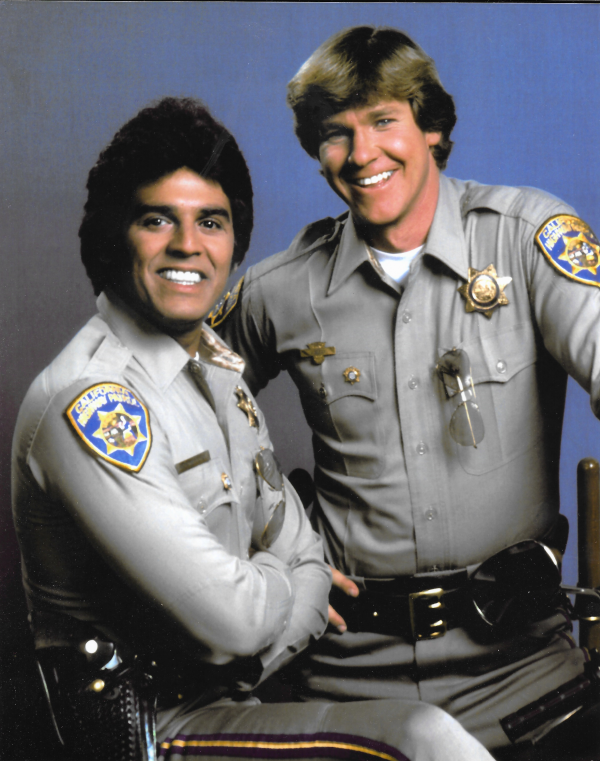
Had Studious Metsimus gotten a vote, the number of ballots cast would have jumped to 425.  But since the "W" in BBWAA stands for "writers" and not "wannabes" (as a blogger, I suppose I fall under the latter category), I won't be able to help some poor athlete worth tens of millions of dollars achieve legendary status.  Then again, perhaps it's best that I don't get a vote, especially since I'd enshrine Jeff Kent just to get his CHiPs era mustache into the Hall.

And now, before you get a chance to search on eBay for a vintage Ponch and Jon poster, it's time to reveal the ten former players who would have been on Ballot No. 425 had such a vote existed, focusing on the three players I loved to watch play the most, followed by the remaining seven in condensed form.


Baseball Mecca.  (Photo courtesy of the Cooperstown/Otsego County website)


Edgar Martinez

Face it, the only reason he's not in the Hall already is because he played a significant portion of his career as a designated hitter.  How else can you explain a lifetime .312 hitter with a .933 OPS and OPS+ just short of 150 not having a plaque in Cooperstown yet?

The voters of this generation who use the DH argument to foil the case of Martinez are like the previous generation's voters who couldn't bear to see relief pitchers making the Hall.  "If they can't pitch more than a few innings, I can't vote for them," those misinformed voters would say.  But relievers such as Rollie Fingers, Goose Gossage and Bruce Sutter (all Hall of Famers) paved the way for the one-inning closer to get recognition from the Hall.  Dennis Eckersley has a plaque in Cooperstown.  John Smoltz's three-and-a-half year period as a dominant closer also helped fuel his candidacy.  Trevor Hoffman (more on him later) is knocking on the Hall's door.  And who's going to keep Mariano Rivera out of Cooperstown once he's eligible in 2019?

The same people who are now accepting one-inning closers as potential Hall of Famers now need to focus their attention on players who left their gloves at home.  Frank Thomas, who started more than 100 games at first base in just three of his 19 seasons and played in over 1,300 games exclusively as a designated hitter, was a first ballot Hall of Famer.  Why is his lifetime .301/.419/.555 slash line considered worthy of enshrinement and Edgar's .312/.418/.515 isn't?  Is it because Thomas produced the sexy hits (521 HR) and Martinez didn't (309 HR)?  It's true Thomas had 11 seasons with 100+ RBI while Edgar had just six.  But did you know the great Mickey Mantle only had four such seasons?  No one used that argument against Mantle and no one should.  But had he played in the DH era, Mantle's knee injuries would have relegated him to "leave your glove behind" status and then people would be questioning what should have been obvious about him; that he is undoubtedly a Hall of Famer.

Martinez won two batting titles.  He was also a league leader in runs scored, RBI, OPS, OPS+ and finished first multiple times in doubles and on-base percentage.  For seven seasons (1995-2001), which coincided with all of the Mariners' postseason trips in franchise history, Martinez's averages per 162 games were mindboggling.  He produced a .329/.446/.574 slash line.  That's a 1.020 OPS in 1,020 games.  And if that's not good enough, how about his 162-game average of 47 doubles, 32 homers, 123 RBI and 111 runs scored during the seven-year stretch?

There's a reason why the annual outstanding designated hitter award is named after Edgar Martinez.  That's because he was the best at what he did.  And those who are the best deserve to be with the best in Cooperstown.

Even Jeff Kent's mustache can't compare to Edgar Martinez's classic lip fuzz. (Bruce Bennett/Getty Images)


Larry Walker

Similar to Edgar Martinez, Walker hasn't gotten as much support as he should because of one nagging element.  Martinez has failed to get votes because of the DH factor, while Walker has the Coors Field factor looming over him.

Prior to becoming a Colorado Rockie, Larry Walker was already a good hitter and complete player.  In his final three years in Montreal, Walker had a .294 batting average, .371 on-base percentage and .516 slugging percentage, averaging 33 doubles, 21 HR, 88 RBI and 21 SB.  He was also an All-Star, won a Silver Slugger Award and two Gold Gloves while in Montreal.  Although those numbers are not quite Hall of Fame worthy, they were still very good.  Then he signed with Colorado and became one of the best players in the major leagues.

In his first season with the Rockies (1995), Walker hit .306 with 36 HR and 101 RBI.  His .607 slugging percentage was second in the league and he helped lead the third-year Rockies to their first-ever playoff appearance.  Year two in Colorado was fraught with injuries, as Walker only played in 83 games but still managed 18 HR, 58 RBI and 18 SB in half a season's worth of games.  Fully healthy in 1997, Walker's career took off into the stratosphere.  Walker's 1997 numbers (.366 batting average, 46 doubles, 49 HR, 130 RBI, 143 runs scored, 33 SB, .452 OBP, .720 SLG, 1.172 OPS) almost looked like they came straight from a video game.  But Walker wasn't done after his phenomenal '97 campaign.  Over the next five seasons, Walker won three batting titles (1998, 1999, 2001), finished second another year (2002) and had a combined .350 batting average over those five seasons.  Basically, he was Tony Gwynn with power and Gwynn was a first-ballot Hall of Famer.

In ten years as a Rockie, Walker posted a .334 batting average, .426 on-base percentage, .618 slugging percentage and 1.044 OPS.  Only 24 players in major league history finished with a higher career batting average than what Walker put up in that ten-year span.  Of those 24, the only three who finished with a higher on-base percentage, slugging percentage and OPS were Ted Williams, Babe Ruth and Lou Gehrig, all first ballot Hall of Famers and all legends of the sport.

Larry Walker played 17 years in the major leagues.  However, because of injuries, he only had four seasons in which he played at least 140 games.  From 1994-2005, Walker missed an average of 44 games per season, failing to play more than 103 games in five of those 12 campaigns.  Despite his multiple trips to the disabled list, Walker finished his career with 2,160 hits, including 471 doubles and 383 HR.  He also stole 230 bases, scored 1,355 runs and drove in 1,311 more.  His combined averages (.313 BA, .400 OBP, .565 SLG) are among the highest career marks of anyone not already in the Hall of Fame, as is his 72.6 bWAR.  And he wasn't just a product of Coors Field.

Walker played in 674 games for the Expos prior to his time in Colorado and 144 games for the Cardinals after leaving the Rockies, which is approximately five full 162-game seasons.  In those 818 games in non-Rockies uniforms, Walker posted an .851 OPS and 129 OPS+, averaging 63 extra-base hits and 21 steals per 162 games.  And those numbers weren't fueled by the thin air in Denver.

All told, Walker was a five-time All-Star, won seven Gold Gloves and three Silver Slugger Awards.  He also finished in the top 20 in the MVP vote seven times, winning the 1997 MVP Award.  Not all of his awards and accolades came as a member of the Colorado Rockies, proving that Walker was an exceptional player before and after his time in Colorado.  Simply stated, Larry Walker has earned the right to become the first player with a Rockies hat on his Hall of Fame plaque.

Larry Walker sticks out his tongue to all those who won't vote for him.  (David Seelig/AllSport)


Vladimir Guerrero

He didn't reach 3,000 hits.  He didn't hit 500 homers.  He didn't collect 1,000 extra-base hits.  He didn't score 1,500 runs, nor did he drive in that amount.  And despite having a feared throwing arm, he somehow never won a Gold Glove.  (Too bad there's no Gold Arm Award.)  None of that matters.  Because Vladimir Guerrero is definitely a Hall of Famer.

Guerrero played only 14 full seasons in the major leagues.  (He played a total of 99 games between the 1996 and 1997 campaigns.)  But he was a feared player both at the plate and in the field.  Guerrero never batted lower than .290 in any of his full seasons and was a .300 hitter in 11 of the 12 years he qualified for the batting title, becoming one of just 30 players to have that many .300 campaigns.  Although he never won a batting title, Guerrero had four years with 200+ hits, leading the league in 2002.  Guerrero also had eight seasons with 30+ homers and an incredible ten years with 100+ RBI, making him one of only 18 players to have double digit seasons with triple digit RBIs.  In addition, Vlad was a nine-time All-Star and eight-time Silver Slugger recipient.

Opposing pitchers feared facing Guerrero, as evidenced by the five seasons in which he was the league leader in intentional walks.  Only Barry Bonds (12 times) and Wade Boggs (six times) led the league in intentional passes more often.  Guerrero was walked intentionally 250 times - the fifth highest total in major league history.

It wasn't just moundsmen who hated to face him; opposing base runners were afraid to run on Guerrero as well.  Guerrero had 126 outfield assists, leading the league in 2002 and 2004.  He could have thrown out many more runners, but they got the memo later in his career and stopped trying to run on his cannon.

And in case you thought it's just me singing his praises, in 2004 Guerrero won the A.L. Most Valuable Player Award.  Nice, right?  Well, that season was one of a dozen years in which the right fielder received MVP votes.  That's just about every year he played in the big leagues, meaning Guerrero was recognized as one of the best players in the game for nearly the entirety of his career.

2,590 hits.  477 doubles.  449 homers.  181 stolen bases.  1,328 runs scored.  1,496 runs batted in.  A .318 lifetime batting average.  A .553 career slugging percentage.  Never striking out 100 times in a season.  Two 30 homer/30 steal seasons.  Lots of accolades.  Lots of respect.

Without question, Vladimir Guerrero is a Hall of Famer (and he should have gotten in on the first ballot last year).

Vladimir Guerrero terrorized the Mets at Shea Stadium and other teams at their parks.  (Heinz Kluetmeier/Sports Illustrated)


In addition to Edgar Martinez, Vladimir Guerrero and Larry Walker, my other seven Hall of Fame selections would be:

  • Chipper Jones:  He didn't just destroy Mets' pitching; he hit every team's pitchers.  Jones is one of 21 players with 1,600+ RBI and 1,600+ runs scored.  Fifteen of the other 20 are already in the Hall.  The other five are not yet eligible or had steroid suspicions.  Jones is not part of that latter group and should become part of that first group.
  • Jim Thome:  Anyone who hits 612 HR and drives in 1,699 runs without any talk of steroid use has earned his pass to Cooperstown on the first ballot.  Nine seasons of 100+ walks and a .402 lifetime OBP also help his case, as do his nine 100-RBI seasons and eight campaigns with 100 or more runs scored.
  • Trevor Hoffman:  A reliever with 30 saves in a season is considered dependable.  If that dependable reliever collects 30 saves every season for two full decades, he would still fall short of Hoffman's career total of 601.  In over 1,000 innings pitched during an era that catered to hitters, Hoffman produced a 2.87 ERA and 1.058 WHIP.  That's not Hall of Very Good.  That's Hall of Fame.
  • Curt Schilling:  Like Hoffman, he posted an impressive WHIP during an era known for its offense.  From 1992 to 2004, Schilling was the owner of a 1.091 WHIP, while averaging 202 strikeouts and just 44 walks per season.  In fact, of all pitchers with at least 3,000 strikeouts, no one posted a better strikeout-to-walk ratio than Schilling's 4.38 K/BB (3,116 K, 711 BB).  And then there's this posteason thing; the one with him going 11-2 with a 2.23 ERA and 0.968 WHIP in 19 starts.  He's one of the all-time greats.
  • Mike Mussina:  Schilling is considered one of the best pitchers of his era.  Modern metrics says Mussina was a better player, as his 83.0 bWAR puts him ahead of Schilling's 79.9 bWAR.  Mussina finished in the top-six in Cy Young Award balloting nine times and won seven Gold Glove Awards.  And of all pitchers who made at least 500 starts, only Hall of Famers Christy Matthewson, Pete Alexander, Randy Johnson and soon-to-be Hall of Famer Roger Clemens posted a higher winning percentage than Mussina's .638 mark.
  • Billy Wagner:  It's a shame Wagner hasn't gotten more recognition, as he was far more dominant than Hoffman ever was.  Hoffman got the job done as effectively as any other closer who ever lived.  But Wagner would eat a hitter up and spit him out.  Injuries curtailed Wagner's career, but any pitcher who averaged nearly 12 strikeouts per nine innings, four whiffs per walk and finished his career with a WHIP under 1.00 (Wagner's WHIP was 0.998) deserves Hall of Fame consideration.  And I didn't even mention his 422 saves and 2.31 ERA.  Okay, maybe I just did.
  • Jeff Kent:  Kent was more than just a mustache.  He was one of the best hitting second basemen of all-time.  For a guy whose career didn't take off until his age-29 season, Kent finished just 16 extra-base hits shy of 1,000.  The pressures of playoff baseball didn't faze him, as Kent posted an identical .500 career slugging percentage in the regular season and postseason.  And let's not forget his eight seasons with 100+ RBI, the 1,518 runs he drove in for his career and the title of all-time leading home run hitter at the second base position.


Those are my ten Hall of Fame selections.  Some will get in.  Some won't.  And some will want to know Jeff Kent's grooming techniques.  (Or Edgar Martinez's, circa 1990.)  As always, some candidates didn't make my cut.  (Yes, I know Barry Bonds and Roger Clemens aren't among my ten guys.  They'll be there ... someday.)  But every player on the Hall of Fame ballot in 2018 had an outstanding career and all of them had qualities that at the very least put them in the Hall of Fame conversation.

Who will get in?  And who will have to be like Johnny Damon and buy a ticket for themselves?  That will be revealed on January 24.  Until then, we'll just follow the advice of Hall of Famer Rogers Hornsby and just stare out the window, waiting for spring to arrive.


Tuesday, January 10, 2017

If Studious Metsimus Had a 2017 Hall of Fame Vote...

On Wednesday, January 18, the National Baseball Hall of Fame will announce the names of the former players who will be receiving the ultimate individual honor in the sport.  These players will join former commissioner Bud Selig and general manager John Schuerholz, who was the architect of the 1980s Kansas City Royals and 1990s Atlanta Braves.  Both men were elected into the Hall of Fame by the Today's Game committee.

Last year's Hall of Fame class included Mike Piazza, who became the second player with a Mets cap on his plaque, and Ken Griffey Jr., who was named on 99.3% of the ballots, which broke the record of the first player with a Mets cap on his plaque.  Three players came within 34 votes of joining Piazza and Griffey in 2016, as Jeff Bagwell (71.6% of the votes), Tim Raines (69.8%) and Trevor Hoffman (67.3%) were forced to live by the old Brooklyn Dodgers mantra, "Wait 'til next year!"

This year, there are 19 players who are on the ballot for the first time, including two former Mets (Melvin Mora, Mike Cameron) and one former Met-killer (Pat Burrell).  Neither of those three players are expected to garner the 5% voter support needed to remain on the ballot in 2018.  But there are several players who will.  And some of those players might even approach the magic 75% threshold required for election.

According to Hall of Fame ballot tracker Ryan Thibodaux, approximately 435 writers will be submitting ballots this year.  It would have been 436 had Major League Baseball recognized the Studious Metsimus vote.  (We would've gotten a vote, too, if it wasn't for that meddling requirement of being a member of the Baseball Writers' Association of America.)

But just because our vote is unofficial doesn't mean you can't officially like or dislike our opinions.  There are ten players on our imaginary ballot.  Let's start with the ones who are on the ballot for the first time.

Baseball Mecca.  (Photo courtesy of the Cooperstown/Otsego County website)


 Vladimir Guerrero

He didn't reach 3,000 hits.  He didn't hit 500 homers.  He didn't collect 1,000 extra-base hits.  He didn't score 1,500 runs, nor did he drive in that amount.  And he somehow never won a Gold Glove.  None of that matters.  Because Vladimir Guerrero is definitely a Hall of Famer.

Guerrero played only 14 full seasons in the major leagues.  (He played a total of 99 games between the 1996 and 1997 campaigns.)  But he was a feared player both at the plate and in the field.  Guerrero never batted lower than .290 in any of his full seasons and was a .300 hitter in 11 of the 12 years he qualified for the batting title, becoming one of just 30 players to have that many .300 campaigns.  Although he never won a batting title, Guerrero had four years with 200+ hits, leading the league in safeties in 2002.  Guerrero also had eight seasons with 30+ homers and an incredible ten years with 100+ RBI, making him one of only 18 players to have double digit seasons with triple digit RBIs.  In addition, Vlad was a nine-time All-Star and eight-time Silver Slugger recipient.

Opposing pitchers feared facing Guerrero, as evidenced by the five seasons in which he was the league leader in intentional walks.  Only Barry Bonds (12 times) and Wade Boggs (six times) led the league in intentional passes more often.  Guerrero was walked intentionally 250 times - the fifth highest total in major league history.

It wasn't just moundsmen who hated to face him; opposing base runners were afraid to run on Guerrero as well.  Guerrero had 126 outfield assists, leading the league in 2002 and 2004.  He could have thrown out many more runners, but they got the memo later in his career and stopped trying to run on his cannon.

And in case you thought it's just me singing his praises, in 2004, Guerrero won the A.L. Most Valuable Player Award.  Nice, right?  Well, that season was one of a dozen years in which the right fielder received MVP votes.  That's just about every year he played in the big leagues, meaning Guerrero was recognized as one of the best players in the game for nearly the entirety of his career.

2,590 hits.  477 doubles.  449 homers.  181 stolen bases.  1,328 runs scored.  1,496 runs batted in.  A .318 lifetime batting average.  A .553 career slugging percentage.  Never striking out 100 times in a season.  Two 30 homer/30 steal seasons.  Lots of accolades.  Lots of respect.

Without question, Vladimir Guerrero is a first-ballot Hall of Famer.

Vlad the Impaler prepares to bludgeon another opposing pitcher. (Jed Jacobsohn/Getty Images)


Ivan Rodriguez

The first catcher nicknamed "Pudge" is already in the Hall of Fame, as Carlton Fisk was inducted in 2000.  The second backstop with that moniker had a career that may have been even better than his pudgy predecessor.  Let's look at some key numbers.

  • Pudge I:  2,356 hits, 421 doubles, 376 HR, 1,330 RBI, 1,276 runs scored, 128 SB
  • Pudge II:  2,844 hits, 572 doubles, 311 HR, 1,332 RBI, 1,354 runs scored, 127 SB

Their RBI and stolen base totals are nearly identical and Fisk had more homers.  But Rodriguez scored more runs and had many more hits and doubles.  And then there's the defense.

Fisk won a Gold Glove once.  Once.  Rodriguez won 13 of those suckers, which is more golden hardware than any player in baseball history not named Brooks Robinson, Greg Maddux or Jim Kaat.  In fact, Rodriguez ranks eighth all-time in defensive WAR, regardless of position.  None of the seven guys in front of him were catchers.  That means - according to that little dWAR stat - Rodriguez is the greatest defensive catcher of all-time.

Throw in his seven Silver Slugger Awards (only Mike Piazza had more as a catcher; I mean Hall of Famer Mike Piazza), his 14 All-Star Game selections (the same as Hall of Famer Johnny Bench, two more than Piazza and three more than Fisk), his two World Series appearances, his 1999 A.L. MVP Award, his Steve Bartman-assisted 2003 NLCS MVP Award and that shiny ring he earned for winning the whole shebang with the Marlins ... Need we say more?

Pudge II will join Pudge I in the hallowed Hall.

Everything's bigger in Texas.  Especially the mighty roar of Ivan Rodriguez.  (Eric Gay/AP)


So, Vladimir Guerrero and Ivan Rodriguez would get my votes of the 19 first-timers on the ballot.  (Sorry, Pat Burrell.)  That leaves up to eight players I can vote for on my unrecognized ballot.  And those exceptional eight are:

  • Edgar Martinez: (Slashed .312/.418/.515 and has an award named after him.  A frickin' award!)
  • Tim Raines: (Because the "Ace of Stats", Ryan Spaeder, would be very pleased.)
  • Jeff Bagwell: (15 years, 1,500 runs, 1,500 RBI.  You average 100 runs/100 RBI, you're in the Hall.)
  • Trevor Hoffman: (Hell's Bells, he had a lot of saves!  And also that 2.87 lifetime ERA.)
  • Curt Schilling: (That K/BB ratio.  That 80+ WAR.  Those postseason performances.)
  • Mike Mussina: (Higher WAR than Schilling, seven Gold Gloves, nine top-six Cy Young finishes.)
  • Larry Walker: (Three batting titles, 72.6 WAR, five Gold Gloves in spacious Coors Field.)
  • Jeff Kent: (Most HR by a second baseman, 560 doubles, 1,518 RBI and a Hall-worthy 'stache!)

Those are my ten Hall of Famers for 2017.  Some will get in.  Some won't.  And some will be Jeff Kent.  But regardless of who gets the call to Cooperstown, all of the players mentioned above had outstanding careers and deserve to be recognized for their great play.

Kinda like a certain blogger should have his Hall of Fame vote recognized.  Oh, well.  There's always next year.


Friday, January 1, 2016

If Studious Metsimus Had a 2016 Hall of Fame Vote...

On Wednesday, January 6, the National Baseball Hall of Fame will be calling those players deemed worthy of entrance into its hallowed halls.  This year, there are 32 players on the ballot, including 15 first-timers.

The 2015 Hall of Fame class featured Randy Johnson, Pedro Martinez, John Smoltz and Craig Biggio.  Mike Piazza, Jeff Bagwell and Tim Raines were only players that did not earn enshrinement last year but still had their names checked off on more than half the ballots submitted, with Piazza missing his call by just 28 votes.

Piazza remains on the ballot this year, as do former Mets Jeff Kent and Gary Sheffield.  Other players who have worn blue and orange in Flushing and are eligible this year for the first time are Mike Hampton, Luis Castillo and Billy Wagner - otherwise known as the school chaser, the ball dropper and the interview shocker.  Most of the former Mets on the ballot this year should not expect to earn a plaque in Cooperstown this year, but a certain cereal connoisseur should finally make the cut this year, as does a Kid who put baseball on the map in the Pacific Northwest.

This is the sixth year that the Studious Metsimus staff is casting a Hall of Fame vote that will be rejected by Cooperstown and not taken seriously by HOF ballot collector Ryan Thibs (@notmrtibbs on Twitter).  Who's making the cut on our ballot that will still need 75% of the votes cast by legitimate baseball writers and Murray Chass?  Let's begin with the players I'd vote for who are first-timers and the ones I hadn't voted for before but have since changed my mind on them.

Mike Piazza failed to be a world champion, but succeeded at eating the breakfast of champions.


Ken Griffey Jr.

The Kid may have saved baseball in Seattle.  And that's not hyperbole.  Prior to Griffey's arrival as a 19-year-old rookie in 1989, the Mariners (established 1977) had never finished above .500 or higher than fourth place in the seven-team American League West division.  In Griffey's third season in Seattle, the team posted its first winning record.  Two years later, they finished above .500 again.  Finally, in 1995, the Mariners won their first division title.

Griffey's home run and RBI totals increased or remained the same in each of his first five seasons.  By the time he was 23, he compiled his first 40-HR season.  He then averaged 52 HR, 142 RBI and 19 stolen bases per season from 1996 to 1999.  By the time he was 30, he had already collected 320 doubles, 398 homers, 1,152 RBI, 1,063 runs scored, 167 stolen bases and was batting just a shade under .300.  Along the way, he made ten All-Star teams, won ten Gold Gloves, brought home seven Silver Slugger awards, finished in the top ten in MVP voting seven times and won the 1997 A.L. MVP award.  Then he turned 30, and injuries started to kick in.

In 2000, his first season in Cincinnati, he still had a Griffey-like year, hitting 40 HR and racking up 118 RBI.  But over his next ten seasons, he averaged just 99 games played per year.  Still, during those final ten injury-plagued seasons (including a second stint in Seattle in 2009 and 2010), Griffey averaged 32 homers and 93 RBI per every 162 games played.

He retired in 2010 with phenomenal numbers across the board.  Griffey had 630 homers, 524 doubles, 1,836 RBI and 1,662 runs scored.  He is one of six players in baseball history with 600+ HR, 500+ doubles, 1,800+ RBI and 1,600+ runs scored, joining Babe Ruth, Willie Mays, Hank Aaron, Barry Bonds and Alex Rodriguez.  His lifetime 83.8 WAR is higher than the WAR posted by Pete Rose, Rod Carew, Carl Yastrzemski, Joe DiMaggio, Willie McCovey and Roberto Clemente, to name a few fairly decent players.

In other words, Ken Griffey Jr. is a Hall of Famer.  No doubt about it.

Ken Griffey Jr. was at the bottom of this pile, but my, oh my, he'll scale the Hall of Fame mountain this year.  (AP Photo)


Tim Raines

This is a player I never voted for the last five times I had this unrecognized vote.  But after careful review, I now believe Raines is a Hall of Famer.

No one questions that Raines was the National League's best leadoff hitter during his prime.  Even fewer people doubt that he was the second-best No. 1 hitter of his generation after Hall of Famer Rickey Henderson.  So why isn't Raines already in the Hall?

His drug use in the 1980s may have turned off some voters.  It also might have hurt his case that he played his finest seasons in Montreal, a franchise that has won one postseason series in its 47 years of existence.  But let's look at some undeniable facts about Raines's career.

Tim Raines stole 808 bases - the fifth highest total in the history of the game.  But he can only steal second base when he's standing on first, and his 713 extra-base hits (including 170 homers) kept his stolen base totals lower than they could have been had he just been a singles hitter.

Raines reached base 3,977 times (47th-highest total in MLB history), which included 1,330 walks (37th all-time).  He had 2,605 hits despite spending the last six years of his career in a part-time role.  He led the league in batting average once, on-base percentage once, runs scored twice, doubles once and stolen bases four times.  He also was a seven-time All-Star, won a Silver Slugger award (even though he wasn't known for his slugging) and received MVP votes in seven seasons.

Nine players in major league history had at least one season with 50+ XBH and 70+ SB.  Only three of those players accomplished the feat more than once.  Two of those three players were Ty Cobb and Rickey Henderson, who each did it twice and are both in the Hall of Fame.  The other player is Tim Raines, who had four such seasons, or as many as Cobb and Henderson had combined.

It's long overdue, but I finally believe Tim Raines should be in the Hall of Fame.

Photo by Getty Images.  Stadium by Shea.

Griffey and Raines are the two players I would vote in that I had never voted for before.  I'm allowed a total of ten players on my vote if my vote actually counted.  So my other players are Piazza (duh), Jeff Bagwell, Curt Schilling, Larry Walker, Jeff Kent and Edgar Martinez - who has the designated hitter award named after him but has been penalized by Hall of Fame voters for years because he was phenomenal at the job people get that award for.

That leaves two unused votes.  Eventually I think I would vote for players such as Trevor Hoffman (601 saves), Billy Wagner (422 saves, 2.53 ERA, 1.04 WHIP, 11.9 K/9 IP), Mike Mussina (270 wins, 82.7 WAR - 24th highest for a pitcher) and Gary Sheffield (1,003 extra-base hits, 253 stolen bases, 1,676 RBI, 1,636 runs scored, 1,475 walks), but I'm holding out for a year in which I have fewer worthy candidates to choose from.  Or whenever I get Murray Chass's vote.  At least I don't have acne in my brain like he does.

If Mike Piazza gets in this year (like he should), Chass will need to pop someone else's Hall of Fame bubble.


Thursday, January 1, 2015

If Studious Metsimus Had A 2015 Hall of Fame Vote...

On Tuesday, January 6, the National Baseball Hall of Fame will reveal its newest inductees to the public.  This year, there were 17 new candidates to consider, as well as 17 holdovers from previous years.  Notable first-timers include Randy Johnson and John Smoltz, as well as former Mets Pedro Martinez, Carlos Delgado, Gary Sheffield, Cliff Floyd and Tony Clark.

There are also two former Mets who are returning to the ballot in 2015 (Mike Piazza, Jeff Kent), making the other 15 holdovers jealous because they never got the support of Mets fans during their active days as a player.  Well, technically Kent didn't get the support of Mets fans, either, but at least he got the support of the writers of the show "Reno 911!", who clearly modeled the character of Lt. Dangle after him.


For the fifth straight year, Studious Metsimus has been denied an "official" vote for the Hall of Fame, a travesty that has been overlooked for too long.  But we ain't mad at'cha.  Instead, the staff of this site has joined heads to give you our unofficial vote, along with brief reasons why these players should be allowed to have plaques in Cooperstown.

As Mets fans, we should know quite a bit about travesties and being overlooked.  After all, of the 14 players who received fewer than 5% of the Hall of Fame votes in 2014, thereby removing them from this year's ballot, five of them were former Mets.  Moises Alou, Hideo Nomo, Armando Benitez, Paul Lo Duca and the beloved Kenny Rogers will no longer be considered by the BBWAA for Hall of Fame enshrinement.  But that doesn't mean that a former Met or two will be denied this year.

Here's the list of players I'd vote for if not for that stupid "you're just a blogger, not a ten-year writer for a respected publication" rule.


Randy Johnson

For the early part of his career, Johnson was the left-handed version of Nolan Ryan.  From 1990 to 1992 (the first three seasons in which Johnson made 30+ starts), the lanky southpaw averaged 221 strikeouts and 139 walks per season and he barely had a winning record (39-35) in those three campaigns.  Then 1993 happened, and the man who possessed a slider named Mr. Snappy exploded as a perennial All-Star.

For a ten-year period (1993-2002), Johnson was the most dominant pitcher in baseball, going 175-58 with a 2.73 ERA, 1.08 ERA and an incredible 2,928 strikeouts.  He also learned how to throw pitches a little closer to the plate, as his walked just 712 batters over the decade.

Johnson finished his career as the second-greatest strikeout pitcher of all time, behind Nolan Ryan.  The ten-time All-Star won five Cy Young Awards, finishing in the top three in three other seasons.  He also received MVP votes in nine seasons, an almost unheard of feat for a pitcher.  And of course, he shared MVP honors in the 2001 World Series (with Curt Schilling) when he won three games against the Yankees.

Mr. Snappy and the man who threw him is without question deserving of the call from the Hall.

Mr. Snappy crackled in the air and popped in the catcher's mitt.  (Photo by Elaine Thompson/AP)


Pedro Martinez

Although Martinez "only" won 219 games in his 17-year career, his Hall of Fame candidacy rests on all the No. 1s he racked up in his career.  Are you ready for this long list?

Martinez led the league in wins once, winning percentage three times, ERA five times, WHIP six times, strikeouts four times (excuse me while catch my breath ... okay, let's continue), strikeouts per nine innings five times, fewest hits per nine innings five times, strikeout-to-walk ratio four times, shutouts once and complete games once.

The former Met pitched in two World Series, winning it all as a member of the Red Sox in 2004.  He also posted an 86.0 WAR as a pitcher, which ranks him 17th all-time in that category.  Fourteen of the 16 pitchers ahead of him are already in the Hall of Fame.  A fifteenth should enter this year (Randy Johnson), while the sixteenth is Roger Clemens, who would be a shoo-in for the Hall if the specter of PEDs wasn't scaring voters away.

Pedro Martinez once threw Don Zimmer to the ground.  Now he should throw down at Cooperstown as a slam dunk first-ballot Hall of Famer.

Pedro Martinez sprinkled in some fun during a wonderful major league career.  (Photo by Frank Franklin II/AP)


John Smoltz

The Braves had two eventual 300-game winners in Hall of Famers Greg Maddux and Tom Glavine.  But the most dominant pitcher during their era of greatness in the 1990s might have been John Smoltz.

Whereas Greg Maddux would paint the corners with the precision of a surgeon and Tom Glavine would confuse umpires into calling strikes on pitches that were off the plate, John Smoltz would come right after the hitter.  He did it as a starting pitcher.  He did it even better as a relief pitcher.  But he was truly at his best as a postseason pitcher.

After a slow start to his career (78-75, 3.59 ERA, 1.24 WHIP from 1988 to 1994), Smoltz turned the corner in 1995 by going 12-7 during the strike-shortened campaign and striking out over a batter per inning for the first time in his career.  A year later, Smoltz won 24 games and the Cy Young Award.  Two years after that, Smoltz led the league in winning percentage (17-3, .850 win %) and finished fourth in the Cy Young vote.  Injuries kept him from pitching in 2000, but when he came back in 2001, he became the Braves' closer.  Smoltz saved 154 games in three-and-a-half seasons, including 55 in 2002, which is still tied for the all-time National League record.

Smoltz pitched in 41 postseason games, both as a starter and reliever, winning 15 games and saving four others.  The 15 postseason wins are the second-highest total in history.  Smoltz also posted a 2.67 lifetime ERA in October and struck out 199 batters, the most of any pitcher in postseason history.

Had he not lost four-and-a-half years to injury and closer's duties, Smoltz might have approached 300 victories (he won 213).  He should approach (and surpass) the 75% minimum needed to enter the Hall of Fame.

Mets fans should tip their caps to John Smoltz on the day he enters the Hall of Fame. (Rich Pilling/MLB Photos)


Among returnees on the ballot, I would vote for Mike Piazza (duh) and Craig Biggio (double duh, which is appropriate since doubles were his specialty, as he hit the fifth-most doubles in MLB history).

The other five votes I'd be allowed to cast (if I were allowed to cast any at all ... stupid BBWAA not letting me play in their sandbox) would go to Jeff Bagwell, Curt Schilling, Larry Walker, Edgar Martinez and Jeff Kent.

Lieutenant Dangle's doppelganger may not have been the friendliest guy in the world, but he sure put up great numbers (regardless of position) for a large chunk of his career.  And "dangle" in the fact that he did all this as a middle infielder, well, he deserves to be mentioned among the best to play the game, as do Bagwell, Schilling, Walker and Edgar Martinez.