Showing posts with label Tim Teufel. Show all posts

Monday, January 16, 2017

The Thrill of Victory, The Agony of the Mets: Wally Backman

To succeed in baseball, sometimes all you need is someone who believes in your ability to do the job you're hired to do.  At times, that belief can get a player who doesn't light up the boxscore with eye-popping stats an everyday job.  The same holds true for a manager, who requires his front office to have faith in his ability to guide the team toward its goals.

For one former Met who was losing hope that he would be able to spend a full season in the big leagues, all it took was a manager's promise; one that gave him the confidence to improve his game to a level that would keep him in the majors for over a decade.  But that faith was not reciprocated when it was his turn to be the manager, ending a nearly four-decade relationship with the franchise that first believed in him as a player.

A rare photo of Wally Backman with a clean uniform.  (Rick Stewart/Getty Images)

Walter Wayne Backman was a scrappy middle infielder from Oregon who impressed the Mets so much while he was in high school that they drafted him in the first round of the 1977 June amateur draft.  Although Backman was purely a singles hitter (he had just 88 extra-base hits in his first four seasons in the minors), his ability to draw walks and steal bases made him a valuable commodity in the speed-driven game of the late '70s and early '80s.

Backman made his major league debut on September 2, 1980, as did fellow speedster Mookie Wilson.  Backman's performance after his September call-up was far more impressive than Wilson's, as the second baseman batted .323 with a .396 on-base percentage in 110 plate appearances, while Wilson batted just .248 with a .325 OBP in nine extra opportunities at the plate.  Backman split time between second base and shortstop during his month-long debut and produced nine multi-hit games, making a case for his inclusion on the Mets' 1981 Opening Day roster.

Although Backman did make the team out of the spring training in 1981, he was relegated to mostly pinch-hitting duties, as he was hard-pressed to find a defensive position on the field.  Incumbent second baseman Doug Flynn had just won his first Gold Glove award for defensive excellence in 1980, while shortstop Frank Taveras was coming off a two-year stretch in which he stole 74 bases.  To make matters worse, rookie third baseman Hubie Brooks, who also excelled during a late-season call-up in 1980 (.309 batting average, 10 RBI in 89 plate appearances), blossomed into the team's best player during the strike-shortened 1981 campaign, batting .307 with 27 extra-base hits in 98 games.  The glut of talented infielders on the Mets' roster limited Backman to just five starts and 42 plate appearances in what should have been his first full season in the majors.

The 1982 campaign brought a new manager to the Mets in George Bamberger, and with the new skipper came Backman's first extended stint at the major league level.  With Flynn having been traded to the Texas Rangers during the off-season, the second base job was Backman's to lose.  Backman handled the offensive side of the game quite well, batting .272 and reaching base at an impressive .387 clip.  In addition, Backman's 115 OPS+ tied All-Star catcher John Stearns for the team lead among regular players.  But after five years of Flynn's Gold Glove caliber defense at second base, Backman was an underwhelming replacement in the field, committing 14 errors in 88 games at the position.  When a broken collarbone ended Backman's season in mid-August, his short tenure as the Mets' starting second baseman also appeared to be over.  It would have been were it not for a manager who had a feeling about his switch-hitting second sacker.

When Backman got injured in 1982, the Mets turned to 22-year-old Brian Giles to replace him.  Giles was much more reliable defensively and became the team's new starter at second base in 1983, leaving Backman without a position.  As a result, Backman spent most of the '83 campaign at Triple-A Tidewater under manager Davey Johnson.  The rest, as they say, is history.

A not-so-rare photo of Wally Backman with a dirty uniform.  (Tony Triolo/Sports Illustrated)

With a mathematics degree in his back pocket and a willingness to use computers to help him manage, Johnson saw in Backman a player whose value couldn't be measured with traditional baseball statistics.  Backman had an impressive .316 batting average for Tidewater in 1983, but his keen ability to draw walks produced a .422 on-base percentage.  At a time when OBP was not considered one of the major determinants of a player's value, Johnson saw its worth and knew that Backman would be key to his team's success.  So when Johnson was promoted to be the Mets' manager in 1984, he kept a promise to take his spark plug with him.

"I need a leadoff hitter, and Backman fit the bill," Johnson said.

Prior to 1984, the Mets had been using Mookie Wilson as their leadoff hitter.  But Wilson's .310 lifetime OBP, combined with his league-leading at-bat total in 1983 meant that he was also among the leaders in outs made.  With Backman batting first and Wilson dropping to No. 2 in the batting order, the Mets had a true leadoff hitter.  Backman's .360 OBP and 32 stolen bases were both second on the team in 1984, trailing only Keith Hernandez's .411 OBP and Wilson's 46 steals.

In addition to Backman's successful season at the plate, he also saw a significant improvement in his defense, making four fewer errors in 1984 than he did in his previous full season with the Mets in 1982, despite starting 39 more games in '84 than he did in '82.  Backman's offense and defense was instrumental in the Mets' improvement from a perennial second-division team to a 90-win contender in 1984.  And he had his manager to thank for the opportunity.

"The best thing that happened to me was having Dave Johnson as a manager last year," Backman said.  "In the past, I was never a leadoff man.  Dave put me leadoff to begin the season.  He saw what I could do and had confidence in me.  That took a lot of pressure off.  I could relax and play my game."

Backman continued to improve in 1985, making just seven errors in 140 games.  However, he wasn't playing entire games, as he would be removed often for a pinch-hitter whenever a left-handed reliever came into the game.  You see, for as many improvements as the switch-hitting Backman made under Davey Johnson, most of his success as a hitter came from the left side of the plate.  In 1984, Backman batted .162 (6-for-37) against left-handed pitchers, albeit with a .340 on-base percentage.  Since that was considered a small sample size for the mathematically inclined Johnson, the skipper gave Backman more opportunities to bat against southpaws in 1985.  And Backman got even worse.

During the 1985 campaign, the second baseman batted a meager .122 (16-for-131) vs. LHP and he was also drawing fewer walks against them, which led to an also cringeworthy .212 OBP.  As a left-handed batter, however, Backman's two-year production was among the best in the league, as batted .307 against right-handed pitching.  Not helping matters was that Backman's replacement at second base whenever a left-handed pitcher was on the mound (Kelvin Chapman) was himself a lousy hitter.  Although Chapman fared well in 1984 against left-pitchers (.296 batting average, 358 OBP in 181 plate appearances), he was downright atrocious replacing Backman in 1985, batting .172 with a .230 OBP in 142 PA.

With more teams using left-handed starters and relievers, Johnson needed a solution to generate more production against them.  He found the answer in a technique employed by former Mets manager Gil Hodges.

(Barry Colla Photography)
In Johnson's first season managing the Mets, five of his starting eight players had at least 595 plate appearances and only seven players on the roster reached 250 plate appearances.  Once he penciled in a player at a certain position in 1984, he was there for the season.  That started to change a little in 1985, as Johnson took a page out of the Book of Hodges and employed a Mookie Wilson/Lenny Dykstra platoon in center field and used both Ray Knight and Howard Johnson at third base to maximize the offensive production.  If a left-handed pitcher started, Wilson and Knight would receive the bulk of the starts.  If it was a right-handed pitcher on the mound, Dykstra and HoJo would play.  As a result, only five players on the 1985 team surpassed 470 plate appearances, but 11 men came to bat at least 200 times.  The platoons helped, as the Mets, who finished in the middle of the pack in most offensive categories in 1984, became one of the National League's strongest hitting squads in 1985, finishing in the league's top five in batting average, OBP, slugging percentage and runs scored.

Second base was the one position that Johnson couldn't find a suitable platoon partner for Backman.  The two-year Kelvin Chapman experiment had failed, and the Mets needed a solution if they wanted to be a complete offensive team in 1986.  Enter Tim Teufel and enter the postseason.

With Teufel aboard in 1986 to spell Backman against southpaws, the Mets flourished at second base, with Teufel providing the pop (25 extra-base hits, 31 RBI in 279 at-bats) and Backman becoming an OBP machine (.320 batting average, .376 OBP).  Only seven batters in the National League who qualified for the batting title managed to hit over .300.  Backman missed qualifying by a mere 62 plate appearances.  However, he did become just the second Met in franchise history to bat at least .320 in a season of 400 or more plate appearances, joining Cleon Jones, who accomplished the feat in 1969.  By the time 1986 was over, Backman would join Jones in accomplishing a team milestone.

The 1986 Mets won 108 games and ran away with the N.L. East title.  In the National League Championship Series against the Houston Astros, the Mets ran into the league's top pitcher in Mike Scott.  Backman's former Mets teammate stymied New York in Games One and Four, meaning the Mets had to beat the other Astros pitchers if they wanted to advance to the World Series.  After being shut out by Scott in the series opener, Backman got things going for the Mets in Game Two, scoring New York's first run of the series after delivering a one-out single off future Hall of Famer Nolan Ryan.  In his next at-bat, Backman produced an RBI single against Ryan and scored on a triple by Keith Hernandez to put the game out of reach.  Backman was also front and center in the Mets' Game Three and Five victories.

With the Mets trailing the Astros by a run in the bottom of the ninth in Game Three, Backman beat out a drag bunt to lead off the inning, then went to second base on a passed ball.  After Danny Heep flied out, Lenny Dykstra hit a long fly ball to right field that barely cleared the wall, giving the Mets and an exuberant Wally Backman a thrilling come-from-behind win.

After Scott's second victory of the series in Game Four, the Mets knew they had win Game Five in order to avoid playing an elimination game at the Astrodome in Game Six.  This time, Nolan Ryan would fare better against Backman, striking out the second baseman three times in his first four at-bats.  Matching Ryan pitch for pitch was Dwight Gooden, who was brilliant in his ten innings of work.  By the 12th inning, the two teams were still deadlocked and Astros pitcher Charlie Kerfeld was in his second inning of relief.  After retiring Dykstra to lead off the inning, Backman delivered a crucial single, lining the ball off the glove of third baseman Denny Walling.  An errant pickoff throw by Kerfeld allowed Backman to scamper to second base, but also meant that the Astros would intentionally walk Hernandez to get to the slumping Gary Carter.  Carter was batting just .048 in the series (1-for-21) as he stepped up to the plate.  By the time his eight-pitch at-bat was over, his average was up to .091, as Carter drove in Backman from second with a hard-hit ground ball up the middle.

Wally Backman celebrates after scoring the winning run in Game Five of the 1986 NLCS.  (ABC TV screen shot)

The Mets were now one win away from advancing to the World Series for the first time in 13 years, but had to fly to Houston to win that pennant.  Left-hander Bob Knepper was tabbed to face the Mets in Game Six, which meant that Backman would start the game on the bench and Tim Teufel would play second base.  By the time the game was over, Backman would play a key role in deciding the outcome of the game.

New York trailed Houston by three runs as the Mets came to bat in the top of the ninth.  Knepper had been brilliant, facing the minimum three batters in seven of his first eight innings.  But the Mets rallied to tie the game against Knepper and reliever Dave Smith.  With the game knotted and two men in scoring position, Backman was called upon to face the right-handed Smith and was intentionally walked to load the bases.  That's where the Mets' rally ended, as pinch-hitter Danny Heep struck out to end the inning.

The two teams continued to put up zeroes until the 14th, when Backman gave the Mets the lead with a one-out RBI single off reliever Aurelio Lopez.  Had Backman just supplied the Mets with a pennant-winning hit?  Would his name become synonymous with those legendary Mets who came through in the club's biggest moments?  Not quite, as Billy Hatcher delayed the Mets' champagne celebration with a home run off the left field foul pole in the bottom of the 14th.

As the game advanced into the 16th frame, both teams were clearly fatigued, especially the pitchers.  With Lopez still in the game for the Astros, Darryl Strawberry led off the inning with a double, which was followed by an RBI single by Ray Knight, who advanced to second on the throw home.  Backman then stepped up to the plate, prompting Houston manager Hal Lanier to summon left-hander Jeff Calhoun from the bullpen.

With Teufel having been replaced by Backman in the ninth inning, Mets manager Davey Johnson was forced to leave Backman in the game to face the lefty.  Calhoun immediately went ahead on the count with two quick strikes.  But a wild pitch allowed Knight to advance to third base, causing Calhoun to be more careful with his pitches.  Using his keen eye at the plate, Backman coaxed a nine-pitch walk out of Calhoun to continue the rally.

As bad as Backman had been at the plate against southpaws, the next batter was even worse against all pitchers, as closer Jesse Orosco was now set to bat.  But the pressure of the situation continued to get to Calhoun, as his first pitch to Orosco got by catcher Alan Ashby, allowing Knight to score from third base and Backman to advance to second.  Orosco then bunted Backman over to third and Backman later scored the third run of the inning on a single by Lenny Dykstra.  Backman's run proved to be the game-winner, as the Astros scored twice against Orosco in the bottom of the 16th before the reliever struck out Kevin Bass with the tying and winning runs on base.

By winning the pennant in Game Six, the Mets avoided a potential do-or-die game against Mike Scott, who had already dominated the Mets twice in the series.  As much as the Mets didn't want to face him, Backman was originally one of the few players who thought a potential third start by Scott would be the charm for the Mets.

"I don't care if he scuffs 400 balls," Backman said, referring to the rumored secret of Scott's success.  "I don't care if they're scuffed before the game.  I don't think any pitcher can beat us three times in a row."

However, once the Mets outlasted the Astros in Game Six, Backman came to the same realization that most of his teammates already had about having to face Scott in a potential seventh game.

"If we had lost and had to face Scott tomorrow," Backman said, "I wouldn't have slept at all."

Mike Scott wonders what might have been had he been able to scuff his balls one last time.  (Scott Halleran/Getty Images)

Although Backman batted just .238 with a .304 OBP in the NLCS, he always seemed to come through for the Mets during all of their memorable rallies, confirming Davey Johnson's belief in Backman's ability to be a key cog for the team.  Backman continued to produce for the Mets in the World Series against the Boston Red Sox, even though he started just four of the seven games due to the presence of left-handed starting pitcher Bruce Hurst, who was essentially Mike Scott without the scuffed balls.

Backman was sensational in his four starts, batting .375 and reaching base at a .444 clip to help the Mets win three of those four games.  But four victories were needed to win the World Series, and the Mets would need to earn that fourth win against Hurst, who had already defeated New York twice in the series.  It had been two weeks since Backman made the proclamation that no pitcher could beat the Mets three times in a row.  And before Game Seven was over, Backman made sure that his prophecy came true.

The Red Sox took an early 3-0 lead against Mets starter Ron Darling, a lead which was still intact going to the bottom of the sixth inning.  But the Mets finally got to Hurst in that sixth frame, collecting two singles and a walk off him.  With the bases loaded, Keith Hernandez delivered a two-run single to get the Mets within a run.  It was then that Davey Johnson inserted Backman into the game as a pinch-runner, which paid off when Backman came in to store the tying run on a bloop by Gary Carter that forced Hernandez out at second base.  When Backman came up to the plate for the first time in the game in the seventh inning, he drew a seven-pitch walk from Boston reliever Joe Sambito that moved Rafael Santana to third base.  The base on balls proved to be huge, as Hernandez drove in the Mets' sixth run of the game with a sacrifice fly.  The Mets went on to win the game and their second World Series title, defeating the Red Sox in the seventh game, 8-5, with Backman scoring the tying run and drawing a key walk that led to the deciding run crossing the plate.

After winning a championship in 1986, the Mets expected to win several more titles during Backman's career.  But alas, that was not to happen, as injuries befell most of the team's starting pitchers in 1987.  The injury bug also got to Backman, as the second baseman missed 18 games in June with a hamstring issue and an additional 18 games at the end of the year with lingering effects of the original injury.  With Backman missing extended time on the field on multiple occasions in 1987, his platoon partner, Tim Teufel, got more playing time and made quite an impression on the team.

Teufel had 351 plate appearances during the 1987 campaign (which was 16 more than Backman) and batted .308 with 29 doubles, 14 homers and 61 RBI.  As a result, Teufel got more playing time in 1988, with Backman starting just 28 games through mid-June.  The lack of consistent playing time hurt Backman, as he batted just .238 through the team's first 60 games.  But Backman got a second chance as a starter when Teufel missed 23 games with an injury and was absolutely spectacular, batting .344 with a .418 on-base percentage from mid-June to late August.  Just when it looked like Backman would help lead the team to another postseason appearance, he was disabled once again, missing 13 games from late August through mid-September.  By the time he got back on the field, he had lost his job once again.

(Andrew D. Bernstein/Getty Images)
Although Backman finished the 1988 campaign with a solid .303 batting average and .388 OBP in 347 plate appearances, it was his injury replacement that captured everyone's attention in September.  Gregg Jefferies was called up from AAA-Tidewater on August 28 to replace Backman on the roster.  After becoming the team's first homegrown hitting prospect since Darryl Strawberry, batting .354 in his first three professional seasons and showing extra-base power with above-average speed, the 21-year-old wunderkind and fellow switch-hitter proceeded to tear the cover off the ball for the Mets, batting .462 with 14 extra-base hits in his first 13 games.  Jefferies ended the year with a .596 slugging percentage and .961 OPS, and his 17 RBI in just 29 games matched the total produced by Backman during the entire season.

Backman did play all seven games against the Los Angeles Dodgers in the National League Championship Series, batting .273 with a .333 OBP, but the writing was on the wall.  Jefferies was going to be the team's starting second baseman in 1989, and Backman was going to need to play elsewhere.  After a dozen seasons in the organization, the Mets granted Backman's request for a trade, sending him to the Minnesota Twins for three minor league pitchers.  Upon finalization of the deal, Backman was clearly disappointed that his tenure with the Mets had to end the way it did.

"It's funny, you're nothing one year, the way I was after 1987, the first bad year I had," Backman said.  "They couldn't have given me away a year ago.  Now, I have a good year and I'm gone."

Backman became a journeyman during the final five seasons of his career, playing for the Twins, Pirates, Phillies and Mariners from 1989 to 1993.  Backman's playing days ended in May 1993, when he was released by Seattle after batting .138 in ten games with the team.  But just because his playing days were over didn't mean Backman was going to hang up his baseball uniform for good.

Less than half a decade after playing in his final game, Backman managed independent baseball teams before coming back to minor league baseball to manage the Chicago White Sox's Carolina League team in Winston-Salem.  He then was promoted to Chicago's Double-A team in Birmingham and won a league title in 2002.  Backman had another first-place finish in 2004 managing for Class-A Lancaster in the Arizona Diamondbacks' organization before getting his first chance to manage in the majors with the parent club.  What should have been a proud moment for Backman ended up being his worst nightmare, as he was fired just four days after he was hired by the D-Backs when it was revealed that he had been arrested for harassment and had been convicted of driving under the influence.  Backman had also filed for bankruptcy and did not report the news in his final interview.

After taking some time away from baseball, Backman returned to managing independent league teams and winning more division titles.  He came back to the Mets organization in 2010 to manage the Brooklyn Cyclones, leading them to a division title.  Backman then moved up the minor league ladder, managing in Double-A in 2011 and Triple-A in 2012.  But although Backman won back-to-back division titles managing Las Vegas in 2013 and 2014, he couldn't get what he really wanted from the Mets - a job managing or coaching at the major league level.

The Mets qualified for the postseason in 2015 and 2016, winning the National League pennant in 2015, but Backman was left in the Pacific Coast League while the team was celebrating its success three time zones away.  And so, with his path to the majors blocked by an organization that he claimed was disrespecting him, Backman resigned as manager of the 51s.

"When you work for an organization, do everything, you want to be respected for what you do,"  Backman said.  "I just felt, for my time being there, that the respect wasn't there."
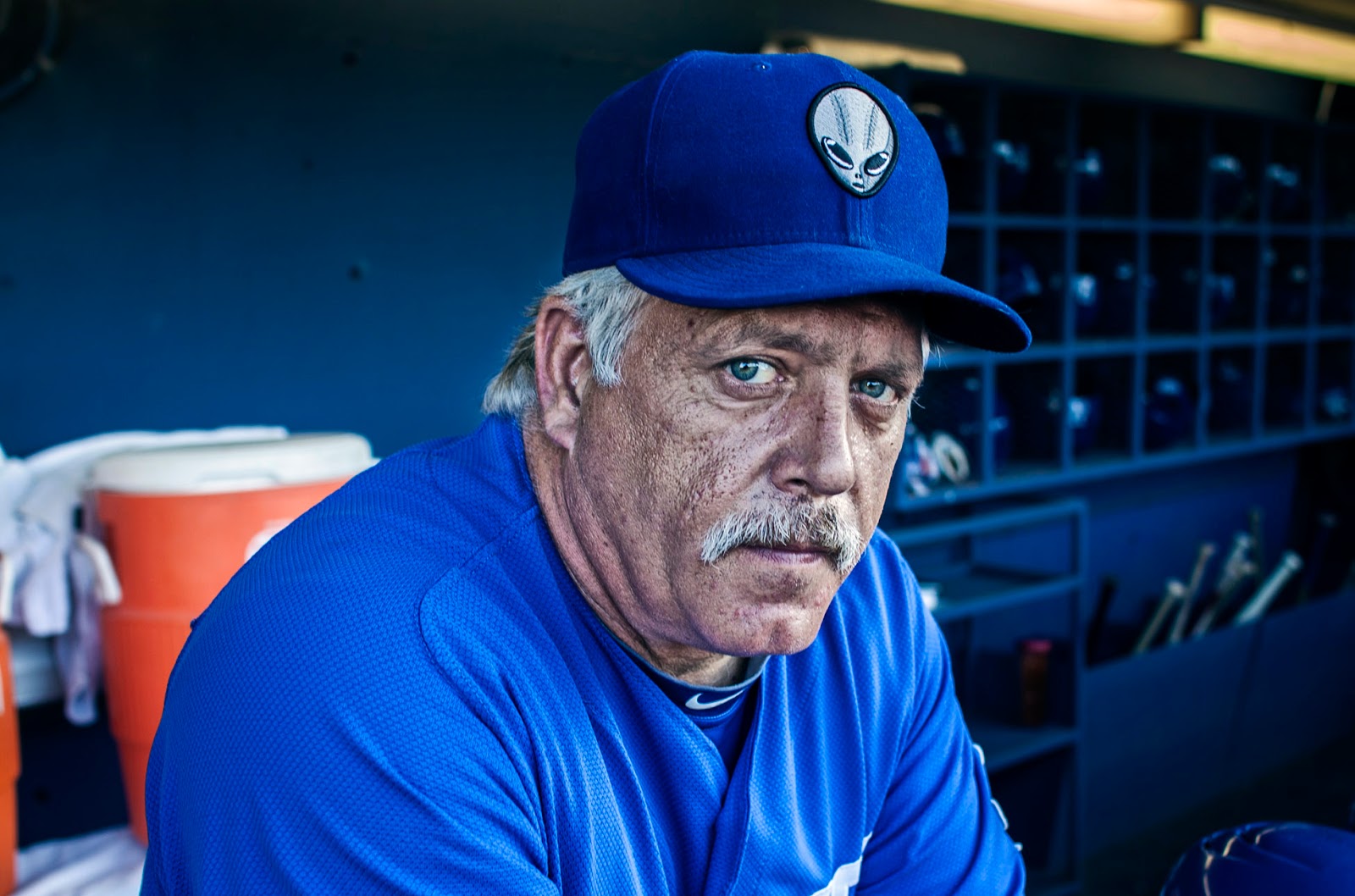
The face of a disrespected man.  (Kin Lui)

Wally Backman was part of the Mets organization for the better part of four decades.  From a scrappy infielder in the 1980s who was one of the spark plugs for a championship team to a fiery manager who led teams to titles wherever he managed, no one could ever say that Backman wasn't a winner.  But for someone whose name was synonymous with winning, why did Backman lose so much?

Before Davey Johnson confided in him, he couldn't get anyone to believe in his ability to play the game.  When the Mets promoted Gregg Jefferies, who was basically a brat with a bat, Backman couldn't stay on the field for the only organization he ever knew.  Because the Arizona Diamondbacks were unaware of how background checks worked, Backman and his family suffered unnecessary embarrassment.  And finally, no amount of division titles was enough to give Backman a job coaching with the Mets on a full-time basis.

For someone who has been a champion many times over, Backman's lifelong career in baseball has been more bitter than sweet.  A player as beloved as he was with the Mets and a person who has given so much of himself to the game deserves better than the hand he has repeatedly been dealt by baseball.


Note: The Thrill of Victory, The Agony of the Mets is a thirteen-part weekly series spotlighting those Mets players and personnel who experienced the best of times and the worst of times with the team.  For previous installments, please click on the names below:

January 2, 2017: Tom Seaver
January 9, 2017: Mike Piazza


Monday, January 18, 2016

The Most With The Least: Tim Teufel (1987)

Sometimes a baseball player gets benched because he's not performing well.  This occasionally leads to the benched player asking how he's supposed to prove himself on the field if he's not allowed to take the field.  However, for some players, spending time on the bench helps them become more productive when they are given the opportunity to start.  Take, for example, the case of a former Mets player and current Mets coach who was an everyday player before coming to New York and then found himself as part of a platoon just as he was entering the prime years of his playing career.

For two seasons in Minnesota, he was the team's starting second baseman.  In his first full season with the Twins, he showed uncharacteristic power potential for a middle infielder, smacking 30 doubles and 14 homers in 652 plate appearances.  His efforts did not go unnoticed, as he placed fourth in that year's American League Rookie of the Year vote.

The following season saw a slight dropoff in his extra-base hit numbers (24 doubles, 10 homers), but nothing too serious to suggest that he was expendable.  However, the Twins struggled tremendously with their pitchers, finishing near the bottom of the American League in that department.  They needed to upgrade the team's pitching if they wanted to compete in their division and so they traded their young second baseman to the New York Mets for two minor league pitching prospects and a former first round draft pick.  The Mets now had a right-handed hitting platoon partner for Wally Backman at second base to take the place of Kelvin Chapman, who batted .174 in the role the year before.  Before long, it was clear that this former Twin wasn't going to be Chapman's twin in the hitting department.

Tim Teufel had many opposing pitchers on their knees in 1987.  (Barry Colla Photography)

Timothy Shawn Teufel had over 1,000 at-bats as the Twins starting second baseman in 1984 and 1985.  But as a second baseman for the Mets playing mostly against left-handed pitchers, he amassed just 279 at-bats in 1986, starting in 70 of the team's 162 games.  Despite the decreased workload, Teufel still managed 24 extra-base hits and 31 RBI for the Mets in 1986, which represented a tremendous upgrade from Kelvin Chapman's 1985 numbers against southpaws (.172 batting average, two extra-base hits, seven RBI in 128 at-bats).

In 1984 and 1985, Wally Backman was forced to hit against left-handed pitching more often than manager Davey Johnson would have liked because of Chapman's inability to produce much of anything against them.  Backman ended up averaging close to 500 at-bats in each season and batted .280 and .273 in the two years before Teufel's acquisition.  However, the switch-hitting Backman was even more futile than Chapman was against left-handed pitching, batting an anemic .122 (16-for-131) versus southpaws in 1985.  The trade for Teufel immediately allowed Backman to play exclusively against right-handed pitching and resulted in Backman's most productive season at the plate in 1986 - a year in which he batted .320 and struck out just 32 times in 440 plate appearances, an average of one strikeout every 13.8 plate appearances.  (Batting more often against left-handed pitchers in 1984 and 1985, Backman fanned 135 times in 1,073 plate appearances, averaging one whiff every 7.9 plate appearances in those seasons.)

While the two pitching prospects (Bill Latham, Joe Klink) and former first round draft pick (future Oakland A's general manager Billy Beane) struggled in Minnesota, Teufel found a home in New York.  The Connecticut native thrived in his new role as the team's part-time second baseman, and his arrival also brought out the best in his platoon partner.  Teufel's first season in New York ended with a World Series victory, one in which he was a healthy contributor at the plate, posting an impressive .444/.500/.889 slash line in the three games he started against Boston lefty Bruce Hurst.  Hurst allowed just two extra-base hits in the series, with both of them (a double and a homer) coming off the bat of Tim Teufel.

Teufel's fielding wasn't always the best, as evidenced by his costly error in Game One of the Fall Classic, but his hitting usually overshadowed his shortcomings on defense and allowed the Mets to be deeper on the bench, as seen in a game during the Mets' dominant summer run in 1986, when Teufel's pinch-hit grand slam off Philadelphia's Tom Hume gave the Mets a thrilling extra-inning victory.

The Mets followed up their historic 1986 campaign with a disappointing 1987 season.  In 1986, the quartet of Dwight Gooden, Ron Darling, Sid Fernandez and Bob Ojeda combined to start 128 games, with each starter making at least 30 starts.  A year later, the post-championship hangover affected the entire staff, with the four hurlers making just 91 starts between them and only Darling taking the ball more than 27 times.  Injuries and substance abuse curtailed the seasons of the once-dominant starting rotation, with each starter, including Darling, spending time on the disabled list in 1987.

With pitchers such as John Mitchell, Terry Leach, Don Schulze, John Candelaria and Tom Edens making unexpected starts for the Mets, it behooved the offense to carry the team even more in 1987.  Darryl Strawberry and Howard Johnson contributed greatly, becoming the first pair of teammates to produce a season with 30+ homers and 30+ stolen bases.  The newly acquired Kevin McReynolds also had a fine season, missing a 30 HR, 100 RBI campaign by just one blast and five ribbies.  But an unheralded hitting star of the 1987 season was not one of the big boppers, as Tim Teufel had one of the most productive campaigns ever produced by a part-time player in team history, shuffling his way into the hearts of Mets fans with his phenomenal performance.


YouTube video courtesy of CourtsideTweets


Once again, Teufel started in less than half of the team's games, as his name was in Davey Johnson's starting lineup just 71 times in 1987, but despite not reaching 300 at-bats for the second straight year (he had 299), Teufel managed to have the type of season he produced when he was an everyday player for the Twins.

Nine players had more at-bats than Teufel did for the Mets in 1987, including fellow second baseman Wally Backman, but Teufel still managed to finish fourth on the team in doubles (29), sixth in homers (14), sixth in RBI (61) and fifth in WAR (3.5).  He also led the team in batting average (.308), on-base percentage (.398 - tied for the team lead with Strawberry) and was runner-up to Strawberry in slugging percentage (.545), OPS (.943) and OPS+ (153).  In doing so, Teufel made team history by becoming just the third player with at least 350 plate appearances (he had 351) to produce an OPS+ higher than 150, joining Cleon Jones - who produced a 151 OPS+ in 1969 - and Strawberry.  Teufel also became the third Mets player with that many plate appearances to produce an OPS higher than .900, also joining Jones and Strawberry.

At no point of the season was Teufel hotter than he was during a two-month stretch from June to August, when the Mets went from being a fourth-place team with a .500 record to a second-place team, knocking on the door of the first-place Cardinals.  From June 9 to August 6, Teufel played in 25 games (22 starts), missing two weeks in late June with a strained right hamstring.  Teufel helped the Mets win 16 of those 25 games, reaching base 43 times and batting .348 with a lofty 1.118 OPS.  More than half of Teufel's 31 hits during his hot streak went for extra bases (10 doubles, 7 HR) and he drove in 22 runs in 89 at-bats, averaging nearly one RBI every four at-bats.

Perhaps the most incredible stat about Teufel's 1987 campaign is the following.  A total of 20 players with at least 350 plate appearances in a single season have batted higher than .308 for the Mets.  Likewise, ten Mets players have produced an OBP higher than .398 and ten players have surpassed a .545 slugging percentage.  But prior to 1987, no Mets player had ever produced a .308/.398/.545 slash line and only John Olerud (1998), Mike Piazza (1998, 2000) and David Wright (2007) have been able to match or surpass Teufel in all three categories since his spectacular 1987 campaign.

Betcha never thought you'd see Tim Teufel's name mentioned in the same sentence as these three Mets all-time greats.

Tim Teufel had 29 doubles and 61 RBI in a limited number of plate appearances in 1987.  Out of all the Mets players with fewer than 400 plate appearances in a single season through the 2015 campaign, no one has produced as many doubles as Teufel did in '87.  (Desi Relaford had 27 doubles in 340 plate appearances in 2001.)  And the only player in the franchise's first 50-plus years to surpass the 61 RBI produced by Teufel in under 400 plate appearances was Steve Henderson, who had 65 RBI in 398 plate appearances in 1977.  (Teufel still had a higher RBI/PA ratio, driving in a run every 5.75 plate appearances while Henderson had an RBI every 6.12 PA.)

Unfortunately, Teufel's amazing 1987 campaign has been mostly overlooked because that season is mostly remembered for the plethora of unexpected visits to the disabled list by the team's pitchers.  Teufel's campaign also occurred in a non-playoff year, as it took place in between the team's 1986 championship season and their 1988 division title.

Although Teufel remained on the team until 1991, his plate appearances dwindled following his breakout 1987 season.  He came up to the plate 309 times in 1988, had 254 plate appearances in 1989 and came up to bat just 192 times in 1990.  His 1990 campaign was reminiscent of his spectacular 1987 season as Teufel had 21 extra-base hits (11 doubles, 10 homers) despite not reaching 200 plate appearances.  But Teufel had just four hits in 34 at-bats through late May in 1991, and as a result, he was traded to the San Diego Padres for shortstop Garry Templeton, playing the final three seasons of his career as a part-time player with the Padres.

Teufel returned to the Mets after a few years away from the game and has served as an instructor, coach and minor league manager within the organization.  Since 2012, he has worked at the major league level, serving as the Mets' third base coach.  Just as his former manager, Buddy Harrelson, was the only man to be in uniform for the 1969 and 1986 World Series championship teams (Harrelson was the team's third base coach in 1986), Teufel is the only person to be in uniform for the 1986 and 2015 Mets teams that reached the Fall Classic.

(Getty Images)


"I'm so happy for these guys to get this feeling as a player.  Not everybody gets this chance.  I had it as a player, but as a coach I'm happy for these guys and I'm happy for the coaching staff."
 
--Tim Teufel, on reaching the 2015 World Series.


Tim Teufel's six-year tenure as a part-time second baseman with the Mets was solid, but unspectacular.  He never played 100 games in any of his half-dozen seasons in New York and only managed 35 homers and 164 RBI in nearly 1,500 plate appearances with the team.  But his acquisition solidified the second base position, providing the team with a high-average, base-stealing threat against right-handed pitchers in Wally Backman and a power-hitting presence versus left-handers in Teufel.  Whereas southpaws relished facing the Mets' second basemen whenever Backman or Kelvin Chapman came up to the plate in 1984 and 1985, they had to pitch more carefully against Teufel, who collected 83 extra-base hits in 810 at-bats against left-handers as a Met from 1986 to 1991.

Teufel reached the postseason twice in 1986 and 1988, but what he did in the year between his playoff appearances was the highlight of his career.  He turned a part-time job into a full-time nightmare for opposing pitchers.  And in doing so, he was responsible for one of the quietest career years by a Mets player and one of the most impressive full-season performances by a platoon player in franchise history.  Teufel made his way to the majors as an everyday player with the Minnesota Twins.  He stayed in the majors by accepting a role as a part-time player for the New York Mets who made the most of his sporadic playing opportunities.

And more than three decades after the trade for Teufel was consummated, he remains a part of the Mets on-field family.  Not bad for a player who spent a good chunk of his playing career on the bench.


Note:  The Most With The Least is a thirteen-part weekly series spotlighting those Mets players who performed at a high level without receiving the accolades or playing time their more established teammates got, due to injuries, executive decisions or other factors.  For previous installments, please click on the players' names below:

January 4, 2016: Benny Agbayani
January 11, 2016: Donn Clendenon

Saturday, August 16, 2014

August 16, 1987: Mets Score Club-Record 23 Runs

The late Harry Caray probably wishes he hadn't been taken out to the ballgame on August 16, 1987.

Note:  I originally published this piece five years ago on Mets Merized Online, but this Mets game from 1987 has always fascinated me, and I have since uncovered some more oddities about this game.  Therefore, I felt compelled to make some quick edits and share this piece once again with you.  Enjoy!


The New York Mets are currently playing a three-game set against the Chicago Cubs at Citi Field.  Twenty-seven years ago today, the Mets were also playing the Cubs, although the venue on that lazy Sunday afternoon was Wrigley Field in Chicago.  One year after winning the 1986 World Series, the Mets were battling the St. Louis Cardinals for the division title and needed to win the finale of their four-game series against the Cubs after dropping the first three games.  They were in the throes of a poor stretch that saw them lose six out of eight games after they had cut the Cardinals’ lead in the division from 10½ to 3½ games.  In that eight-game stretch, they had scored only 20 runs.  They needed to bust out of their slump quickly if they were going to continue to stay in the race with St. Louis.  Fortunately, the wind was blowing out at Wrigley Field on August 16 and the Mets’ bats were ready to take advantage.

The starting pitchers were Ron Darling for the Mets and a kid for the Cubs who had just been recalled from the minors after being sent down two weeks earlier due to a poor 6-10 start for the big club.  You may have heard of him.  He was a scrawny 21-year-old kid named Greg Maddux.

The Mets jumped out of the box quickly, scoring three runs in the first inning to take an early lead.  The lead had extended to 7-0 by the time the Cubs came up to bat in the bottom of the fourth inning.  However, Ron Darling struggled in the fourth, giving up a grand slam to catcher Jody Davis.  That was followed up by a home run from the next batter, a rookie who was pinch-hitting for Cubs reliever (and former Met) Ed Lynch.  That rookie was Rafael Palmeiro, who hit the tenth of his 569 career home runs to cut the Mets lead to 7-5.

Fortunately for Darling, manager Davey Johnson did not remove him from the game despite the poor inning.  He was allowed to put out the fire he started and pitch the minimum five innings required to qualify for the victory.  Because of that, Darling was able to stick around to reap the benefits of the additional fireworks displayed by his teammates as they continued to ride the jet stream out of Wrigley Field.

The Mets immediately responded to the Cubs’ five-run fourth by scoring three runs in the fifth inning and seven additional runs in the sixth.  They now had a commanding 17-5 lead, but the Cubbie carnage continued.  Not satisfied with a lead of a dozen runs, they scored three additional runs in both the seventh and eighth innings.  Jesse Orosco relieved Darling in the seventh and gave up four runs in his inning of work, but by then, the Mets had already put the game away.  A run by Chicago in the ninth inning off Jeff Innis produced the final tally in the Mets’ 23-10 shellacking of the Cubs.

The offense was powered by Lenny Dykstra and Darryl Strawberry.  Eights were wild for the two Met outfielders, as they combined for eight hits, eight runs scored and eight runs batted in.  Strawberry in particular smoked the Cubs’ pitchers, as all four of his hits went for extra bases (two doubles, a triple and a home run).

Dykstra and Strawberry - two smiling California kids who put lots of frowns on Cubs fans' faces on August 16, 1987.

In doing so, Strawberry became just the third Met to produce four extra-base hits in one game, joining Joe Christopher, who accomplished the feat in 1964, and Tim Teufel, who turned the trick just six weeks prior to Strawberry.  Strawberry added a stolen base in the second inning, making him the first and only Met to collect four extra-base hits and a stolen base in the same game.

Strawberry also became just the third Met to score five runs in a game, after Lenny Randle in 1978 and Lee Mazzilli in 1979.  In addition, the Straw Man drove in five runs, making him the first Mets player to have a five-run, five-RBI game in franchise history.  The only other Met to accomplish that rare feat since August 16, 1987 is Edgardo Alfonzo, who produced six runs and five RBI against the Houston Astros on August 30, 1999.

Dykstra also made Mets history in the game, becoming the first Met to collect seven at-bats in a nine-inning game.  The only Met to match Dykstra since then is Luis Hernandez, who went 3-for-7 in an 18-5 thrashing of the Cubs in 2010, which, just like Dykstra's record-setting effort 23 years earlier, took place on a lazy Sunday afternoon at Wrigley Field.

Strawberry and Dykstra victimized several Cubs pitchers that day, including starting pitcher Greg Maddux.  Maddux collected almost 10% of his 355 career wins against the Mets.  His 35 victories (against 19 losses) are the most by any pitcher against New York.  However, one of his worst pitching performances against the Mets (or any other club) took place on that Sunday afternoon in the North Side of Chicago.

Throughout his major league career, which resulted in a much-deserved call to the Baseball Hall of Fame this year, Maddux was always known as a control pitcher, as he walked fewer than 1,000 batters in over 5,000 innings.  But on August 16, 1987 against the Mets, Maddux pitched 3 innings and was charged with seven earned runs allowed.  He gave up six hits and a very un-Maddux-like five bases on balls.  Let's dissect Maddux's effort to see just how much of an anomaly this game was for him.

Greg Maddux would have preferred starting at Shea Stadium on August 16, 1987.

Greg Maddux made 740 starts in his big league career.  He issued five bases on balls or more in just 20 of those starts.  But in 14 of those 20 starts, he lasted at least six innings, giving him more time to issue those free passes.  Maddux wouldn't have another game in which he lasted fewer than four innings and allowed five or more walks until 2004, a year in which he produced his first ERA above 4.00 since - you guessed it - 1987.

Maddux also allowed seven earned runs in the game, which was the first time he had ever allowed that many runs in one of his starts.  Maddux would go on to allow seven or more earned runs in a start a total of 27 times in his career, including three more times against the Mets, but he never walked more than three batters in any of his other seven-run efforts.  The game on August 16, 1987 was the only time in his 23-year career that Maddux allowed seven or more runs and walked more than three batters.  And that was from a future Hall of Famer who beat the Mets more than any other pitcher in the 53-year history of the club.

Going into their series finale against the Cubs on August 16, 1987, the Mets were in a hitting slump and got out of it in a major way at Wrigley Field.  They scored more runs in that one game than they did in their previous eight contests.  By doing so, the Mets established a new franchise record with their 23-run outburst in Chicago and were able to use that game as a stepping stone that carried them all the way until the last week of the season, when they were eliminated from playoff contention by the Cardinals.  And it all happened 27 years ago today.
 

Saturday, April 5, 2014

Hark(ness), The Herald Davis Swings

If you were at Citi Field today as I was, you witnessed a thrilling conclusion to the Mets-Reds affair.  With the Mets trailing, 3-2, going into the bottom of the ninth, Juan Lagares, Anthony Recker and Ruben Tejada all reached base to start the inning.

Up stepped Ike Davis, needing a long fly ball to tie the game and a base hit to perhaps win it.  What he did was even more exciting.

Slam!  Let the boys be boys!  (Photo by Howard Simmons/NY Daily News)

Davis' long blast off the Subway sign in right-center turned a potential heartbreaking one-run loss into a scream-until-you-lose-your-voice three-run victory.  The walk-off grand slam gave the Mets a 6-3 win over the Reds and put them in position to sweep Cincinnati on Sunday.

But Ike Davis' game-ending homer was more than just a fantastic moment in this young season.  It also was one of the rarest moments in the 53-year history of the team.  Please allow me to elaborate.

Davis' walk-off grand slam was only the seventh such home run hit by a Mets player in franchise history.  Tim Harkness was the first Met to smoke a game-ending salami, accomplishing the feat against the Chicago Cubs at the Polo Grounds on June 26, 1963.  Just forty-four days later, Jim Hickman also victimized the Cubs for a walk-off grand slam at the Polo Grounds.  The killer H's were the only two players in team history to end games with four-run homers until 1980, when Mike Jorgensen took the Dodgers' Rick Sutcliffe deep at Shea Stadium.  Six years later, Tim Teufel hit a grand slam against Tom Hume of the Phillies at Shea, a feat that wasn't seen again at the Mets' former home until 1991, when Kevin McReynolds blasted a bases-clearing shot over the wall versus the Montreal Expos.  It took another 22 years before Jordany Valdespin became the sixth Met to end a game with a grand slam, taking the Dodgers' Josh Wall over the wall at Citi Field on April 24, 2013.  Less than 365 days after Jordany took a spin around the bases, Ike Davis became the seventh slammer.

Obviously, becoming the seventh player to hit a walk-off grand slam in Mets history puts Davis in select company, but four of the other six players who ended games by putting a four-spot up on the scoreboard did so when their respective games were tied.

Hickman, Jorgensen, Teufel and Valdespin each turned tie games into four-run victories with their powerful swings.  That means Harkness, McReynolds and now Ike Davis are the only players who can claim snatching a victory from the jaws of defeat by walking off with a grand slam home run.  And each player did so at a different home park, with Harkness turning a 6-4 deficit into an 8-6 win at the Polo Grounds, McReynolds blasting away at a potential 5-4 loss by slamming the Mets to an 8-5 victory at Shea Stadium and Ike Davis erasing a 3-2 Reds lead with one swing of the bat, giving the Mets a 6-3 win at Citi Field.

Harkness.  McReynolds.  Davis.  Three very different players playing in three very different eras.  But all produced one very similar result with three well-timed swings of the bat.  And it was a result that made Mets fans across the generations leave the ballpark feeling slam-tastic.


Sunday, August 11, 2013

Wilmer Flores: The Anti-Gregg Jefferies

Be very thankful Wilmer Flores is nothing like Gregg Jefferies.

Say the name Gregg Jefferies to any long-time Mets fan and you'll get various reactions.  Some people loved his spunk and appreciated his contributions to the team as it pushed toward the 1988 NL East title.  Other cringe upon hearing his name because of the negative effects he had on the clubhouse and the team's chemistry.

Gregg Jefferies had a remarkable final five weeks of the 1988 season.  When he played his first game after his promotion on August 28, the Mets held a 6½-game lead over the second place Pittsburgh Pirates.  But Jefferies collected 24 hits in his first 13 games after the call-up, including seven doubles, two triples and five homers.  During that 13-game stretch, the Mets increased their division lead to 11 games.  With Jefferies leading the offensive charge, the Mets ended up outpacing the Pirates by 15 games to win their second division title in three years.

Jefferies fared well in his first playoff experience, reaching base 14 times (nine hits, four walks, one hit-by-pitch).  But the Mets failed to advance to the World Series, losing the NLCS to the underdog Dodgers in seven games.  Some say the reason for the team's failures in the postseason was due to Jefferies breaking up the lineup, reducing several regulars to part-time players and sending some part-time players to the bench.

You see, Jefferies was a man without a position.  His best position on the field was hitter.  When Jefferies started at third base, which he did 19 times during the regular season and in all seven playoff games, Howard Johnson moved into a platoon with shortstop Kevin Elster.  A southpaw on the mound would have Jefferies and Elster manning the left side of the infield, while a right-handed pitcher would allow for switch-hitters Jefferies and Johnson (who was a far better hitter from the left side of the plate) to play together.  Jefferies also played ten games at second base (eight starts).  That put him in a platoon with the right-handed hitting Tim Teufel, sending Wally Backman to the bench.  The veteran Backman would only start when Jefferies was needed at third base and only against right-handed pitchers.  Needless to say, that irked a lot of the established players on the team.  It also didn't help that Jefferies was a spoiled brat.

After a stellar 1988 campaign, a year in which he finished sixth in the Rookie of the Year vote despite retaining his rookie status for 1989, Jefferies suffered at the plate in his "second" rookie season.  The 21-year-old batted .258 in 1989 with 12 homers, 56 RBI and 21 stolen bases.  Those numbers weren't horrible for such a young player, but they were far short of what the Mets were expecting from him.  After all, his .314 on-base percentage was lower than his batting average (.321) the year before.

Jefferies actually led the league in doubles in 1990, becoming only the second Met to reach 40 doubles in a season (Howard Johnson became the first in 1989).  Jefferies also raised his batting average to .283, hit 15 homers and scored a team-high 96 runs, which at the time was the sixth-highest total in franchise history.  But he ran less (only 11 steals) and pouted more.  He was also becoming more of a liability in the field.

Gregg Jefferies.  Alone.  Which is where most of the team wanted to see him.

As the team's second baseman in 1989 and 1990, Jefferies finished with the third-most errors at the position in '89 and the fifth-most errors in '90.  In each season, he committed a dozen errors.  He was also terrible at turning the double play, combining to participate in 90 double plays during the two seasons.  How low was that total compared to his fellow second basemen around the league?  Well, in 1989 alone, second baseman (and former Met) Jose Oquendo turned 109 double plays.  Also in 1989, second baseman (and future Met) Roberto Alomar participated in 91 double plays.  That's more double plays than Jefferies helped turn in 1989 and 1990 combined.

By 1991, the Mets got fed up waiting for Jefferies to blossom into what they thought he'd become following the 1988 season.  Jefferies failed to reach double digits in home runs and saw his batting average drop to .272 in '91.  After a 40-double campaign in 1990, Jefferies produced only 30 extra-base hits (19 doubles, two triples, nine homers) in his final season as a Met.  That offseason, Jefferies was shipped off to Kansas City as part of a five-player deal that brought two-time Cy Young Award winner Bret Saberhagen to New York.

Jefferies did blossom after Kansas City traded him to St. Louis following the 1992 campaign, achieving career highs in batting average (.342), home runs (16), RBI (83) and stolen bases (46) with the Cardinals in 1993.  In fact, from 1993 to 1998, Jefferies batted .304, collected 233 extra-base hits and stole 111 bases despite missing nearly 200 games due to an assortment of injuries.

Gregg Jefferies was a man without a position when he was promoted to the Mets for good in 1988 (he played in six games for the Mets in 1987), but hit his way into the lineup.  Unfortunately, his teammates didn't like losing playing time to a player who whined and complained more often than he reached base during his time with the Mets.

That brings us (finally!) to Wilmer Flores.  Over the past two seasons, Flores has torn up minor league pitching to the tune of a .310 batting average, 66 doubles, six triples, 33 homers and 161 RBI in only 917 at-bats.  He's done this while bouncing around from position to position in the infield.  He played third base at St. Lucie.  Upon being promoted to Binghamton, he started to play more at second base.  This year, he played 11 games at first base at Las Vegas.

Now Wilmer Flores is with the big club, where he has moved back to third base to fill in for the injured David Wright.  In his first six games with the Mets, Flores hasn't produced all the extra-base hits Jefferies did a quarter century ago.  However, he is driving in a boatload of runs.  After an 0-for-4 debut on August 6, Flores has driven in runs in each of his last five games.  Flores hit his first homer on Sunday and has nine RBI in less than a week of service time, becoming only the third Met to drive in that many runs in his first six games with the team.  (Mike Jacobs and John Buck are the others.)  Flores has also had two games with three RBI, something that Jefferies did only once in 1988.

Both Flores and Jefferies were infielders in their early 20s when they became everyday players with the Mets.  Additionally, neither player had a true position when he was called up to the big leagues.  But there's one big difference between the two players.  Humility.

Unlike Gregg Jefferies, Wilmer Flores is not going to embarrass himself or his teammates on the field.  He still admits that he's nervous every time he steps onto the field and is not trying to take anyone's job, unlike Jefferies, who felt it was his right to be out there.  Flores is still learning.  Jefferies thought he knew it all.  It's because of that that Flores has a much better chance to be a success as a Met than Jefferies ever was.

Gregg Jefferies came up to the Mets in the middle of a pennant race.  After flourishing for a few weeks, Jefferies started showing that he was not a hitting machine like his idol, Ty Cobb.  However, he did rub people the wrong way like Cobb did.  Wilmer Flores is playing for a team that is not in playoff contention.  He's enjoying the moment, rather than trying to prove that he is the second coming of someone he's not.

Soon after Jefferies became a regular with the Mets, the team started falling apart.  The 2013 Mets are a team on the rise.  And Wilmer Flores is trying to become part of that rising team.  The word "team" was never a part of Gregg Jefferies' vocabulary while he was on the Mets.  We should all be thankful that Wilmer Flores is the anti-Gregg Jefferies when it comes to being a part of the team.  Success as a group is far more satisfying.