Showing posts with label Doctor K. Show all posts

Sunday, December 30, 2018

Studious Metsimus Presents The Happy/Crappy Recap For 2018

Another year is about to reach its conclusion, Mets fans.  Ray Ramirez is still gone, the Wilpons are still reluctant to break open their piggy banks and the Mets are still a fourth place team - something they've been for six of Citi Field's ten seasons.  In other words, the calendar may be changing, but the Mets haven't really followed suit.  Or have they?

Since Noah Syndergaard ended the 2018 campaign with a complete game shutout, some dead weight has been shown the door (Jay Bruce, Anthony Swarzak), some new blood has been added (Robinson Canó, Edwin Díaz, Wilson Ramos) and a "Familia" face has returned to his old haunts (the Danza Kuduro guy).  We've shed one last tear of joy for Wilmer Flores, and exhaled because new Rockies infielder Daniel Murphy will only be making one annual trip to Flushing instead of three.

There are still quite a few free agents available for the Mets to pass up on.  Just as there are many American League teams who should show some good ol' Junior Circuit hospitality to Bryce Harper and Manny Machado in order to keep them away from the Phillies.

But that's something for 2019.  We're here to talk about 2018 for the final time.  Optimistic Mets fans saw plenty of happy moments in the soon-to-be-over year, while the blue and orange pessimists (and there are plenty of you out there) thought the 2018 campaign was mostly manure.  Let's see what was so happy and crappy about the dearly departed season, shall we?


Two words.  Jacob deGrom.

You can't have a conversation about what made Mets fans happy in 2018 without mentioning deGrom's historic season.  You know the numbers.  1.70 ERA.  269 strikeouts.  And just ten wins in 32 starts.  Some people have compared Jake's 2018 campaign to Bob Gibson's in 1968 and Doc Gooden's in 1985.  DeGrom's season would have been better if it wasn't for those meddling wins.

Both Gibson and Gooden struck out 268 batters in their historic years.  DeGrom fanned one more.

Gibby and Doc pitched to a 1.12 and 1.53 ERA, respectively, in their Cy Young seasons.  The league average ERA in 1968 was 2.99 (or 1.87 higher than Gibson's record-setting mark), while the average N.L. pitcher in 1985 posted a 3.59 ERA (or 2.06 higher than Doctor K's figure).  Jacob deGrom would like Gibson and Gooden to hold his beer, as his 1.70 ERA was 2.32 lower than the league average 4.02 ERA.

Gibson allowed four runs or more in four of his starts in 1968, while Doc saw four men cross the plate in two of his outings in '85.  Only once did deGrom give up more than three runs in a game in 2018, as he ended the year with 29 consecutive starts allowing three runs or fewer, which is a major league record that Gibson and Gooden failed to approach in their stellar campaigns.

Sure, the Mets had breakout seasons from Brandon Nimmo (53 XBH, .404 OBP, .886 OPS) and Zack Wheeler (12-7, 3.31 ERA, 1.12 WHIP, 179 Ks) and Michael Conforto returned from his gruesome shoulder injury to post career highs in home runs (28) and RBI (82), but come on.  None of them brought Mets fans out to the ballpark as much as deGrom did.

Every deGrom start was a must-see event, and unfortunately, once the Mets were eliminated from postseason contention (which, contrary to popular belief, was not during the National Anthem on Opening Day), Jacob's starts were the only things Mets fans were looking forward to.

Which brings us to what was crappy about the 2018 campaign.


Two words.  David Wright.

Wright himself wasn't crappy.  In fact, he's arguably the best homegrown position player in franchise history.  But after playing in just 77 out of the Mets' 648 games from 2015 to 2018, Wright finally called it a career after making one final start for the only team he's ever known.

Wright looked to be on his way to a Hall of Fame career before Ray Ramirez, I mean, spinal stenosis got in the way.  One day, he will have a plaque on display in the Mets Hall of Fame and Museum.  Maybe the Mets will even retire No. 5.  But knowing the Mets, they'll probably just take the number out of circulation until Kelvin Torve Jr. is ready to be called up.

"Hey, kid!  Have we got the perfect uniform number for you!"

Anyway, the really crappy guy here is Peter O'Brien, the Marlins' first baseman who caught Wright's foul pop-up near the first base stands rather than slipping on an imaginary banana peel in order to give Wright a chance to get one final hit in a Mets uniform.  What is it about the Marlins playing the Mets in New York during the season's final three games that cause such crappy moments to happen?

On that note, I hope someone got O'Brien a copy of "How to Catch Pop-Ups at Citi Field" by respected author Luis Castillo as a stocking stuffer.


That's all she wrote for 2018, which means the 2019 season is just around the corner.  But before you put up one of those new calendars that someone got you for the holidays because they had no idea what else to get you and they've never heard of gift cards, let's pause to give credit to those hardworking Mets bloggers who still find the time to write about their favorite team even though most people have switched over to doing podcasts.

Respected and long-running blogs such as A Gal For All Seasons, Faith and Fear in Flushing, Mets Merized Online, MetsMinors.Net, Amazin' Avenue, Metstradamus, Remembering Shea, The Daily Stache, Mets360, Rising Apple, Mets Plus, Good Fundies, MetSilverman, Converted Mets Fan and Mets Daddy, just to name a few (or 15, to be exact) always have interesting stories to share, day or night.  Check them out some time.  I'd say "tell 'em Ed sent you" but I'm not sure all of them know who I am.

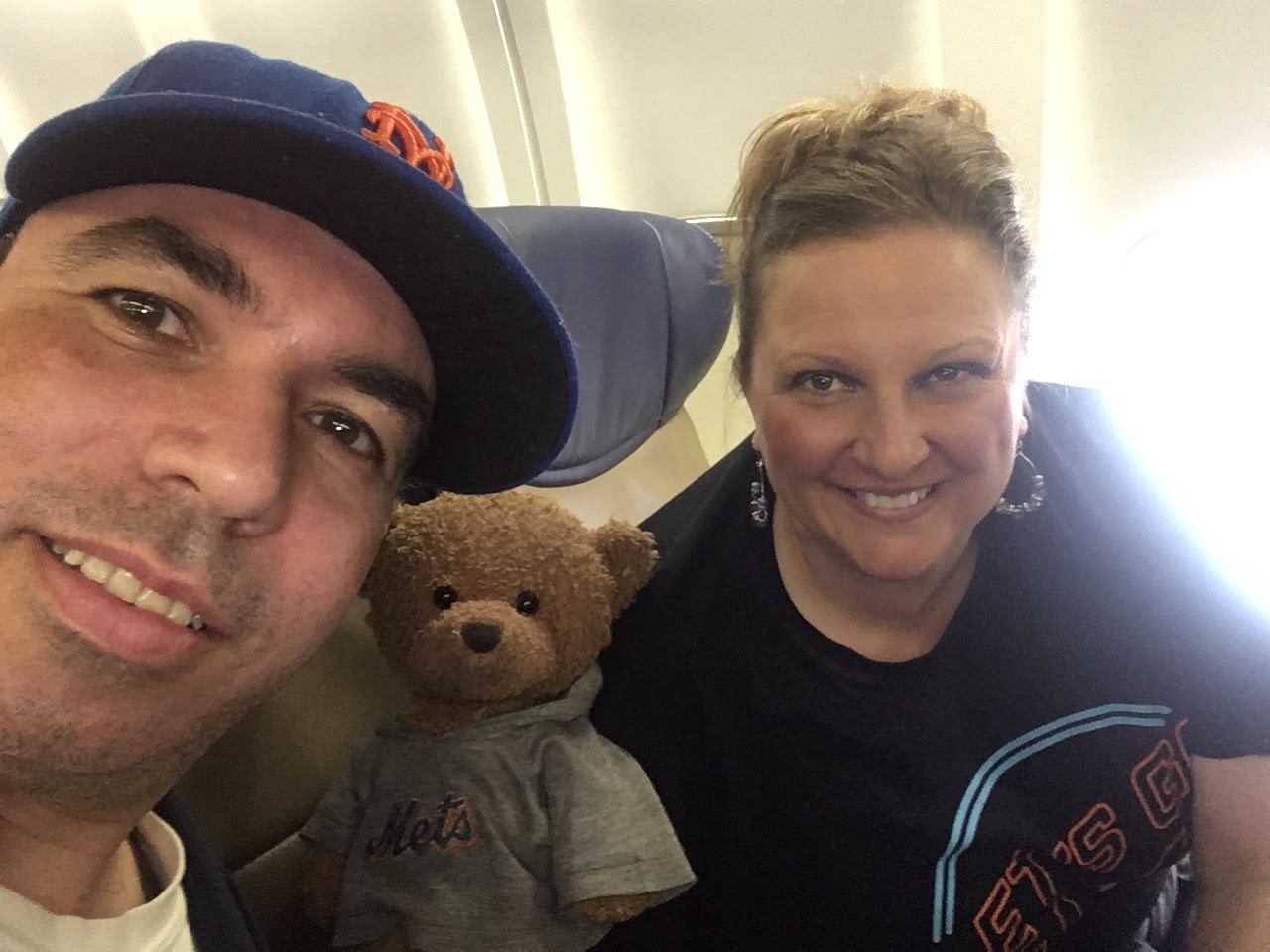
From all of us here at Studious Metsimus Headquarters, which is pretty much just a desk, a computer, a keyboard that needs a new battery and a guard cat (we couldn't afford a guard dog), we'd like to thank you for your continued support of this site and wish you all the best in 2019.  And when I say "we", I'm talking about Ed Leyro (the guy at the desk), Joey Beartran (the roving reporter/culinary expert who would like his computer back so he can order dinner) and Taryn "The Coop" Cooper (who would invent new curse words if I asked her to get a battery for the keyboard instead of just getting it myself).

And remember, Mets fans.  Winning isn't everything.  It's just the thing Jacob deGrom can't do whenever he pitches eight innings of one-run ball.


LET'S GO METS!!


The Studious Metsimus crew will be at a ballpark near you in 2019.  (Ed Leyro/Studious Metsimus)

Monday, March 6, 2017

The Thrill of Victory, The Agony of the Mets: Dwight Gooden

There have been many highly touted prospects who never lived up to the lofty expectations after they were called up to the majors.  Former No. 1 overall pick David Clyde went from being a Texas high school superstar (18-0, 0.18 ERA, 328 Ks in 148 IP) to the Texas Rangers almost overnight in 1973.  He pitched his final game in the majors before his 25th birthday.  Similarly, Joe Charboneau's first season with the Cleveland Indians in 1980 saw him win the American League Rookie of the Year Award and be the subject of a novelty song ("Go Joe Charboneau").  He played just 70 more games in the big leagues after his inaugural campaign, setting the record for fewest career games by a former Rookie of the Year.

Charboneau played his final game in the majors in June 1982, the same month that the Mets drafted a 17-year-old high school pitching phenom from Tampa, Florida with the fifth overall pick.  Before he was out of his teens, the prospect would win his own Rookie of the Year Award.  Then at age 20, he was the unanimous winner of the Cy Young Award.  A year later, he helped the Mets win a World Series trophy.  Three years, three individual and team awards.  But what should have been the beginning of a Hall of Fame career ended up leading to his downfall as a major league pitcher.  A small taste of success on the field led to a much larger taste in illegal activities off it.  And before long, his performance on the field for the Mets became the least of his worries.

Oh, what might have been for the good doctor.  (Ronald C. Modra/Sports Imagery/Getty Images)

Dwight Eugene Gooden was the third pitcher selected in the 1982 June Amateur Draft after Jimmy Jones (Padres) and Bryan Oelkers (Twins).  But whereas Jones and Oelkers failed to have much of an impact on the teams that drafted them, Gooden made the Mets better as soon as he put on a major league uniform for the first time in 1984.

At Hillsborough High School in Tampa, Gooden struck out 130 batters in just 74 innings during his senior year.  As he adjusted to minor league baseball, Gooden struck out fewer batters.  Doc - as he was so named by a family friend when he was in Little League - made 11 starts in his first professional season and fanned 84 batters in 78⅔ innings.  Promoted to Single-A Lynchburg in 1983, Gooden became unhittable, striking out 300 batters in 191 innings.  When the Mets' Triple-A team qualified for the International League playoffs, Gooden made the jump from Lynchburg to Tidewater at the request of Tides' manager Davey Johnson.

"I kept asking for him that year," Johnson said.  "I knew his command.  The Mets had taken Walt Terrell and Tom Gorman away from me that year, they took Ron Darling, and I kept yelling, 'Give me Gooden.'  After he pitched a 1-0 shutout that won the championship for Lynchburg, they finally let me have him in the playoffs."

Facing hitters who were one step away from the majors didn't faze the 18-year-old Gooden, as he struck out 19 more batters and recorded a complete-game victory over the Denver Bears.  Tidewater ended up winning the Little World Series, earning Johnson a promotion to the Mets to manage the big league club.  Although Gooden was still in his teens, Johnson wanted him on the Opening Day roster in 1984, which made general manager Frank Cashen uneasy because of what had happened to another top prospect just three years earlier.

"Davey told us he'd protect the kid, but Frank Cashen was leery," Mets vice president of operations Lou Gorman said.  "Frank remembered how Tim Leary had hurt his arm and he didn't want to take a chance on an 18-year-old hurting his arm after a long season."

In 1981, Leary - another former first round pick - was promoted from Double-A to the big leagues, making his debut with the Mets on April 12 at cold Wrigley Field in Chicago.  His first appearance lasted two innings, as an elbow injury forced him out of the game.  By the time Gooden was pitching for Tidewater in September 1983, Leary had not yet returned to the majors and would only start nine more games for the Mets before he was traded to the Milwaukee Brewers in 1985.

With a feeling of trepidation, Cashen agreed to have Gooden on the Mets' Opening Day roster as a 19-year-old in 1984.  There were no weather concerns for Doc in his first start, as the game was played indoors at the Houston Astrodome.  Gooden was sharp in his debut, holding the Astros to one run and three hits in five innings to earn his first major league victory.  He was not as fortunate in his second appearance, which, in an interesting bit of irony, was also played at a chilly Wrigley Field.

One day after the three-year anniversary of Leary's ill-fated debut, Gooden was knocked out of the game in the fourth inning after allowing six runs and ten base runners.  Much to the relief of Cashen, Gooden felt fine physically after the game.  In fact, Doc took the lessons he learned from the defeat and used it to carve out a wildly successful career against the Cubs, winning 28 of his next 31 decisions versus Chicago.

Rick Sutcliffe beat Doc for the 1984 Cy Young, but Doc beat Chicago the rest of his career.  (Ronald C. Modra/Getty Images)

Through his first eight starts, Gooden was just 3-3 with a 4.15 ERA.  But in late May, after a 14-strikeout performance against the Los Angeles Dodgers at Shea Stadium, Gooden became the pitcher Johnson saw in the minors.  In his final 23 starts, Doc went 14-6 with a 2.22 ERA, holding opposing hitters to a .197 batting average and .539 OPS.  Gooden struck out 217 batters in those 23 starts en route to setting a new single-season strikeout record for rookies.  Included in his stellar second half were back-to-back 16-strikeout games against the Pittsburgh Pirates and Philadelphia Phillies in mid-September when the Mets were trying to stay in their first pennant race in nearly a decade.

Unfortunately, the Mets lost Gooden's second 16-K game, and with it, lost any hope of catching the first-place Cubs in the division.  Despite having to settle for a second-place finish, the Mets had ended a seven-year stretch of losing baseball at Shea, one that began when the last pitching virtuoso, Tom Seaver, was traded away from the team.  New York finished the 1984 campaign with a 90-72 record, just the second time in franchise history that the team reached the 90-win plateau.  It would not be the last time the Mets won that many games during Gooden's tenure in New York.

The 1985 campaign began with the National League's Rookie of the Year trying to avoid the dreaded sophomore slump.  It ended with Gooden completing what is arguably the greatest season by a Mets starting pitcher in franchise history.  With off-season acquisition Gary Carter behind the plate, Gooden flourished in his second year with the team, winning the Triple Crown of pitching, as he led the league in wins (24), ERA (1.53) and strikeouts (268).  Doc also paced all National League pitchers in innings pitched (276⅔) and complete games (16), often pitching like a seasoned veteran despite being only 20 years old.  After failing to be the unanimous winner in the Rookie of the Year vote the previous season (future teammate Juan Samuel got one first place vote), Gooden received every first place vote for the Cy Young Award in 1985, becoming the first Met since Tom Seaver in 1975 to take home the coveted pitching prize.

For the second straight year, the Mets were runners-up in the division, this time finishing second to the St. Louis Cardinals.  The Mets were determined to not let it happen three years in a row, with Johnson going so far as saying that the team wouldn't just win; they would dominate.  Gooden also looked to improve upon his 1985 campaign.  But how does one improve a product that's already nearly perfect?

One thing that got better in 1986 was Gooden's bank account, as he received a hefty raise before his third season from $450,000 to $1,320,000.  That money did not include what he was earning from all the endorsement deals that were coming his way.  A 21-year-old whose face was plastered everywhere - including a larger-than-life mural on 42nd Street - became instantly recognizable to everyone; even non-baseball fans knew who Gooden was.  That recognition and success in turn led to all kinds of temptations.  And as strong as Gooden was on the mound, he was weak off it, especially when the high of doing lines became greater than the rush of pitching between them.

In the mid-'80s, Doc Gooden was larger than life.  (Matt Weber Street Photography)

In 1986, Gooden picked up where he left off the previous year, winning his first five decisions and posting a stellar 1.04 ERA through his first six starts.  But Doc was merely human after his strong first month of the season, as he pitched to a 3.32 ERA and 1.207 WHIP in his final 27 starts.  Gooden also needed to strike out the last batter he faced in his final regular season start just to reach 200 strikeouts, a number he had reached by the end of August in each of his first two seasons.  But with the Mets fulfilling their manager's prophecy by dominating the division, Gooden's so-so season never became an issue.  That is, until the postseason started.

In the National League Championship Series, Gooden pitched well against the Astros, allowing just two runs in 17 innings.  But he only struck out nine batters in his two starts and failed to earn a win in either game.  When Gooden took the mound against the Boston Red Sox in the World Series, he was hit quite hard.  Boston's hitters operated on Doc twice in the series, scoring ten runs (eight earned) and collecting 17 hits in his nine innings of work against the American League champions.  Although the Red Sox defeated Gooden twice in the series, the Mets would go on to win the Fall Classic in seven games.

The Mets lost five postseason games in 1986.  Three of the losses were charged to Gooden.  It was alarming to see the Mets' ace not come through for the team in the postseason.  It was even more alarming not to see him at the Mets' victory parade up the Canyon of Heroes.

As the team celebrated with its fans, Gooden was watching the parade from his bed after spending the previous night drinking heavily and doing drugs.  In his autobiography, "Doc: A Memoir", Gooden recounted his post-Game Seven activities.

"I was drinking shots of vodka," Gooden wrote.  "I was snorting lines of cocaine.  And more lines of cocaine - and more lines of cocaine.  I didn't leave the drug party until after the sun came up.  As my teammates toasted our triumph, I was nursing a head-splitting coke-and-booze hangover, too spent, too paranoid, and too mad at myself to drag my sorry butt to my own victory parade."

Drugs had taken over Gooden's life in 1986.  When he wasn't pitching or preparing to pitch, he was nose deep in cocaine.  And when there was no baseball to play, there was more time to do drugs.  For the better part of a year, Gooden had been able to keep his off-the-field exploits a secret from the fans and the press.  By the end of spring training, however, his addiction had become public knowledge.

In March 1987, a urine sample submitted by Gooden tested positive for cocaine.  Faced with the option of a one-year suspension without pay or going to a drug rehabilitation center while continuing to be paid, Gooden chose the latter, checking himself into the Smithers Alcoholism and Treatment Center in Manhattan, where he would remain for a month.  Once Gooden completed his rehab, he made five starts in the minors before returning to the Mets on June 5.

Gooden had no idea what to expect from the Shea Stadium crowd that night.  In his absence, the defending champion Mets had become a mediocre team, entering the Friday night matchup against the Pittsburgh Pirates in fourth place with a 25-25 record.  Sportswriter Dick Young, whose articles had contributed to the departure of Tom Seaver a decade earlier, encouraged Mets fans to "stand up and boo" Gooden when he took the mound.

"If I could choreograph things tonight," Young wrote, "I would do it this way: Enter Dwight Gooden ... 50,000 people boo loudly.  That's to let him know how society feels about the wrong he has done, about the damage he has committed to the millions of kids who worshipped him."

Throw a Lord Charles like this and you'll never get booed.  (Focus On Sport/Getty Images)

Instead of booing, Gooden received a rousing ovation from the sellout crowd.  The extra support from the fans helped Doc pitch into the seventh inning, and when he was removed from the game with two outs, he exited to more thunderous applause.  The Mets won the game, 5-1, and more importantly, they had their ace back.  Although the Mets failed to return to the playoffs in 1987, they did improve from a .500 team without Gooden to a team that went 67-45 with Doc on the active roster.  And despite missing nearly a third of the season, Gooden still won 15 games for the Mets, which helped him place fifth in the Cy Young Award vote - his third top five finish in his first four seasons.

Unlike the 1987 season, Gooden was with the team from the start of the '88 campaign.  His drug demons supposedly behind him, Gooden finished the year with an 18-9 record and ten complete games.  It was the last time Gooden - or any other Mets pitcher - reached double digits in complete games.  For the first time in his career, Gooden pitched to contact instead of going for the strikeout, as he struck out just 175 batters in 248⅓ innings and averaged a career-low 2.1 walks per nine innings.  But as well as Gooden's pitch-to-contact mantra worked during the regular season in 1988, it came back to haunt him and the Mets in the postseason.

The Mets won 100 games in 1988 and cruised to their second division title in three years.  Their opponent in the NLCS was the Los Angeles Dodgers, a team New York had defeated ten times in 11 regular season matchups.  The Mets' fortunes against the Dodgers continued in the first three games of the series, as they took two of those three contests and had Gooden on the mound for Game Four.  Gooden struggled early, allowing two runs in the first inning before striking out Mike Scioscia to limit the damage.  Gooden's strikeout of Scioscia got him back on track, as Doc allowed just one hit over the next seven innings.  Meanwhile, Dodgers' starter John Tudor - who was the runner-up to Gooden for the Cy Young Award just three years earlier - was knocked around for four runs in five innings.

Through eight innings, the Mets held a 4-2 lead with Gooden throwing 118 pitches.  Still, Johnson kept Gooden in the game to face John Shelby, who had driven in the only two runs scored by the Dodgers.  Shelby fouled off Gooden's first pitch, then took a curveball for strike two.  Needing one pitch to retire the leadoff batter in the ninth, Gooden threw six more pitches before walking Shelby.  Doc was now up to 126 pitches, but there was still no one warming up in the Mets' bullpen.

And then, with one swing of the bat, Scioscia happened.

Mike Scioscia had gone deep just three times in 452 regular season at-bats in 1988.  He made it four on Gooden's first pitch to him, taking Doc over the right field wall for a game-tying, stadium-quieting home run.  It was like déjà vu all over again for Gooden and Scioscia, as the light-hitting Scioscia's first-ever homer at Shea Stadium back in 1984 had also been hit off Gooden, although that blast didn't come in a critical postseason game.  With the wind taken out of the Mets' sails, the Dodgers eked out an extra-inning win on a home run by Kirk Gibson.  Three games later, New York abandoned ship on their season, dropping the seventh and deciding game at Dodger Stadium.

Make that 2 wins, 60 losses after what transpired in Game Four.  (Screen shot courtesy of MLBClassics YouTube channel)

The heartbreaking loss in the 1988 NLCS was the beginning of the end for the Mets, as general manager Frank Cashen began to slowly dismantle the team that won him a championship.  By the end of the 1989 campaign, fan-favorites Wally Backman, Lenny Dykstra, Roger McDowell, Mookie Wilson and Lee Mazzilli were all gone.  Gooden's perfect health was also gone, as the 24-year-old veteran was placed on the disabled list because of an actual injury for the first time in his career in July.  Originally thought to be out three to four weeks with a slight tear of a muscle in his right shoulder, Gooden didn't return to the team until mid-September, making two relief appearances before being shut down for the final two weeks of the season.  Gooden finished the year with a 9-4 record; it was the first time he failed to win at least 15 games in a season.

New York bid adieu to the the 1980s with just one championship despite having one of the best pitching staffs in the league.  And less than two months into the first season of the 1990s, the team also said goodbye to its long-time manager, as Davey Johnson was removed from the position following a less-than-mediocre 20-22 start.  Gooden's early season performance matched the team's, as Doc started the year with a 3-5 record and 4.44 ERA in his first 12 starts.  But with the arrival of new manager Buddy Harrelson, the team started hitting.  And hitting.  And hitting some more.

Dave Magadan competed for the batting title.  Darryl Strawberry set the single-season franchise record for RBI.  Even Mackey Sasser hit over .300, becoming the first catcher in team history to reach that lofty level while playing in at least 100 games.  One of the main beneficiaries of the increased run production was Doc Gooden, who went 16-1 from mid-June to late September.  But just because he was winning almost every start didn't mean he was pitching like vintage Gooden.  Case in point, in back-to-back starts against the Dodgers and Giants in August, Gooden allowed a total of 13 runs (all earned), 15 hits and eight walks in just 11 innings.  Incredibly, he was the winning pitcher in both games.

For the season, the Mets averaged over six runs per game in Gooden's 34 starts.  As a result, Gooden won 19 games in 1990, losing his final start as he attempted to become a 20-game winner for the second time in his career.  Gooden also struck out 223 batters, his highest total since his Cy Young season in 1985.  But Doc's 3.83 ERA was the highest of his career and was more than a run higher than his 2.64 lifetime ERA coming into the season.  The years of sub-3.00 ERAs would become a thing of the past for Gooden, as would winning seasons for the Mets.

In 1991, the Mets finished the year with a 77-84 record; their first losing season since Gooden was pitching for Single-A Lynchburg.  Although Gooden won 13 of 20 decisions, his campaign was curtailed by another injury to his pitching arm, which required season-ending surgery in early September.  Prior to Opening Day of the '91 campaign, a healthier Gooden had signed the richest contract in National League history, which guaranteed him $15.45 million through 1994 (the contract wouldn't kick in until the 1992 season).  Unfortunately, Gooden had difficulty living up to his end of the deal.

From 1984 to 1991, Gooden finished at least five games over .500 in each season.  But from 1992 to 1994 - which covered the length of his new contract - Gooden had a losing record in each campaign.  His 1994 season was especially harsh, beginning with his Opening Day outing, when he allowed three home runs to Tuffy Rhodes at Wrigley Field.  Gooden also injured his toe during the season opener and exacerbated the injury over his next two starts, which caused him to spend nearly two months on the disabled list.  During his time away from the team, Gooden was randomly tested for drugs as part of his after-care program.  He returned to the team in early June, just three weeks before the results of his drug test were made public.  The news was not what the Mets and their fans wanted to hear.

Gooden was caught with cocaine in his system.  Again.  And this time, he was suspended by Major League Baseball for 60 days.

"I have been suspended for breaking the rules of my aftercare program," Gooden said in a prepared statement.  "I'm truly sorry it happened.  I will be back stronger and better."
 
Gooden never did come back to the Mets, as the 1994 players' strike canceled the remainder of the season before his suspension had come to an end.  Then, just days after the World Series would have ended had it been played, it was revealed that Gooden had tested positive for cocaine multiple times after completing his rehabilitation in August.  He was suspended for the entire 1995 season, which disappointed Joe McIlvaine, the team's executive vice president of baseball operations.

"Right now our only concern is for Dwight Gooden the person," McIlvaine said.  "Any speculation about his baseball future is secondary and unimportant.  It's a shame at the age of 29 his future is so much in doubt."

Gooden's declaration of coming back stronger and better would have to come in another team's uniform, as the Mets did not offer their former ace a contract after he completed his suspensions.  Gooden signed with the crosstown Yankees in 1996 and almost immediately pitched a no-hitter for his new team.  He went on to win two World Series rings with the Yankees and made a triumphant return to Shea Stadium in 2000, defeating the Mets in the first game of a two-stadium doubleheader.

Gooden retired just days before the start of the 2001 season, ending his 16-year major league career six wins shy of 200 for his career.  All but 37 of his 194 victories came as a member of the New York Mets.

"It's a sad and enjoyable day for myself," Gooden said upon announcing his retirement.  "I've enjoyed a great career.  It's been a joyous ride."

Dwight Gooden played 11 seasons with the Mets.  His once-promising career should have yielded so many memorable moments, but instead ended up seeing Gooden with more drug suspensions as a Met than championship trophies.  Despite the personal demons that he could never quite conquer, even well after his retirement as a player, Gooden has remained quite popular with Mets fans.  Gooden received the loudest ovation when he returned to Shea Stadium for the park's closing ceremonies in 2008 and was inducted into the Mets Hall of Fame in 2010.

Doc's memorabilia is in Cooperstown, but not Doc himself. (Ed Leyro/Studious Metsimus)

In 1984, a 19-year-old rookie gave fans a reason to come to the ballpark after the Mets had spent seven seasons as the dregs of the league.  Dr. K had his own "Korner" at Shea Stadium.  He also had his own six-story mural on one of New York's busiest streets.  But for all the hold Gooden had on the city of New York, he couldn't control his own vices.  And a road that should have led to Cooperstown ended up leading to one rehab trip after another.

There's an old saying that reminds us "it's not where you start, it's where you finish."  Players like David Clyde and Joe Charboneau are quite familiar with that quote.  So is Dwight Gooden.  His first few years in the majors had many pundits mentioning his name in the same sentence as the game's all-time greats.  By the time his career ended, those same people were including Gooden on their lists of the game's greatest disappointments.

The Mets won one World Series during Gooden's tenure in Flushing.  Gooden then missed the parade that celebrated that lone title.  Just like Mets fans missed out on what should have been a legendary career in orange and blue.


Note: The Thrill of Victory, The Agony of the Mets is a thirteen-part weekly series spotlighting those Mets players and personnel who experienced the best of times and the worst of times with the team.  For previous installments, please click on the names below:

January 2, 2017: Tom Seaver
January 9, 2017: Mike Piazza
January 16, 2017: Wally Backman
January 23, 2017: Daniel Murphy
January 30, 2017: Frank Cashen
February 6, 2017: Ed Kranepool
February 13, 2017: Doug Sisk
February 20, 2017: Joan Whitney Payson 
February 27, 2017: John Franco and Armando Benitez


Monday, January 30, 2017

The Thrill of Victory, The Agony of the Mets: Frank Cashen

Stand at the corner of Riverside Drive and West 122nd St. in Manhattan and you'll see the General Grant National Memorial.  Grant's Tomb, as it is more commonly known, is the final resting place of former president Ulysses S. Grant and is the largest mausoleum in North America.

Stand at the corner of Roosevelt Ave. and 126th St. in Queens and you'll see where Shea Stadium used to be.  In the late 1970s, nearly a century after General U.S. Grant passed away, Shea was not-so-affectionately known as Grant's Tomb after Mets chairman M.D. Grant.  And not even an experienced doctor could have saved the Mets from going six feet under during Grant's tenure.

Shea Stadium resembled a mausoleum in 1979, with fewer than 800,000 fans braving the tumbleweed that passed through the park's empty concourses to watch the men who passed as players tumbling over each other on the field.  But things began to change a year later in 1980, when the ownership team of Nelson Doubleday and Fred Wilpon purchased the Mets from the Payson/de Roulet family.

After many years of misguided machinations by M. Donald Grant, the Mets were looking for a general manager who could make the team relevant again.  They found him after receiving a tip from the beer guy.

The architect and the building he worked in.  (Manny Millan/Getty Images)

John Francis Cashen was a sportswriter in Baltimore for 15 years.  When he wasn't writing, the bow tie aficionado was studying law at the University of Maryland.  On top of that, Cashen worked as a publicity director at a race track owned by local businessman Jerold Hoffberger, which led to a job in advertising for Hoffberger's National Brewing Company.

In 1965, Hoffberger, whose "Natty Boh" beer was the main sponsor of the Baltimore Orioles, gained controlling interest in the O's and asked Cashen to be the team's executive vice president.  Although Cashen had no experience working for a major league club, he enjoyed immediate success in his new role.  The Orioles won four pennants in his first six years on the job, taking home the World Series title in 1966 and 1970.

But after ten highly successful seasons with the Orioles, Cashen left the team to manage the brewery, which wasn't experiencing as much success.  Hoffberger eventually lost control of the National Brewing Company and ended up selling the Orioles in 1979.  No longer attached to his former boss, Cashen returned to baseball, accepting a position as Commissioner Bowie Kuhn's assistant.  Within a year, Cashen was changing jobs again, with a little help from his previous employer.

The New York Mets had new ownership in 1980, and were looking to build a winner from the ground up.  To do that, Doubleday and Wilpon needed a savvy general manager.  But before they could start the interview process, they first had to answer the phone.

"I understand you just bought the Mets," said the voice on the line.  "Well, the best general manager in the business is Frank Cashen."

Doubleday had never met Jerold Hoffberger, but once he took the former Orioles' owner's call, he figured he had nothing to lose by contacting Cashen.

"We called him," Doubleday said.  "He was the only one we talked to.  It only took a week."

And with that, the Mets had their new general manager.  However, it took a little longer than a week for the Mets to have a competitive team.

The 1979 Mets needed to win their last six games of the year to avoid losing 100 games.  But the season-ending skein couldn't keep them from finishing in the N.L. East cellar for a third consecutive campaign.  Cashen knew the roster needed a total shakeup if he wanted to field a competitive team that would bring the fans back to Shea Stadium.

"I took over a huge mess," Cashen said.  "Talent-wise, we had nothing.  Fan support, there was nothing.  In my estimation it was as ugly as you could get.  Just terrible.  We needed a complete overhaul of everything."

(Chuck Solomon/Getty Images)
One of the first things Cashen did as part of his overhaul was hire Jerry Della Famina and his advertising agency.  Due to his past work in advertising for the National Brewing Company in Baltimore, Cashen knew that the team had to promote a new image to its fans; one that promised that the losing ways of the club were coming to an end.  Della Famina came up with "The Magic Is Back" as the team's slogan in 1980, which led to much ridicule after the team ended the year with a 67-95 record.  His initial failure caused Cashen to realize exactly what was needed to help bring fans back to the ballpark.

"You can go overboard with marketing and advertising," Cashen said.  "The real thing that sells the team is the team.  You have to have the players."

At first, Cashen did not have much success importing veteran talent via the trade market, as players such as Ellis Valentine, Randy Jones and George Foster all underperformed after being acquired by the Mets.  But Cashen knew young talent when he saw it.  And his trades for prospects, as well as his draft strategy, were key in building a cohesive unit that would end the Grant's Tomb era of baseball at Shea.

Cashen's first-ever draft pick was Darryl Strawberry, who went on to set the franchise record for home runs.  Over the next three years, Cashen went on to draft Dwight Gooden, Lenny Dykstra, Roger McDowell and Randy Myers, among others.  He also signed several amateur free agents such as Kevin Mitchell and Ed Hearn.  And he traded away fan-favorite Lee Mazzilli in exchange for minor league pitchers Ron Darling and Walt Terrell, flipping Terrell a few years later for Howard Johnson.

When he first came aboard, Cashen said it would take four or five years to make the team competitive.  In 1983 - Cashen's fourth season with the team - the Mets were still languishing at the bottom of the division standings.  But by then, Strawberry and Darling were major-league ready.  In addition, Cashen finally made a trade for a veteran player that worked out for the club, acquiring first baseman Keith Hernandez from the defending world champion St. Louis Cardinals.  The Mets won just 68 games in 1983, but that represented the franchise's highest win total in seven years.

The 1984 season began with a loss before the team had even taken the field, as the Mets foolishly failed to protect Tom Seaver - Cashen had brought back the prodigal son just a year earlier - in the free agent compensation draft.  But Seaver's departure opened up a spot in the starting rotation, one that was filled when new manager Davey Johnson insisted to a hesitant Cashen that 19-year-old phenom Dwight Gooden was equipped to succeed in the big leagues after striking out 300 hitters in 191 innings at Single-A Lynchburg in 1983.

"He's ready, I know it," Johnson said.  "And don't worry because I'll protect him.  That's what I do with young arms."

With Cashen's young talent beginning to spread its wings at the major league level, the Mets exceeded all expectations by winning 90 games in '84 - the second-highest total in franchise history up to that point.  New York played meaningful games in September for the first time in nearly a decade, but ultimately fell short of the postseason.  Nevertheless, the team drew over one million more fans than they did in the year prior to Cashen's hiring.  Knowing that the team had to remain competitive to keep its new and returning fans, Cashen had to once again trade one of the club's most popular players.  But this time, instead of acquiring prospects in the deal, Cashen went for the gold.

On December 10, the Mets sent fan-favorite third baseman Hubie Brooks to the Montreal Expos, along with catcher Mike Fitzgerald, speedy outfielder Herm Winningham and pitching prospect Floyd Youmans.  In return, the Mets received veteran catcher Gary Carter, who was a seven-time All-Star, three-time Gold Glove winner and three-time Silver Slugger Award recipient.  In other words, Carter was the missing link, both as a hitter and groomer of young pitchers.

"As easy as the trade for Hernandez was, the trade for Gary Carter was much, much, much, much more difficult," Cashen said.  "It took about 10 telephone calls and a couple of face-to-face meetings and was done over a period of a couple of months before I could finalize the deal.  He [Expos president John McHale] didn't want to do it.  I thought the possibility of getting him was slim and none.  We needed a hitter and a catcher and he fit the bill completely.  I hung in there for a long time, much longer than you do for an ordinary kind of trade."

Have bat, will travel - from Montreal to New York.  (Bob Vedral/Sporting News via Getty Images)

Prior to the acquisition of Carter, the most prolific offensive season by a Mets catcher was by John Stearns in 1978, when the Bad Dude smacked 15 homers and drove in 73 runs.  Carter surpassed both of those totals easily, cranking out a 32-homer, 100-RBI campaign in his first year with the team.  Carter nearly single-handedly carried the Mets to a division crown, batting .323 with 15 homers (Stearns' full-season total in '78) and 38 RBI over his last 34 games.  But alas, the Mets fell short of the playoffs once again, as their 98-64 record left them three games behind the St. Louis Cardinals in the N.L. East.

The Mets had won 188 games between the 1984 and 1985 seasons with nary a postseason berth to show for it.  The team now had veteran leadership in Keith Hernandez and Gary Carter, and Cashen's key early '80s draft picks had all graduated to the big club.  With the core of the team already in place, Cashen decided to add smaller pieces to complete the championship puzzle, acquiring second baseman Tim Teufel to platoon with incumbent middle infielder Wally Backman and trading for left-handed starting pitcher Bob Ojeda to fill out the starting rotation.

The less splashier moves were a tremendous success, as Ojeda led the Mets with 18 victories in 1986, while Teufel's presence allowed Backman to play primarily against right-handed pitchers.  Backman responded by batting a career-high .320, while Teufel brought some pop to the lineup, contributing 25 extra-base hits in just 279 at-bats.  After two years of being the runner-up in the division, the Mets finally ended 13 years of frustration, advancing to the postseason for the first time since 1973.

With the right mix of veterans and homegrown talent, the team Cashen built won it all in 1986, defeating the Boston Red Sox in seven games to win the franchise's second World Series championship.  It took four years of rebuilding before the Mets became contenders and then another couple of seasons before they had the talent (and the luck - Thanks, Buckner!) to bring the trophy home, but Cashen kept the promise he made to his bosses.  He stitched together a ragtag group of imperfect players and came up with the perfect season for long-suffering Mets fans.

Of course, once a team climbs to the top of the mountain, the only place to go is back down.  And the descent started when Cashen traded away Kevin Mitchell just six weeks after the Mets had won the World Series.  Although the Mets received slugger Kevin McReynolds in the eight-player deal with the San Diego Padres, Mitchell was "one of the guys" who embodied the identity of the never-say-die Mets, whereas McReynolds' idea of hunting for a trophy usually ended with an animal's head on his wall.  McReynolds wasn't a rough-and-tumble Met like Mitchell and several of his former teammates were, but Cashen felt that Mitchell would be a negative presence in the clubhouse, especially around Gooden and Strawberry.  The news of the transaction did not sit well with manager Davey Johnson.

"That's the one trade I really fought," Johnson said.  "They felt Mitch was a bad influence on Doc and Straw.  I knew that wasn't the case.  Mitch came from a tough background but he wasn't a problem at all.  I tried to convince the powers-that-be, but they kept saying, 'we think he'll self-destruct.' "

This photo clearly depicts Kevin Mitchell as a self-destructing bad influence.  (Bill Turnbull/NY Daily News)

What Mitchell did do over the course of his career after his departure from New York was destroy baseballs.  After playing just 62 games in his hometown of San Diego, Mitchell was dealt to the San Francisco Giants, where he hit 143 homers in less than five full seasons.  Mitchell helped the Giants win two N.L. West titles and the 1989 National League pennant, taking home the league's Most Valuable Player Award in the Giants' World Series campaign.

While Mitchell was becoming one the game's most feared hitters, McReynolds had a solid career with the Mets.  In 1988, McReynolds finished third in the N.L. MVP vote and helped the Mets win a division title.  But that was the only time he played in the postseason with the team, as the '88 squad didn't have the fire and resilience that their '86 counterparts had.  They did have David Cone, however, who became one of the league's best pitchers after Cashen traded for him.

In what is widely considered to be the best post-championship trade made by Cashen, the Mets acquired Cone from Kansas City for catcher Ed Hearn and pitchers Rick Anderson and Mauro Gozzo.  Cashen wasn't even asking for Cone in particular, but stuck to his mantra about who to select in a trade when given the opportunity.

"We knew Kansas City needed a catcher and we had Eddie Hearn," Cashen said.  "I'd like to tell you that we were that brilliant, but we looked into their system for a pitcher.  You know my philosophy: if you don't know what you want, take pitching." 

Cone had an up-and-down 1987 campaign, filling in as a starter when the staff was overcome with injuries and serving as a reliever when the other pitchers were healthy.  Cone himself wasn't immune to the injuries that plagued the pitching staff in 1987, missing nearly three months with a broken right little finger.  But Cone blossomed in 1988, becoming the first Met not named Seaver, Koosman or Gooden to win 20 games in a single season.  As good as Cone and his teammates were in 1987 and 1988 - the Mets combined to win 192 games during the two seasons - they had no pennants to show for their regular season success.  What they did have was a group of rapidly aging veterans and memories of a time when the team was expected to win a championship every year - something that Cashen was becoming well aware of.

At the tail end of the 1988 campaign, the Mets promoted 21-year-old wunderkind Gregg Jefferies.  Jefferies, who had torn the cover off the ball at every minor league level, would split time between second and third base during the final month of the season and started all seven games against Los Angeles in the National League Championship Series at the hot corner.  But after the disappointing defeat to the Dodgers, the Mets decided that Jefferies' future in New York would be at second base.  Wally Backman, who had been with the organization for a dozen seasons, including the last nine at the big league level as the team's second baseman, was the odd man out, causing him to ask for a trade.  In December, the Mets granted his wish, sending the gritty fan-favorite to the Minnesota Twins for three minor league pitchers.

Unfortunately, Jefferies didn't become the next hitting superstar for the Mets, playing just three more seasons in New York after Backman was traded to make room for him.  The .321 batting average and .961 OPS posted by Jefferies during his late-season call-up in 1988 proved to be a fluke, as Jefferies batted just .272 and had a .732 OPS for the Mets from 1989 to 1991.  In addition, Jefferies rubbed his more experienced teammates the wrong way with his immature behavior and childlike temper tantrums.  If anything, Jefferies became the clubhouse cancer that Cashen thought Kevin Mitchell was going to be just a few years earlier.

Six months after the departure of Backman, Cashen continued to part ways with some of the other characters from the '86 club.  On Father's Day 1989, the Mets traded Lenny Dykstra and Roger McDowell to the division rival Phillies for Juan Samuel.  The second baseman turned center fielder failed miserably in New York, and was an ex-Met the following season.  Meanwhile, Dykstra and McDowell both played well into the '90s, with Dykstra providing the spark in Philadelphia's pennant-winning 1993 campaign.  Needless to say, the trade to cut ties with Dykstra was unpopular with Mets fans and with the team's manager.

"The only thing I wanted Dykstra to do was stop trying to hit home runs," Johnson said.  "I never wanted him out of there.  He was part of the grit and the grind, along with Backman."

After 1986, Davey Johnson and Frank Cashen didn't see eye-to-eye very much.  (Focus on Sport/Getty Images)

As the 1980s came to a close, so did the tenures of many long-time Mets players.  In addition to the trades of Backman, Dykstra and McDowell, the team shipped off beloved outfielder Mookie Wilson to Toronto at the trade deadline in 1989 and chose not to renew the contracts of Keith Hernandez and Gary Carter at the end of the season.  That was followed by the firing of Davey Johnson in May 1990 and the failure to re-sign Darryl Strawberry six months later.

Just as Cashen had no problem sending Kevin Mitchell back to his hometown four years earlier, he had no qualms about letting Strawberry return to his place of birth in Los Angeles.  The Mets had offered what they thought was a fair deal, putting four years and $15.5 million on the table for the right fielder, but the Dodgers were willing to give Strawberry a longer commitment and the corresponding financial compensation that came with such a commitment.  When the deal was announced, Cashen remained unapologetic about not bringing back the 28-year-old superstar.

"We offered him four years; they offered him five," Cashen said.  "The money was the same.  I've never offered a ballplayer a contract for $15.5 million.  I don't have to apologize for it."

And just like that, the first player Cashen drafted when he became the Mets' general manager was gone.  

When the Mets rallied to defeat the Red Sox in Game Six of the 1986 World Series, the miraculous comeback featured two-out singles by Gary Carter, Kevin Mitchell and Ray Knight, followed by a wild pitch and a little roller up along first by Mookie Wilson.  Within three seasons, they were all gone.  In fact, by the time 1990 came to a close, all nine players who started Game Six and the manager who wrote their names on the lineup card were no longer with the team.  The house that Cashen built so meticulously had been all but torn down.  A year later, the architect walked away as well.

In 1991, the Mets had a solid first half under manager Bud Harrelson, and by late July the team was 15 games over .500 despite having a suspect offense.  But the Mets won just 24 of their final 70 games to finish the year under .500 for the first time in eight years.  That was enough for Cashen, who resigned at the end of the year after 12 seasons as the Mets' general manager.  Cashen remained with the team as its chief operating officer in 1992 and then as a consultant, briefly filling in as general manager in 1993 and once again in 1998.
 
Nearly two decades after spending his last day as the team's full-time general manager, Cashen was inducted into the Mets Hall of Fame.   He received the honor in 2010 along with two of his former first round draft picks (Strawberry, Gooden) and the manager he hired that helped turn the team around in 1984, leading to a championship two years later.

The Mets' turnaround in the 1980s might never have happened if not for these four men.  (Nick Laham/Getty Images)

Cashen, who passed away in 2014 at the age of 88, wasn't without his faults, as he frequently had disagreements with manager Davey Johnson.  Cashen's old-school approach to running a club, expecting professionalism from his players at all times, was frustrating to Johnson, especially when it came to women traveling with the team and the players' behavior off the field.  Cashen was also quick to trade away players, as seen by the jettisoning of Mitchell, Backman and Dykstra for players who either couldn't handle New York (Juan Samuel), couldn't make it to the big leagues (all the minor leaguers who came back in return) or couldn't feign interest in the game (Kevin McReynolds).  The fast trigger finger eventually led to the team's decline in the early '90s and the subsequent drop in attendance at the ballpark.  A team that had surpassed three million paying fans in 1987 and 1988 was barely drawing half that amount just five years later.  Shea Stadium wasn't quite Grant's Tomb again, but the magic that had permeated the park in the 1980s had certainly dissipated by the 1990s.

Despite his various flaws, Cashen's legacy remains untarnished and he is still revered as one of the greatest general managers in franchise history.  He may not have had everyone on his side during his time with the Mets, but even his fiercest detractors knew how important he was to the team.

"Frank was our leader," Strawberry said upon hearing of Cashen's passing.  "I always admired the way he put together our team.  He mixed young guys, like me and Doc, with guys like Carter and Hernandez.  He was able to find the perfect blend to build a championship."

The Mets were one of the worst teams in the league at the beginning of Cashen's tenure in New York.  When he left, they were once again a second division team.  But for all the agony Mets fans endured waiting for a competitive club to root for, the one championship squad Cashen constructed has remained something they can look back on with pride.

A man who got his start working for the local beer guy will always have Mets fans raising a glass in his honor.


Note: The Thrill of Victory, The Agony of the Mets is a thirteen-part weekly series spotlighting those Mets players and personnel who experienced the best of times and the worst of times with the team.  For previous installments, please click on the names below:

January 2, 2017: Tom Seaver
January 9, 2017: Mike Piazza
January 16, 2017: Wally Backman
January 23, 2017: Daniel Murphy


 

Saturday, September 10, 2016

Pitching Wins Don't Matter ... Tell That to Bartolo Colón

It's been very difficult to cool down Bartolo Colón recently.  (Joe Robbins/Getty Images)

Decades ago, pitching victories were viewed as the standard by which to judge a pitcher's success.  If he won a lot of games, he was considered to be a good pitcher.  That was then, this is now.  And wins don't mean what they used to.  Just ask Seattle Mariners pitcher Felix Hernandez, who won the American League Cy Young Award in 2010 despite finishing the season with a mediocre 13-12 won-loss record.

In the days of yore, the man known as King Felix wouldn't have been considered a candidate for the ultimate pitching honor with that record, but Hernandez led the American League during the 2010 campaign in innings pitched, ERA and fewest hits per nine innings, while also finishing high among the league leaders in the new stats of the day, like ERA+ (174; 2nd in A.L.), FIP (3.04; 4th in A.L.) and WAR for pitchers (7.1; 1st in A.L.).

Not only did Hernandez win the Cy Young over 19-game winner David Price and 21-game winner CC Sabathia, but the voting wasn't particularly close, as Hernandez earned 21 of the 28 first-place votes cast for the award in 2010.

Voters for regular season awards already know that there is more to determine the value of a pitcher than pitching wins.  But Mets pitcher Bartolo Colón doesn't have time for that talk.  He's too busy helping the Mets inch closer to an unlikely postseason berth by racking up win after win.  And in doing so, he finds himself just one victory away from joining an exclusive Mets pitching club.

Most of the time, when a player becomes "one of only so-and-so players to do something in club history", he's joined by a hodgepodge of players.  Some of these players are usually among the better players to suit up for the team, while others can sometimes be of the "what's he doing on this list?" variety.

For example, when you think of the top home run hitters in Mets history, your thoughts usually turn to guys like Darryl Strawberry, Mike Piazza and Dave Kingman - three guys who were known for their prodigious power.  But rounding out the top ten on the team's all-time home run list is Ed Kranepool, who never hit more than 16 home runs in any season and averaged a long ball every 50.8 plate appearances in his career.  Longevity had more to do with him appearing on this list than anything else.

Similarly, when one thinks of the top strikeout pitchers to put on the orange and blue, immediately visions of the Seavers, Koosmans and Goodens of the Mets universe come to mind.  No one would ever think of including a player like Jonathon Niese in the conversation, but there he is, sitting at No. 9 among the top strikeout pitchers in team history.  That's more a testament to how few great strikeout pitchers have managed to stick around with the Mets than it is of Niese's ability to throw strike three by an opposing batter.

That brings us back to Bartolo Colón, who currently sports a 13-7 won-loss record.  His excellent 2016 campaign comes on the heels of a 14-win season in 2015 and a 15-victory campaign in his inaugural season as a Met in 2014.  A win on Saturday against the Atlanta Braves would give him his third consecutive year with 14 or more victories and would put him on the short list of players who have accomplished that feat in a Mets uniform.  And believe me when I say that the players he'd be joining are not of the Ed Kranepool and Jonathon Niese ilk.

Steve Trachsel (Getty Images)
Entering 2016, a total of 27 pitchers (including Colón) had won 14 or more games for the Mets in a single season.  By accomplishing the feat in each of his first two seasons with the team, Colón had become one of ten Mets hurlers to post multiple seasons of 14+ victories.  However, one of the other nine was Steve Trachsel, which suggests that the company wasn't really that exclusive.  But should Colón win his 14th game of the season tonight or in any of his subsequent starts over the final three weeks of the season, he'd join pitchers like Jon Matlack, Ron Darling, Sid Fernandez and Al Leiter as three-time 14-game winners.  It's a slightly more impressive list, but none of those guys would ever appear on the Mount Rushmore of Mets starting pitchers.

Matlack, Darling, Fernandez and Leiter all had varying degrees of success with the Mets, but none of them put together at least three consecutive seasons of 14 or more victories while they were on the team.  Only four pitchers have ever done that.  You may have heard of them.  Those players are:

  • Tom Seaver (1967-73)
  • Jerry Koosman (1973-76)
  • Dwight Gooden (1984-88)
  • David Cone (1988-91)

If you were going to sculpt a Mets-style Mount Rushmore using the top four starting pitchers in Mets history, the noggins of those four players would more than likely be permanently chiseled in granite.  Basically, any positive pitching records in team history will feature most, if not all of those pitchers.  Their constant success from year to year made them aces or co-aces of the staffs they pitched for and resulted in lots of wins for the team and themselves.

And to think, Bartolo Colón is just one victory away from joining them.

Over the years, the importance of the pitching victory has been lessened.  A leaky pen can cost a starting pitcher a well-deserved win just as easily as an explosive offense can help a starter earn an ugly "W".  But a win is a win is a win, and pitchers still love getting them.  (Just ask Rick Porcello.)

Bartolo Colón has been in baseball long enough that he remembers when pitching victories were still used to determine how valuable a pitcher was.  But you don't have to tell anyone in this day and age just how valuable Colón has been to the Mets.  And should he earn a victory tonight over the Braves, his value as a winning pitcher will elevate him into the pantheon that includes the best starting pitchers in the history of the franchise.

Yeah, wins for pitchers don't matter as much as they used to.  But I don't think anyone is complaining  that Bartolo Colón is still racking up that "meaningless stat" for the Mets.


Sunday, May 8, 2016

How the Mets Fare When Their Starting Pitcher Homers

Bartolo Colon, Slugger.  (Photo by Denis Poroy/Getty Images)

It.  Has.  Happened.

Bartolo Colon accomplished what was thought to be impossible, crushing an offering by Padres' starter James Shields into the Western Metal Supply Co. building.  It was the 266th tater served up by Shields in his career, but the first he had ever allowed to an opposing pitcher.  Colon's two-run shot gave the Mets a 4-0 lead in a game they ended up winning, 6-3, which continued an odd two-decades long winning streak.

Beginning with former No. 1 overall pick Paul Wilson's homer against the Phillies on September 20, 1996, the Mets have now won 14 consecutive games in which their starting pitcher homered.  That includes blasts by beloved and respected pitchers (Rick Reed, Johan Santana, Noah Syndergaard, Matt Harvey), pitchers who are among the team's all-time top ten in victories (Bobby Jones, Steve Trachsel), pitchers who were barely on the Mets (Armando Reynoso, Jeremy Hefner) and a pitcher who had better success hitting a Roger Clemens pitch than he did at hitting Roger Clemens with a pitch (Shawn Estes).

The Dirty Baker's Dozen, BC (Before Colon).

Interestingly enough, prior to Wilson's round tripper, his former Generation K teammate, Jason Isringhausen, was responsible for the team's two previous homers by starting pitchers, going deep twice in a five-week period during the summer of '96, but the Mets lost both contests, dropping a 6-5 decision to the Pirates on June 19 and a 7-6 game at Coors Field against the Rockies on July 24.  And before Isringhausen, Dwight Gooden was the last pitcher to homer in a game, doing so against the Marlins in 1993.  Yup, the Mets lost that game, too.

For a time, the Mets could only lose games in which their starting pitcher hit a home run.  Now, they can't lose when the pitcher trots around the bases.  The Mets' decades-long winning streak when the starting pitcher homers is now up to 14 games, and it was extended by the unlikeliest candidate in hefty hurler Bartolo Colon.

Death, taxes and the Mets winning ballgames when the starter goes yard.  There are currently no surer things in life.