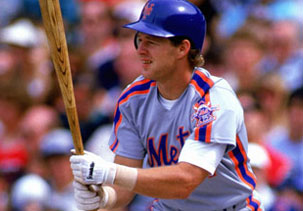
Showing posts with label Juan Samuel. Show all posts

Sunday, June 19, 2016

Memories of Baseball on Father's Day

As we reach another Father's Day, let's take a break from discussing the Mets' recent ups and downs (mostly downs).  Today is not a day to discuss why the Mets seem to have fewer timely hits than Kajagoogoo, nor is a day to talk about how the Mets lead the league in mental errors.  (Sending Flores to the plate with no outs in the ninth?  Really?)  Rather, today is a day to reflect on a special man in our lives.

He is the man who more than likely showed us how to throw our first curveball, took us to our first ballgame and showed us the proper way to order a ballpark hot dog (which I seem to have forgotten once prices passed the $4.00 mark).  I'm talking about fathers.

Just as we have surely had many Father's Day memories, both pleasant and not so pleasant, the Mets and Major League Baseball have also had a number of noteworthy moments on Father's Day.  Here's a small sample:


       HAPPY FATHER'S DAY!       HAPPY FATHER'S DAY!       HAPPY FATHER'S DAY!


On Father's Day 2004 (June 20), Cincinnati Reds outfielder (and new Hall of Famer) Ken Griffey Jr. hit the 500th home run of his career at St. Louis' Busch Stadium.  At the time, he was the youngest player to reach that milestone.  Making it more fitting, Ken Griffey Sr. was in attendance to help celebrate his son's momentous occasion.

Nothing like a little Griffey love to get this post started.

On Father's Day 1997 (June 15), Major League Baseball instituted its first Home Run Challenge to benefit prostate cancer research.  Now in its 20th season, the Home Run Challenge has raised nearly $45 million in the hopes that a cure can be found for this devastating disease that affects millions of men worldwide.

(Note to all men reading this.  Please go to your doctors and get checked. Early detection can save your life, enabling you to share many Father's Day moments with your loved ones.)

Early prostate cancer detection is serious business.  Even if it is a pain in the ass.

In one of the most ill-fated trades in Mets history, beloved members of the 1986 World Championship team Lenny Dykstra and Roger McDowell were traded to the Philadelphia Phillies for Juan Samuel on Father's Day 1989 (June 18).  Samuel would have a tumultuous time playing center field for the Mets during his short stay at Shea and was later traded for another dud, Mike Marshall.  Dykstra would become an All-Star in Philadelphia and helped lead the Phillies to the 1993 World Series.  McDowell pitched seven more seasons after the trade and would become famous to Seinfeld fans for his role as the man who spit the magic loogie on Kramer and Newman when they confronted Keith Hernandez after a Mets loss. 

Just as Tom Seaver's trade is known as the Midnight Massacre, this day should be known as The Day The Hotfoot Died.  On a lighter note, sales of Jheri Curl products increased in the New York metropolitan area ... by one.

"Let your Soul Glo..."

Jim Bunning of the Philadelphia Phillies pitched a perfect game at Shea Stadium on Father's Day in 1964 (June 21) when he defeated the Mets by the final score of 6-0.  Bunning struck out ten batters en route to becoming the first National League pitcher to toss a perfect game in the 20th century and the first pitcher in the modern era to throw a no-hitter in both leagues.  He pitched his first no-hitter in 1958 as a member of the Detroit Tigers.

Hall of Famer Jim Bunning made Shea Stadium's first Father's Day game a memorable one.

Please forgive the abundance of Phillies pictures in this post.  It is unintentional and is not meant to dampen your Father's Day festivities in any way.  If so, the photo beneath the next paragraph should bring a smile to your face, especially if you are a long-time Mets fan.

Ralph Kiner was always the king of malapropisms.  From classic lines such as "if Casey Stengel were alive today, he'd be spinning in his grave" and "all of his saves have come in relief appearances", Ralph mangled words and phrases with grace and dignity.  One of his most famous quotes came on Father's Day as well, when during a Mets broadcast, he said "on Father's Day, we again wish you all a happy birthday!"

R.I.P. Ralph Kiner and Bob Murphy.  You will always be missed.

One final note before you go have a catch with your son or daughter.  Mets fans are well aware of the fact that no pitcher in franchise history had pitched a no-hitter before Johan Santana turned the trick on June 1, 2012.  But prior to Santana's gem, the Mets had had several no-hitters pitched against them, including the perfect game tossed by the aforementioned Bunning in 1964.  (Let's not talk about last year's no-nos by San Francisco's Chris Heston and Washington's Max Scherzer.)  Before Santana accomplished his historic feat four years ago, the Mets weren't the only team that had never pitched a no-hitter.

The only team currently without a no-hitter to its credit has also been around since the 1960s.  The San Diego Padres have played 47 years since their inaugural season in 1969 and have never had a no-hitter pitched for them.  Hmm, Padres.  That's Spanish for Fathers.  On that note, I can't think of a more fitting way to end this than by wishing all you fathers out there a Happy Birthday!  (I mean, Father's Day!)


       HAPPY FATHER'S DAY!      HAPPY FATHER'S DAY!      HAPPY FATHER'S DAY! 
 

Sunday, June 21, 2015

Memories of Baseball and Father's Day

As we reach another Father's Day, let's take a break from discussing the Mets' recent ups and downs (mostly downs).  Today is not a day to discuss why Sandy Alderson continues to do nothing about the team's lack of offense, nor is a day to talk about how the Mets lead the league in mental errors this year.  Today is a day to reflect on a special man in our lives.

He is the man who more than likely showed us how to throw our first curveball, took us to our first ballgame and showed us the proper way to order a ballpark hot dog (which I seem to have forgotten once prices passed the $4.00 mark).  I'm talking about fathers.

As we have had many Father's Day memories, both pleasant and not so pleasant, the Mets and Major League Baseball have also had a number of noteworthy moments on Father's Day.  Here's a small sample:


       HAPPY FATHER'S DAY!       HAPPY FATHER'S DAY!       HAPPY FATHER'S DAY!


On Father's Day 2004 (June 20), Cincinnati Reds outfielder Ken Griffey Jr. hit the 500th home run of his career at St. Louis' Busch Stadium.  At the time, he was the youngest player to reach that milestone.  Making it more fitting, Ken Griffey Sr. was in attendance to help celebrate his son's momentous occasion.

Nothing like a little Griffey love to get this post started.

On Father's Day 1997 (June 15), Major League Baseball instituted its first Home Run Challenge to benefit prostate cancer research.  Now in its 19th season, the Home Run Challenge has raised nearly $45 million in the hopes that a cure can be found for this devastating disease that affects millions of men worldwide.

(Note to all men reading this.  Please go to your doctors and get checked. Early detection can save your life, enabling you to share many Father's Day moments with your loved ones.)

Early prostate cancer detection is serious business.  Even if it is a pain in the ass.

In one of the most ill-fated trades in Mets history, beloved members of the 1986 World Championship team Lenny Dykstra and Roger McDowell were traded to the Philadelphia Phillies for Juan Samuel on Father's Day 1989 (June 18).  Samuel would have a tumultuous time playing center field for the Mets during his short stay at Shea and was later traded for another dud, Mike Marshall.  Dykstra would become an All-Star in Philadelphia and helped lead the Phillies to the 1993 World Series.  McDowell pitched seven more seasons after the trade and would become famous to Seinfeld fans for his role as the man who spit the magic loogie on Kramer and Newman when they confronted Keith Hernandez after a Mets loss. 

Just as Tom Seaver's trade is known as the Midnight Massacre, this day should be known as The Day The Hotfoot Died.  On a lighter note, sales of Jheri Curl products increased in the New York metropolitan area ... by one.

"Let your Soul Glo..."

Jim Bunning of the Philadelphia Phillies pitched a perfect game at Shea Stadium on Father's Day in 1964 (June 21) when he defeated the Mets by the final score of 6-0.  Bunning struck out ten batters en route to becoming the first National League pitcher to toss a perfect game in the 20th century and the first pitcher in the modern era to throw a no-hitter in both leagues.  He pitched his first no-hitter in 1958 as a member of the Detroit Tigers.

Hall of Famer Jim Bunning made Shea Stadium's first Father's Day game a memorable one.

Please forgive the abundance of Phillies pictures in this post.  It is unintentional and is not meant to dampen your Father's Day festivities in any way.  If so, the photo beneath the next paragraph should bring a smile to your face, especially if you are a long-time Mets fan.

Ralph Kiner was always the king of malapropisms.  From classic lines such as "if Casey Stengel were alive today, he'd be spinning in his grave" and "all of his saves have come in relief appearances", Ralph mangled words and phrases with grace and dignity.  One of his most famous quotes came on Father's Day as well, when during a Mets broadcast, he said "on Father's Day, we again wish you all a happy birthday!"

R.I.P. Ralph Kiner and Bob Murphy.  You will always be missed.

One final note before you go have a catch with your son or daughter.  Mets fans are well aware of the fact that no pitcher in franchise history had pitched a no-hitter before Johan Santana turned the trick on June 1, 2012.  But prior to Santana's gem, the Mets had had several no-hitters pitched against them, including the perfect game tossed by the aforementioned Bunning in 1964.  (Let's not talk about this month's no-no by San Francisco's Chris Heston.)  Before Santana accomplished his historic feat three years ago, the Mets weren't the only team that had never pitched a no-hitter.

The only team currently without a no-hitter to its credit has also been around since the 1960s.  The San Diego Padres have played 46 years since their inaugural season in 1969 and have never had a no-hitter pitched for them.  Hmm, Padres.  That's Spanish for Fathers.  On that note, I can't think of a more fitting way to end this than by wishing all you fathers out there a Happy Birthday!  (I mean, Father's Day!)


       HAPPY FATHER'S DAY!      HAPPY FATHER'S DAY!      HAPPY FATHER'S DAY! 
 

Sunday, June 15, 2014

Baseball Memories On Father's Day

As we reach another Father's Day, let's take a break from discussing the Mets' recent ups and downs (mostly downs).  Today is not a day to discuss why Sandy Alderson continues to play musical chairs with the Mets' bullpen, nor is a day to talk about how the Mets' loss total is only surpassed by the Cubs, Padres, Diamondbacks and Rays.  Today is a day to reflect on a special man in our lives.

He is the man who more than likely showed us how to throw our first curveball, took us to our first ballgame and showed us the proper way to order a ballpark hot dog (which I seem to have forgotten once prices passed the $4.00 mark).  I'm talking about fathers.

As we have had many Father's Day memories, both pleasant and not so pleasant, the Mets and Major League Baseball have also had a number of noteworthy moments on Father's Day.  Here's a small sample:


       HAPPY FATHER'S DAY!       HAPPY FATHER'S DAY!       HAPPY FATHER'S DAY!


On Father's Day 2004 (June 20), Cincinnati Reds outfielder Ken Griffey Jr. hit the 500th home run of his career at St. Louis' Busch Stadium.  At the time, he was the youngest player to reach that milestone.  Making it more fitting, Ken Griffey Sr. was in attendance to help celebrate his son's momentous occasion.

Nothing like a little Griffey love to get this post started.

On Father's Day 1997 (June 15), Major League Baseball instituted its first Home Run Challenge to benefit prostate cancer research.  Now in its 18th season, the Home Run Challenge has raised over $40 million in the hopes that a cure can be found for this devastating disease that affects millions of men worldwide.

(Note to all men reading this.  Please go to your doctors and get checked. Early detection can save your life, enabling you to share many Father's Day moments with your loved ones.)

Early prostate cancer detection is serious business.  Even if it is a pain in the ass.

In one of the most ill-fated trades in Mets history, beloved members of the 1986 World Championship team Lenny Dykstra and Roger McDowell were traded to the Philadelphia Phillies for Juan Samuel on Father's Day 1989 (June 18).  Samuel would have a tumultuous time playing center field for the Mets during his short stay at Shea and was later traded for another dud, Mike Marshall.  Dykstra would become an All-Star in Philadelphia and helped lead the Phillies to the 1993 World Series.  McDowell pitched seven more seasons after the trade and would become famous to Seinfeld fans for his role as the man who spit the magic loogie on Kramer and Newman when they confronted Keith Hernandez after a Mets loss. 

Just as Tom Seaver's trade is known as the Midnight Massacre, this day should be known as The Day The Hotfoot Died.  On a lighter note, sales of Jheri Curl products increased in the New York metropolitan area ... by one.

"Let your Soul Glo..."

Jim Bunning of the Philadelphia Phillies pitched a perfect game at Shea Stadium on Father's Day in 1964 (June 21) when he defeated the Mets by the final score of 6-0.  Bunning struck out ten batters en route to becoming the first National League pitcher to pitch a perfect game in the 20th century and the first pitcher in the modern era to throw a no-hitter in both leagues.  He pitched his first no-hitter in 1958 as a member of the Detroit Tigers.

Hall of Famer Jim Bunning made Shea Stadium's first Father's Day game a memorable one.

Please forgive the abundance of Phillies pictures in this post.  It is unintentional and is not meant to dampen your Father's Day festivities in any way.  If so, the photo beneath the next paragraph should bring a smile to your face, especially if you are a long-time Mets fan.

Ralph Kiner was always the king of malapropisms.  From classic lines such as "if Casey Stengel were alive today, he'd be spinning in his grave" and "all of his saves have come in relief appearances", Ralph mangled words and phrases with grace and dignity.  One of his most famous quotes came on Father's Day as well, when during a Mets broadcast, he said "on Father's Day, we again wish you all a happy birthday!"

R.I.P. Ralph Kiner and Bob Murphy.  You will always be missed.

One final note before you go have a catch with your son or daughter.  Mets fans are well aware of the fact that no pitcher in franchise history had pitched a no-hitter before Johan Santana turned the trick on June 1, 2012.  But prior to Santana's gem, the Mets had had numerous no-hitters pitched against them, including the perfect game tossed by the aforementioned Bunning in 1964.  Before Santana accomplished his historic feat, the Mets weren't the only team who had never pitched a no-hitter.

The only team currently without a no-hitter to its credit has also been around since the 1960s.  The San Diego Padres have gone 44 years since their inaugural season in 1969 and have never had a no-hitter pitched for them.  Hmm, Padres.  That's Spanish for Fathers.  (And it's also the team the Mets are playing today.)  On that note, I can't think of a more fitting way to end this than by wishing all you fathers out there a Happy Birthday!  (I mean, Father's Day!)


       HAPPY FATHER'S DAY!      HAPPY FATHER'S DAY!      HAPPY FATHER'S DAY! 
 

Sunday, June 16, 2013

Memories of Father's Day and Baseball

As we reach another Father's Day, let's take a break from discussing the Mets' recent ups and downs (mostly downs).  Today is not a day to discuss why Sandy Alderson continues to play musical chairs with the Mets' bullpen and outfield, nor is a day to talk about how the Mets have fewer wins than every team in baseball other than the one team who has the most wins against them (Miami).  Today is a day to reflect on a special man in our lives.

He is the man who more than likely showed us how to throw our first curveball, took us to our first ballgame and showed us the proper way to order a ballpark hot dog (which I seem to have forgotten once prices passed the $4.00 mark).  I'm talking about fathers.

As we have had many Father's Day memories, both pleasant and not so pleasant, the Mets and Major League Baseball have also had a number of noteworthy moments on Father's Day.  Here's a small sample:


       HAPPY FATHER'S DAY!       HAPPY FATHER'S DAY!       HAPPY FATHER'S DAY!


On Father's Day 2004 (June 20), Cincinnati Reds outfielder Ken Griffey Jr. hit the 500th home run of his career at St. Louis' Busch Stadium.  At the time, he was the youngest player to reach that milestone.  Making it more fitting, Ken Griffey Sr. was in attendance to help celebrate his son's momentous occasion.


On Father's Day 1997 (June 15), Major League Baseball instituted its first Home Run Challenge to benefit prostate cancer research.  Now in its 17th season, the Home Run Challenge has raised over $40 million in the hopes that a cure can be found for this devastating disease that affects millions of men worldwide.

(Note to all men reading this.  Please go to your doctors and get checked. Early detection can save your life, enabling you to share many Father's Day moments with your loved ones.)


In one of the most ill-fated trades in Mets history, beloved members of the 1986 World Championship team Lenny Dykstra and Roger McDowell were traded to the Philadelphia Phillies for Juan Samuel on Father's Day 1989 (June 18).  Samuel would have a tumultuous time playing center field for the Mets during his short stay at Shea and was later traded for another dud, Mike Marshall.  Dykstra would become an All-Star in Philadelphia and helped lead the Phillies to the 1993 World Series.  McDowell pitched seven more seasons after the trade and would become famous to Seinfeld fans for his role as the man who spit the magic loogie on Kramer and Newman when they confronted Keith Hernandez after a Mets loss. 

Just as Tom Seaver's trade is known as the Midnight Massacre, this day should be known as The Day The Hotfoot Died.  On a lighter note, sales of Jheri Curl products increased in the New York metropolitan area ... by one.


Jim Bunning of the Philadelphia Phillies pitched a perfect game at Shea Stadium on Father's Day in 1964 (June 21) when he defeated the Mets by the final score of 6-0.  Bunning struck out ten batters en route to becoming the first National League pitcher to pitch a perfect game in the 20th century and the first pitcher in the modern era to throw a no-hitter in both leagues.  He pitched his first no-hitter in 1958 as a member of the Detroit Tigers.


Please forgive the abundance of Phillies pictures in this post.  It is unintentional and is not meant to dampen your Father's Day festivities in any way.  If so, the photo beneath the next paragraph should bring a smile to your face, especially if you are a long-time Mets fan.

Ralph Kiner has always been the king of malapropisms.  From classic lines such as "if Casey Stengel were alive today, he'd be spinning in his grave" and "all of his saves have come in relief appearances", Ralph has mangled words and phrases with grace and dignity.  One of his most famous quotes came on Father's Day as well, when during a Mets broadcast, he said "on Father's Day, we again wish you all a happy birthday!"


One final note before you go have a catch with your son or daughter.  Mets fans are well aware of the fact that no pitcher in franchise history had pitched a no-hitter before Johan Santana turned the trick on June 1, 2012.  But prior to Santana's gem, the Mets had had numerous no-hitters pitched against them, including the perfect game tossed by the aforementioned Bunning in 1964.  Before Santana accomplished his historic feat, the Mets weren't the only team who had never pitched a no-hitter.

The only team currently without a no-hitter to its credit has also been around since the 1960s.  The San Diego Padres have gone 44 years since their inaugural season in 1969 and have never had a no-hitter pitched for them.  Hmm, Padres.  That's Spanish for Fathers.  On that note, I can't think of a more fitting way to end this than by wishing all you fathers out there a Happy Birthday!  (I mean, Father's Day!)


       HAPPY FATHER'S DAY!      HAPPY FATHER'S DAY!      HAPPY FATHER'S DAY! 
 

Monday, February 11, 2013

The Mets That Got Away: Lenny Dykstra

There are some players who are so good in high school, they're considered can't-miss prospects.  These are the players who are scooped up in the first round of the draft and given hefty signing bonuses, all before they've set foot on a professional baseball field.  Because of their reputations, these players don't always have to put up eye-popping numbers in the minor leagues to advance from one level to the next.

But there are also players who are bypassed multiple times by every team, eventually taken in the middle-to-late rounds.  More often than not, these players have flaws that prevent them from joining the can't-miss prospects in the earlier rounds.  These players also have to prove themselves repeatedly in the lower minor league levels before even getting a sniff of a promotion.  One such player was drafted by the Mets in the 13th round of the 1981 June amateur draft.

In the early rounds of the '81 draft, the Mets selected Terry Blocker and John Christensen, neither of whom made a significant impact in the major leagues.  Their fifth round pick was used on Steve Phillips, who had a far greater impact on the team as its general manager than he did as a middle infielder.  And of course, a fairly decent starting pitcher named Roger Clemens was selected in the 12th round (he decided to go to college instead of signing with the Mets, presumably to hone his bat-throwing skills).  But it was the Mets' next pick after Clemens that eventually opened everyone's eyes.  It's too bad that he opened more eyes as a division rival than he did as a Met.

Small in stature, but tough as nails.  That was Lenny Dykstra.

Leonard Kyle Dykstra was the 315th overall pick in the 1981 draft.  A skinny kid from California whose first word out the womb was probably "dude",  Dykstra was an outfielder who played the game with reckless abandon and extreme confidence.  If an outfield fence wasn't dinged up, it was because Dykstra hadn't played on that field.  If a future Hall of Fame pitcher faced him, Dykstra would nonchalantly claim that he would "stick him".  These were the intangibles that caught the eye of scout Myron Pines and led Frank Cashen to select Dykstra on draft day.

Although Dykstra's slight body wasn't built for hitting home runs, he possessed a wonderful eye at the plate and an exceptional ability to steal bases.  After hitting .261 with 15 stolen bases in 48 games as an 18-year-old, Dykstra stole his way onto the team's radar in 1982.  Playing for Shelby in the South Atlantic League, Dykstra batted .291 in 120 games for the Mets' Single-A affiliate.  However, he had a .425 on-base percentage and stole 77 bases in 88 attempts.  Both figures were second in the league.  One year later, Dykstra was second to no one.

In 1983, while playing for Lynchburg in the Carolina League, Dykstra led the league in batting average (.358), on-base percentage (.472), hits (188), walks (107), triples (14), runs scored (132) and stolen bases (105).  Despite hitting only eight home runs, Dykstra managed to finish fifth in the league with 81 RBIs and sixth in slugging percentage with a .503 mark.

Dykstra's production dropped off in 1984 playing for AA-Jackson.  But his "down year" still resulted in a .275 batting average, .372 on-base percentage, 53 stolen bases and a league-leading 100 runs scored.  Dykstra advanced to AAA-Tidewater to begin the 1985 campaign, but less than a month into the season, he received his first call-up to the Mets, replacing the injured Ron Gardenhire on the 25-man roster.  It didn't take long for Dykstra to make an impact in the major leagues.

With Mookie Wilson getting a few days off to recover from a nagging shoulder injury, Dykstra was inserted into the starting lineup for the first time on May 3, 1985, batting leadoff against the Cincinnati Reds.  Facing three-time All-Star Mario Soto, Dykstra struck out in his first at-bat before hitting a two-run homer off Soto the next time he faced him.  Dykstra's debut was a success, as the centerfielder went 2-for-5 with two runs scored and a stolen base in the Mets' 9-4 victory.  Dykstra would go 5-for-12 in the three-game series at Riverfront Stadium, but was sent back down to Tidewater after appearing as a pinch-runner later in the week against Atlanta.

Over the first three months of the season, Dykstra rode the Tidewater-to-Shea shuttle several times.  As a member of the Tides, Dykstra performed splendidly, batting .310 with 44 runs scored and 26 stolen bases in 58 games.  As a Met, Dykstra struggled, batting .242 with only four runs scored and three steals in 12 games.  But after the Mets defeated the Braves in a memorable 19-inning affair on the Fourth (and Fifth) of July, the post-game fireworks weren't the only thing set to explode.

In the Mets' 16-13 victory over Atlanta, Dykstra played all 19 innings, going 3-for-9 with a run scored and two RBIs.  With the scored tied in the 18th inning, Dykstra hit a sacrifice fly that gave the Mets an 11-10 lead.  Dykstra's run-scoring fly ball would have represented the winning run, but Braves relief pitcher Rick Camp decided to give Chief Noc-A-Homa and the dozens of fans still in attendance an unexpected thrill with a game-tying home run in the bottom of the 18th.  Dykstra may have lost a game-winning RBI, but gained a starting job.  And once he became an everyday player, the runs started piling up.

Over his next 19 starts, Dykstra served as the team's catalyst.  He scored 21 runs, collected 11 RBIs, stole five bases and made outstanding contact, striking out only seven times in 102 plate appearances.  More importantly, the Mets went 15-4 in Dykstra's starts and averaged 7.1 runs in those games after averaging only 3.4 runs in their first 75 games.  For the season, Dysktra batted .254 and reached base at a .338 clip.  Although he only had 236 at-bats with the Mets in 1985, he scored 40 runs and stole 15 bases.

In 1986, Dykstra went into spring training trying to win an everyday job with the Mets.  Once again, he got his chance because of a teammate's misfortune.  A gruesome eye injury suffered by Mookie Wilson during a rundown drill put the six-year veteran on the disabled list.  Center field was now Dykstra's position to lose, and he made sure to take advantage of the opportunity.

Dykstra played in 78 of the team's first 85 games, batting .347 with a .420 on-base percentage.  He also started driving the ball more, collecting 25 extra-base hits in his first 216 at-bats.  His eye at the plate continued to be impeccable, as he drew more walks (28) than strikeouts (26).  And as he did in 1985, Dykstra continued to contribute to a plethora of Mets victories.

The Mets won 58 of the 78 games in which Dykstra played through July 17.  For the season, they were 100-47 when Dykstra played and 8-7 when he didn't.  Dykstra finished his first full season in the majors with a .295 batting average, 77 runs scored and a team-leading 31 stolen bases.  He was also one of six Mets to garner MVP consideration, finishing 19th in the vote.  Dykstra only hit eight homers during the regular season, but during the postseason, he ratcheted up the power in several key situations.

Touch 'em all, Lenny.  You'll never hit a bigger home run.  (But you sure tried.)

In Game 3 of the NLCS against Houston, Dykstra's two-run homer in the bottom of the ninth gave the Mets their first postseason victory at Shea Stadium since Game 5 of the 1973 World Series.  Dykstra also hurt the Astros in Game 6, starting a three-run rally in the ninth inning with a long triple.  In the 16th inning, Dykstra gave the Mets a 7-4 lead with an RBI single off Jeff Calhoun.  The run-scoring hit proved to be the difference in the Mets' 7-6 pennant-clinching victory.

After the Mets dropped the first two games of the World Series to the Boston Red Sox at Shea Stadium, Dykstra led off Game 3 with a home run at Fenway Park.  Dykstra followed in the footsteps of Tommie Agee and Wayne Garrett, who both homered to lead off Game 3 of the World Series, with Agee accomplishing the feat in the 1969 Fall Classic and Garrett doing it in 1973.  Dykstra also broke open Game 4 by hitting a two-run homer in the seventh inning the following night.

The Mets went on to defeat the Red Sox in seven games to win the franchise's second World Series championship.  In 13 postseason games, Dykstra batted .300 (15-for-50) with three homers, six RBIs and seven runs scored.  The man known as "Nails" hammered the Astros and Red Sox to the tune of a .540 slugging percentage.

The 1987 season began with the newly-acquired Kevin McReynolds in left field, leaving center field to both Dykstra and Mookie Wilson.  Neither player was particularly pleased with the situation, but they accepted manager Davey Johnson's decision (well, Mookie did) and played hard whenever they found themselves in the starting lineup.  Dykstra, in particular, got off to a hot start.  Lenny played in 45 of the team's first 53 games, starting 32 of them.  In those games, Dykstra batted .326 with a .391 on-base percentage.  His 19 extra-base hits in 141 at-bats contributed to an uncharacteristically high .560 slugging percentage.  Unfortunately, that was higher than the team's winning percentage at the time, as the Mets struggled to keep their team - particularly their starting pitchers - healthy and on the field.

The Mets eventually got hot as the summer continued, pulling to within striking distance of the first place St. Louis Cardinals.  The team suffered a heartbreaking loss to the Cards on September 11 when Roger McDowell allowed a game-tying two-run homer in the ninth inning to Terry Pendleton, followed by a tenth inning meltdown by Jesse Orosco.  But even after the deflating defeat, Lenny Dykstra did whatever he could to keep the team in contention until the season's final week.

From September 13 to the day the Mets were officially eliminated from the playoff race, Dykstra carried the team on his back.  He started all 16 games the Mets played during that stretch, batting .349 with ten doubles, a homer, 11 RBIs, 17 runs scored and four stolen bases.  But not even a player as tough as nails could prevent the Mets from giving up their division crown to the Cardinals, as New York finished the year three games behind the eventual National League champions.

Despite his platoon role, Dykstra had a tremendous season in 1987.  He played in 132 games, batting .285 with 37 doubles, 10 home runs, 43 RBIs and 86 runs scored.  His 37 two-base hits set a new club record for left-handed hitters, a mark that would not be surpassed until 1999, when John Olerud (39 doubles) and Robin Ventura (38 two-baggers) passed him.

It was more of the same for Dykstra in 1988.  Kevin McReynolds and Darryl Strawberry were the everyday corner outfielders, leaving Dysktra and Wilson to split the duties in center field.  Dykstra performed well under those circumstances in 1987, but suffered from it in 1988.

Although the Mets won their second division title in three years, Dykstra struggled for most of the season.  His .285/.352/.455 slash line from 1987 fell to .270/.321/.385 in 1988, causing a 100-point drop in OPS (on-base plus slugging percentage).  Also, his 19 doubles were barely half of his 1987 total and his 57 runs scored in 126 games were far less than the Mets had come to expect from their leadoff hitter.

Despite his subpar season, Dykstra turned his game up a notch in the postseason, batting .429 (6-for-14) with three doubles, a homer and no strikeouts in the seven-game NLCS against the Dodgers, but the Mets fell short of their ultimate goal, losing the series when Orel Hershiser pitched a complete-game shutout in Game 7.  After the unexpected loss, the team was ready to make changes.  One of those changes ended up becoming the death knell for the mid-to-late '80s Mets.

On June 18, 1989, the Mets traded Lenny Dykstra and Roger McDowell to the Phillies for Juan Samuel.  Samuel was a two-time All-Star and a Silver Slugger-winning second baseman for the Phillies before becoming a Met.  But the Mets didn't start him at second because Mets wünderkind Gregg Jefferies was already there.  Rather, Samuel became the team's new centerfielder, effectively (or ineffectively) replacing Dykstra and causing Mookie Wilson to spend more time on the bench.  Samuel, to put it bluntly, couldn't carry Dykstra's dirt-covered jock strap.
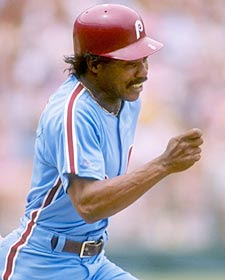
The Mets let their soul go, replacing him with Juan Samuel and his Soul Glo.

In 86 games with the Mets following the trade, Samuel hit .228 with three home runs and 28 RBIs.  His .300 slugging percentage was the lowest of any Mets everyday player.  That means it was lower than Barry Lyons' percentage (.340) and lower than Kevin Elster's figure (.360).  Heck, it was even lower than the slugging percentage posted by notorious singles hitter Dave Magadan (.393), who beat Samuel by nearly 100 points!  And let's not even get started with Samuel's play in the outfield.  Fortunately, the Mets realized the error of their ways, trading Samuel to the Dodgers six months after they acquired him.

The trade of the popular Dykstra to Philadelphia meant that Lenny was now going to be an everyday player for the first time in his career.  Like Samuel with the Mets, Dykstra also went through a period of adjustment in 1989, hitting .222 with 27 extra-base hits for the last-place Phillies.  But the Phillies remained patient with Dykstra, and by the following season, they had an All-Star on their hands.

In 1990, the 27-year-old Dykstra had his best season to date.  His .325 batting average was fourth in the National League and he led the league in both hits (192) and on-base percentage (.418).  Dykstra also finished in the top ten in doubles (35; 7th place), walks (89; 4th) and runs scored (106; 5th).  Dykstra became an All-Star for the first time in 1990 and finished 9th in the NL MVP vote despite playing for a sub-.500 team.

Injuries kept Dykstra from repeating his success in 1991 and 1992.  He played in only 63 games in 1991 and 85 games in 1992.  But despite playing in fewer than a full season's worth of games over those two years, Dykstra combined to hit .299 with 31 doubles, nine homers, 54 stolen bases and 101 runs scored.  One year later, Dykstra was fully healthy for the first time since 1990 and he embarked on a season for the ages.

In 1993, the Phillies won their first NL East title in ten years.  Philadelphia had many key contributors to their success, but none of them posted a season like Lenny Dykstra.  Dykstra set a major league record with 773 plate appearances (a record since surpassed by Jimmy Rollins).  He also led the league in at-bats (637), hits (194), walks (129) and runs scored (143), becoming the first National League player since Chuck Klein in 1932 to score over 140 runs in a single season.  But being the first National Leaguer in over 60 years to score that many runs wasn't the most impressive achievement for Dykstra in 1993.

As mentioned before, Dykstra led the league in 1993 with 194 hits and 129 walks.  In doing so, he became only the fifth player in major league history to pace his league in both categories.  Dykstra joined Billy Hamilton (179 hits, 102 walks in 1891), Rogers Hornsby (227 hits, 89 walks in 1924), Richie Ashburn (215 hits, 97 walks in 1958) and Carl Yastrzemski (183 hits, 95 walks in 1963) in this exclusive fraternity.  It should be noted that all four players are in the Hall of Fame.

Dykstra's historic year with the Phillies (he also set career highs with 44 doubles, 19 home runs, 66 RBIs and 37 stolen bases in 1993) continued in the the National League Championship Series and the World Series.

In 12 games against the Braves and Blue Jays, Dykstra batted .313 and reached base 27 times for a gaudy .450 on-base percentage.  Dykstra also socked six homers, collected 10 RBIs and scored 14 runs for the National League champions.  In the World Series alone, Dykstra smacked four homers, stole four bases and slugged .913.  He would easily have been the World Series MVP had Joe Carter not sent the Skydome into a frenzy with his title-winning home run in Game 6.  (Dykstra also had to settle for second place in the NL MVP vote, as he was the runner-up to Barry Bonds.)

Dykstra did not make the All-Star team in 1993 because of a slow start (he was hitting .265 as late as June 5), but he was selected to play in the Midsummer Classic in each of the following two seasons, including his only All-Star start in 1995.  However, just like the 1991 and 1992 campaigns, injuries curtailed both seasons.  Dykstra was held to 84 games in 1994 and 62 games in 1995.  He did not perform nearly as well as he did in 1993 when he was healthy enough to play, batting .269 with seven homers and 42 RBIs in 569 at-bats over the two seasons.  However, he did manage to hit 41 doubles, score 105 runs, steal 25 bases and walk 101 times over the same time period.

In 1996, Dykstra was limited to only 40 games and he missed the entire 1997 season due to injuries.  Although Dykstra was only 33 years old when he played his final game in the majors, he still put up a number of fantastic seasons for both the Mets and the Phillies.

Dykstra ranks 36th on the all-time Mets leaderboard in games played.  However, he's in the top thirty in batting average (.278; 17th place), on-base percentage (.350; 18th), doubles (104; 26th), triples (17; T-18th), runs scored (287; 27th) and stolen bases (116; 7th).  He ranks so highly on the team's all-time lists despite never holding a firm grip on an everyday job in 4½ seasons in New York.  His numbers are even better as a Phillie.

A total of 58 players have played more games in a Phillies uniform than Dykstra did (Lenny took the field 734 times as a Phillie), but Dykstra still ranks highly on the team's leaderboard in batting average (.289; T-40th), on-base percentage (.388; 7th), OPS (.810; 31st), hits (829; 46th), total bases (1,211; 44th), doubles (177; 36th), walks (459; 24th), runs scored (515; 36th) and stolen bases (169; T-16th).  Keep in mind that the Phillies have been in business since 1883 and have employed almost 2,000 players, while the Mets have yet to employ 1,000 players through the 2012 season.

In 12 years in the big leagues, Dykstra was a three-time All-Star and won a Silver Slugger Award in 1993.  He also received MVP votes in three seasons, including two top ten finishes (1990, 1993).  But as good as he was in the regular season, he was even better in the postseason.

Dykstra only reached the playoffs three times in his career but is still considered to be one of the best postseason hitters of all time.  In 32 games, Dykstra hit .321 with a .433 on-base percentage.  He also had a .661 slugging percentage and a whopping 1.094 OPS.  (For the record, Reggie Jackson - who was known as Mr. October for his postseason prowess - had a .527 slugging percentage and .885 OPS in 77 career postseason games.)  Almost half of Dykstra's 36 postseason hits went for extra bases, and 10 of them left the park.  Not bad for a player who surpassed ten home runs in a single season only once in his 12-year career.

Lenny Dykstra was always in the spotlight playing for two large-market teams in New York and Philadelphia.  Unfortunately, he has remained in the spotlight during his post-playing days, and not for reasons he would like. 

After running a successful car wash business for nearly a decade, Dykstra was sued by a former business partner in 2005, who accused him of steroid use and betting on baseball games.  It would not be the last time Dykstra was named in a lawsuit.  Dykstra also spent much of his money on extravagant cars, the stock market and other business pursuits.  All of his post-baseball success was only temporary.  By 2009, Dykstra was bankrupt, divorced and living on the street.

He may not have money, a wife or a permanent address.  But at least Lenny Dykstra has his Twizzlers.

Two years later, Dykstra's problems with the law continued.  In no particular order, he was:

  • Arrested on suspicion of grand theft for trying to buy a stolen car.
  • Accused of embezzling funds from a bankruptcy estate, trying to hide or sell almost half a million dollars worth of items without permission from the trustee.
  • Accused of sexual assault by his former housekeeper. 
  • Charged with indecent exposure after luring women to his house via an ad on Craigslist. 

Everything came crashing down on Dykstra in 2012, as he was sentenced to six months in prison for bankruptcy fraud.  Dysktra had already been serving three years for auto theft and nine months for lewd conduct.  He expects to be released from prison in June 2013, twenty years after his landmark season with the Phillies and more than a quarter century after he endeared himself to Mets fans.

Like Tug McGraw before him, Lenny Dykstra was beloved by both Mets fans and Phillies fans and helped both teams to a World Series appearance.  But unlike McGraw, Dykstra didn't remain a hero to his fans after his playing days were done.  Sadly, McGraw succumbed to his demon when cancer took his life in 2004.  Lenny Dykstra is still paying for the demons that took away his livelihood.

In 1985, Dykstra was a skinny kid who thought he was the best player on the field.  His "you can't stop me" attitude helped him win a World Series with the Mets and a National League pennant with the Phillies.  But Dykstra was eventually stopped by the law and his vices.

The Mets let Dykstra get away in 1989.  Then Dysktra let his life get away 20 years later.  Sometimes it's best to hold on to what you have.  It's a heck of a lot better than not having a hold on anything.


Note:  The Mets That Got Away is a thirteen-part weekly series that spotlights those Mets players who established themselves as major leaguers in New York, only to become stars after leaving town.  For previous installments, please click on the players' names below:

January 7, 2013: Nolan Ryan
January 14, 2013: Melvin Mora  
January 21, 2013: Kevin Mitchell 
January 28, 2013: Amos Otis
February 4, 2013: Jeff Reardon
 

Saturday, August 4, 2012

Song Parody: 1989

Photo courtesy of Chris Creamer's SportsLogos News

On Friday night, the Mets lost to the San Diego Padres by the final score of 3-1.  I could talk all day about how the Mets wasted a fine pitching performance by R.A. Dickey.  I could mention how Josh Thole cost the Mets the game by not holding onto the ball during a home plate collision with Carlos Quentin, who was still in San Marcos when Thole received the throw at the plate.

But I'm not.  Instead, I've decided to talk about something else instead of dwelling on another tough loss.

Friday night's game brought back memories of a different time in Mets history.  It was Throwback Night at Petco Park.  Both teams wore uniforms from 1989, a time to forget for Mets fans.  You see, the Mets were expected to do well in 1989.  They had just come off their second postseason appearance in three years and were poised to make it three out of four.  But the front office had different plans.

The majority of the team left over from both division-winning campaigns was dealt away or left via free agency in a 12-month span.  Gone were Wally Backman, Lenny Dykstra, Roger McDowell, Keith Hernandez and Gary Carter.  In were players who weren't Wally, Lenny and the rest of the bunch.

Ah yes, 1989.  A year that was made to be parodied in a song.  And what better song to pick for this parody, but the classic song by Bowling For Soup called "1985"?  Just add four years to the original track, throw in Don Aase (whose sole season in New York was 1989), stir in a little Juan Samuel and you have the latest Studious Metsimus song parody.  Ladies and gentlemen, I give to you "1989":


Boo hoo hoo
Boo hoo hoo

Metsies just hit the wall
They were in a free fall
One more loss a day
Had killed their ERA
Playoff dreams went out the door
With every final score
Wondering what could've been
What happened to our 'pen?

They were gonna make the playoffs
They were gonna be All-Stars
They were gonna kick your ass
Like Ray Knight kicked Niedenfuer's
But now good ol' Davey manages the enemy
Looks like that hideous time
When nothing ... went down ... all right

Since Len Dykstra, McDowell
Were traded for Juan Samuel
Gone were Mookie, Mazzilli
And why do we have Don Aase?
Hernandez and Carter
'86 couldn't seem farther
'Cause that was just a dark time
In 19, 19, 1989

Boo hoo hoo
1989
Boo hoo hoo

We've seen the Mets Classics
Shown on SNY
'86 club sure didn't stink
So they're on all the time
We loved that Backman
Wasn't a clean uniform fan
Thought we'd win again
In 1987.

Pitchers all got hurt; drugs claimed Gooden
No championship flag was raised at Shea Stadium
Was it reality, when Scioscia went deep?
Whatever happened to Ray Knight's ... K.O.'s ...
Michael Sergio ...

Dykstra, McDowell
Traded for Juan Samuel
Gone were Mookie, Mazzilli
And why do we have Don Aase?
Hernandez and Carter
'86 couldn't seem farther
'Cause that was just a dark time
In 19, 19, 1989

Boo hoo hoo

We hate that the wins stopped
When did Doctor K become a has-been Doc?
(Has-been Doc)
And what did our age become a factor?
Please wake me ... up ... up ...
UP!

And bring back ...
Dykstra, McDowell
who were traded for Juan Samuel
No more Mookie, Mazzilli
But somehow we still had Aase
Hernandez and Carter
'86 just got farther
Yeah, that was quite a dark time
1989

Len Dykstra, McDowell
Were traded for Juan Samuel
Gone were Mookie, Mazzilli
And why do we have Don Aase?
Hernandez and Carter
'86 couldn't seem farther
'Cause that was just a dark time
In 19, 19, ...
1989 ...


Sunday, June 17, 2012

Memories of Baseball and Father's Day

As we reach another Father's Day, let's take a break from discussing the Mets' recent ups and downs and why Jason Bay can't seem to catch a break (other than in his body parts) to reflect on a special man in our lives.

He is the man who more than likely showed us how to throw our first curveball, took us to our first ballgame and showed us the proper way to order a ballpark hot dog (which I seem to have forgotten once prices passed the $4.00 mark). I'm talking about fathers.

As we have had many Father's Day memories, both pleasant and not so pleasant, the Mets and Major League Baseball have also had a number of noteworthy moments on Father's Day. Here's a small sample:


       HAPPY FATHER'S DAY!       HAPPY FATHER'S DAY!       HAPPY FATHER'S DAY!


On Father's Day 2004 (June 20), Cincinnati Reds outfielder Ken Griffey Jr. hit the 500th home run of his career at St. Louis' Busch Stadium. At the time, he was the youngest player to reach that milestone. Making it more fitting, Ken Griffey Sr. was in attendance to help celebrate his son's momentous occasion.


On Father's Day 1997 (June 15), Major League Baseball instituted its first Home Run Challenge to benefit prostate cancer research. Now in its 16th season, the Home Run Challenge has raised nearly $40 million in the hopes that a cure can be found for this devastating disease that affects millions of men worldwide.

(Note to all men reading this. Please go to your doctors and get checked. Early detection can save your life, enabling you to share many Father's Day moments with your loved ones.)


In one of the most ill-fated trades in Mets history, beloved members of the 1986 World Championship team Lenny Dykstra and Roger McDowell were traded to the Philadelphia Phillies for Juan Samuel on Father's Day 1989 (June 18). Samuel would have a tumultuous time playing centerfield for the Mets during his short stay at Shea and was later traded for another dud, Mike Marshall. Dykstra would become an All-Star in Philadelphia and helped lead the Phillies to the 1993 World Series. McDowell pitched seven more seasons after the trade and would become famous to Seinfeld fans for his role as the man who spit the magic loogie on Kramer and Newman when they confronted Keith Hernandez after a Mets loss. 

Just as Tom Seaver's trade is known as the Midnight Massacre, this day should be known as The Day The Hotfoot Died. On a lighter note, sales of Jheri Curl products increased in the New York metropolitan area ... by one.


Jim Bunning of the Philadelphia Phillies pitched a perfect game at Shea Stadium on Father's Day in 1964 (June 21) when he defeated the Mets by the final score of 6-0. Bunning struck out ten batters en route to becoming the first National League pitcher to pitch a perfect game in the 20th century and the first pitcher in the modern era to throw a no-hitter in both leagues. He pitched his first no-hitter in 1958 as a member of the Detroit Tigers.


Please forgive the abundance of Phillies pictures in this post. It is unintentional and is not meant to dampen your Father's Day festivities in any way. If so, the photo beneath the next paragraph should bring a smile to your face, especially if you are a long-time Mets fan.

Ralph Kiner has always been the king of malapropisms. From classic lines such as "if Casey Stengel were alive today, he'd be spinning in his grave" and "all of his saves have come in relief appearances", Ralph has mangled words and phrases with grace and dignity. One of his most famous quotes came on Father's Day as well, when during a Mets broadcast, he said "on Father's Day, we again wish you all a happy birthday!"


One final note before you go have a catch with your son or daughter. Mets fans are well aware of the fact that no pitcher in franchise history had pitched a no-hitter before Johan Santana turned the trick on June 1, 2012.  They have had numerous no-hitters pitched against them, including the aforementioned Bunning in 1964.  Prior to Santana's historic feat, the Mets weren't the only team who had never pitched a no-hitter.

The only team currently without a no-hitter to its credit has also been around since the 1960s. The San Diego Padres have gone 43 years since their inaugural season in 1969 and have never had a no-hitter pitched for them. Hmm, Padres. That's Spanish for Fathers. On that note, I can't think of a more fitting way to end this than by wishing all you fathers out there a Happy Birthday! (I mean, Father's Day!)


       HAPPY FATHER'S DAY!      HAPPY FATHER'S DAY!      HAPPY FATHER'S DAY! 

Saturday, September 10, 2011

17 Games Left: Third Is The Word

With today's loss to the Cubs, the Mets fell to 71-74 on the season.  They remain two thousand games behind the first place Phillies (that will change after tonight's Phillies-Brewers matchup has been completed) and a few hundred games behind the wild card-leading Braves (also pending tonight's game).  However, they do remain four games ahead of the fourth place Nationals and 5½ games in front of the lowly Marlins.

So the question is not whether the Mets can catch the Braves for the wild card or cut the Phillies' lead in the NL East to one thousand games (even though a three-game sweep of Philadelphia in two weeks would certainly help), it's whether or not the Mets can forget that there are 17 games left in the season and hold off the Nats and Fish to finish higher than fourth place for the first time since moving across the parking lot to Citi Field.

The 2007 and 2008 Mets famously went 5-12 and 7-10, respectively, in their final 17 games to lose their not-so-firm grip on first place and the wild card, failing to make the playoffs each year.  The 2009 Mets also went 7-10 in their final 17 games, but managed to hold off the Washington Nationals in their quest for fourth place in the NL East (mission accomplished - yes!)

Last year's team was 72-73 at the 145-game mark, as they were duking it out with the Marlins for third place.  They then proceeded to go (you guessed it) 7-10 in their final 17 games, finishing in fourth place, a game behind the Marlins, but at least ahead of the last place Nats.

So what can we expect the Mets to do this year now that they've reached the dreaded "17 to play" mark of the season?

For one thing, the Mets have what should be a comfortable lead in the NL East over the Nationals and Marlins.  But then again, being four games up on Washington doesn't guarantee anything.  The Nationals still have something to play for.  Since moving to Washington from Montreal following the 2004 season, the Nats have finished last in every year but one (2007, when they finished two games ahead of the cellar-dwelling Marlins).  With the potential for their highest finish in the NL East, the Nationals will surely be playing hard over their final 17 games.  The Marlins, on the other hand, just lost six games over the past two weeks to the Mets.  The demons of 2007 and 2008 have been exorcised and the Marlins should pose no threat to the Mets over their final 17 games (we hope).

A quick look at my once shiny, now falling apart Mets pocket schedule reveals that the Mets will be playing a four-game series with the fourth place (and hungry) Nationals next week at Citi Field.  The Mets cannot lose this series if a) they want to finish .500 or better and 2) they don't want to choke away third place to Jayson Werth and his cohorts.  They must split this series at the very least.  Taking three of four would all but eliminate the Nats from third place contention and a four-game sweep plus drilling Werth in his $126 million @$$ would be the cherry on top of the mediocre sundae.

It would behoove the Mets to do well against Washington because after that series, the Mets will be playing the wild card-leading Braves in Atlanta (they have a worse winning percentage at Turner Field than the Washington Generals have against the Harlem Globetrotters), followed by a trip to St. Louis against the somehow-still-in-it Cardinals, and topped off with a three-game set against the team with the best record in baseball, the Philadelphia Phillies, who somehow are on their way to the best record in franchise history, even without the aforementioned Jayson Werth (guess their key off-season acquisition of Juan Samuel to be their third base coach really panned out for them).

Should the Mets falter against the Braves, Cardinals and Phillies, they'll need to sweep the Reds at Citi Field to close out the regular season to have any realistic hope of finishing ahead of the Nationals for third place.  The lowly Reds surely remember the Mets' first-ever four-game sweep in Cincinnati a few months ago, so they will not be an easy opponent, despite what the won-loss records say.

The Mets have gone 7-10 over their final 17 games in each of the last three seasons (and it's four out of five seasons if you go back to 2006; even that team went 7-10 over their final 17 regular season games).  Doing the same this year would produce a 78-84 record, a one-game dropoff from their 2010 final record.  It would also put them in jeopardy of being passed by the Washington Nationals for third place in the NL East.  Finishing .500 or better should be the ultimate goal for this year's Mets, but finishing in third place is the more likely (and attainable) goal.  It's time to show the rest of the National League East (meaning those teams not named Los Phillies or Los Braves) that this Mets team has had enough of late-season chokes and fourth place finishes.  Say it loud and say it proud!  Third is the word!  And nothing else will be acceptable!

Monday, March 21, 2011

M.U.M.'s The Word (Most Underrated Mets): Roger McDowell

In 1982, the Mets selected three right-handed pitchers in the June amateur draft with their first three picks. In the first round, they chose a high school kid from Tampa who would become one of the franchise's all-time best pitchers (Dwight Gooden). In the second round, they selected Gooden's high school teammate who would become one of the prospects coveted by the Expos in the deal that brought Gary Carter to New York (Floyd Youmans).

When it came time for the Mets to announce their third pick, they took a skinny college kid from Bowling Green State University in Ohio (the same school that produced Orel Hershiser three years earlier). Although not as highly touted as Gooden and Youmans, the young right-handed starter worked his way to AA-Jackson in 1983, where he won 11 games. The following season, he suffered an elbow injury that limited him to two starts. Because of the injury, he had to come up with a new way to deliver his pitches and in doing so, developed a signature pitch that would help him make it to the major leagues.

For most pitchers, a severe arm injury in the minor leagues usually spells the end of their major league dreams. For Roger McDowell, his injury caused him to reinvent himself, and when he did, he became one of the best relievers in Mets history.

Roger McDowell was all about fun and games off the field, but on the mound, he was all business.

Despite missing most of the 1984 season and never pitching above the AA level, Roger McDowell impressed manager Davey Johnson so much during Spring Training that he became part of the 1985 Opening Day roster. It didn't take McDowell very long to reach the win column, as he was credited with the victory in his major league debut after pitching a one-two-three inning in relief against the St. Louis Cardinals on April 11, 1985. Two days later, he pitched two scoreless innings against the Cincinnati Reds to claim his second victory. The original 1962 Mets played 14 games before earning their second win. It took Roger McDowell three innings to do the same.

After appearing out of the bullpen in his first five appearances, the Mets decided to allow McDowell to start two games. That experiment failed miserably, as the righty allowed nine runs in 10 1/3 innings over the two starts. After suffering his first defeat in a 14-2 loss to the Reds on May 4, McDowell was sent back to the bullpen, never making another start in the major leagues. It ended up being one of the most important decisions the Mets made during their mid-80s heyday.

Once McDowell was relieved (no pun intended) from his starting role, he became virtually unhittable. For the remainder of May, the Jolly Roger pitched 21 scoreless innings, giving up six hits (all singles) and three walks. Statisticians needed a microscope to find his opponents' batting average against him (.088), a number that is comparable to Al Leiter's career batting average. During his Bob Gibson-esque month, McDowell earned three wins and three saves, dispelling any thoughts that his stint as a starting pitcher would affect him negatively.

With the Mets and Cardinals fighting tooth and nail for first place in the NL East, McDowell did not wilt under the pressure of his first pennant race. During a three-week stretch in September, McDowell held opponents at bay, allowing only one run in 20 2/3 innings (0.44 ERA). Alas, the Mets would fall to the Cardinals, who clinched the division title on the penultimate day of the season. Still, the Mets finished the 1985 season with a 98-64 record, which represented the second-best record in franchise history.

For the year, McDowell had six wins and 17 saves to go with a sparkling 2.83 ERA. His rookie season did not go unnoticed, as he finished sixth in the voting for National League Rookie of the Year. If 1985 was the year Roger McDowell hit the big scene, 1986 was the year he relished in it.

Just like the rain, Roger McDowell's sinker couldn't help but fall towards the ground.

After a slow start to the 1986 season, Roger McDowell went on a tear for two months. From May 4 to July 1, McDowell was undefeated (5-0), with six saves and five holds in 25 appearances. Over the two-month span, his ERA was 1.07. In 50 2/3 innings, McDowell gave up 35 hits (31 singles, four doubles), holding opposing hitters to a .193 batting average and a .215 slugging percentage. In addition to keeping his own runners from scoring, he was incredibly adept at stranding other pitchers' runners, allowing only one inherited runner to score in two months. (McDowell inherited 11 baserunners during that time.)

When the regular season ended, McDowell had set the franchise record for appearances (75) and wins by a reliever (14). His numbers almost resembled that of a starting pitcher (14-9, 3.02 ERA, 128 innings pitched). McDowell, along with Jesse Orosco, became the first teammates to save 20 games apiece in the same season, with Roger leading the team with 22 saves and Jesse finishing with 21. On a team that featured a starting quartet of Dwight Gooden, Ron Darling, Bob Ojeda and Sid Fernandez, it was McDowell who received the most votes of any Mets pitcher for the 1986 NL MVP Award, as he finished 17th in the voting.

McDowell carried his highly successful regular season into the League Championship Series against the Houston Astros. He made his first appearance in the NLCS in Game 4, coming into the game in the seventh inning after Sid Fernandez had fallen behind by three runs to eventual Series MVP Mike Scott. McDowell retired all six batters he faced, but the Mets fell short to the Astros, who had "the right scuff" with Scott on the mound. When he pitched again in Game 6, McDowell delivered one of the most crucial performances by any reliever in team history.

With the Mets trailing the Astros in the ninth inning of Game 6, they mounted a furious rally off starting pitcher Bob Knepper and closer Dave Smith, scoring three runs to tie the game. Roger McDowell was called upon to replace Rick Aguilera (who had pitched three scoreless innings in relief of starter Bob Ojeda) in the bottom of the ninth inning. McDowell was no stranger to multiple innings of work, pitching two innings or more in 36 of his 75 regular season appearances. The experience of all those multiple-inning performances paid off in Game 6, as McDowell pitched five near-perfect innings. The only baserunner he allowed (a 12th inning walk to Kevin Bass; more on him later) was quickly erased on a failed stolen base attempt.

The Mets took the lead in the top of the 14th inning, putting McDowell in line for the pennant-clinching victory. However, with Jesse Orosco now in the game for the save, Billy Hatcher hit a long home run that hit the left field fair pole. As the ball slid down the screen, so did McDowell's chances for the win. The Mets eventually won the game and the pennant in a frenetic 16th inning, where they scored three runs in the top of the 16th, only to see Orosco give up two runs in the bottom of the inning before striking out Kevin Bass to end the threat and the game. It was the second time Orosco struck out Bass in the game, as he got the Astros' rightfielder to swing at strike three to lead off the 15th inning.

McDowell's final line in the 1986 NLCS was nothing short of brilliant. In seven innings, he faced the minimum 21 batters, allowing no runs and no hits, walking one and striking out three. However, because Orosco failed to hold the lead in the 14th inning of Game 6, McDowell was denied the opportunity to secure the victory in a pennant-clinching game. The same could not be said for the World Series.

Although Roger McDowell did not pitch as effectively against the Boston Red Sox in the World Series, allowing ten hits and six walks in seven innings of work, none of his outings cost the Mets any games. McDowell did give up the go-ahead run in the seventh inning of Game 6, but that run scored on an error by Ray Knight, who later made up for his gaffe in the memorable tenth inning by driving in Gary Carter with a base hit and then scoring the winning run on Bill Buckner's error.

In Game 7, McDowell was called upon to pitch the seventh inning after the Mets had tied the game with three runs in the bottom of the sixth. Roger responded by retiring the Red Sox in order. The Mets took the lead in the bottom of the seventh inning, with the key blow coming on Ray Knight's tiebreaking home run. The Red Sox did score two runs off McDowell in the eighth inning, but this time Jesse Orosco was able to hold McDowell's lead. When Orosco struck out Marty Barrett to end the game, McDowell was given credit for the victory, joining Jerry Koosman as the only pitchers in club history to win a World Series-clinching game.

Roger McDowell would return to the postseason in 1988, but not before having a down year in 1987. He began the season on the disabled list, after having hernia surgery in late March. The Mets' bullpen struggled in McDowell's absence and the team did as well, losing 17 of their first 31 games before Roger returned on May 14. His return, which had originally been expected to be on June 1, was pushed up due to the fragile state of the pitching staff.

McDowell was not very effective upon his return, with an ERA just under 6.00 after his first 14 appearances. But as McDowell turned his season around, so did the Mets. For the next three months, McDowell was back to his old self. Over his next 35 appearances (spanning from June 12 to September 6), Roger won four games and racked up 17 saves. His ERA over the three months was 2.89. The Mets had gone from a fifth-place, 14-17 team before McDowell's activation from the disabled list, to an 80-59 team that was only 1½ games behind the St. Louis Cardinals on September 11. Then, with one swing of Terry Pendleton's bat, McDowell's resurgence was all but forgotten.

Roger McDowell gave up 22 regular season home runs as a Met. If only it had been 21...

With the Mets one inning away from pulling to within half a game of the first place Cardinals, Roger McDowell was beginning his second inning of work. He had ended the eighth inning by getting the speedy Vince Coleman to ground into a rare double play. After the Mets failed to extend their 4-1 lead in their half of the eighth, McDowell was left in the game to record the final three outs. After issuing a leadoff walk to Ozzie Smith, McDowell retired the next two batters to face him. With a three-run lead and one out to go, it appeared as if the Mets had wrapped up their 81st win of the season. But then the bottom fell out for McDowell at the same time that his sinker stopped sinking. First, Willie McGee drove in Smith with an RBI single. Then Terry Pendleton, who hit hit only ten home runs before that fateful night, drove a long fly ball over the 410' sign in center field. The Shot Heard 'Round Flushing had unexpectedly tied the game, and the Mets would eventually lose the game in ten innings.

Although the Mets had plenty of chances to catch the Cardinals over the final three weeks of the season, it was the home run by Terry Pendleton off Roger McDowell (everyone seems to forget the walk-off home run by Luis Aguayo off Jesse Orosco on September 30 that essentially put the nail in the coffin for the 1987 Mets) that served as the beginning of the end of the Mets' title defense. Still, despite the poor ending to the season, McDowell finished the 1987 season with a career-high 25 saves, which at the time was tied for the third-highest single-season total in franchise history.

In 1988, McDowell began the season healthy and it showed in his performance. He finished the season with his lowest ERA (2.63) as a Met, to go along with five wins and 16 saves. The Mets rolled to another division title in 1988, but once again, a home run given up by McDowell, this time in the NLCS, was crucial in defining the Mets' season.

McDowell pitched in four games of the seven-game series against the Los Angeles Dodgers, allowing three runs in six innings of work. However, the only run he will be remembered for was the one he gave up in the 12th inning of Game 4. The Mets had already blown a two-run lead in the ninth inning. Similar to Terry Pendleton's game-tying ninth inning homer in 1987, another unlikely source of power had erased a 4-2 ninth inning Mets lead, as Mike Scioscia (who had hit just three home runs during the regular season) connected for a game-tying blast off starter Dwight Gooden.

The game continued into extra innings, where Roger McDowell escaped an 11th inning jam by retiring Tracy Woodson on a groundout with the go-ahead run in scoring position. The Mets failed to score in their half of the 11th and McDowell was left in the game to pitch the 12th, retiring the first two batters to face him. That brought up eventual 1988 NL MVP Kirk Gibson to the plate, and he launched a long home run to right-center that gave the Dodgers the lead. Although the Mets mounted a rally in the bottom of the 12th, loading up the bases with one out, the two men who finished directly behind Gibson in the MVP vote (Darryl Strawberry and Kevin McReynolds) both popped out to end the threat and the game. It would be McDowell's only loss in 11 postseason appearances for the Mets.

The Mets were a different team going into the 1989 season. Jesse Orosco had already left prior to the 1988 season, winning a World Series ring with the Dodgers in '88. Wally Backman was traded to the Minnesota Twins during the off-season to allow Gregg Jefferies to play every day. Co-captains Keith Hernandez and Gary Carter were coming off their worst seasons as Mets and lost playing time to Dave Magadan and Barry Lyons, respectively. As a result of this transition, the Mets struggled out of the gate, and were around the .500 mark for most of the first half of the season. However, despite their slow start, the Mets found themselves only a game behind the first place Chicago Cubs when they woke up on Father's Day (June 18). Mets' Vice President Joe McIlvane felt that for the team to make a prolonged push to the top of the division, they needed an upgrade in the offensive department. Well, he succeeded in the "offensive" part, but not in the way he expected.

On June 18, general manager Frank Cashen orchestrated the trade that effectively ended the 1986 World Series after-party. He sent Roger McDowell and Lenny Dykstra to the Philadelphia Phillies in exchange for Juan Samuel, who was now going to be playing center field for the Mets.

We gave away Roger McDowell and Lenny Dykstra for this guy? Juan Samuel wasn't fit to wear Ed Kranepool's jock strap, let alone his uniform number!

From 1984-1987, Samuel was one of the most complete players in the National League, averaging 35 doubles, 15 triples, 20 home runs, 50 stolen bases, 102 runs scored and 80 RBI per season. However, in 1988, Samuel's numbers dropped across the board. He finished the season with career-lows in batting average (.243), on-base percentage (.298), triples (9), home runs (12), RBI (67), runs scored (68) and stolen bases (33), while striking out 151 times. Of course, Mets' management thought moving him to center field and making him the club's new leadoff hitter was going to turn the team's fortunes around. Epic fail.

Samuel struggled after his trade to New York, batting .228 in 86 games. After finishing the 1987 season with 28 HR and 100 RBI, Samuel was a different player on the Mets, hitting only three home runs and driving in 28 runs in 1989 for New York. Meanwhile, McDowell and Dykstra flourished after the trade to Philadelphia, with McDowell registering a 1.11 ERA for the Phillies in 1989 and Dykstra going on to become one of the premier leadoff hitters in the game, helping the Phillies to an unexpected National League pennant in 1993.

Roger McDowell was one of the most beloved Mets in team history. With an effervescent personality to go with his killer sinkerball, McDowell was all play in the clubhouse but all business on the mound. At any moment, McDowell would burn a teammate with a cleverly placed hot foot, then burn an opponent by inducing ground ball after ground ball with his sinker.

Over his 4½ year tenure with the Mets, McDowell was 33-29, with 84 saves and a 3.10 ERA. At the time he was traded, McDowell was third on the franchise's all-time leaderboard with those 84 saves (he is now sixth), trailing only Jesse Orosco and Tug McGraw. His 3.10 ERA as a Met is lower than every other pitcher except for five (Tom Seaver, Jesse Orosco, Johan Santana, Jon Matlack, Jerry Koosman). Only 28 Mets pitchers have won more games than McDowell's 33, but none of them accomplished their victory total with as few innings as Roger's 468 1/3. In addition to the above, Roger also ranked in the Mets' top ten in winning percentage (.532, 9th), games pitched (280, 5th) and games finished (189, 3rd) at the time of his trade to the Phillies.

When Roger McDowell was traded to the Phillies, he was the team's all-time leader in saves for a right-handed pitcher. He also led the team in Hubba Bubba consumption and hot foots given.

Roger McDowell is still in baseball, serving as the pitching coach for the Atlanta Braves, but no matter what he does in the game, he will always be remembered for his time on the Mets as the club's top right-handed reliever and resident prankster. Whether he was wearing his uniform upside down, lighting firecrackers in the dugout or appearing as the second spitter on "Seinfeld", McDowell's antics off the field were just as fun to watch as his performances on the mound.

Simply stated, Roger McDowell was a big kid playing a kid's game. For four and a half years, he excelled at that game as a member of the Mets, yet he was always overshadowed by Jesse Orosco and his glove-flinging celebrations. McDowell may never have been the guy on the mound when the Mets were celebrating two division titles, a National League pennant and a World Series championship, but he was one of the guys who helped get them there.

Underrated? Yes. Underappreciated? No. Anyone who remembers McDowell solely for the Terry Pendleton and Kirk Gibson home runs missed out on what was truly a great Mets reliever and personality. Those who didn't appreciate his contributions to the Mets should stand on guard. There may be a hot foot coming your way.


Note: M.U.M.'s The Word is a thirteen-part weekly series spotlighting some of the best Mets players of all-time who never got the recognition they deserved because they weren't the biggest names on the teams they played for. For previous installments, please click on the players' names below:

January 3, 2011: John Olerud
January 10, 2011: Sid Fernandez
January 17, 2011: Jon Matlack
January 24, 2011: Kevin McReynolds
January 31, 2011: Bobby Jones
February 7, 2011: John Stearns
February 14, 2011: David Cone
February 21, 2011: Rusty Staub

February 28, 2011: Rick Reed
March 7, 2011: Ron Taylor
March 14, 2011: Turk Wendell