Showing posts with label Phil Niekro. Show all posts

Thursday, September 21, 2017

Joey's World Tour: Peaches and Creamed (Part I - Mets Put the Hot in Hotlanta)

At least it's not Turner Field.  (Photo by Ed Leyro/Studious Metsimus)

Welcome to the latest edition of my baseball world tour.  I'm your Studious Metsimus roving reporter/culinary expert Joey Beartran.  In today's two-part installment (you can read the second part by clicking here), I'll take you to the latest ballparks I visited; the brand spanking new SunTrust Park in Atlanta and the cavernous airport hangar in Miami known as Marlins Park.

The state of Georgia is known as the Peach State, and I was feeling pretty peachy myself after attending the middle game of the three-game series against the Braves.  My colleagues and I arrived at the ballpark about half an hour before first pitch.  We tried to get there at least an hour early to take photos around the park and to explore the stadium before first pitch, but it was impossible to park near the stadium.  You see, most parking facilities within a Juan Lagares throw of the stadium were "permit parking only".  My limo driver (and by limo, I mean rental car from the airport) had to drive around for close to half an hour before she found an area nearly a mile away from the stadium gates.  So after working up a sweat hiking, we arrived to notice that the area adjacent to the ballpark has been developed into an entertainment complex known as The Battery.

For those who don't have tickets to the game, The Battery has several restaurants, such as Wahlburgers, YardHouse and PBR Bar & Grill, where you can drink, dance and ride a mechanical bull.  And no, I did not ride the bull.  I weigh eight ounces and would be tossed from it immediately.

The Battery also has a theater for live entertainment (Coca Cola Roxy Theatre), an area where you can watch the Braves' pre-game show as it's been filmed and a huge floating baseball located high above the concourse that serves as a TV and scoreboard.  All in all, this area has everything for the baseball fan (and non-baseball fan) to see and do before and after the game.

(Above photos by Ed Leyro/Studious Metsimus)

As we walked around the ballpark, we noticed several statues dedicated to Braves legends.  Hall of Fame pitchers Phil Niekro and Warren Spahn (who won four games as a Met in 1965) are prominently featured, as is Hall of Fame manager Bobby Cox.  Meanwhile, all the Mets can muster for one of its managers is a gnome-sized Casey Stengel statue-like piece hidden near a window at the Mets Hall of Fame and Museum.


Seriously, Mets?  This is the best you can do regarding statues?  (EL/SM)

We did notice that one statue was missing outside the stadium, and considering that the ballpark's official address is 755 Battery Avenue Southeast and 755 is kind of an important number in baseball history, we thought this was an oversight on the Braves' part, similar to Terry Collins not starting Michael Conforto regularly against left-handed pitchers until a couple of months into this season.

But we were proven wrong once we entered the ballpark.  Oh, how wrong we were.

Behind home plate is an area known as Monument Garden.  This area details Braves history from the team's days in Boston to its 13 seasons in Milwaukee to the last half-century in Atlanta.  From the World Series pennants (Did you know the Braves franchise has won exactly one championship in each of the three cities it has called home?  They won a title in Boston in 1914, Milwaukee in 1957 and Atlanta in 1995.) to uniforms of prominent players over the years, the Braves did a fantastic job honoring the history of the franchise as a whole; not just the team's days in Atlanta.  They even gave Casey Stengel - who played for the franchise for two seasons and managed them for six years - more than just a gnome.

Top to bottom: Monument Garden, Dale Murphy 1982 jersey, Sid Bream's leg brace from his pennant-winning run, Laaaaarrrry, Casey Stengel non-gnome.  (EL/SM)

That's just some of the Braves history in the park.  But you want to see the Hank Aaron stuff, don't you?  There was plenty of that to behold in Monument Garden.

First, there was the jersey worn by Aaron when he hit his record-setting 715th home run on April 8, 1974.  Then there is the massive statue of Aaron making solid contact with a baseball, which sits atop a beautiful waterfall.  And of course, there are the 755 Louisville Slugger bats behind the statue which form a number 755.  (There are 201 bats in the number 7 and 277 bats in each of the two 5s.  I'm not as nerdy as my colleague; he was the one who counted the bats.)  The whole area is truly an awesome tribute to a legendary player and ambassador of the game.

Henry "Hank" Aaron.  Legend.  (EL/SM)

At the other end of the ballpark in straightaway center field is an area devoted to kids.  From rock climbing to a zip line to a whack-a-mole game, kids who are more interested in playing than watching millionaires play will certainly have plenty to keep themselves occupied.  But if I were a parent, I wouldn't be happy with it, mainly because there is no way to see the game from center field.  That concourse area does not have a view of the field so you'll have to depend on small TVs that you have to be standing directly under in order to know what's going on in the game you paid good money to see.

If I were one of those kids' parents, I'd just leave them there and walk around to one of the many food areas.  At least there, I can turn around and watch the game.  What are some of these food choices?  I'm glad you asked.

In addition to the regular ballpark fare, there are street tacos, a build-your-own ice cream bar, a Chick-fil-A, a Waffle House (not pictured), the Chop House (which serves the regional favorite H & F Burger) and a cleverly named stand that specializes in Thai food (Intentional Wok).  Although I was interested in trying the Chicken Pad Thai noodles there, I did not.  That was mainly because the name of the stand reminded me too much of the intentional walks issued by Kenny Rogers to Chipper Jones and Brian Jordan in Game Six of the 1999 NLCS right before the unintentional pass to Andruw Jones that won the pennant for the Braves.  Those walks made me intentionally walk right by the Thai food stand without ordering anything.

Wok on by, wok on by.  (EL/SM)

The game itself was quite entertaining, as Jacob deGrom bested former Met R.A. Dickey in a 7-3 Mets victory.  DeGrom threw seven innings of one-run ball, Gavin Cecchini collected his first three-hit game in the majors and drove in two runs and Dominic Smith got back at the moron who chose to play "Dominic the Donkey" as Smith's walk-up music by lashing a two-run double.  Seriously, if the Braves were going to play a Lou Monte song, they should have picked "Lazy Mary" instead of "Dominic the Donkey".  But what should I expect from a team that can't spell "Lagares" correctly?

Well, he has legged out several triples and stolen bases this year, so maybe that explains the misspelling.  (EL/SM)

So what did I think of the ballpark?  Well, I liked the area around the park.  I also enjoyed Monument Garden and the food options.  Another cool feature was the rent-a-glove station, which allows fans who don't want to injure themselves by attempting a barehanded catch of a screaming Freddie Freeman foul ball to leave their gloves at home.  All that makes it seem like I enjoyed my experience at the ballpark.

But it's the Braves.  As a Mets fan, I will never like anything about them.  So if you're not a Mets fan or if you are but don't have a long memory, come on out to SunTrust Park.  As long as you don't have kids who will keep you in the center field play area all game, you'll have a wonderful time before, during and after the game.

I do give credit to the Braves for trying to give an out-of-town Mets fan such as myself a pleasant experience.  In fact, I'd like to give them a full moon salute for their effort.  You can't say I don't appreciate a team trying to impress me.

Chop this, Atlanta!  (EL/SM)


For previous installments of Joey's World Tour, please click on the links below, where you will be entertained by Joey's wit, photos and love of ballpark cuisine:

World Tour Stop #1: Baltimore
World Tour Stop #2: Washington, DC
World Tour Stop #3: Pittsburgh
World Tour Stop #4: Texas
World Tour Stop #5: Los Angeles
World Tour Stop #6: San Diego
World Tour Stop #7: Toronto
World Tour Stop #8: Chicago (NL)
World Tour Stop #9: Milwaukee
World Tour Stop #10: Seattle
World Tour Stop #11: Cleveland
World Tour Stop #12: Brooklyn (Ebbets Field site) and Manhattan (Polo Grounds site)
World Tour Stop #13: Baltimore (again) and Pittsburgh (part deux)
World Tour Stop #14: Cincinnati
World Tour Stop #15: Colorado
World Tour Stop #16: Cooperstown (Baseball Hall of Fame)
World Tour Stop #17: Detroit


Friday, November 11, 2016

Colón Blows Off Mets to Become Part of Braves' Quadragenarian Effort


Bartolo Colón will be taking his big sexiness down south for the 2017 season.  According to multiple reports, the fan-favorite former Met has signed a one-year deal worth $12.5 million to pitch for the Atlanta Braves.

This comes just a day after the Braves signed another 40-something one-time Met in R.A. Dickey, giving Atlanta the two oldest pitchers in baseball.  (The only non-pitcher older than Dickey is Ichiro Suzuki.)

The two signings also give hope to pitchers such as Scott Atchison (Atchison spent the 2016 season as a Cleveland Indians' advanced coach and staff assistant) that they can still play for a major league team, although in all honesty, Atchison may be out of the Braves' age range.

With Atlanta opening up its new ballpark next season, perhaps they're looking to put fannies in the seats with a bunch of quadragenarian players, especially now that soon-to-be 40-year-old catcher A.J. Pierzynski has retired.  But why stop there?  Why not bring back 58-year-old utility man Julio Franco, who in 5½ seasons with the Braves (2001-05, second half of 2007) put up an incredible .291/.363/.424 slash line in nearly 1,400 plate appearances - all while he was in his mid-to-late 40s.  Or better yet, how about franchise legend Phil Niekro?  He'll be 78 by Opening Day, but he's a knuckleballer, and you know that knucklers can pitch much later in life than their hard-throwing brethren can.  Plus, it would give Dickey a close friend on the team.

But in all seriousness, there was no way Sandy Alderson was going to commit $12.5 million to Colón in his age-44 season when he didn't give that to him in any of Colón's three seasons with the Mets.  As good and as entertaining as Colón was as a Met from 2014 to 2016, the Mets needed to pay him less than that amount if they wanted to keep players such as Yoenis Céspedes around.

The emergence of Seth Lugo and Robert Gsellman has given the Mets hope, albeit in a small sample size, that they still have some kind of depth in the starting pitcher department in the event that the Fab Five of Matt Harvey, Jacob deGrom, Noah Syndergaard, Steven Matz and Zack Wheeler never materializes because of their constant injury issues.

If the Mets use the money they would have given to Colón to sweeten the pot for Céspedes and he ends up re-signing with the team, then great.  We'll miss Bart, but we'd have missed Yo more.  If one or all of the starting five miss a significant part of the season, then oops, the Mets will have crapped their pants; Colón blowing off the team for the money in Atlanta will come back to haunt New York.

The Mets begin the 2017 season at Citi Field next year.  Their opponent will be the Atlanta Braves.  More than likely, the Opening Day starter for the Braves will be Met-killer Julio Teheran.  But don't be surprised if Bartolo Colón and R.A. Dickey start the other two games of the series.  And you also shouldn't be surprised if the fans give both pitchers the same kind of welcome that Mike Piazza received when he returned to Flushing for the first time as a former Met in 2006.

I just hope both pitchers don't become Met-killers themselves, regardless of their Atchisonian age.

I have faith that the Mets will not make these SNL references come true.  Ya gotta believe, right?

Sunday, April 22, 2012

Bears On Film: Knuckleball!

Hi, everyone!  It's us, Joey and Iggy Beartran, coming at you from the Tribeca Film Festival, where we were treated to VIP treatment for the premiere of Knuckleball!, a documentary on the dying art of knuckleball pitching and the fraternity that the pitch has created amongst its throwers.

Before we discuss the film, we'd like to share the beautiful movie poster we won (see photo to the left), which was autographed by four of the protagonists of the film.  In all, three former major league knuckleball pitchers (Jim Bouton, Charlie Hough and Tim Wakefield) and one current knuckler (the Mets' own R.A. Dickey) signed the poster.   All four were also in attendance at the premiere, as were the film's director and producer.

Before the film, we were treated to live music (courtesy of Moon Hooch) and a surprise appearance by Mr. Met.  Then, shortly after sundown, the film began.  (Did we mention it was an outdoor premiere, similar to a drive-in experience, except that we took the subway and we didn't catch anyone making out in the backseat of their car?)

The film began with the recently retired Tim Wakefield, as he was searching for his 200th career victory last year.  Most of the film dealt with Wakefield and R.A. Dickey, with occasional appearances and interviews with other knuckleball pitchers such as Jim Bouton, Charlie Hough, Wilbur Wood, Tom Candiotti and Hall of Famer Phil Niekro.

In one particular memorable scene, Dickey, Wakefield, Hough and Niekro gathered together for a golf outing (Dickey can really drive the ball, while Niekro, golfing in his Atlanta Braves cap, looked like Jack Nicklaus but couldn't play like him) and a chat.  The brothers-in-knuckles discussed the toughest hitters they faced in the major leagues among other topics.

Charlie Hough claimed Mark Salas was his toughest out.  This is the same Mark Salas who was a catcher for six teams in his eight-year career and finished with a lifetime .247 batting average and a mere 319 hits.  But against Hough, Salas turned into Babe Ruth, batting .433 (13-for-30) with three home runs.  For two seasons (1986-87), Salas was unconscious against Hough, batting .692 (9-for-13) with an ungodly 1.385 slugging percentage.  R.A. Dickey called Salas a "slappie", which was an affectionate term for a good contact hitter who would always fight off knuckleballs until they were able to get one that didn't knuckle as much.

For Phil Niekro and Tim Wakefield, their toughest outs were players who were good hitters against many pitchers, not just knuckleball artists.  Niekro admitted to having a rough time with Bill Buckner, while Wakefield hated facing Darryl Strawberry, which was proven when the film cut to footage of the Straw Man hitting a titanic home run off Wakefield in the old Yankee Stadium that cleared the side of the upper deck and hit a garage door in the back of the stadium.  (In case you were wondering, the scene with the four knucklers ended without Dickey naming his toughest out, although he later admitted that Carlos Delgado always hit him well, while Derek Jeter was a player who did not fare well against him.)

From there on, the film focused on Wakefield's rise to the major leagues as a converted infielder who couldn't hit and culminated with his 200th victory on September 13, 2011.  The use of old footage was amazing, especially when showing his rise and fall with the Pittsburgh Pirates in 1992 and 1993.

R.A. Dickey gives an interview while Tim Wakefield and Charlie Hough pose for photos behind him. 


In the case of R.A. Dickey, there were times when his story mirrored the events detailed in his book, Wherever I Wind Up.  For a moment, we thought we were watching the movie adaptation of his book and not a story about knuckleball pitchers over the years, especially in a scene that discussed his missing ulnar collateral ligament and various scenes featuring his wife, Anne.  The other knucklers' spouses did not make appearances in the film, save for a short scene with Stacy Wakefield.

As Mets fans, of course we were attracted to Dickey's rise from a highly-touted conventional pitcher to a journeyman pitcher who moved 37 times to pursue his dream.  But the Wakefield story was also intriguing and was discussed at length in the film.  The director did a fine job in showing how Wakefield became a knuckleball pitcher and how he used that unpredictable pitch to become one of the Red Sox' all-time winningest pitchers.  But it also showed just how that pitch can lead to unfortunate moments, such as the home run Wakefield gave up to Aaron Boone to end the 2003 American League Championship Series.

After giving up the home run, Wakefield claimed that he thought he was going to be Bill Buckner for a new generation of Red Sox fans (yes, Mets fans, we do get to see Mookie hitting the ball through Buckner's legs as Wakefield talks about this), but instead, he was not vilified in Boston.  Rather, he was appreciated for everything he gave the team over his long career with the Red Sox.  This revelation then led to the scene in the film when Wakefield finally achieved his landmark 200th victory, followed by footage of his retirement in February 2012, where Wakefield thanked all the knuckleballers that came before him and passed the torch to R.A. Dickey.  It was truly a beautiful story and an outstanding job of editing.

All in all, we enjoyed the film very much.  Of course, we might be biased as Mets fans because of all the attention given to R.A. Dickey.  (Look out for a scene in the film where Dickey talks about his chances of making a start after tearing his fingernail, claiming that he should have no problem because his body tends to generate an excess amount of protein, which leads to fingernail growth - he also claims this is why he has no difficulty growing hair.)   But even without Dickey's screen time, the film was quite an effort by the director/producer team of Ricki Stern and Annie Sundberg.

Unlike an actual knuckleball, which tends to go all over the place before settling in (or bouncing off) the catcher's mitt, the film Knuckleball! was easy to follow and a pleasure to watch.  It provided fantastic insight into the rarely-used pitch and the men who made a living throwing it.  We highly recommend it and give it two paws up.  (We'd give it two knuckles up, but we don't have any knuckles...)


For our review of Moneyball, please click here.  No, there is no truth to the rumor that we only review films with balls in their titles.  That's just a coincidence, although we did enjoy Meatballs and Spaceballs.

Sunday, April 1, 2012

With Santana Back, Should The Mets Go To A Six-Man Rotation?


After much speculation over the past few weeks, the Mets have announced that Johan Santana will indeed be the team's Opening Day starter.  He will followed in the rotation by R.A. Dickey, Jonathon Niese, Mike Pelfrey and Dillon Gee.

Because the Mets have three off-days during the first 15 days of the season, Santana will be starting every sixth day for most of the month of April.  Barring any rainouts, Santana will not have to start on the more traditional fifth day until April 28 in Colorado.  But once the calendar hits May, the Mets will go through their longest stretch of the year without any scheduled off-days, playing 20 games in 20 days from May 11 to May 30.  Santana would have to make four consecutive starts on only four days rest during that time frame.

Will Santana be ready for the extra work once May comes around?  For that matter, what about the rest of the starting rotation?  The Mets might not have to answer these questions if they consider what I'm about to say. Perhaps the time has come for the Mets to go to a six-man rotation.

Earlier this week, Chris Young was signed by the Mets to a minor league deal to give the team some much-needed depth in the starting rotation.  Although Young is still recovering from the shoulder injury that put the kibosh on his 2011 season, he is hopeful that he can be ready by June.  If not, his contract contains language that would allow for his release should he not be on the Mets' major league roster by June 1 and July 1.

So let's say Young is ready to make his season debut in June.  The Mets are not going to put him out there every fifth day and expect a complete game from him every time, but they are going to make him a starter.  This is where the six-man rotation comes into play.

With a six-man rotation, Chris Young would get extra rest, occasionally going up to a full week between starts if there is a scheduled off-day in the mix.  Last year, Young threw 103 pitches in his Mets' debut on April 5.  He then came back on four days rest and threw 108 pitches in his next start.  He was on the disabled list soon after.  Once he returned from the DL, Young threw 88 pitches in only 4⅔ innings on April 26.  In his next start, also on four days rest, he threw 97 pitches.  That 97th pitch was the last pitch he'd throw for the Mets in 2011.

If you blinked, you missed it.  This was Chris Young's only start as a Met at Citi Field in 2011.


Clearly, Young will need more time between his starts if he wants to finish the season on the major league roster.  But he won't be the only pitcher who could benefit from pitching in a six-man rotation.

Johan Santana is the obvious first person you'd think of who would be better served by pitching every sixth day.  Since he would be going every fifth day during the aforementioned 20-games-in-20-days stretch, it would behoove the Mets not to wear him out before the All-Star Break if they want to be sure he's still healthy by the break.  Pitching as part of a six-man rotation would give Santana a better chance of staying strong throughout the season.

Also, Jonathon Niese has never pitched more than 200 innings in a season.  Since becoming a regular member of the starting rotation in 2010, Niese has started each season strongly only to fall apart at the end.  In 2010, Niese was 8-5 with a 3.33 ERA and 1.33 WHIP in his first 23 starts, which included his near-perfect game on June 10.  Over his final seven starts, however, Niese was awful, going 1-5 with a 7.57 ERA and 1.96 WHIP.  Opposing batters hit .345 against him and reached base at a .419 clip over his last seven starts, as opposed to a respectable .262/.324 split over his first 23 appearances.

It was more of the same for Niese in 2011.  Over his first 20 appearances (which included one relief effort), Niese went 9-7 with a 3.73 ERA and 1.25 WHIP.  After July 16, Niese made seven starts, going 2-4 with a 6.46 ERA and 1.64 WHIP before spending the final month of the season on the disabled list.

In a six-man rotation, Niese wouldn't hit the proverbial wall so early in the season and could actually finish the season strongly, which would boost his confidence and stamina for future seasons.  The same could be said for another young starter in the rotation, Dillon Gee.

Dillon Gee led the team with 13 wins, but things got a little hairy for him at the end of the season.


Gee started his rookie season on a high note, going 7-0 with an impressive 2.86 ERA and 1.08 WHIP in his first 13 appearances (10 starts).  But Gee was a shadow of his first-half self after that breakthrough start, going 6-6 with a 5.51 ERA and 1.58 WHIP over his final 17 starts.  If Gee were to get an extra day of rest between starts, which a six-man rotation would allow him to do, his first-half success could stretch well into the second half.

Mike Pelfrey has never had any type of injury history.  In fact, he is one of only two starters to make 30 or more starts for the Mets in four consecutive seasons during the 21st century (Tom Glavine did it five straight years from 2003 to 2007).  That being said, with Pelfrey's consistency for being inconsistent, perhaps the Mets would like to see him on the mound fewer than 30 times in 2012.  A six-man rotation would solve that problem.

That brings us to R.A. Dickey.  The force has been strong with the knuckleballer ever since he joined the Mets in 2010.  Although Dickey owns a losing record (19-22) in two seasons with the Mets, he has been the team's most consistent starter during that period.  His 3.08 ERA and 1.21 WHIP are more indicative of what he can do on the mound than his won-loss record.  But being a knuckleball pitcher also gives Dickey an extra edge.  He doesn't need as much rest between starts since his signature pitch isn't very taxing on his arm.  That might also work to his advantage in a six-man rotation.  How so?  Dickey can pitch in relief between starts.

It's not unusual to see knuckleball pitchers come out of the bullpen when they're not starting.  Dickey has had a relief appearance in each of his two seasons in New York.  The recently-retired Tim Wakefield made it a habit in Boston.  In 17 years with the Red Sox, Wakefield made 430 starts and 160 relief appearances.  Wakefield won 87 games after his 37th birthday.  Hall of Famer Phil Niekro won 173 games after he blew out his 37 candles.  Why is that age important?  Because that's how old R.A. Dickey is now.

 R.A. Dickey could stand tall for the Mets as a starter and as an occasional reliever.


Knuckleball artists can pitch often and be successful at an advanced age.  R.A. Dickey can start every sixth game and can be used as needed between starts to help the injury-prone starters (Santana and Young) stay healthy, as well as helping the young starters (Niese and Gee) stay fresh so they can be productive for the entire season.  Using Dickey out of the bullpen on occasion would also solve the problem of how many pitchers the Mets should carry.  With six starters, that would only leave five spots in the bullpen should the Mets decide to go with 11 pitchers and a six-man bench.  But with Dickey doing double duty (say that five times fast) as a starter and reliever, the Mets could still carry six relievers or they could opt for an extra bench player if they felt the need to do so.

Most teams frown upon going to a six-man rotation.  But then again, there was a time when teams didn't want to use a five-man rotation, choosing to go with four starters at a time.  Times and injuries have changed over the years and perhaps the six-man rotation is the way of the future.  But for the Mets, the future might be the present.

If Johan Santana wants to stay healthy for a full season, if Chris Young wants to pitch in the major leagues again, if Jonathon Niese and Dillon Gee want to be productive for an entire year and if Mike Pelfrey doesn't want to get his @$$ handed to him, perhaps Terry Collins should consider going to a six-man rotation in 2012.  It's been too long since the team has been consistent for an entire year.  Perhaps this would help move the team achieve a modicum of consistency that they've sorely lacked since they moved to Citi Field.

Friday, February 25, 2011

A Double Dose of Dickeypedia

There are times when R.A. Dickey's words of wisdom cannot be contained. They can come at you from every direction, just like an Oliver Perez fastball. So it should come as no surprise that Bill Madden's article on the Mets' knuckler/wordsmith in today's Daily News touched upon a topic that made us consult Dickeypedia.

In 2005, R.A. Dickey was coming off his second consecutive poor season for the Texas Rangers. As a result, Dickey was asked by the Rangers to consult knuckleball guru (and former Ranger pitcher) Charlie Hough so he could learn the nuances of the nomadic pitch. In discussing Hough's influence on Dickey's career-saving pitch, the Mets' righty professed:


"Charlie taught me the rudiments of the knuckleball. He changed my grip to help with the consistency and make it mechanically more compact."


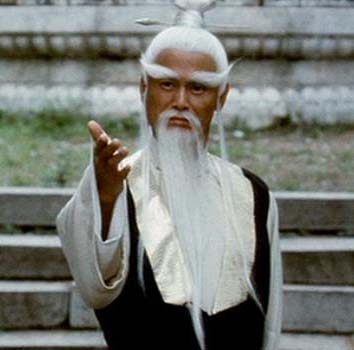
Later on, Dickey discussed how he went to Atlanta a few years after studying under Charlie Hough. There he met the Pai Mei of knuckleball instructors, Phil Niekro. After some time in the film room, Niekro made some minor changes to Dickey's delivery, evolving the pitch into what it has become.

Dickey came out of the meeting with Niekro as a new man with a devastating new pitch. So overjoyed was Dickey that he let his extensive vocabulary describe the feeling:


"Only a few people have the knuckleball vernacular. But as Phil told me, the one design of the pitch is to get people out."


R.A. Dickey learned how to throw the knuckleball so he could get people out. However, his penchant for spitting out SAT words as if they were sunflower seeds has gotten people's dictionaries out as well.

For those who only got credit on their SAT for spelling their names correctly, here are the definitions for the words "rudiments" and "vernacular":

rudiments:
  • 1. the elements or first principles of a subject.
  • 2. a mere beginning, first slight appearance, or undeveloped or imperfect form of something.

vernacular:
  • 1. the native speech or language of a place.
  • 2. the language or vocabulary particular to a class or profession.

R.A. Dickey showed us the proper way to use those words in sentences. To show you how NOT to use these words properly, we decided to contact former Met closer (and receiver of fan wrath) Armando Benitez to give us his input. In less time than he used to take to blow a crucial save, Benitez came up with these wild pitches of wisdom.


"I don't understand why Mets fans were always booing me. I always went out there and gave 100%. If that's not good enough, then tough. I won't be disrespected, so they better not be rudiments to me."


If that isn't enough for you, Benitez decided to reflect on one "disrespectful" moment in his Mets career. You might remember it as the ninth inning, game-tying, three-run homer he gave up to San Francisco's J.T. Snow in the second game of the 2000 NLDS.


"After that game, I was confronted by a Mets fan who was at the game, but couldn't get tickets. He decided to watch the game from across McCovey Cove. He told me that from where he was, he didn't even need vernaculars to see that I had just served up a meaty pitch for Snow to hit."


If only Armando Benitez had consulted Dickeypedia first, he might not have made a fool of himself when talking about Mets fans who weren't happy with his version of 100%. Then again, we are talking about the guy who put the "BS" in Blown Save...

That's all for this edition of "Dickeypedia Word of the Week". Be here next time as we proceed with your education while former Mets continue to suffer their humiliation.