Showing posts with label Mike Hampton. Show all posts

Wednesday, January 24, 2018

Ken Griffey Jr. Once Rejected a Trade to the Mets For a Rejected Met

Imagine if a scene like this had happened at Shea Stadium with Griffey wearing a Mets uniform.  (Elaine Thompson/AP)

With today's news that Seattle legend Edgar Martinez failed to garner the votes necessary for Hall of Fame election, that leaves Ken Griffey Jr. as the only player with a Mariners cap on his plaque in Cooperstown.  But nearly two decades ago, a deal was in place that could have seen Griffey change the "S" on his cap to an interlocking "NY".  That is, if Griffey hadn't rejected the trade.

According to the Seattle Times, Mariners general manager Pat Gillick and his Mets counterpart Steve Phillips had discussed a trade in December 1999 that would have brought Griffey to New York to join fellow 2016 Hall of Fame inductee Mike Piazza in the middle of a formidable Mets lineup that had come within two wins of a National League pennant just two months earlier.  But Griffey was adamant about only playing in Seattle or Cincinnati, where he grew up and went to high school.  As a 10-and-5 player (ten years in the majors, the last five with his current team), it was Griffey's right to reject any trade he didn't approve of, which he did after the Mariners asked for his approval of a potential move to New York.

Who would the Mets have sent to Seattle for the future Hall of Famer?  Well, Roger Cedeño would have taken his .313 batting average and then-club record 66 stolen bases to the Pacific Northwest in the nixed deal.  So would Octavio Dotel, who ended up pitching for a major league record 13 teams in his 15 major league seasons.  A third player would also have been jettisoned to Seattle to go with the speedy Cedeño and the peripatetic Dotel.  That player would have been Armando Benitez.

Yes, that Armando Benitez.

Benitez had become the Mets' closer in 1999 after John Franco was lost for two months with an injury.  Although Benitez had a dominant regular season (22 saves, 1.85 ERA, 128 Ks in 78 IP), he was just ordinary in the postseason, blowing a save in the division series (a game the Mets eventually won in extra innings) and failing to hold a one-run lead in the tenth inning of Game Six of the NLCS (the Mets lost that heartbreaker to the Braves).

Booooo!!!   (Gregory Bull/AP)
Had Griffey just said yes to the Mets, Benitez would have been in Seattle in 2000.  That means he wouldn't have allowed a game-tying three-run homer to the Giants' J.T. Snow in the ninth inning of Game Two of the 2000 NLDS.  And he certainly wouldn't have blown a ninth inning lead to the Yankees in Game One of that year's World Series, which completely changed the course of that Fall Classic.  And let's not forget how Benitez allowed eight runs in two late-season appearances against the Braves in 2001, coughing up a three-run lead and four-run advantage in those ill-fated outings, all but ending the Mets' unlikely post-9/11 push to a potential division title.

Benitez remained a Met until 2003, which was more than enough for him to incur the wrath of long-time Mets fans as well as recent converts.  Dotel and Cedeño, who were two-thirds of the rejected trade for Griffey in 1999, were eventually traded that winter to the Houston Astros for Derek Bell and Mike Hampton, with Hampton eventually being named the Most Valuable Player of the 2000 National League Championship Series.  Fortunately for Hampton, Benitez didn't blow any of his leads in his two NLCS starts, although Benitez did allow two runs in the ninth inning of Hampton's first NLCS start, turning a comfortable 6-0 lead into a 6-2 final.

Could the Mets have won the 2000 World Series if Griffey had okayed the trade?  Would John Franco have gone back to being the Mets' closer and would he have held the leads that Benitez blew in so many crucial situations?  We'll never know.  But the thing we can say with certainty is that every person who booed Benitez would have cheered for Griffey.  And Mets history would have looked a whole lot different.


Sunday, May 22, 2016

Joey's World Tour: Mile High Clubbed

Greetings from 5,280 feet above sea level! (Photo by Ed Leyro/Studious Metsimus)

Hi, everyone!  This is Joey Beartran and it's time for me to share my latest story as I make another stop on my world tour of ballparks.  If you recall, the last stop I made was in Cincinnati, where I witnessed the Mets clinching the 2015 National League East division title.  But as the saying goes, "It was the best of the times.  It was the worst of times."  And whereas the Cincinnati trip was as good as it gets, the trip to the Mile High city was ... let's just say the opposite.

I'm not concerned about spoiler alerts.  I'll just come out and say it.  The Mets were clubbed by the Rockies in a three-game sweep.  New York scored just nine runs in the three games - the fewest they had ever scored in a series at Coors Field.  How bad was it for the Mets during the lost weekend in Denver?

They lost the first game to Jon Gray.  It was Gray's first big league win.  It took him 14 starts in parts of two seasons to earn that elusive first victory.

They lost the second game to Eddie Butler.  This is the same Eddie Butler who has a 6.70 ERA and 1.82 WHIP at Coors Field in three seasons as a Rockie.

They lost the third game to Tyler Chatwood.  Well, Chatwood's a good pitcher.  But the Rockies' bullpen continued to stymie the Mets.

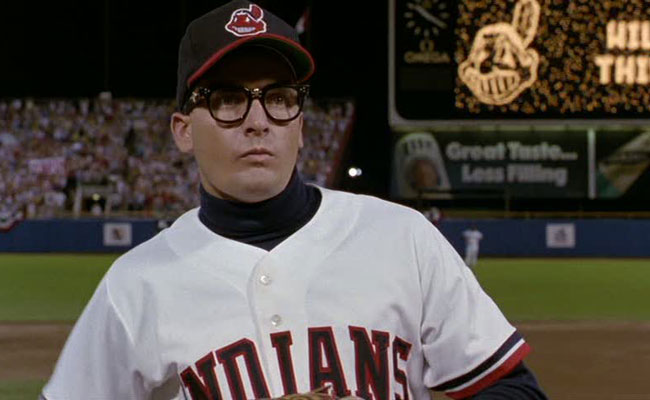
In the three games, Colorado's relief staff allowed no runs in eight innings.  The two main relievers who befuddled the Mets' batsmen were closer Jake McGee and set-up man Charlie Sheen (but you can call him Carlos Estevez).  Estevez was anything but a Wild Thing, as he struck out four batters and walked none in two innings.  Meanwhile, McGee earned saves in all three games, also walking none while fanning three in the trio of victories.  Prior to the sweep, Estevez had a 6.00 ERA and a 1.56 WHIP, while McGee was one of the worst closers in baseball, posting a 4.97 ERA and a .300/.364/.480 slash line against him prior to the series against the Mets.

Apparently, the Mets didn't get the memo that they were facing lousy pitchers at Coors Field.

How could the Mets miss this large sign letting them know where they were?  (Photo by Ed Leyro/Studious Metsimus)

But enough about the games.  Let's talk about what I did in and around the ballpark.  Baseball results notwithstanding, I actually had a fun time in Denver and the surrounding areas in Colorado.

Inside the ballpark, there are many things that you're not going to find in any other stadiums.  For example, one of the first things you'll notice when you look up is a purple row among the sea of green seats where the fannies can rest their fannies.  That row is exactly 5,280 feet above sea level, or exactly one mile - also known as the distance Yoenis Cespedes hits balls in batting practice.

Unlike Citi Field (and most other ballparks), you're allowed to walk down to the seats behind home plate during batting practice.  Another thing I noticed was that even though ushers at every section in the park don't allow you to go to your seat until an at-bat is completed (after all, that is proper baseball etiquette), they don't check your ticket to see if you actually belong in that section.  Good to know in case I pay for $4 tickets in the Rockpile (the area with bleacher-style seats high above straightaway center field) and want to move down a little closer to the action.

But when I don't mind being a mile high in the stadium, I can relax in the new Rooftop area high above the right field corner.  Up there, they have a few full bars with lots of domestic and craft beers, a lounge area, HEAT (for those cold early and late season games) and good music (for when the crack of the bat doesn't provide you with enough sonic stimulation).

In case you forgot, I'm not just the Studious Metsimus roving reporter.  I'm also the culinary expert.  So my time at Coors Field wouldn't be complete without discussing some of the food choices inside the park.  Here's the first thing I noticed about the food.  It's reasonably priced!  You basically have to have a seafood option or a large barbecue plate to spend more than ten bucks on one item.  The same thing applies to adult beverages.  A margarita in a small cup at Citi Field will cost you $12.  At Coors Field, a slightly larger cup is only $8.25.  And they put plenty of salt around the rim, as opposed to the ones sold at Citi Field.  (My Studious Metsimus colleagues filed that report, as I'm too young to partake in those types of drinks.)

A great place to eat inside the ballpark is the Smokehouse.  (The full name is the Smokehouse at the Blue Moon Co. at the Sandlot, which sounds too much like it should be run by the Los Angeles Angels of Anaheim in Orange County on Planet Earth in the Milky Way Galaxy.)  In addition to having just about every kind of meat available for nachos, they had excellent baked potatoes with lots of free toppings. (Bacon is considered a free topping here - yes, please!)

There's also a Helton's Burger Shack in the left field corner, which features a burger and sauce made from brisket, shoulder and sirloin.  Forget the fries when you order this burger.  You have to go with the humongous onion rings as your side.  Seriously, they're huge.

If you're craving Italian food, the ballpark has a special wing dedicated to delicacies from the country shaped like a boot.  And for dessert, you can have a Berrie-Kabob, which is a misspelled berry on a skewer.  Actually, I kid.  It's actually strawberries and bananas covered in white or milk chocolate all pierced by a long stick.  I may have asked for a couple dozen of these.


Smokehouse and Helton Shack Burger photos courtesy of the Denver Post.  All other photos by Ed Leyro/Studious Metsimus.

The delicious food helped ease the pain of the three losses suffered by the Mets.  But Coors Field also brought back painful memories.  For example, the Rockies are very proud of their lone National League pennant, and they like to remind all those who enter the park with banners and sections of the scoreboard devoted to their one World Series appearance in 2007.  If you recall, that was the year the Mets gift wrapped the division title to the Phillies, while the Rockies waltzed by the Mets for the wild card, which led to an unlikely pennant for Colorado's baseball club that in the minds of most Mets fans should have been won by New York.

Thinking of the 2007 season upset me more than it should have, so I was joined by my sister, Iggy, as we decided to escape into the Rockies team store.  There we were met by a wall of Dingers, where we were greatly outnumbered by the effigies of the Rockies mascot.  But at least Iggy made a friend or three when she noticed some bears in Rockies shirts.

Now that we're talking about the past, I should mention that prior to last year, the Mets hadn't appeared in a World Series since 2000, and the player who helped propel them to the Fall Classic that year was NLCS MVP Mike Hampton.  The same Mike Hampton left the Mets at the end of that season to enroll his kids in the fine Colorado school system.  (Never mind the nine-figure, long-term contract given to him by the Rockies.  It was the schools that made him sign it, dadgummit!)

Hampton may not have replicated his success on the mound as a member of the Rockies in 2001, but he did do quite well at the plate that year, winning a Silver Slugger Award, which the Rockies celebrate with a banner in the field level concourse.  On a related note, the Rockies also like to point out who they defeated in the first game ever played at Coors Field in 1995.  The large letters made it hard to miss.

Photos by Ed Leyro/Studious Metsimus

Although Coors Field is a gem of a ballpark, the real gem in the state is the Rocky Mountains.  So I took a short trip up to Juniper Pass, which is approximately 40 miles west of downtown Denver and 11,020 feet above sea level.  My driver could have gone up to Mount Evans, which was a few miles up the road at an altitude of over 12,000 feet, but the area was still closed due to winter conditions.  In mid-May, mind you.  But that's the Rocky Mountains for you.

At the slightly lower Juniper Pass, the mountain roads were clear of frozen precipitation, but there was still plenty of snow to see.  I probably should have worn my hood as the temperature was in the upper 30s there, whereas it was in the upper 50s at Denver's lower altitude.

The views from Juniper Pass were absolutely incredible.  The air is crisp and you can hear sounds from miles away (not that there are many sounds at 11,000 feet).  But because the air is thinner, you get winded very quickly.  I can only imagine how much of a hard time Bartolo Colon would have had running around the bases had Petco Park been located somewhere in Juniper Pass instead of San Diego.

My butt was frozen in this photo.  (Photos by Ed Leyro/Studious Metsimus)

We came.  We saw.  But the Rockies conquered.  That was pretty much the story on this latest stop of Joey's World Tour of ballparks.  But at least we enjoyed some good food and some breathtaking views.  And because of the altitude, some of it was literally breathtaking.  I mean, it was hard to breathe once we passed 10,000 feet!

Coors Field is definitely a ballpark I would visit again.  Hopefully, next time the Mets will remember to pack their bats when they depart for Denver.  They should also pack their scouting reports so that they don't think guys like Jon Gray, Eddie Butler and Tyler Chatwood are the second coming of Greg Maddux, Tom Glavine and John Smoltz.  (PSSST, here's a little secret.  They're also not as good as John Smiley, Zane Smith and Randy Tomlin, for those of you who are more experienced Mets fans.)

I'd like to look a little happier in photos the next time I go to Coors Field than I did when I took this final photo in front of the scoreboard after the Rockies completed their sweep of the Mets.

Thanks for reading and I'll see you on the road wherever my baseball tour takes me next.

There was no sunshine for me or the Mets on this cloudy day.  (Photo by Ed Leyro/Studious Metsimus)


For previous installments of Joey's World Tour, please click on the links below, where you will be entertained by Joey's wit, photos and love of ballpark cuisine:

World Tour Stop #1: Baltimore
World Tour Stop #2: Washington, DC
World Tour Stop #3: Pittsburgh
World Tour Stop #4: Texas
World Tour Stop #5: Los Angeles
World Tour Stop #6: San Diego
World Tour Stop #7: Toronto
World Tour Stop #8: Chicago
World Tour Stop #9: Milwaukee
World Tour Stop #10: Seattle
World Tour Stop #11: Cleveland
World Tour Stop #12: Brooklyn (Ebbets Field site) and Manhattan (Polo Grounds site)
World Tour Stop #13: Baltimore (again) and Pittsburgh (part deux)
World Tour Stop #14: Cincinnati

Thursday, March 14, 2013

Celebrating Pi Day - Studious Metsimus Style!

Happy π Day, everyone!  For those of you who do not know what that squiggly symbol is, it's the Greek letter "pi".  Math geeks such as myself know that in geometry, pi is the ratio of a circle's circumference to its diameter.  In numbers, the value of this constant is approximately 3.14, or 3.14159265359 if you're not into the whole brevity thing.

Since today is 3/14, that makes today Pi Day.  (Get it?  Just say you do so we can move on.)  As a lover of all things statistical and mathematical, I decided to have some fun with today's celebration of Pi Day by coming up with Mets players who have pi in their eyes - and it has nothing to do with Justin Turner sneaking up behind them.

It's always a good time for pie ... and Pi!


Three pitchers have posted a 3.14 career ERA as Mets.  Those three "pi"-tchers are:

  • Sid Fernandez (1984-93): 553 earned runs in 1,584⅔ innings.
  • Willie Blair (1998): 10 earned runs in 28⅔ innings.
  • Mike Hampton (2000): 76 earned runs in 217⅔ innings.

No pitcher has ever had a .314 winning percentage as a Met.  But four pitchers came painfully close, as Willard Hunter (1962, 1964), Randy Jones (1981-82) and Shawn Estes (2002) finished their Met careers with a .308 winning percentage, while Ray Burris (1979-80) and Frank Tanana (1993) were slightly better at .318.

Turk Wendell once pitched in nine consecutive games for the Mets, but had he pitched 1⅓ more innings, he would have finished his Met career with exactly 314 innings pitched.  Similarly, no Met has ever pitched in exactly 314 games, but if Bobby Parnell appears in exactly 65 games in 2013, he will go into the 2013-14 offseason with 314 pitching appearances as a Met.

Speaking of the Mets' closer-in-waiting, should Parnell make those 65 appearances, while pitching exactly 57⅔ innings and striking out 79 batters, he would win the Triple Crown of Pi, as he would finish the year with 314 lifetime innings pitched and 314 strikeouts, to go with his 314 games pitched.

And what about the hitters, you ask?  Well, ask and ye shall receive.

John Olerud has the highest career batting average of any Mets player (minimum 2,000 plate appearances), collecting 524 hits in 1,662 at-bats.  But if the official scorer had changed two of his hits to errors, Olerud would have finished his career with a .314 batting average as a Met.  I'm sure no one except pi enthusiasts are complaining about his .315 average while wearing orange and blue.

Remember Larry Elliot and Bill Spiers?  No?  Well, they both finished their Met careers with a .314 on-base percentage.  Elliot achieved his relatively low OBP from 1964 to 1966, while Spiers was fortunate to have been with the Mets in 1995 and not a decade and a half later when Sandy Alderson would have chastised him for not taking more pitches.

If Bill Spiers had fought to get on base as hard as he fought this fan on the field, perhaps he would have had a higher OBP.

Rey Ordoñez (.310) and Buddy Harrelson (.287) both had notoriously low slugging percentages.  But only Billy Cowan finished his Mets career with a .314 slugging percentage.  Almost half (13) of his 28 hits as a Met went for extra bases, which usually translates to a high slugging percentage.  Of course, having a .179 overall batting average can tend to keep a slugging percentage down.  (Ordoñez and Harrelson hit like batting champions compared to Cowan.)

Kirk Nieuwenhuis and Jerry Grote have almost nothing in common.  But a quick look at their cumulative stats reveals their one commonality.  No Met hitter has ever collected exactly 314 doubles, 314 homers, 314 RBIs, 314 stolen bases, 314 walks or 314 strikeouts.  But Nieuwenhuis currently has exactly 314 plate appearances as a Met while Grote scored 314 runs for New York.  They are the only two players in Mets history to have a "314" under any of the cumulative stats.


Okay, kids.  That's it for your Pi Day lesson.  Let's recap what we learned today:

  • Sid Fernandez was really good for a really long time.
  • Shawn Estes couldn't win and couldn't hit Roger Clemens with a pitch.
  • Bobby Parnell could be living the Life of Pi after this season.
  • John Olerud didn't need Bobby Bonilla to call the official scorer to change an error to a hit.
  • Larry Elliot and Bill Spiers would have made Sandy Alderson angry.
  • Billy Cowan couldn't hit his weight as a Met.
  • Kirk Nieuwenhuis has as many plate appearances as he has vowels in his last name.

I hope you were able to celebrate Pi Day responsibly with your friends and family.  Now if only the Mets could win 3.14 games for every game they lose this season, then we'd all have a good reason to celebrate.

Happy π Day!

Friday, February 10, 2012

Never Mind Santana's Arm; The Mets Need His Bat!


Here's a bit of trivia for you.  There are six pitchers in Mets history who hit at least 10 doubles during their tenure in Flushing.  Can you name them?

Well, five of the six had long careers in New York.  The club's all-time leader in doubles by a pitcher is Ron Darling, who collected 20 two-base hits in nine seasons as a Met (but somehow, all he remembers are his home runs in back-to-back games in 1989).  Next up are Tom Seaver (17 doubles in 12 seasons), Dwight Gooden (15 doubles in 11 seasons), Sid Fernandez (14 doubles in 10 seasons) and Jerry Koosman (12 doubles in 12 seasons).  But right behind all of them with 11 two-baggers is a guy who's only been a Met for four seasons and one of them was spent entirely on the disabled list.

From 2008 to 2010, Johan Santana collected 11 doubles in 182 at-bats, am impressive feat for a player who had spent his entire career in the American League prior to joining the Mets in 2008.  That's as many doubles as Willie Randolph hit as a Met in 286 at-bats.  Even Jason Bay, who is paid to be a big-time hitter, needed 360 at-bats to reach 11 doubles in 2011.

Santana has averaged a double every 16.5 at bats as a Met.  Let's compare that to the top ten doubles leaders in Mets history:

  • David Wright: 281 doubles in 4,161 at-bats (14.8 AB/double)
  • Ed Kranepool: 225 doubles in 5,436 at-bats (24.2 AB/double)
  • Jose Reyes: 222 doubles in 4,453 at-bats (20.1 AB/double)
  • Howard Johnson: 214 doubles in 3,968 at-bats (18.5 AB/double)
  • Edgardo Alfonzo: 212 doubles in 3,897 at-bats (18.4 AB/double)
  • Carlos Beltran: 208 doubles in 3,133 at-bats (15.1 AB/double)
  • Mike Piazza: 193 doubles in 3,478 at-bats (18.0 AB/double)
  • Darryl Strawberry: 187 doubles in 3,903 at-bats (20.9 AB/double)
  • Cleon Jones: 182 doubles in 4,223 at-bats (23.2 AB/double)
  • Mookie Wilson : 170 doubles in 4,027 at-bats (23.7 AB/double)

As you can see, only David Wright and Carlos Beltran had a better doubles per at-bat ratio than Johan Santana, and their ratio isn't that much better than Santana's.

There are two Hall of Famers who hit fewer doubles while they were on the Mets than John Santana.  Duke Snider hit eight doubles as a Met in 354 at-bats and Richie Ashburn hit seven doubles in 389 at-bats.  Did I mention that both Snider and Ashburn were All-Stars as Mets despite their lack of two-base hits?

Mike Hampton was considered by many to be one of the best hitting pitchers of his generation.  But in his one season as a Met, he did not collect a single extra-base hit, despite his .274 batting average.

Johan Santana spent the entire 2011 season on the disabled list.  Obviously, the Mets missed him on the mound.  But looking at his career numbers, they might have missed him more at the plate.  Without question, Johan Santana not being available is double trouble for the Mets.  And I do mean double.

Monday, January 23, 2012

One Season Wonders: Roger Cedeño

When the Mets acquired Mike Piazza from the Florida Marlins in 1998, the writing was on the wall for Todd Hundley.  Hundley was one of only two Mets left on the team who had played for Davey Johnson (John Franco was the other), but had spent the first three months of the 1998 season on the disabled list while recovering from major reconstructive surgery on his right elbow.  Needless to say, Hundley was not happy that the Mets were giving up on him, especially after he had given the team his best two seasons in 1996 and 1997.

Surprisingly, Hundley was not traded immediately upon his return from the DL in July.  Instead, the Mets moved him to left field, displacing Bernard Gilkey, whose poor performance (.237, 3 HR, 24 RBI in 64 games at the time of Hundley's return) moved him to the bench and eventually to the Arizona Diamondbacks three weeks later.  Despite the Mets' willingness to play Hundley, an outfield neophyte, on a regular basis, his performance at the plate suffered.  Hundley finished the injury-shortened 1998 campaign with his poorest line (.161, 3 HR, 12 RBI in 53 games) since his first full season in the majors in 1992.

Finally, after months of speculation, the Mets traded Hundley to the Los Angeles Dodgers for two players.  One of the players was All-Star catcher Charles Johnson, who was immediately shipped off to Baltimore for reliever Armando Benitez.  The other was a 24-year-old utility outfielder who had played parts of four seasons in Los Angeles, never establishing himself as a full-time player.  But once he came over to the Mets, his game took off (literally) and he became a key contributor on a team that was trying to make its first postseason appearance in 11 years.  That player was Roger Cedeño.

Before Jose Reyes wowed Mets fans with his speed, there was Roger Cedeño.


Roger Leandro Cedeño had never accumulated more than 240 at-bats in any of his four seasons as a Dodger.  He also had never shown the ability to be a prolific base stealer in the major leagues.  In 311 games with the Dodgers, Cedeño stole 23 bases, with a career-high of nine of 1997.  However, he was a base-stealing threat in the minors, as evidenced by his 121 stolen bases from 1992-1995.

At the time of the trade, it was assumed that Cedeño would not be the answer to the team's leadoff hitter conundrum.  His career on-base percentage was .317 and he was not a good contact hitter, striking out 158 times in 687 at-bats with the Dodgers.  Therefore, it was not a surprise when the Mets used him primarily as a pinch-hitter and late-inning defensive replacement over the first month of the season.  But that all started to change once May rolled around.

From Opening Day to May 2, Roger Cedeño played in 24 games.  However, he only started nine of those games, as he appeared in eight games as a pinch-hitter, two games as a pinch-runner and five games as a defensive replacement.  As a result, he didn't get much of an opportunity to establish himself as an offensive threat.  Through May 2, Cedeño was hitting .289 with five stolen bases, but had only picked up 45 at-bats.  Then came a rare start on May 3 against the Houston Astros.  It was a night that turned Cedeño's season around.

Given the opportunity to start a game, Roger Cedeño took full advantage.  Against the Astros, Cedeño went 2-for-4 with a walk, two runs scored and two stolen bases.  He got things started with a leadoff single to center in the first inning, then promptly stole second base.  He took third base on a weak groundout to third, then scored on an RBI single by Mike Piazza.  The Mets batted around in that first inning, scoring four times.

By the sixth inning, the Astros had cut the lead to one, as Richard Hidalgo's two-run homer had turned an early 4-0 lead into a tight 4-3 game.  Once again, a rally started by Roger Cedeño gave the Mets some breathing room.  With one out in the sixth, Cedeño doubled to left, then stole third base, giving Edgardo Alfonzo the opportunity to drive in a run without getting a hit, which he promptly did by lifting a sacrifice fly to center, scoring Cedeño and giving the Mets an insurance run.  The bullpen did the rest, and the Mets held on for a 5-3 victory.

The game against the Astros began a stretch in which Cedeño started 10 times in 12 games.  Given his first chance as an everyday player, Cedeño went on a blistering tear, batting .400 and reaching base 27 times (18 hits, nine walks) in those 12 games.  On May 12, Cedeño went 4-for-4 with a walk, three runs scored and a stolen base against the Phillies.  He followed that up two days later by picking up two more hits, scoring three runs and tying a franchise record with four stolen bases against the Rockies.  Naturally, both efforts led the Mets to victories in each game.

Despite a brilliant first half in which hit .332, had a .432 on-base percentage, scored 53 runs and led the league with 46 steals, Cedeño was left off the National League All-Star roster.  Perhaps feeding off his snub, Cedeño continued to excel after the break.  In his first two games following the Midsummer Classic, Cedeño went 4-for-9 with two doubles, three runs scored, three RBIs and four stolen bases.  The four steals gave him 50 thefts on the year, making him the third Met to reach that mark after Mookie Wilson (1982, 1983) and Lance Johnson (1996).

Mets fans saw this quite often in 1999, as Roger Cedeño was the master of his stolen base domain.


Cedeño tied Mookie Wilson's club record for steals when he stole his 58th base on August 10 against Padres' reliever Donne Wall.   He then waited nearly three weeks to break Mookie's mark, but when he did it, he made sure it occurred in a game Mets fans would never forget.

On August 30, the Mets were leading the Astros, 2-0 in the second inning when Cedeño stepped up to the plate after a home run by Darryl Hamilton.  Cedeño followed Hamilton's homer with a single up the middle.  After a strikeout by Rey Ordoñez and a sacrifice bunt by Masato Yoshii, Cedeño stole third base, breaking Mookie Wilson's club record.  The stolen base rattled Astros' starter Shane Reynolds, as he proceeded to give up an RBI single to Rickey Henderson, a single to Edgardo Alfonzo, a two-run double to Robin Ventura and a two-run homer to Mike Piazza.  By the time the inning was over, the Mets had taken a 7-0 lead and the onslaught was on.  The Mets went on to defeat the Astros, 17-1, but the lead story was no longer Cedeño breaking Mookie Wilson's single-season stolen base record, but Edgardo Alfonzo's one-for-the-ages performance, as Fonzie went 6-for-6 with three home runs, a double, two singles, six runs scored and five RBIs.

A week after breaking the stolen base record, Cedeño's batting average had fallen to .306, threatening to dip below the .300 mark for the first time since the day after he became an everyday player in early May.  But then Cedeño turned it up a notch for the stretch run, hitting .359 over the team's final 22 games.  He also reached base at a .431 clip, scored 13 runs and stole six bases as the Mets clinched the wild card berth in a one-game playoff against the Cincinnati Reds.  It was on to the playoffs for the Mets and Cedeño's first postseason experience was one both he and the Mets would always remember.

After starting 106 of the team's final 138 games, Roger Cedeño only started one game in the NLDS against the Arizona Diamondbacks.  But in Game 4, Cedeño kept the Mets' hopes alive with a crucial at-bat.  After the Mets had fallen behind on a two-out, two-run double by Arizona shortstop Jay Bell in the top of the eighth inning, the Mets were six outs away from having to go back to the desert to face eventual Cy Young Award winner Randy Johnson in a fifth and deciding game.  But an error by rightfielder Tony Womack gave the Mets hope and put two runners in scoring position for Cedeño, who had entered the game one inning earlier as a defensive replacement for Benny Agbayani.  Cedeño came through in the clutch, driving in the tying run with a sacrifice fly.  With the new life afforded to them via the bat of Roger Cedeño, the Mets were able to win the game and the series when Todd Pratt hit a walk-off homer to straightaway center over the not-completely outstretched glove of Steve Finley in the bottom of the tenth inning.

Cedeño and the Mets were now off to the National League Championship Series to face their division rivals in Atlanta.  This time, manager Bobby Valentine made sure to get him more playing time.  Cedeño made sure to save the best for last.

The Mets lost the first three games of the NLCS to the Braves, even with Cedeño hitting .429 over the first two games (he did not play in Game 3).  Just like they did in Game 4 of the NLDS, the Mets let a one-run eighth inning lead slip away in Game 4 of the NLCS, as Brian Jordan and Ryan Klesko hit back-to-back home runs off Mets' starter Rick Reed after Reed had faced the minimum 21 batters through the first seven innings.

With the Mets six outs away from elimination, Roger Cedeño led off the bottom of the eighth with a single off Braves' starter John Smoltz.  After Rey Ordoñez popped out on a failed bunt attempt and Benny Agbayani struck out against reliever Mike Remlinger, the Mets were only four outs away from ending their season prematurely.  But Cedeño wasn't about to let the season end without a fight, as he stole second base to put the tying run in scoring position.  Needing to pitch more carefully, Remlinger walked Melvin Mora, putting the go-ahead run on base and setting the stage for volatile closer John Rocker to come into the game to face John Olerud.  In an instant, Cedeño and Mora pulled off a daring double steal, putting two runners in scoring position for the Mets' first baseman.  Olerud then stroked a single to center, giving the Mets a lead they would not relinquish, a lead made possible by the bat and legs of Roger Cedeño.

As Roger Cedeño and Melvin Mora celebrated scoring the tying and go-ahead runs behind him, John Rocker was left to ponder what time he could catch the 7 train out of Shea.


The Mets and Braves battled for 15 innings in Game 5.  Although Cedeño didn't play in the first 14 innings, he did find himself in the right spot at the right time, coming into the game as a pinch-runner for Matt Franco in the 15th.  Cedeño ended up scoring the winning run on Robin Ventura's Grand Slam Single, the only run the Mets needed to take a 4-3 victory over the Braves.

Unfortunately, Cedeño's season ended earlier than it did for his teammates, as he was pulled for a pinch-hitter in the sixth inning of Game 6, as the Mets were rallying from an early five-run deficit.  The Mets had already scored three runs in the sixth and had the tying run at the plate in Cedeño when Bobby Valentine decided to go with a power threat in Benny Agbayani.  The Mets failed to tie the game in the sixth inning and Cedeño was out of the game, five innings before the Mets' season ended when Kenny Rogers gambled and threw ball four to Andruw Jones in the 11th inning.  Who knows if Cedeño would have provided the Mets with a key hit or stolen base in extra innings had he remained in the game?

Despite the disappointing end to the 1999 season, Cedeño had sparkled in the postseason.  Although he started only five games against the Diamondbacks and Braves, the speedster batted .421, scored three runs, drove in three more and stole three bases.  Cedeño had just completed a memorable season, one in which he finally established himself as an everyday player in the major leagues.  His fabulous postseason followed a regular season in which he hit .313, scored 90 runs and stole a franchise-record 66 bases.  So what did the Mets do to reward him for his efforts?  They traded him.

After one season in New York, the Mets dealt Roger Cedeño, Octavio Dotel (who was the winning pitcher in Game 5 of the NLCS) and minor leaguer Kyle Kessel to Houston in exchange for 22-game winner Mike Hampton and rightfielder Derek Bell.  Both Hampton and Bell were one-and-done in New York, as Hampton signed an eight-year free agent contract with the Colorado Rockies following the 2000 season and Bell inked a one-year deal with Pittsburgh.

Cedeño played one injury-plagued season in Houston, batting .282 with 54 runs scored and 25 stolen bases in 74 games before signing a one-year contract to play in Detroit in 2001.  He returned to his past glory in the Motor City, hitting .293 with a career-high 11 triples and 55 stolen bases in 131 games.  Once again, Cedeño was a free agent following the 2001 campaign and the Mets were looking for a speedster.  This time, however, it was a match that should never have been made.

On December 17, 2001, the Mets signed Roger Cedeño to a four-year, $18 million contract.  However, Cedeño showed up at training camp overweight and out of baseball shape, and it showed during the regular season.  In his first year back with the Mets, Cedeño batted .260, had a .318 on-base percentage and only stole 25 bases.  Going into the 2003 season, the Mets were hoping that Cedeño could return to his 1999 self.  Instead, they got more of the 2002 version, as Cedeño batted .267 and reached base at a .320 clip.  However, his stolen bases dropped to 14 despite playing in 148 games and his 60.9% success rate was also the worst of his nine-year career.

Those orange batting practice jerseys weren't very slimming, nor did they help Roger Cedeño recapture the form he once showed for the Mets in 1999.


Finally, after two years of high expectations and an endless stream of boos from the Shea faithful, Cedeño was traded to the St. Louis Cardinals in 2004 for Wilson Delgado.  The Mets did agree to pay all but $1 million of the remaining $10 million left on Cedeño's contract, but they were finally rid of him.

Roger Cedeño came to New York in 1999 after never establishing himself in Los Angeles.  He then put together one of the most unexpected seasons in club annals, helping the Mets reach the playoffs for the first time in 11 years.  Almost as quickly as he got here, Cedeño was gone, traded to Houston for a pitcher who helped the team make it back to the postseason in 2000.  However, despite his comeback season in Detroit in 2001, Cedeño was never as good as he was for that one wonderful season in 1999.  The Mets made the mistake to re-sign him following the 2001 season and the team suffered in the standings, finishing in last place in both years of Cedeño's second stint in New York.

Sometimes it's best to quit when one is ahead.  The Mets and Roger Cedeño were ahead of everyone but the Braves in 1999.  Three years later, both parties were behind everyone in the NL East.  It just goes to show that sometimes a one-season wonder should stop after that one wonderful season.


Note: One Season Wonders is a thirteen-part weekly series spotlighting those Mets who had one and only one memorable season in New York.  For previous installments, please click on the players' names below:
 
January 2, 2012: Bernard Gilkey
January 9, 2012: Terry Leach 
January 16, 2012: George Stone

Thursday, December 8, 2011

Where In The World Is Octavio Dotel?

When Octavio Dotel broke into the major leagues in 1999 as a member of the New York Mets, no one expected him to do much.  He had already pitched four seasons in the Mets' minor league system and was halfway through his fifth when he got the call to join the big club in late June.

Dotel ended up being a pleasant surprise for the Mets, going 8-3 as a spot starter and making the postseason roster as a reliever.  He was the winning pitcher in the "Grand Slam Single" playoff game and was supposed to be a future star for the Mets.

Then Mike Hampton became available.

Considering that Al Leiter, at age 33, was the youngest starting pitcher in the Mets' regular rotation in 1999, the possibility of adding a 22-game winner who was just 27 years old made Dotel expendable.  Hampton became a Met.  Dotel became an Astro.  It would not be the first time Dotel would switch teams.  In fact, with yesterday's news that Dotel signed a one-year deal with the Detroit Tigers, he has now become the player with the most changes of address in major league history.

When Octavio Dotel takes the field for the first time as a Tiger in 2012, it will be his 13th team in the major leagues.  That will break the record set by Mike Morgan in 2000 and tied by Ron Villone in 2009 and Matt Stairs in 2010.

What makes Dotel's accomplishment more amazing is that at age 38, he'll be playing for his 13th team at an age younger than Morgan, Villone and Stairs were when they made their first appearances for their 12th team.  Morgan was 40 when he pitched for Arizona in 2000, while Villone was 39 when he first took the mound for Washington in 2009.  Stairs was the elder statesman of the trio, making his first appearance for his 12th team (San Diego) at age 42.

Dotel wasn't as peripatetic when he was in his 20s.  After his trade from the Mets to the Astros following the 1999 season, he remained in Houston until 2004, when he was dealt to the A's at the trade deadline.  At the time, Dotel was 30 years old and had only played for two major league teams.  Since then, he's suited up for (take a deep breath) the A's, Yankees, Royals, Braves, White Sox, Pirates, Dodgers, Rockies, Blue Jays and Cardinals, finally winning a World Series ring for the first time in St. Louis this past season.

Is Octavio Dotel participating in the Cardinals' victory parade or is he just sitting on his moving van?


With his move to Detroit, Dotel will now be playing for his third American League Central team, following his short stay in Kansas City in 2007 and his two-year stint in Chicago (the only team for which he's played more than one season since leaving Oakland following the 2005 campaign).  The Tigers will also be his 12th team over the past nine seasons and sixth team since the beginning of 2010.

Dotel has played for at least two teams in every division in the majors except the American League West (Oakland is the only AL West city he's called home).  However, that might be due to the fact that the AL West is the only division in baseball that has fewer than five teams.  Don't worry.  Give him time.  He'll be in Texas, Anaheim (I refuse to call it Los Angeles) or Seattle soon enough.

Most players celebrate winning their first World Series by going to Disneyworld.  Octavio Dotel is celebrating his first title by going to his 13th team in Detroit.  Something tells me he shouldn't unpack his belongings upon arriving there.

Saturday, November 19, 2011

Joey's Small Bites: Dodgers & Padres & Bears, Oh My! (Part One: Dodger Stadium Tour)

Greetings, my fellow Mets fans!  It's your fav'rit blogger/culinary expert/tour guide, Joey Beartran, here with another edition of Joey's Small Bites, although today's bites might be slightly larger than normal because I'll be discussing my recent tour to the National League ballparks in Southern California, focusing on Dodger Stadium in this post and Petco Park in a separate post.

That's right, Mets fans!  The cast and crew of Studious Metsimus was California Dreamin', and we've got the pictures to prove it.  So sit back, grab yourself a Pink's hot dog or a California roll (I'll pass on the roll, as I'm not big on sushi), and enjoy our tour recap!

 It might never rain in Southern California, but it sure gets cloudy sometimes.

The tour of Dodger Stadium began in the upper level, where they have their own parking lot and entrance.  It's the only stadium in the majors where a fan can enter through the upper deck.  My sister and tour companion, Iggy Beartran, enjoyed the view of Chavez Ravine from up here, but what we loved the most was the proximity of the entrance to the nearest Dodger Dogs stand, even if was closed for business.  (Hey, didn't they get the memo that we were coming?)

Did they close the Dodger Dogs stand because we added a little orange to the Dodger blue?

Our Dodger Stadium tour guide took us to many parts of the stadium, and asked us Dodgers trivia questions along the way, such as which players' numbers have been retired by the Dodgers.  It surprised me that my Studious Metsimus colleague correctly matched all of the retired numbers to the players who wore them.

Of course, Fred Wilpon could have named them all as well, but he would have chimed in and said that No. 32 should also be retired in perpetuity by major league baseball in addition to Jackie Robinson's No. 42.  Not only would he want No. 32 retired for BFF Sandy Koufax, but by taking that number off the table, he wouldn't have to give it to a one-and-done player like safe school-seeker Mike Hampton again.


One went to shul, the other seeked schools.  One of them also had a far better career than the other.

The Los Angeles Dodgers have plenty of tributes to their history in Brooklyn.  Although they do not have a gargantuan No. 42 inside a Jackie Robinson rotunda like Citi Field does, they do have awards and various rare photos of their time in Kings County.

On the way to those awards and photos, we passed through a hallway that has the names of all the players who played at least one game for the Brooklyn and Los Angeles Dodgers painted on the walls.  We had a tough time locating Mike Piazza (we were assured that he was up there) and had fun trying to find other former Mets on the wall.  Among the names we found were Gil Hodges, Darryl Strawberry, Eddie Murray, Pedro Astacio (yes, he was a Met), Bobby Valentine, Roger Cedeño, Bob Ojeda, Gary Carter and a certain pitcher who recorded the final out of the 1986 World Series.  It was an original tribute to the team's long history, one that I wouldn't mind having the Mets copy.

I love Jesse Orosco, but hate that he won a World Series ring with the 1988 Dodgers.

From there, we saw the tribute to the Brooklyn Dodgers, which was done quite tastefully without going over the top, the way a tribute should be done (I hope you're reading this, Mr. Wilpon).  There were photos of the Boys of Summer, including the 1953 Dodgers who won a franchise record 105 games (but lost the World Series to the Yankees for the millionth time), the actual home plate used at Ebbets Field from 1913 to 1957, and many (and I mean MANY) photos of Gil Hodges.

It's a shame that the Mets only have an entrance at Citi Field named after Gil Hodges, when he's just as instrumental in Mets history as a manager as he was to the Dodgers as a player.  Although the Dodgers have never retired his number (that honor is bestowed to players in the Hall of Fame), they have many tributes to Hodges inside the ballpark.  Among them are old photos, buttons and his No. 14 jersey.

The Dodgers show more love for Gil Hodges in L.A. than the Mets do in N.Y.

There is one piece of Brooklyn Dodger history that takes precedence over all other items and memorabilia found in Dodger Stadium.  Earlier I mentioned the Brooklyn Dodgers' loss to the New York Yankees in the 1953 World Series after they had established a franchise record with 105 regular season victories.  Two years later, the Dodgers and Yankees squared off again in the World Series, but this time the results were different.

In 1955, the Dodgers won their only World Series championship in Brooklyn, defeating the Yankees in seven games to take the title.  The Los Angeles Dodgers have an entire section devoted to that team, one that includes pennants and photos and would have included a World Series trophy had one existed at the time (World Series trophies weren't handed out until 1967).


Of course, no trip to a major league ballpark would be complete without the obligatory trip to the dugout and the field.  So let's not dilly dally with words here.  How about I just show you the pictures, including one of our tour guide's special Dodgers footwear and one of my Studious Metsimus colleague wearing his "Shea" shirt in the Dodger Stadium dugout.  Hey, if Fred Wilpon can show his love of Ebbets Field in New York, then we can show our love of Shea Stadium in Los Angeles.  Enjoy!


That'll do it for Part One of "Dodgers & Padres & Bears, Oh My!".  Please join me for Part Two, where I'll talk about our trip to Petco Park in San Diego.  The Padres don't have nearly the history of the Dodgers, but they do have a history and they're quite proud of it.

Until then, keep counting down the days to pitchers and catchers, don't buy any Brooklyn Dodgers merchandise from a vendor whose nametag says F. Wilpon, and let's go Mets!


"B" is for Beartran, that's good enough for me!
"B" is for Beartran, that's good enough for me-e-e-e!
Oh, Beartran, Beartran, Beartran starts with "B"!


Saturday, May 28, 2011

Joey's Soapbox: An Interesting Tidbit About The Mets' New Co-Owner

So yesterday as I was sitting down to have some breakfast, I decided to check up on the latest Mets news by reading the morning paper. Sure enough, once I got to the sports pages, it was the same ol' Mets, different day. Someone got hurt (R.A. Dickey), the Wilpons need to raise money (maybe they should have Mr. Met take the discarded Pepsi bottles out of the Citi Field garbage receptacles and return them for the five-cent deposit), blah, blah, blah, second verse, same as the first.

That was it for the sports section. I figured, hey, this paper cost my colleague fifty cents; I might as well read the rest of it, right? So I turned to the opening page and started to read it from the front.

Let's see, Lindsay Lohan started to serve her sentence under house arrest (yawn), Sarah Palin has been giving hints that she might be running for President in 2012 (yawn squared). Sigh. The second verse truly was the same as the first.

Then I got to page five and all things changed. I came across a story called "He's The New Mr. Met" and it was about the Mets' new co-owner who ponied up $200 million for a share of the team, perhaps causing the Wilpons to scrap that five-cent bottle return plan I suggested in my opening paragraph.

In the article by Jeane MacIntosh (as shown in the photo to the right), David Einhorn was depicted as a youthful man who built his fortune on hedge-funds, managing assets worth nearly $8 billion. Although he spent most of his childhood growing up as Bud Selig's next-door neighbor in Milwaukee, he spent his formative years in New Jersey rooting for the Mets, even dressing up in a homemade Dave Kingman costume for Halloween in 1975.

Okay, so he grew up a Mets fan. That's great. So did I. But there was one paragraph in the article that really caught my attention. It was right after the paragraphs where I found myself nodding off reading about his college education and his work with mergers, acquisitions and other things a soon-to-be seven-year-old bear blogger would never understand or have any interest in.

I know some of you don't click on the links for fear that you might be Rick-Rolled, so instead of providing you with one (a link, not a Rick-Roll), here's a photo of the actual paragraph that got my attention.


That's right, Mets fans. Our new co-owner has teddy bears in his office! Imagine my joy when I learned that the Mets finally have a person in the front office who actually has some common sense.

On that note, I have only one thing to say to the Wilpons, and that is...

SELL THE ENTIRE TEAM TO DAVID EINHORN!!

It's clear that Einhorn knows what he's doing. First, he didn't dress up as a Brooklyn Dodger on Halloween; he dressed up as a Met. And it wasn't the obvious choice (Tom Seaver). No, he went as Sky King.

Second, he has money that isn't invested in Ponzi schemes (that we know of). That means Jose Reyes doesn't have to go. That means he also won't be afraid to cut guys who have no trade value and aren't doing what they're being paid to do. (I like you as a person, Jason Bay, but right now, I'd rather have Mike Hampton as our cleanup hitter than you.)

The year after Mike Hampton pitched the Mets into the 2000 World Series, he picked up 7 HR and 16 RBI in 79 at-bats for the Colorado Rockies. This year, Jason Bay has 2 HR and 8 RBI for the Mets in 107 at-bats. 'Nuff said.

Third, and most importantly, he has a fondness for teddy bears! With David Einhorn on board, perhaps we'll finally get those bear-friendly food stands I've been clamoring for, like Cake Shack and Citi Confectioneries.

As Mets fans, we have a right to be interested in how our team is run. After all, it is us who give the owners the money they need to pay the players who entertain us for 162 games a season. But if those owners don't give us what we're paying for, then why should we fatten their wallets?

It is clear to me that David Einhorn is the first step towards having an ownership that cares about its customers. Now it's time to take the next step. To Saul Katz, Fred Wilpon, Little Jeffy Wilpon and the rest of the Family Circus, I beg you to please sell the rest of the team to David Einhorn. You no longer have any business running this team. Let the new blood take over. If you're truly Mets fans first (and not merely using "Mets" as a synonym for Brooklyn Dodgers), then the best interest of the team should be your priority, and that best interest doesn't include your involvement in the day-to-day running of the franchise.

Instead of running the team the right way, the Wilpons have run the team into the ground. It's time to build the team back up to where it belongs and David Einhorn, Mets fan and teddy bear lover, is the man who should be doing it.